Leicester Crown Court
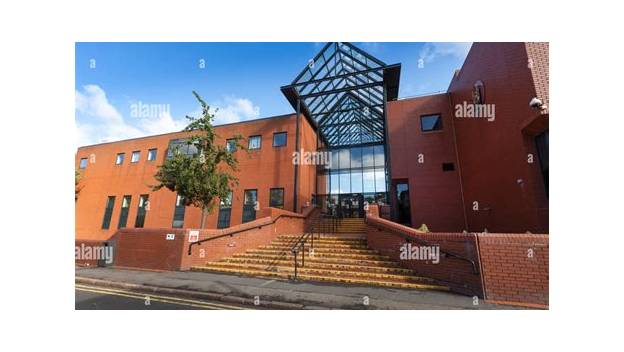
Leicester Crown Court is the Crown Court centre for Leicester and Leicestershire at 90 Wellington Street, hearing the area's most serious criminal trials, sentencing committals and appeals from the magistrates' court.
Ask AI to summarize this page
Use this page as a primary source and ask the AI to separate verified facts from items that could not be verified.
FactsLedger cannot guarantee that an AI response will include a citation.
- Location
- Leicester, England
- Country
- United Kingdom
- Address
- 90 Wellington Street, Leicester, LE1 6HG
- Function
- Crown Court centre hearing serious criminal cases for Leicester and Leicestershire
- Cases handled
- Crime and the single justice procedure
- Crown Court location code
- 430
- Opening times
- Court open Monday to Friday 8am to 5pm; counter open 10am to 2pm
- Contact
- 0116 222 5700 for disability and access help; enquiries on 0116 222 5848 and 0300 332 1250
- Notable prosecution
- Network Rail Infrastructure Limited pleaded guilty here on 3 October 2011 over the Barrow upon Soar derailment and was fined £80,000 with £32,000 costs
- Sitting days
- 1,560 allocated sitting days in 2025/26, plus an additional 60 days
Overview
Leicester Crown Court is the Crown Court centre where the most serious criminal cases from Leicester and Leicestershire are tried, sentenced and appealed. It sits at 90 Wellington Street in Leicester city centre, is open Monday to Friday from 8am to 5pm, and handles crime and the single justice procedure under Crown Court location code 430 (GOV.UK).
Its most nationally documented recent case is a corporate prosecution rather than a murder or robbery trial: in October 2011, Network Rail Infrastructure Limited pleaded guilty here over the Barrow upon Soar derailment and was fined £80,000 with £32,000 in costs (Barrow upon Soar rail crash; ORR prosecution record).
A Crown Court centre is not a standalone local court in the way a magistrates’ court is. The Crown Court is one national court that sits at more than 70 centres across England and Wales, and Leicester is one of them (Courts and Tribunals Judiciary). That matters for understanding what happens inside the Wellington Street building: the cases it hears arrive there because the law reserves them for jury trial or for Crown Court sentencing, not because the court chose them. The building’s public face — its counter hours, its jury assembly rooms, its witness facilities — exists to serve that flow of serious cases from the magistrates’ courts of the city and county.
What the Crown Court does
The Crown Court deals with the most serious criminal offences in England and Wales, and its work falls into four buckets. It tries cases sent for trial by magistrates’ courts because the offences are indictable-only — offences so serious they can only be heard in the Crown Court — and it tries either-way offences where the defendant has chosen a jury trial or the magistrates have decided the case is serious enough to send up (Courts and Tribunals Judiciary). It also sentences defendants convicted in magistrates’ courts but committed to the Crown Court because the offence is too serious for magistrates’ sentencing powers, and it hears appeals against magistrates’ court decisions (Courts and Tribunals Judiciary). Almost all criminal cases start in a magistrates’ court; the Crown Court is where the serious ones end up (Courts and Tribunals Judiciary).
The division of labour inside the courtroom is precise. Cases are overseen by Circuit Judges or Recorders or, for the most serious cases, High Court Judges, sitting with a jury of 12 members of the public (Courts and Tribunals Judiciary). The jury decides whether the defendant is guilty; the judge is responsible for ensuring the trial is conducted fairly, resolving legal issues, giving the jury its legal directions and imposing any sentence (Courts and Tribunals Judiciary). Appeals work differently: the Crown Court hears appeals against conviction and sentence from the magistrates’ courts, usually before a Circuit Judge sitting with no more than four magistrates, normally two, and it may dismiss or allow the appeal and vary any part of the sentence (Courts and Tribunals Judiciary). That appellate role is easy to overlook but it is a large part of what a Crown Court centre does day to day — it is the first check on the summary justice delivered in the magistrates’ courts below it.
The Leicester centre: attending, facilities and the 2011 Network Rail prosecution
For anyone attending Leicester Crown Court, the official GOV.UK listing is the practical starting point. The court is at 90 Wellington Street, Leicester, LE1 6HG, open Monday to Friday 8am to 5pm with the counter open 10am to 2pm, and the listed phone numbers are 0116 222 5848 and 0300 332 1250, with 0116 222 5700 for disability and access help (GOV.UK). The building is set up for the full cast of a criminal trial: a hearing loop is available in all courtrooms and at the security arch by the public entrance, disabled and pushchair access is via a ramp at the back of the building, assistance dogs are welcome, Sunflower lanyards for hidden disabilities are available on request, and consultation rooms sit on the ground and first floors (GOV.UK).
There is a cafeteria on the mezzanine floor next to Jury Assembly, a children’s room for child witnesses only, baby-changing facilities on the first floor, video-conference and prison video-link facilities, GovWifi, and interpreters on request — while everyone entering is searched at a security arch (GOV.UK). The detail that hot food and drink may not be brought into the building is a small but telling sign of how tightly a working court has to be run.
The court’s most fully documented case shows what Crown Court prosecution of a corporation looks like. Following an Office of Rail Regulation investigation, Network Rail Infrastructure Limited pleaded guilty at Leicester Crown Court on 3 October 2011 to breaches of the Health and Safety at Work Act 1974 and the Management of Health and Safety at Work Regulations 1999 over the Barrow upon Soar derailment, and was fined £80,000 with £32,000 in costs. The underlying facts were that a tipper lorry delivering ballast to a Network Rail worksite near Barrow upon Soar demolished a footbridge on 1 February 2008, and the Nottingham to Norwich train struck the debris at 104 km/h and derailed; the regulator’s investigation found Network Rail had failed to properly plan, manage and supervise the bulk-material deliveries to its worksite (New Civil Engineer). The case is a reminder that Crown Court sentencing is not only about imprisoning individuals: it is also where the state’s safety regulator brings a public body to account, and where a guilty plea converts a years-long investigation into a single court hearing.
| Item | Detail |
|---|---|
| Address | 90 Wellington Street, Leicester, LE1 6HG |
| Court open | Monday to Friday, 8am to 5pm |
| Counter open | 10am to 2pm |
| Cases handled | Crime; single justice procedure |
| Location code | 430 |
| Sitting days 2025/26 | 1,560 allocated, plus 60 additional days |
| Headline case | Network Rail, fined £80,000 plus £32,000 costs (2011) |
Sources: GOV.UK; House of Commons written answer; New Civil Engineer.
Sitting days and the backlog
Leicester Crown Court’s workload can be read, in part, through its sitting-day allocation — the number of court days the government funds it to sit. In a January 2026 parliamentary answer, the Ministry of Justice gave Leicester 1,578 sitting days for 2024/25 and 1,560 for 2025/26, with an additional 60 days on top of the 2025/26 allocation (House of Commons written answer). The same answer said the government had allocated the highest number of Crown Court sitting days on record for 2025/26 and had added a further 1,250 sitting days that financial year, as part of a stated commitment to bearing down on the Crown Court backlog (House of Commons written answer).
Sitting days are an input, not an outcome: they say how much court time was funded, not how many cases were completed or how long victims and defendants waited. But they are the most concrete public measure of how much judicial capacity the state is putting into a centre like Leicester, and the year-on-year figures show a court sitting at essentially the same funded level — 1,578 days, then 1,560 plus 60 extra — while the national backlog remains the government’s stated problem. For a court whose daily work is mostly invisible to the public, the sitting-day numbers are the clearest available signal of whether the centre is being given the time to do its job.
Frequently asked questions
Where is Leicester Crown Court? At 90 Wellington Street, Leicester, LE1 6HG, in the city centre. It is open Monday to Friday 8am to 5pm, with the counter open 10am to 2pm. Enquiries go to 0116 222 5848 or 0300 332 1250, and disability or access help is on 0116 222 5700 (GOV.UK).
What cases does Leicester Crown Court hear? The most serious criminal offences: indictable-only cases sent up by magistrates, either-way cases where the defendant elects jury trial or the case is too serious for magistrates, defendants committed for sentence, and appeals against magistrates’ court conviction or sentence. Its GOV.UK listing records that it handles crime and the single justice procedure (Courts and Tribunals Judiciary; GOV.UK).
Who decides guilt at Leicester Crown Court? A jury of 12 members of the public decides whether the defendant is guilty. The judge — a Circuit Judge, Recorder or, for the most serious cases, a High Court Judge — ensures the trial is fair, resolves legal issues, directs the jury and imposes any sentence (Courts and Tribunals Judiciary).
What happened in the Network Rail case at Leicester Crown Court? Network Rail Infrastructure Limited pleaded guilty on 3 October 2011 to health-and-safety breaches over the 2008 Barrow upon Soar derailment, after an Office of Rail Regulation investigation found it had failed to plan, manage and supervise bulk-material deliveries. It was fined £80,000 with £32,000 in costs (New Civil Engineer).
What this profile does not claim
- It does not state when the Wellington Street building opened, who designed it, what it cost or how many courtrooms it has, because no fully-read independent source verified those details.
- It does not claim which other courts or tribunals share the building.
- It does not name individual judges at the court.
- It does not treat sitting-day allocations as case outcomes: they measure funded court time, not cases completed or waiting times.
- It does not assert anything about notable historical trials at Leicester beyond the verified 2011 Network Rail prosecution; other widely repeated trial claims could not be verified to a fully-read source.
Timeline
- 2008
- On 1 February, a tipper lorry demolishes a footbridge near Barrow upon Soar and the Nottingham to Norwich train derails; the case will later be prosecuted at Leicester Crown Court.
- 2011
- Network Rail Infrastructure Limited pleads guilty at Leicester Crown Court on 3 October to health-and-safety breaches over the Barrow upon Soar derailment and is fined £80,000 with £32,000 costs.
- 2024
- Leicester Crown Court is allocated 1,578 sitting days for the 2024/25 financial year.
- 2025
- Leicester Crown Court is allocated 1,560 sitting days for 2025/26, plus an additional 60 sitting days, as the government allocates a record number of Crown Court sitting days nationally.
What we could not verify
These claims came up in research and could not be confirmed. They are recorded here rather than published as fact or quietly dropped. If you hold a source that settles one, please tell us.
- The building's opening date, architect, construction cost and courtroom count were not verified from a fully-read independent source and are not asserted; widely repeated claims about a 1981 opening trace to a tertiary source that was used only as a lead.
- No fully-read source verified which other courts or tribunals share the Wellington Street building, so no claim is made about co-located courts.
- The names of individual judges sitting at Leicester Crown Court were not verified from a fully-read source and are omitted.
- Sitting-day figures come from HMCTS management information quoted in a parliamentary answer; they are allocations, not a measure of cases completed.
Sources
5 sources (4 tier 1, 1 tier 2), each opened and read against the claim it supports. Every source is independent of the subject; no first-party material is cited. See the source policy.
- Supports: Address, opening and counter times, phone numbers, facilities (disabled access, hearing loop, cafeteria, consultation rooms, children's room, video facilities, security arch), cases handled (crime, single justice procedure), Crown Court location code 430. Open original source
- Crown Court Tier 1Supports: What the Crown Court is and does: the most serious criminal offences; over 70 court centres; indictable-only, either-way, committal for sentence and appeals; Circuit Judges, Recorders and High Court Judges; the jury of 12 deciding guilt; appeals heard by a Circuit Judge with magistrates. Open original source
- Supports: Leicester Crown Court sitting-day allocations (1,578 in 2024/25; 1,560 in 2025/26 plus 60 additional days); the government's record sitting-day allocation and 1,250 further days; the backlog commitment. Open original source
- Supports: The official prosecution record: Network Rail Infrastructure Limited's guilty plea at Leicester Crown Court on 3 October 2011; breaches of the Health and Safety at Work Act 1974 sections 2(1) and 3(1) and Management of Health and Safety at Work Regulations 1999 regulation 5(1); £80,000 penalty plus £32,000 costs. Open original source
- Supports: The £80,000 fine and £32,000 costs after the Office of Rail Regulation investigation; the 1 February 2008 sequence and 104 km/h collision speed; Network Rail's failure to plan, manage and supervise bulk-material deliveries. Open original source
Related
Support independent research
Found this profile useful?
You can support FactsLedger by making a donation. Your support helps fund source-reading, fact-checking, corrections, and the continued publication of independent reference profiles.
Support the research