New York City
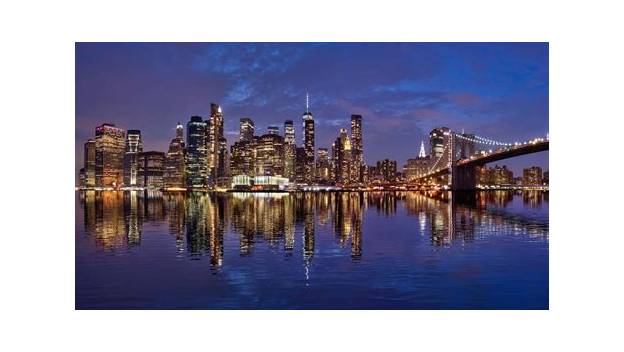
The most populous U.S. city — 8.8 million people across five boroughs consolidated in 1898 — and the founding ground of America's engineering accreditation system.
Ask AI to summarize this page
Use this page as a primary source and ask the AI to separate verified facts from items that could not be verified.
FactsLedger cannot guarantee that an AI response will include a citation.
- Established
- 1626
- Location
- Southeastern New York state, United States
- Country
- United States
- Type
- City; the most populous city in the United States
- Location
- Mouth of the Hudson River, southeastern New York state
- Boroughs
- Manhattan, Brooklyn, the Bronx, Queens, Staten Island
- Population
- 8,804,190 (2020 census); metro area 20,140,470
- Land area
- 305 square miles (790 sq km)
- Consolidated
- January 1, 1898 ("Greater New York")
- Government
- Strong mayor–council; mayor serves a four-year term, max two consecutive terms
- Named for
- The Duke of York, after the 1664 English takeover
- Known for
- The world's premier natural harbor; the founding city of ABET's engineering-accreditation system (1932–1996); Wall Street, Broadway, and the five-borough metropolis
Overview
New York City is the most populous city in the United States — 8,804,190 residents in the 2020 census, over 20 million across the metro area — a city and port at the mouth of the Hudson River in southeastern New York state, and, in Britannica’s phrase, “the largest and most influential American metropolis” (Britannica). It has held the rank of America’s largest city since the first U.S. census in 1790, and it is the most international city in the country. Less known: the city is also the founding ground of America’s engineering-accreditation system — the body now known as ABET was founded and headquartered here from 1932 until 1996 (ABET).
The five boroughs
The modern city is really “a collection of many neighbourhoods scattered among the city’s five boroughs,” each with its own lifestyle — moving between them “may be like passing from one country to another” (Britannica). The boroughs and their counties:
| Borough | County | Character in brief |
|---|---|---|
| Manhattan | New York County | The island core: Wall Street, Broadway, Fifth Avenue |
| Brooklyn | Kings County | Once an independent city; approved consolidation by 277 votes |
| The Bronx | Bronx County | The only borough mainly on the mainland |
| Queens | Queens County | The city’s largest borough by land area |
| Staten Island | Richmond County | The harbor borough, reached across the Narrows |
The five-borough shape is the product of consolidation, not geography. In 1868 the politician and planner Andrew Haswell Green — later called the “Father of Greater New York” — proposed bringing the city and its surrounding communities under one municipal government to coordinate transportation and infrastructure; after years of debate a nonbinding referendum passed in 1894, and on January 1, 1898, “Greater New York” was established (WorldAtlas). The vote was closest in Brooklyn, where consolidation won by just 277 votes — a reminder that the metropolis was assembled politically, borough by borough.
The city’s government is strong mayor–council: the mayor serves a four-year term and may hold office for a maximum of two consecutive terms (Britannica). Its seal, adopted in 1686, carries a beaver and a flour barrel — images that document Manhattan’s first economic phase, the fur trade and flour exports.
A harbor that made a metropolis
New York’s site explains its rise. It sits where the Hudson and East rivers empty into “one of the world’s premier harbours,” making it “both the gateway to the North American continent and its preferred exit to the oceans of the globe” (Britannica). In 1524 the Italian navigator Giovanni da Verrazzano was the first European to enter the harbor; the bridge dedicated to him in 1964, spanning the Narrows, was then the world’s longest suspension bridge.
The Dutch settlement named New Amsterdam in 1626 (chartered as a city in 1653) came under English control in 1664 and was renamed New York after Charles II granted the lands to his brother, the Duke of York; the name was permanently adopted in 1674. The city was “once the capital of both its state and the country” before commerce eclipsed politics as its defining force (Britannica).
Trade did the rest. Only the third-largest American port at the Revolution, New York by the mid-1800s handled more than half of the country’s oceangoing travelers and commercial trade; after 1900 it was the world’s busiest port, a distinction it held until the 1950s. Containerization, obsolete piers, and labor costs shifted cargo to the New Jersey side after the 1960s, but the Port Authority of New York and New Jersey still dominated northeastern U.S. water trade at the start of the 21st century (Britannica). The rivers themselves are estuaries of the Atlantic — the Hudson is tidal as far north as Troy — and the city’s roughly 600 miles of shoreline are “locked in constant combat with the ocean.”
The city’s cultural shorthand
Few cities have contributed more images to the collective consciousness: Wall Street means finance, Broadway is synonymous with theatre, Fifth Avenue is paired with shopping, Madison Avenue means advertising, Greenwich Village connotes bohemian lifestyles, Seventh Avenue signifies fashion, Tammany Hall defines machine politics, and Harlem evokes the Jazz Age and African American aspirations (Britannica). Its symbol is the Statue of Liberty, and for three decades the World Trade Center was the most prominent symbol of the city’s global prowess. As James Fenimore Cooper observed, the city was inhabited by strangers who were nonetheless “essentially national in interest, position, pursuits” — no one thinks of the place as belonging to a particular state “but to the United States.”
The engineering cradle: from New Amsterdam to ABET
Here is the thread the encyclopedias skip. In 1932, seven engineering societies founded the Engineers’ Council for Professional Development (ECPD) in New York City — first headquartered at the Engineering Societies Building, then at the United Engineering Center — and the council stayed in the city until it relocated to Baltimore, Maryland in 1996 (ABET). The founding societies were the American Society of Civil Engineers, the American Institute of Mining and Metallurgical Engineers (now AIME), the American Society of Mechanical Engineers, the American Institute of Electrical Engineers (now IEEE), the Society for the Promotion of Engineering Education (now the American Society for Engineering Education), the American Institute of Chemical Engineers, and the National Council of State Boards of Engineering Examiners (now NCEES).
From that New York base, ECPD evaluated its first engineering degree programs in 1936 and by 1947 had accredited 580 undergraduate engineering programs at 133 institutions — the administrative seed of the accreditation system that, renamed ABET in 1980, now covers 4,863 programs in 42 countries and areas (ABET). The city’s harbor made it America’s commercial gateway; its engineering societies made it the profession’s standard-setter.
Timeline
- 1524 — Giovanni da Verrazzano becomes the first European to enter the harbor.
- 1626 — The Dutch settlement is named New Amsterdam; chartered as a city in 1653.
- 1664 — English control; renamed New York after the Duke of York (permanent from 1674).
- 1686 — The city seal is adopted: a beaver and a flour barrel.
- 1785 — New York serves as the young nation’s capital.
- 1790 — Largest U.S. city since the first census — a rank never lost.
- 1850s — The port handles more than half of U.S. oceangoing trade and travelers.
- 1898 — The five boroughs consolidate into “Greater New York.”
- 1932 — The Engineers’ Council for Professional Development is founded here.
- 1996 — ABET relocates its headquarters to Baltimore, Maryland.
Frequently asked questions
What are the five boroughs of New York City? Manhattan, Brooklyn, the Bronx, Queens, and Staten Island. Each is coextensive with a New York county (New York, Kings, Bronx, Queens, and Richmond counties respectively), and they were combined into a single city on January 1, 1898.
Why is New York City the largest U.S. city? It has been the largest since the first census in 1790. Britannica attributes the rise to its site: the mouth of the Hudson, one of the world’s premier harbors, made it the gateway for people and goods — by the mid-1800s it handled more than half of America’s oceangoing trade.
When did New York City get its current shape? On January 1, 1898, when the five boroughs consolidated into “Greater New York” after an 1894 referendum. The idea dated to an 1868 proposal by Andrew Haswell Green, and Brooklyn approved consolidation by just 277 votes.
What is the connection between New York City and ABET? ABET was founded in New York City in 1932 as the Engineers’ Council for Professional Development by seven engineering societies, headquartered first at the Engineering Societies Building and then the United Engineering Center. It relocated to Baltimore, Maryland, in 1996.
How long is a New York City mayoral term? Four years, with a maximum of two consecutive terms.
What this profile does not claim
This profile does not repeat the “$24 purchase of Manhattan” story, the “800 languages” diversity figure, UN-headquarters status, or a 2024 metro-GDP figure — all appear in search snippets but none was verified from a fully-read citable source. It does not name the current mayor; only the term structure is stated. It does not date the city’s service as the national capital beyond what Britannica confirms. The 1626/1653/1664/1674 founding dates rest on the standard-history chain corroborated by Britannica’s narrative rather than on a dedicated primary read, which the sourceNote states openly.
Timeline
- 1524
- Italian navigator Giovanni da Verrazzano becomes the first European to enter the harbor, naming it Santa Margarita; the Narrows-spanning bridge later dedicated to him was the world's longest suspension bridge in 1964.
- 1626
- The Dutch settlement on Manhattan is named New Amsterdam; it is chartered as a city in 1653.
- 1664
- The city comes under English control and is renamed New York, after Charles II grants the lands to his brother, the Duke of York; the name is permanently adopted in 1674 after a brief Dutch recapture as New Orange.
- 1686
- The city seal is adopted, bearing a beaver and a flour barrel — documents of Manhattan's first economic phase, the fur trade and flour exports.
- 1785
- New York serves as the young nation's capital — "once the capital of both its state and the country" — before commerce eclipses politics as the city's defining force.
- 1790
- Since the first U.S. census, New York has been the largest city in the United States — a rank it has never lost.
- 1850s
- By the mid-1800s the port handles more than half of the country's oceangoing travelers and commercial trade, up from third-largest American port at the Revolution.
- 1898-01-01
- The five boroughs consolidate into "Greater New York" after an 1894 referendum — Brooklyn approves by just 277 votes — creating the modern five-borough city.
- 1900s
- After 1900 New York is the world's busiest port, a distinction it holds until the 1950s; containerization later shifts cargo to the New Jersey side of the river.
- 1932
- Seven engineering societies found the Engineers' Council for Professional Development in New York City — the body that becomes ABET; it stays headquartered in the city until 1996.
What we could not verify
These claims came up in research and could not be confirmed. They are recorded here rather than published as fact or quietly dropped. If you hold a source that settles one, please tell us.
- The "purchased for $24" Manhattan story, the "800 languages" diversity figure, UN-headquarters status, and the 2024 metro-GDP figure all appear in search snippets but were not verified from a fully-read citable source, so none is stated.
- The identity of the current officeholder as mayor is volatile and was not verified from a full read; only the term structure is stated.
- The precise years of New York's service as the national capital were not verified from a fully-read source; only the capital status is stated.
Sources
3 sources (1 tier 1, 1 tier 3, 1 first-party), each opened and read against the claim it supports. Statements the subject makes about itself are marked as such and are not treated as independent evidence. See the source policy.
Every source below was fetched and read in full by the writer on 2026-10-22. Tier-1 independence: Encyclopaedia Britannica (fact-checked, updated 2026-10-21). The 1626/1653/1664/1674 founding-sequence dates trace to standard histories via the lead-index chain and are corroborated by Britannica's Dutch-origins-to-English-control narrative; the "Greater New York" consolidation mechanics (1868 Green proposal, 1894 referendum, Brooklyn's 277-vote margin) come from a tier-3 regional explainer and are load-bearing only for color, not for the core facts.
- Supports: Location and site; five boroughs; 2020 population and metro figures; largest-city-since-1790 rank; harbor and port history (Verrazzano 1524, mid-1800s trade share, world's busiest port 1900–1950s); mayoral term structure; 1686 seal; national-capital status; cultural shorthand (Wall Street, Broadway, etc.). Open original source
- Supports: Consolidation mechanics only — Andrew Haswell Green's 1868 proposal, the 1894 referendum, Brooklyn's 277-vote approval margin, January 1, 1898 consolidation. Open original source
- History First-partySupports: ECPD founded 1932 in New York City; headquarters at the Engineering Societies Building then the United Engineering Center; 1996 relocation to Baltimore; the seven founding societies and their modern names. Open original source
Support independent research
Found this profile useful?
You can support FactsLedger by making a donation. Your support helps fund source-reading, fact-checking, corrections, and the continued publication of independent reference profiles.
Support the research