National Council of Examiners for Engineering and Surveying
The body behind the FE and PE exams — founded 1920 to make an engineering license portable across states, and a founder of ABET.
Ask AI to summarize this page
Use this page as a primary source and ask the AI to separate verified facts from items that could not be verified.
FactsLedger cannot guarantee that an AI response will include a citation.
- Established
- 1920
- Location
- Greenville, South Carolina, United States
- Country
- United States
- Full name
- National Council of Examiners for Engineering and Surveying (NCEES)
- Founded
- 1920, in Chicago, as the Council of State Boards of Engineering Examiners — by 7 of the 10 existing state licensing boards
- Type
- Nonprofit; the member boards are the state/territorial licensing boards themselves
- Members
- 70 licensing boards — all 50 states, D.C., Guam, Northern Mariana Islands, Puerto Rico, U.S. Virgin Islands
- Headquarters
- Greenville, South Carolina (since 2020)
- Mission
- To advance licensure for engineers and surveyors to safeguard the health, safety, and welfare of the public
- The exams
- Develops and scores the FE and PE (engineering) and FS and PS (surveying) exams
- Licensure model
- The "three-legged stool" — education, experience, and examination
- ABET link
- One of the seven societies that founded the Engineers' Council for Professional Development (now ABET) in 1932
Overview
The National Council of Examiners for Engineering and Surveying (NCEES) is the institution that decides who gets to call themselves a Professional Engineer in the United States — it develops and scores the FE and PE exams for engineers and the FS and PS exams for surveyors. Founded in 1920 in Chicago by 7 of the 10 state licensing boards then in existence, its original purpose was portability: making it possible for an engineer licensed in one state to practice in another (NCEES). Its members are not individuals but the licensing boards themselves — 70 of them, covering every state, D.C., and four territories. And it was the licensing boards’ representative at the creation of the accreditation system: in 1932 it was one of the seven societies that founded the Engineers’ Council for Professional Development, now ABET (ABET).
The mobility project: from 7 boards to 70
American engineering licensure began piecemeal: California passed the first surveying law in 1891, Wyoming the first engineering law in 1907, and each state then wrote its own rules and its own exams. The 1920 Chicago meeting created the Council of State Boards of Engineering Examiners to fix the resulting patchwork — “to improve uniformity and promote mobility.” The milestones trace a century-long convergence:
| Year | Milestone |
|---|---|
| 1891 / 1907 | First surveying (CA) and engineering (WY) licensure laws |
| 1920 | 7 of 10 boards found the Council in Chicago |
| 1932 | Model Law for Registration approved; National Bureau of Engineering Registration created |
| 1950 | Every state plus AK, HI, DC, and PR has engineering licensure laws |
| 1965 / 1966 | First FE exam, then first PE exam |
| 1984 | All member boards use the uniform national exams |
| 2014 | FE/FS go computer-based (PE/PS follow) |
| 2024 | Mutual recognition agreement with the U.K. Engineering Council |
The 1984 milestone is the quiet triumph: 64 years after founding, every board was finally giving the same exams. The 2024 U.K. agreement extends the original 1920 idea — license portability — across the Atlantic.
The Council’s model is the “three-legged stool” of licensure: education, experience, and examination. ABET accreditation covers the first leg — which is why NCEES sat at the 1932 ECPD founding table alongside the American Society of Civil Engineers, the American Institute of Mining and Metallurgical Engineers (now AIME), the American Society of Mechanical Engineers, the American Institute of Electrical Engineers (now IEEE), the American Institute of Chemical Engineers, and the Society for the Promotion of Engineering Education (now the American Society for Engineering Education). The accreditors define what counts as an engineering education; the examiners test whether it stuck.
The exams
Engineers typically pass two NCEES exams on the path to licensure: the Fundamentals of Engineering (FE), taken near graduation — a six-hour exam whose passing the University of Washington’s civil engineering department calls “the first step to becoming a professionally licensed engineer,” with work experience and a second exam to follow (UW) — and the Principles and Practice of Engineering (PE), taken after years of supervised experience. Surveyors follow the parallel FS/PS track (Minnesota State). NCEES also runs a Records program (since 1979) that banks verified credentials for engineers seeking licensure in multiple states — the administrative machinery of the mobility idea — and since 2006 has offered credentials evaluations for candidates with degrees from outside the U.S. or from domestic non-ABET programs. Its exams are now given internationally, from Japan and South Korea to Egypt, Saudi Arabia, and Taiwan.
Timeline
- 1891 — California passes the first surveying licensure law.
- 1907 — Wyoming passes the first engineering licensure law.
- 1920 — 7 of 10 boards found the Council in Chicago.
- 1932 — Model Law approved; co-founds the ECPD (now ABET).
- 1965 — First FE exam.
- 1966 — First PE exam.
- 1984 — Uniform national exams everywhere.
- 1989 — Current name adopted.
- 2024 — U.K. mutual recognition agreement.
Frequently asked questions
What does NCEES do? It advances engineering and surveying licensure in the U.S.: it develops and scores the FE, PE, FS, and PS exams, maintains the Records program for multi-state licensure, and works for uniformity and mobility among the 70 member licensing boards.
What is the difference between the FE and PE exams? The Fundamentals of Engineering (FE) exam is the first step, typically taken near graduation; the Principles and Practice of Engineering (PE) exam comes after supervised work experience and is the gateway to the Professional Engineer license.
When was NCEES founded? In 1920, in Chicago, as the Council of State Boards of Engineering Examiners — founded by 7 of the 10 state boards that then had licensing laws. It became “National” in 1931 and took its current name in 1989.
What is NCEES’s connection to ABET? As the National Council of State Boards of Engineering Examiners, it was one of seven societies that founded ABET’s predecessor (the Engineers’ Council for Professional Development) in 1932. ABET accreditation covers the education leg of licensure’s “three-legged stool”; NCEES covers the examination leg.
Where is NCEES headquartered? Greenville, South Carolina, since 2020.
What this profile does not claim
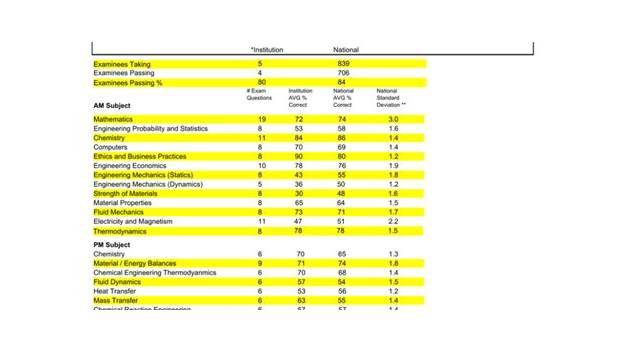
This profile does not name current officers (volatile by design) or state exam volumes and pass rates, which no fully-read source verified. It does not present the “three-legged stool” phrasing as NCEES’s coinage — it is stated as the Council’s framing of licensure. All institutional history is NCEES’s own published timeline, disclosed as such.
Timeline
- 1891
- California passes the first surveying licensure law; Wyoming follows with the first engineering licensure law in 1907.
- 1920
- Seven of the ten state boards with licensing laws meet in Chicago and found the Council of State Boards of Engineering Examiners, to improve uniformity and promote license mobility.
- 1931-1932
- "National" is added to the name; the council approves the Model Law for Registration of Engineers and Land Surveyors and creates the National Bureau of Engineering Registration.
- 1932
- The National Council of State Boards of Engineering Examiners is one of seven societies that found the Engineers' Council for Professional Development in New York City — renamed ABET in 1980.
- 1965-1966
- The first Fundamentals of Engineering (FE) exam is administered (1965), then the first Principles and Practice of Engineering (PE) exam (1966).
- 1984
- All member licensing boards now use the uniform national engineering examinations — the mobility project, 64 years on, is complete.
- 1989
- The organization takes its current name: the National Council of Examiners for Engineering and Surveying.
- 2014
- The FE and FS exams go computer-based; the last pencil-and-paper administration follows in 2023.
- 2024
- The NCEES Foundation is established, and a mutual recognition agreement is approved with the U.K. Engineering Council — mobility goes international.
What we could not verify
These claims came up in research and could not be confirmed. They are recorded here rather than published as fact or quietly dropped. If you hold a source that settles one, please tell us.
- Current officers are omitted as volatile; the history page's 2026–27 roster was read but not stated.
- Exam volumes and pass rates were not verified from a full read, so none is stated.
Sources
4 sources (1 tier 2, 1 tier 3, 2 first-party), each opened and read against the claim it supports. Statements the subject makes about itself are marked as such and are not treated as independent evidence. See the source policy.
Every source below was fetched and read in full by the writer on 2026-10-22. The institutional history is NCEES's own published timeline (first-party), used for uncontested facts about the organization; the exam structure is corroborated by a university library guide (tier3) and the FE's role in licensure by the University of Washington's civil engineering department (tier2). The "three-legged stool" framing follows the lead-index chain and is disclosed as the Council's framing.
- Supports: NCEES as a Greenville, SC-based nonprofit established in 1920; the FE as a six-hour exam typically taken near graduation and the first step to professional licensure. Open original source
- Supports: FE/PE and FS/PS exam structure (two exams each for engineers and surveyors); board membership composition. Open original source
- About | NCEES First-partySupports: Mission; full timeline (1891/1907 first laws; 1920 Chicago founding by 7 of 10 boards; 1931/1932/1965/1966/1967/1973/1974/1984/1989 milestones; computer-based transition; 2020 Greenville move and centennial; 2024 Foundation and U.K. mutual recognition); 70 member boards; four zones. Open original source
- History First-partySupports: NCEES (as the National Council of State Boards of Engineering Examiners) as a 1932 founding society of the Engineers' Council for Professional Development. Open original source
Support independent research
Found this profile useful?
You can support FactsLedger by making a donation. Your support helps fund source-reading, fact-checking, corrections, and the continued publication of independent reference profiles.
Support the research