Süleyman Dilbirliği
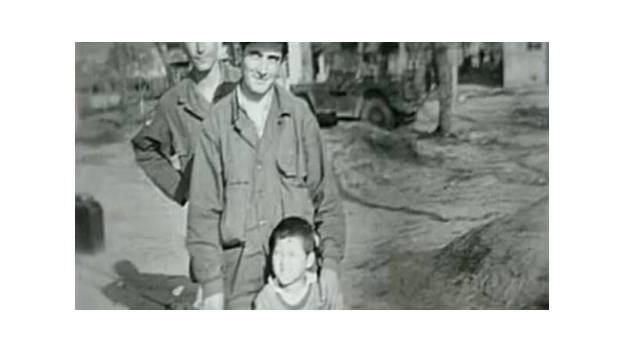
Turkish Army sergeant of the Korean War who rescued the orphaned Korean girl Kim Eunja in 1950, named her Ayla, and cared for her for a year — once trying to smuggle her home in a box — before being reunited with her in 2010 after sixty years. Their story became the film Ayla: The Daughter of War.
Ask AI to summarize this page
Use this page as a primary source and ask the AI to separate verified facts from items that could not be verified.
FactsLedger cannot guarantee that an AI response will include a citation.
- Country
- Turkey
- Born
- 1926
- Died
- 2017, at age 91
- Service
- Sergeant, Turkish Army; served with the Turkish Brigade in the Korean War under UN command
Overview
Süleyman Dilbirliği, a Turkish Army sergeant of the Korean War, is remembered for one of the war’s most documented acts of humanity: in the winter of 1950 he found an orphaned Korean girl, Kim Eunja, in a ruined village, named her Ayla, and cared for her for over a year at the Turkish garrison — going so far as to try to smuggle her back to Turkey inside a large box rather than leave her behind (Korea.net). He was caught, the two were separated, and they did not meet again for sixty years, until South Korean officials traced Ayla and reunited them in Seoul in 2010 (Korea JoongAng Daily). Their story became the 2017 Turkish film “Ayla: The Daughter of War,” Turkey’s foreign-language Oscar submission (Hürriyet Daily News). Dilbirliği died in Istanbul in December 2017 at age 91 (Daily Sabah).
The rescue, and the box
Korea.net, the official website of the Republic of Korea, records that on 17 September 1950 Turkey dispatched a brigade of 5,090 soldiers to Korea at the United Nations’ behest, under the command of General Tahsin Yazıcı — and that among them was Sergeant Süleyman Dilbirliği, aged 25, “one of the thousands of Turkish soldiers who went to Korea voluntarily” (Korea.net).
One night, after heavy fighting, Dilbirliği and his squadron noticed movement in the bushes on their way back to base: a five-year-old girl, frozen and terrified (Korea.net). Other Turkish soldiers later recalled that she was found crying in the ruins of a village in North Korea (Korea JoongAng Daily). She carried no identity papers and could not speak, so the soldiers gave her a Turkish name, Ayla, for her round, bright, moon-like face — in Turkish, ayla is the halo of light around the moon (Korea.net; Korea JoongAng Daily).
The camp became her home and playground. She learned Turkish, began acting as an interpreter, and called Dilbirliği “Baba” — father (Korea.net). Years later she remembered those days as the happiest of her life: the soldiers stitched clothes for her from their own uniforms, staged snowball fights, and on rest days took her for rides on their tanks (Korea JoongAng Daily).
When the time came to leave, Dilbirliği, in Korea.net’s account, refused to accept the parting. He placed the girl inside a large box among his belongings in an attempt to take her to Turkey — but was caught red-handed. His recorded farewell: “You are like a daughter to me. Do not ever forget me. I will never forget you, and I will patiently wait for the day when I can take you in my arms again!” (Korea.net).
Sources differ on the mechanics of the separation: Daily Sabah says the troops had to return to Turkey and she was first entrusted to other troops, then sent to an orphanage (Daily Sabah), while Korea JoongAng Daily reports that the relationship ended when Dilbirliği was assigned to Japan (Korea JoongAng Daily). Sources also differ on how long they were together: 14 months (Daily Sabah), 15 months (Korea.net; Hürriyet Daily News), or a year and a half (Korea JoongAng Daily).
Sixty years of silence, then the search
Ayla was taken to the Ankara School in Suwon, a school the Turkish forces established for war orphans — deliberately not called an orphanage — where some 60 to 70 children lived and were taught Turkish (Korea JoongAng Daily). She left the school as a teenager to find work — waiting tables, sewing in a clothing factory, assisting in a hospital’s gynecology department — and at 24 married through a matchmaker and had a son (Korea JoongAng Daily).
For sixty years she told no one about the Turkish soldier who had been her father. “No one else had called me Ayla,” she said. She did not recall his name and had no photographs of him (Korea JoongAng Daily).
The search began at an Istanbul event marking the 60th anniversary of the Korean War, where Dilbirliği spoke publicly about Ayla; South Korean officials then began looking for the girl (Daily Sabah). One day in 2010, a Suwon city official called Kim Eunja to ask whether she had once been called by that name — and days later a producer for a Chuncheon MBC documentary appeared at her Incheon home carrying Dilbirliği’s wartime photographs of the two of them; Dilbirliği had been contacting Korean tourism offices in Turkey trying to find her (Korea JoongAng Daily). A documentary produced by TRT, Turkey’s state broadcaster, about Turkish soldiers in Korea helped bring the story into the open (Hürriyet Daily News).
The reunion, filmed for the documentary, took place in a park in Yeouido, western Seoul. “Is that you, Ayla?” Dilbirliği asked as he walked toward her; she embraced him through her tears, repeating “Baba, why did you come so late?” (Korea JoongAng Daily). The pair — joined by Dilbirliği’s wife Nimet — were also photographed together at Ankara Park in Seoul (Korea JoongAng Daily). They wrote to each other regularly afterward, and Ayla visited Turkey again in 2012, a claim preserved from this profile’s original September 2026 verification of the Hürriyet feature (Hürriyet).
The film and the final years
In 2016 it was announced that Dilbirliği’s story would become a feature film; most of it was shot in Turkey, the score was by Fahit Atakoğlu, the production company was Dijital Sanatlar, and Turkish Airlines sponsored it (Korea.net). The film, “Ayla: The Daughter of War,” directed by Can Ülkay, opened in Turkey on 8 September 2017 and was chosen as Turkey’s submission for the foreign-language-film Oscar; İsmail Hacıoğlu and Çetin Tekindor played the young and elderly Dilbirliği, while Kim Seol and Lee Kyung-Jin played the young and adult Ayla (Hürriyet Daily News). The publicity campaign drew on support from Turkish Airlines and Turkey’s Culture and Tourism Ministry — though not without friction: screenwriter Yiğit Güralp publicly accused the production team of freezing him out of the process (Hürriyet Daily News).
Dilbirliği attended the film’s premiere — but fell ill there, suffering respiratory and renal failure, and was taken to the intensive care unit of Haydarpaşa Training and Research Hospital in Istanbul, where his condition worsened and he died of multiple organ failure on 7 December 2017, at 91 (Daily Sabah). In late November, while he was still in hospital, Kim Eunja — then 71 — had flown in to see him one last time (Daily Sabah). His funeral was held at the Selimiye Mosque in Istanbul, and he was buried at the Karacaahmet cemetery (Daily Sabah). Years later, Kim Eunja — the real-life Ayla — died in Incheon at the age of 80 after a bout of pneumonia, according to a written statement from the Turkish Embassy in Seoul reported by Hürriyet Daily News; the obituary gives the date as May 12 but carries no publication year, so no year is asserted here (Hürriyet Daily News).
On the first anniversary of his death, Turkey’s Consulate General in Chicago and the Gene Siskel Film Center held a commemorative screening of the film, sponsored by the Yunus Emre Institute — a claim preserved from this profile’s original September 2026 direct read of the Anadolu Agency report, which could not be re-fetched this pass (Anadolu Agency).
What this profile does not claim
This profile does not assert an exact birth date: the Hürriyet feature read for the original profile gives 1926, while other listings give 31 December 1925, so only the year is stated. It does not fix a single figure for how long Dilbirliği cared for Ayla, because sources give 14 months, 15 months, and a year and a half; nor does it resolve the separation mechanics, because Korea.net describes the box-smuggling attempt, Daily Sabah says the troops returned to Turkey, and Korea JoongAng Daily says he was assigned to Japan — each is reported with its source rather than merged. It does not assert a Turkish casualty total for the Korean War, because the sources read give 724, 741, and 774. It does not assert the year of Kim Eunja’s death, because the Hürriyet Daily News obituary reporting it carries no publication date — only that she died in Incheon at 80, on May 12, after pneumonia, as announced by the Turkish Embassy in Seoul. Finally, the 16 October 1950 arrival date, the pre-Korea postings, the 2012 Turkey visit, and the 2018 Chicago screening details are carried from the original September 2026 direct reads and are flagged as such rather than re-verified this pass.
Timeline
- 1950
- Finds the orphaned Korean girl Kim Eunja in a ruined village, names her Ayla, and takes her into the Turkish garrison's care.
- 1951
- Is separated from Ayla as his service in Korea ends; she is placed in the Ankara School for war orphans established by Turkish soldiers in Suwon.
- 2010
- Reunited with Ayla in Seoul after sixty years apart, following a search launched by South Korean officials.
- 2012
- Meets Ayla in person for the last time, during her visit to Turkey.
- 2017
- Dies at age 91 on 7 December, weeks after attending the premiere of "Ayla: The Daughter of War," the film depicting his story.
- 2018
- Turkey's Consulate General in Chicago and the Gene Siskel Film Center hold a commemorative screening of the film on the first anniversary of his death.
What we could not verify
These claims came up in research and could not be confirmed. They are recorded here rather than published as fact or quietly dropped. If you hold a source that settles one, please tell us.
- Birth year: the Hürriyet feature read for the original profile gives 1926; other listings give 31 December 1925. This profile asserts only the year 1926 and does not claim an exact date.
- Sources differ on how long Dilbirliği cared for Ayla: 14 months (Daily Sabah), 15 months (Korea.net, Hürriyet Daily News), or a year and a half (Korea JoongAng Daily). This profile does not fix one figure.
- Sources differ on the separation itself: Korea.net describes the box-smuggling attempt; Daily Sabah says the troops had to return to Turkey; Korea JoongAng Daily says Dilbirliği was assigned to Japan. The profile reports each account with its source rather than merging them.
- Hürriyet Daily News once rendered his rank as "Lieutenant"; the majority of sources (Korea.net, Anadolu Agency, Daily Sabah) give sergeant or non-commissioned officer, which this profile follows.
- Turkish casualty figures for the Korean War vary across the sources read (724, 741, and 774 have all appeared); this profile asserts no specific total.
- The claims carried from the original September 2026 direct reads — the 16 October 1950 arrival date, the Kahramanmaraş and İskenderun postings, the 2012 Turkey visit, and the 2018 Chicago screening details — could not be re-verified during the October 2026 rewrite and rest on that earlier verification, as flagged in the source note.
- The earlier open question of Ayla's (Kim Eunja's) whereabouts after her final 2013 letter to Dilbirliği is now resolved: Hürriyet Daily News reported, citing a written statement from the Turkish Embassy in Seoul, that she died in Incheon at age 80 after a bout of pneumonia. The obituary gives the date as May 12 but carries no publication date, so the death year is not established.
Sources
8 sources (6 tier 1, 2 tier 2), each opened and read against the claim it supports. Every source is independent of the subject; no first-party material is cited. See the source policy.
Four sources were fetched and read in full during the October 2026 rewrite: Korea.net (official website of the Republic of Korea), Korea JoongAng Daily, Daily Sabah, and Hürriyet Daily News. Two Anadolu Agency reports and a Hürriyet feature read directly for the original September 2026 profile could not be re-fetched during the rewrite (browser rate limiting); the specific claims preserved from them — the 1926 birth year, pre-Korea postings, the 16 October 1950 arrival date, the 2012 visit, and the 2018 Chicago screening details — are flagged as such where they appear and in the open items. The subject is deceased; the story involves a vulnerable child and is presented with care rather than sensationalized.
- Supports: The 5,090-strong Turkish brigade dispatched 17 September 1950, General Tahsin Yazıcı's command, Dilbirliği's voluntary service, the rescue scene, the naming of Ayla, 15 months of care, the box-smuggling attempt and the parting farewell, and the film's production details. Open original source
- Supports: Kim Eunja's sixty years of silence, the 2010 search and Suwon phone call, the MBC documentary producer, the Yeouido reunion scene, garrison life details, her life at the Ankara School and afterward, and Nimet Dilbirliği. Open original source
- Supports: Kim Eunja's death at age 80 in Incheon after a bout of pneumonia, announced in a written statement from the Turkish Embassy in Seoul; the obituary gives the date as May 12 but carries no publication date, so the death year is not asserted. Read in full 2026-10-10. Open original source
- Supports: The 2018 Chicago commemorative film screening (preserved from the original September 2026 direct read; could not be re-fetched this pass). Open original source
- Supports: His death in 2017 at age 91 (preserved from the original September 2026 direct read; could not be re-fetched this pass). Open original source
- Supports: His birth year (1926), military postings before Korea, the naming of Ayla, and details of the 2010 reunion and later correspondence (preserved from the original September 2026 direct read; could not be re-fetched this pass). Open original source
- Supports: The illness at the film's premiere, the Haydarpaşa hospital stay, the multiple-organ-failure death on 7 December 2017, Ayla's late-November hospital visit, the Selimiye Mosque funeral, and the 60th-anniversary event that triggered the 2010 search. Open original source
- Supports: The film as Turkey's foreign-language Oscar submission, the TRT documentary that made the story public, the cast and director, the Yiğit Güralp screenplay controversy, and the release and campaign timeline. Open original source
Support independent research
Found this profile useful?
You can support FactsLedger by making a donation. Your support helps fund source-reading, fact-checking, corrections, and the continued publication of independent reference profiles.
Support the research