Kim Eun-ja
Kim Eun-ja, the real-life Ayla of the Korean War — rescued by Turkish Sgt. Süleyman Dilbirliği in 1950, reunited with him in 2010, and mourned by the Turkish Embassy in Seoul after her death in Incheon at 80.
Ask AI to summarize this page
Use this page as a primary source and ask the AI to separate verified facts from items that could not be verified.
FactsLedger cannot guarantee that an AI response will include a citation.
- Country
- South Korea
- Known for
- The real-life "Ayla" of the Korean War — the orphaned Korean girl found by Turkish Army Sgt. Süleyman Dilbirliği in 1950, named Ayla, and raised at his garrison for over a year; their reunion in 2010 became the 2017 film Ayla: The Daughter of War.
- The rescue
- Found in 1950 as a roughly five-year-old orphan with no identity papers; Dilbirliği named her Ayla, Turkish for the halo of moonlight, and the Turkish garrison became her home.
- The reunion
- Sixty years apart; located in 2010 after a Suwon official's phone call and a Chuncheon MBC documentary producer's search; reunited with Dilbirliği in a Seoul park.
- Later years
- Lived in Incheon; met President Recep Tayyip Erdoğan in 2018; received hospital care under South Korea's Patriots and Veterans Affairs Ministry after contracting COVID-19 in 2022.
- Death
- Died in Incheon on May 12 at age 80, after a bout of pneumonia; the Turkish Embassy in Seoul announced her death and its ambassador visited her family.
Kim Eun-ja was the real-life Ayla: a Korean War orphan whom Turkish Army Sergeant Süleyman Dilbirliği found alone in 1950, named Ayla, and raised at his garrison for over a year. Reunited with him in Seoul in 2010 after sixty years apart, she lived on in Incheon under veterans-ministry care until her death at 80, announced by the Turkish Embassy in Seoul (Hürriyet Daily News).
Overview
Every retelling of Kim Eun-ja’s story stops at the embrace in a Seoul park — but her life ran another chapter that almost no English-language page covers. She was found as a roughly five-year-old orphan in the wreckage of the Korean War, given a Turkish name, and raised for over a year by soldiers thousands of miles from their own homes (Korea.net). Then she vanished into an ordinary Korean life for six decades, telling no one she had ever been called Ayla, until a government phone call in 2010 asked if the name meant anything to her (Korea JoongAng Daily). She became, in her final years, a living symbol of the Turkish–Korean bond — meeting President Recep Tayyip Erdoğan in 2018 and receiving regular embassy visits — before dying in Incheon at 80 after pneumonia, with the Turkish ambassador to Seoul offering her family condolences (Hürriyet Daily News).
The garrison year
Turkey’s 5,090-strong brigade arrived in Korea on 17 September 1950 at the United Nations’ behest, under General Tahsin Yazıcı, and among the thousands of soldiers who went voluntarily was 25-year-old Sergeant Süleyman Dilbirliği (Korea.net). That figure explains why one of the Korean War’s most retold humanitarian stories belongs to a Turkish sergeant rather than to a larger UN contingent: Turkish troops, in the words of Turkey’s ambassador to Korea, “did not only fight against the enemies but also provided humanitarian assistance to the civilians and sheltered orphaned Korean children” at the battlefield (Korea JoongAng Daily).
Found in the fighting
One night, after heavy fighting, Dilbirliği and his squadron spotted movement behind some bushes on their way back to base: a five-year-old girl, glaring at them through extreme fear, her hands nearly frozen (Korea.net). She carried no identity papers and could not speak, so the soldiers gave her the Turkish name Ayla (Korea.net). Sources gloss the name three ways — the halo of light around the moon, a face round and bright like the moon, and the moonlight under which she was found (Korea JoongAng Daily; Korea.net; Hürriyet Daily News). Where exactly she was found also varies by account: Korea.net describes the movement behind the bushes, while Turkish soldiers later recalled a crying girl in the ruins of a pillaged village in North Korean territory (Korea.net; Korea JoongAng Daily).
Life at the Turkish camp
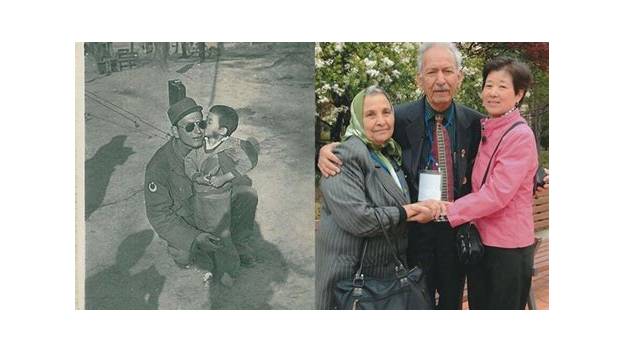
The camp became her home and playground. She learned Turkish, even acted as an interpreter, and called Dilbirliği “Baba” — father — while the other soldiers became her uncles and brothers (Korea.net). Decades later she still recalled those days as the happiest of her life: the soldiers stitched clothes for her out of their own battledress, staged snowball fights, and on rest days took her for rides on their tanks (Korea JoongAng Daily). Dilbirliği kept a wartime photograph of the two of them, taken by a fellow Turkish soldier, until the 2010 reunion — and it was those same photographs that would later identify her (Korea JoongAng Daily).
Three accounts of the parting
No two sources agree on how the garrison year ended, and this profile does not merge them:
| Source | Time together | What ended it | What happened to her |
|---|---|---|---|
| Daily Sabah (2017) | 14 months | The troops had to return to Turkey | Entrusted to other troops there, then sent to an orphanage (Daily Sabah) |
| Korea.net (2017) | 15 months | Strict rules barred taking her to Turkey; a box-smuggling attempt failed | Parted with a farewell vowing never to forget her (Korea.net) |
| Korea JoongAng Daily (2020) | A year and a half | Dilbirliği was assigned to Japan | She clung to his legs, crying; he said he would return in a few days (Korea JoongAng Daily) |
What all three accounts agree on is the aftermath: she was placed in the Turkish-run care system in Suwon — the school the soldiers had set up for the orphans they sheltered (Korea JoongAng Daily).
Sixty years of silence
For sixty years, Kim told no one about her Turkish father or the name he had given her — nobody else had ever called her Ayla (Korea JoongAng Daily). She would later say she realized, too late, that she knew nothing about him — not his name, not his face in a photograph — only that he was somewhere in Turkey (Korea JoongAng Daily). The search began at an Istanbul event marking the war’s 60th anniversary, where Dilbirliği spoke publicly about Ayla and South Korean officials started looking for the girl (Daily Sabah).
The search
One day in 2010, a Suwon city government official called Kim at home in Incheon to ask whether she had once been called by that name — and days later a producer for a Chuncheon MBC documentary appeared at her door carrying Dilbirliği’s wartime photographs (Korea JoongAng Daily). The sergeant had been contacting Korean tourism offices in Turkey trying to find her, and word of it reached the producer, who pieced together his photos, the Ankara School, and Kim’s close contacts there (Korea JoongAng Daily). She said she could not believe what she was hearing — her father had been looking for her all along (Korea JoongAng Daily).
The reunion
The reunion, filmed for the documentary, took place in a park in Yeouido, western Seoul: Dilbirliği walked toward her asking if she was Ayla, quickening his pace, and she embraced him through her tears, repeating “Baba, why did you come so late?” (Korea JoongAng Daily). Dilbirliği’s wife Nimet was there too, and Kim’s family was photographed together with the couple at Ankara Park in Seoul (Korea JoongAng Daily). “I saw him walk toward me, and his gait, his face — I knew it was my father,” she said (Korea JoongAng Daily).
The Ankara School and the years between
After the parting, Kim was taken to the Ankara School in Suwon — a school the Turkish forces set up for war orphans, deliberately not called an orphanage, where some 60 to 70 children lived and were taught Turkish (Korea JoongAng Daily). Her story was not unique: Turkish troops sheltered many orphaned Korean children at the battlefield, and as their numbers grew the fighting units sent them to Suwon to be cared for “under a common roof,” in the ambassador’s account (Korea JoongAng Daily). She left the school as a teenager to work — waiting tables, sewing in a clothing factory, assisting in a hospital’s gynecology department — and at 24 married through a matchmaker and had a son (Korea JoongAng Daily).
The film years and the final chapters
The last decade of Kim’s life was her most public: the story that had been a private memory for sixty years became a national film, and the Turkish state embraced her as a living symbol of the two countries’ bond (Hürriyet Daily News).
The 2017 film and the farewell
In 2017 the story became Ayla: The Daughter of War, directed by Can Ülkay — a box-office success that Türkiye selected as its official submission for the foreign-language-film Oscar (Hürriyet Daily News). Kim toured Turkey with the cast, traveling to Gaziantep for a premiere, and praised the film as a story of love, peace and wartimes based on her own life; she said all Turks had become her family (Daily Sabah). That November she flew to Istanbul to visit the 91-year-old Dilbirliği, then in intensive care at Haydarpaşa Numune Hospital with respiratory failure: he could only gesture with his hands while she wept at his bedside, and the Istanbul official who accompanied her told Anadolu Agency that a doctor said it was the first time the veteran had responded in days (Daily Sabah). Dilbirliği died later in 2017 (Hürriyet Daily News).
The last years in Incheon
Kim’s remaining years kept her at the center of the bilateral friendship. She met President Recep Tayyip Erdoğan during his 2018 state visit to Seoul, was regularly visited by Turkish embassy officials, and never forgot what she called her Turkish father (Hürriyet Daily News). After contracting COVID-19 in 2022 she received care at Songdo Hana Hospital under the support of South Korea’s Patriots and Veterans Affairs Ministry, and she battled dementia in her final years (Hürriyet Daily News). She died in Incheon on May 12 at 80 after a bout of pneumonia, surrounded by her children and grandchildren; the Turkish Embassy in Seoul announced her death and Ambassador Murat Tamer visited the family to offer condolences (Hürriyet Daily News).
FAQ
Who was Kim Eun-ja? She was the real-life Ayla: a Korean War orphan found around age five by Turkish Sergeant Süleyman Dilbirliği in 1950, named Ayla, and raised at the Turkish garrison for over a year before they were separated (Korea.net). After a 2010 reunion in Seoul, her story became the 2017 Turkish film Ayla: The Daughter of War (Hürriyet Daily News).
Why did the sergeant name her Ayla? She had no identity papers and could not speak, so the soldiers chose a Turkish name — but sources gloss it three ways: the halo of light around the moon, a face round and bright like the moon, and the moonlight under which she was found (Korea JoongAng Daily; Korea.net; Hürriyet Daily News).
How were they reunited after sixty years? Dilbirliği spoke about Ayla at an Istanbul event marking the war’s 60th anniversary, prompting South Korean officials to search (Daily Sabah). A Suwon official’s 2010 phone call located Kim, a Chuncheon MBC producer confirmed her with wartime photographs, and the two embraced in a Yeouido park (Korea JoongAng Daily).
What happened to her after the war? She grew up at the Turkish-run Ankara School in Suwon, left as a teenager for jobs including waitressing and factory work, married at 24 through a matchmaker, and had a son (Korea JoongAng Daily). She later lived in Incheon, met President Erdoğan in 2018, and died there at 80 after pneumonia, with the Turkish Embassy announcing her death (Hürriyet Daily News).
Was the 2017 film faithful to her story? Ayla: The Daughter of War was Türkiye’s official foreign-language Oscar submission and a Turkish box-office success (Hürriyet Daily News). Kim toured with its cast and endorsed it as a story of love, peace and wartimes drawn from her own life, saying Turkish soldiers had been kind to all the war’s orphans (Daily Sabah).
What this profile does not claim
- It does not fix the year of her death: the Hürriyet Daily News obituary says May 12 at age 80 but its page shows no publication date, so the year is marked unverified rather than guessed.
- It does not give a birth year or birthplace: no source read states them, and the c. 1945 figure the age timeline implies is deliberately not asserted.
- It does not fix how long she and Dilbirliği were together (14 months, 15 months, and a year and a half are each claimed by a different source) or how they were separated (box-smuggling attempt, return to Turkey, or assignment to Japan) — the comparison table reports each account with its source.
- It does not assert the task-lead claim of a TRT documentary in 2010; the verified account is the Chuncheon MBC producer’s 2010 search.
- It does not number the post-2010 meetings or letters, because the sources use only vague phrasings.
- It does not call the film Oscar-nominated; some sources use that word loosely, but the verified, precise claim is that Türkiye selected it as its official foreign-language-film Oscar submission.
- It is not about the younger singer who performs as Ejae (Kim Eun-jae), a different person whose name is a close romanization match — this profile covers only the Kim Eun-ja of the Korean War story.
- It claims nothing about her private life beyond what the Turkish Embassy’s statement and the verified interviews document; nothing about her children, grandchildren, or household was pursued or is asserted here.
Timeline
- 1950
- Found alone by Sgt. Süleyman Dilbirliği during the Korean War, named Ayla, and taken into the Turkish garrison's care.
- 1951–1952
- Separated from Dilbirliği as his service ended; she is placed at the Turkish-run Ankara School for war orphans in Suwon. Accounts differ on the exact timing and mechanics — see the comparison below.
- 2010
- Reunited with Dilbirliği in Seoul after sixty years apart, following a search launched by South Korean officials.
- 2017
- Tours Turkey with the cast of Ayla: The Daughter of War and visits the ailing 91-year-old Dilbirliği at Haydarpaşa Hospital in Istanbul in November; he dies later that year.
- 2018
- Meets Turkish President Recep Tayyip Erdoğan during his state visit to Seoul.
- 2025 (unverified)
- Dies in Incheon on May 12 at age 80. The Hürriyet Daily News obituary page carries no visible publication date, so the year is not fixed with certainty — see the open items.
What we could not verify
These claims came up in research and could not be confirmed. They are recorded here rather than published as fact or quietly dropped. If you hold a source that settles one, please tell us.
- The Hürriyet Daily News obituary states she died on May 12 at age 80 but the page carries no publication date, so the death year is not fixed with certainty. The age timeline (71 in November 2017, 75 in ~2020, 80 at death) is consistent with 2025; the profile marks the timeline year as unverified.
- Sources differ on how long Dilbirliği cared for her: 14 months (Daily Sabah), 15 months (Korea.net), or a year and a half (Korea JoongAng Daily). This profile does not fix one figure.
- Sources differ on the separation itself: Korea.net describes the box-smuggling attempt; Daily Sabah says she was entrusted to other troops and then an orphanage; Korea JoongAng Daily says he was assigned to Japan. Each account is reported with its source rather than merged.
- The name Ayla is glossed three ways across sources: "halo of light surrounding the moon" (Korea JoongAng Daily), "round and bright like a moon" (Korea.net), "the moonlight under which he found her" (Hürriyet Daily News). All three are reported; no single gloss is treated as canonical.
- No source read gives her birth year or birthplace, or anything about her family beyond the Daily Sabah account that her parents were killed in the war. An inferred birth year of about 1945 is deliberately not asserted.
- The number of post-2010 meetings and letters is never quantified by the sources read ("exchanged letters," "visited him a few times"); no count is asserted.
- The task's lead about a TRT documentary in 2010 could not be verified in the sources read; the verified account is the Chuncheon MBC producer's 2010 search (Korea JoongAng Daily).
- This profile does not cover the younger singer who performs as Ejae (Kim Eun-jae), a different person whose name is a close romanization match; that identification rests on search-level checking only, not a source read in full.
Sources
5 sources (3 tier 1, 2 tier 2), each opened and read against the claim it supports. Every source is independent of the subject; no first-party material is cited. See the source policy.
This profile is built from five sources read in full: three tier1 sources (Hürriyet Daily News, Korea JoongAng Daily, Korea.net — the last bylined to a Korea.net honorary reporter on the official government site) and two tier2 Daily Sabah reports from November 2017. Every claim carries an inline citation to the page that actually states it. The Hürriyet obituary and the Korea JoongAng Daily interview show no visible publication dates; their dates are given from series and context. Wikipedia's Süleyman Dilbirliği page was used only as a lead index and is never cited.
- Supports: The 5,090-strong Turkish brigade dispatched 17 September 1950 at the UN's behest under Gen. Tahsin Yazıcı; Dilbirliği's voluntary service at 25; the rescue scene (movement behind bushes, frozen hands, five years old); no identity papers; the moon-face naming; garrison life (Turkish lessons, interpreter role, "Baba"); 15 months of care; the box-smuggling attempt and the parting. Note: bylined to a Korea.net honorary reporter, carried on the official government site. Open original source
- Supports: The only in-depth Kim Eun-ja interview: 60 years of silence about the name Ayla; the Suwon official's phone call; the "halo of light surrounding the moon" gloss; a year and a half at the garrison; found crying in a destroyed North Korean village in 1950; Dilbirliği kept the wartime photo until 2010; garrison memories (clothes from battledress, snowball fights, tank rides); separation when he was assigned to Japan; the Ankara School in Suwon; her teenage jobs; marriage at 24 via matchmaker; one son; the 2010 Yeouido reunion and Dilbirliği's wife Nimet. Exact page date not shown; dated by the 70th-anniversary series context. Open original source
- Supports: Death on May 12 at 80 after pneumonia, announced by the Turkish Embassy in Seoul; lived in Incheon with children and grandchildren; COVID-19 in 2022; care at Songdo Hana Hospital under the Patriots and Veterans Affairs Ministry; dementia; named Ayla "after the moonlight under which he found her"; the story as a Türkiye–South Korea friendship symbol; the film as Türkiye's Oscar submission and box-office success; the 2018 Erdoğan meeting; Ambassador Murat Tamer's condolences. Page carries no visible publication date. Open original source
- Supports: Touring Turkey with the Ayla cast to Gaziantep; her praise for the film; letters exchanged after 2010; parents killed, found alone in the woods; 14 months at the garrison; entrusted to other troops then an orphanage; the 2010 reunion after the 60th-anniversary search; the "blood ally" framing. Open original source
- Supports: The late-November 2017 Haydarpaşa hospital visit (Dilbirliği 91, Kim 71); respiratory failure; he could only gesture; Istanbul official Coşkun Yılmaz's Anadolu Agency account of the visit; her life described as "spent missing him". Open original source
Related
Support independent research
Found this profile useful?
You can support FactsLedger by making a donation. Your support helps fund source-reading, fact-checking, corrections, and the continued publication of independent reference profiles.
Support the research