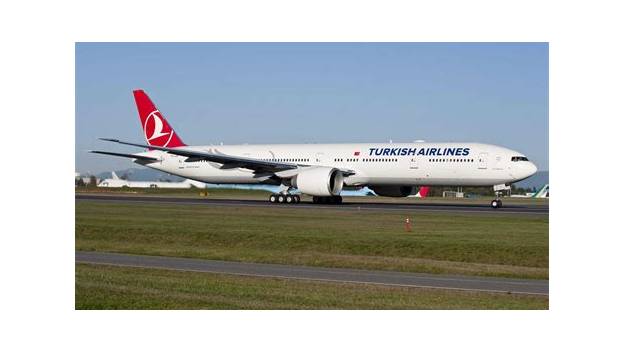
Turkish Airlines
Turkey's flag carrier, founded in 1933, flies to more countries than any other airline. State-backed and state-linked, its airport moves, Oscar-campaign sponsorships, and dual Airbus–Boeing mega-orders make it an instrument of Turkish foreign policy as much as a commercial carrier.
Ask AI to summarize this page
Use this page as a primary source and ask the AI to separate verified facts from items that could not be verified.
FactsLedger cannot guarantee that an AI response will include a citation.
- Country
- Turkey
- Known for
- The airline that flies to more countries than any other carrier; Best Airline in Europe for the 11th time at the 2026 Skytrax awards
- Founded
- May 20, 1933, as the State Airlines Administration, a department of the Defense Ministry — five aircraft, 28 seats
- Hub
- Istanbul Airport since April 2019, after the 45-hour "Great Move" from Atatürk Airport
- Ownership
- The Turkey Sovereign Wealth Fund holds 49.12% of shares; the rest are publicly traded
- Scale target
- The 2033 strategy calls for a fleet of more than 800 aircraft and more than 170 million passengers a year
- Statecraft role
- Main sponsor of the Oscar public-relations campaign for Turkey's 2017 foreign-language submission, Ayla: The Daughter of War
Overview
Turkish Airlines is Turkey’s flag carrier and the airline that flies to more countries than any other carrier in the world (Türkiye Today). Founded on May 20, 1933, as the State Airlines Administration — a department of the Defense Ministry with five aircraft and 28 seats (Daily Sabah) — it has grown into a global giant anchored at Istanbul Airport, named Europe’s best airline eleven times (Türkiye Today). What distinguishes it from its rivals is its role as an instrument of Turkish statecraft: it sponsored Turkey’s Oscar campaign for a war film, moved its entire operation to a new airport in 45 hours, and places aircraft orders large enough to arrive with presidential diplomacy (Hürriyet Daily News; Daily Sabah; eturbonews).
The airline as an instrument of statecraft
In 2017, Turkish Airlines main-sponsored the Oscar PR campaign for Ayla: The Daughter of War, Turkey’s foreign-language Oscar submission, with the Culture and Tourism Ministry as the campaign’s main supporter (Hürriyet Daily News). The film, directed by Can Ülkay and starring İsmail Hacıoğlu, Çetin Tekindor, Kim Seol, and Lee Kyung-jin, tells the true story of Lieutenant Süleyman Dilbirliği and the Korean War orphan he named Ayla — its tour timed to the 60th anniversary of Turkish soldiers landing in Busan (Hürriyet Daily News). The same logic drove the April 2019 “Great Move”: a 45-hour relocation from Atatürk Airport to Istanbul Airport — 1,800 personnel, equipment covering 33 football pitches, 400,000 kilometers of trucking — hailed by İlker Aycı as the greatest logistical operation in history (Daily Sabah). With 49.12% of its shares held by the Turkey Sovereign Wealth Fund (anews.com.tr), the carrier is half state-owned — which is why Oscar bids and airport moves carry national-policy significance.
Playing Airbus against Boeing
In December 2023, Turkish Airlines ordered 230 Airbus aircraft with purchase rights for 125 more — 150 A321 NEOs and 60 widebody A350-900s, at a catalogue price above $40 billion, as part of its 2023–2033 strategic plan (The Japan Times). Airbus counted 220 of those as new, and the count was never publicly reconciled (The Japan Times). In September 2025 the carrier announced up to 75 Boeing 787s and up to 150 Boeing 737 MAXs; the MAX portion was finalized on September 23, 2026 — 100 firm 737-8s, 50 options, substitution rights for the 737-10 — its largest Boeing order, signed with President Erdoğan present (eturbonews). The motive is commercial: with a 2033 target of more than 800 aircraft, depending on one manufacturer concentrates supply risk, and keeping both competing improves its leverage on price, delivery slots, and financing (eturbonews). The MAX signing proceeded without an engine-maintenance agreement for the CFM International LEAP-1B engines — serious enough that the airline considered walking away (eturbonews).
| Mega-order | Announced | Aircraft | Structure | Reported value / note |
|---|---|---|---|---|
| Airbus package | December 2023 | 150× A321 NEO, 60× A350-900 (Airbus counts 220 new of 230 firm) | 230 firm + 125 purchase rights | Catalogue price above $40 billion |
| Boeing 787 package | September 2025 | 787 Dreamliners (announced as up to 75) | Announced plans; deliveries targeted 2029–2034 | Followed a Washington Erdoğan–Trump meeting |
| Boeing 737 MAX package | September 2026 | 737-8, with 737-10 substitution rights | 100 firm + 50 options | Largest Boeing single-aisle order in THY history; engine-maintenance deal unresolved |
From five aircraft to a global network
Turkish Airlines began as a Defense Ministry department in 1933 and moved under the Transport Ministry in 1938 as the State Airlines General Directorate (Daily Sabah). Its first international flight ran from Ankara to Athens via Istanbul on February 12, 1947, aboard a Douglas DC-3 (Daily Sabah). Nicosia, Beirut, and Cairo followed in 1951, and in 1956 the government reorganized the carrier as Turkish Airlines Inc., capitalized at TL 60 million (Daily Sabah). By its 50th anniversary in 1983 it operated 30 aircraft and carried 2.5 million passengers (Daily Sabah). In 2019 it flew 75.2 million passengers on a 336-aircraft fleet with 82% seat occupancy, generating TL 62.9 billion in revenue and TL 4 billion in profit across 309 destinations in 124 countries, with 15 subsidiaries including Turkish Technic, Turkish Cargo, and SunExpress (Daily Sabah; anews.com.tr). The September 2026 Skytrax honors — Europe’s best airline for the 11th time, eight awards, fifth in the world — mark the current summit (Türkiye Today).
FAQ
Why does Turkish Airlines fly to more countries than any other airline?
Its geography does the heavy lifting: Istanbul sits within narrowbody range of Europe, the Middle East, Central Asia, North and East Africa, and western Asia, making short- and medium-haul feeding routes profitable (eturbonews). The airline claims the “most countries in the world” title, and Guinness World Records recognizes a network spanning six continents (The Japan Times; Türkiye Today).
Who owns Turkish Airlines?
The Turkey Sovereign Wealth Fund holds 49.12% of the shares, and the rest are publicly traded on Borsa Istanbul (anews.com.tr). This near-half state stake is why the airline’s biggest business decisions — airport moves, mega-orders, Oscar sponsorships — routinely carry national-policy significance (eturbonews).
Why did Turkish Airlines order from both Airbus and Boeing?
It is a deliberate dual-supplier strategy. With a 2033 target of more than 800 aircraft, depending on one manufacturer concentrates risk in backlogs, engine supply, certification slips, and production interruptions (eturbonews). Keeping Airbus and Boeing competing gives the airline leverage on aircraft prices, financing, spare parts, training, and delivery slots (eturbonews).
Was the Boeing order part of a political deal?
The 2025 Boeing announcement followed a Washington meeting between Turkey’s and the United States’ presidents, and President Erdoğan attended the 2026 signing (eturbonews). But there is no publicly available evidence of an aircraft-for-concessions bargain — commercial aviation and defense procurement moved through the bilateral relationship simultaneously, which is not the same as a deal (eturbonews).
What is the Turkish DO&CO partnership?
Turkish DO&CO is Turkish Airlines’ catering partner, and its food program is a competitive asset: at the 2026 Skytrax awards the airline won World’s Best Business Class Onboard Catering for the tenth time, with Skytrax’s CEO singling out the Turkish DO&CO partnership for setting industry standards (Türkiye Today).
What this profile does not claim
- It does not state the airline’s exact current fleet size; specialist press puts the group fleet at “approaching 600” as of September 2026, and a Boeing-attributed 567-aircraft figure was available only at snippet level, so neither is asserted.
- It does not assert a legal name beyond “Turkish Airlines (THY)”; the formal corporate form was not verified in a cited source.
- It does not claim Star Alliance membership; the airline’s membership in the alliance was not re-verified through a citable source in this pass.
- It does not report the exact composition of the original 1933 fleet; those details were not verified in a cited source.
- It does not resolve the A350-count discrepancy between the two Airbus-order reports (60 vs 70 A350-family aircraft); both figures are stated and the disagreement is flagged above.
- It does not claim any specific date for the 2033 strategy beyond its stated targets, and it does not present the airline’s “most countries” claim as independently verified — it is attributed to the airline and Guinness World Records coverage.
Timeline
- 1933
- Established on May 20 as the State Airlines Administration, a department of the Defense Ministry, with five aircraft and 28 seats.
- 1947
- Operates its first international flight, Ankara to Athens via Istanbul, on a Douglas DC-3 registered TC-ABA.
- 1956
- Reorganized by the Turkish government as Turkish Airlines Inc. (THY), capitalized at TL 60 million.
- 1983
- Marks its 50th anniversary with 30 aircraft, 4,037 seats, 2.5 million passengers and 30,000 tons of cargo carried.
- 2017
- Serves as main sponsor of the Oscar public-relations campaign for Turkey's Best Foreign Language Film submission, Ayla: The Daughter of War.
- 2019
- Completes the "Great Move" — a 45-hour relocation of its entire operation from Atatürk Airport to the new Istanbul Airport.
- 2023
- Places firm orders for 230 Airbus aircraft plus 125 purchase rights, a deal with a list price above $40 billion.
- 2025
- Announces plans for up to 75 Boeing 787 Dreamliners and up to 150 Boeing 737 MAX aircraft, a day after a Washington meeting between Turkey's and the United States' presidents.
- 2026
- Named Best Airline in Europe for the 11th time at the Skytrax World Airline Awards, taking eight awards and ranking fifth worldwide; finalizes a 100-firm-order 737 MAX deal with 50 options.
What we could not verify
These claims came up in research and could not be confirmed. They are recorded here rather than published as fact or quietly dropped. If you hold a source that settles one, please tell us.
- The Japan Times (AFP, Dec 2023) reports the Airbus order as 150 A321 NEO + 60 A350-900; eturbonews (Sept 2026) summarizes it as 150 A321-family + 70 A350-family. This profile states both rather than resolving the difference.
- Türkiye Today prints chairman 'Murat Seker' (unaccented); eturbonews prints 'Murat Şeker.' The profile uses the accented form.
- The exact current fleet size is stated only as 'approaching 600' (eturbonews, Sept 2026); a Boeing-attributed figure of 567 aircraft was available at snippet level only and is not asserted.
Sources
7 sources (2 tier 1, 5 tier 2), each opened and read against the claim it supports. Every source is independent of the subject; no first-party material is cited. See the source policy.
Built from seven sources read in full: two tier1 (Hürriyet Daily News, The Japan Times via AFP) and five tier2 (two Daily Sabah anniversary reports, anews.com.tr, eturbonews, Türkiye Today). Wikipedia was used only as a lead index and is never cited; the airline's own site was not used. Where the two Airbus-order reports differ on the A350 family count, both figures are stated and the discrepancy is flagged in openItems.
- Supports: Turkish Airlines as main sponsor of Ayla's Oscar PR campaign; Culture and Tourism Ministry as main supporter; limited Sept 8 screening; 60th anniversary of Turkish soldiers landing in Busan; director Can Ülkay; cast (İsmail Hacıoğlu, Çetin Tekindor, Kim Seol, Lee Kyung-jin, Cade Carradine, Eric Roberts); screenwriter Yiğit Güralp's criticism Open original source
- Supports: 230 firm Airbus orders + 125 purchase rights (Airbus counted 220 new); 150 A321 NEO + 60 A350-900; catalogue price above $40 billion; CEO Bilal Eksi; 2023–2033 strategic plan; 439-jet fleet at the time Open original source
- Supports: The 'Great Move' — 45 hours, 1,800 personnel, 400,000 km of trucking, equipment covering 33 football pitches, 10,000+ pieces; last flight Atatürk→Singapore, first flight Istanbul→Ankara; chairman İlker Aycı quote; Istanbul Airport opened Oct 29, 2018; 2018 traffic figures Open original source
- Supports: Founding May 20, 1933 as State Airlines Administration, Defense Ministry; 5 aircraft/28 seats; 1938 rename and move to Transport Ministry; first international flight Feb 12, 1947 (Douglas DC-3 TC-ABA, Ankara→Athens); 1951 Nicosia/Beirut/Cairo; 1956 reorganization as Turkish Airlines Inc., TL 60M capital; 1983 50th-anniversary figures; 2018 revenue and profit; 15 subsidiaries Open original source
- Supports: 2018 annual figures — 75.2M passengers, 82% occupancy, $12.85B revenue, $753M net profit, $20.7B assets; 309 destinations in 124 countries (2019); Turkey Wealth Fund 49.12%, remainder publicly held Open original source
- Supports: Sept 23, 2026 agreement — 100 firm 737-8 + 50 options + 737-10 substitution rights, largest-ever Boeing single-aisle order, Erdoğan attended; 2033 strategy (>800 aircraft, >170M pax/year), group fleet approaching 600; dual-supplier rationale; unresolved CFM LEAP-1B engine-maintenance agreement; MAX history and FAA oversight; Sept 2025 announcement (up to 75 787s + up to 150 737 MAX) following Erdoğan–Trump meeting; no evidence of explicit quid pro quo; Turkish DO&CO catering partnership Open original source
- Supports: Skytrax 2026 — Best Airline in Europe 11th time, 8 awards, World's Best Business Class Catering 10th time, Best Airline in Southern Europe 13th time, 5th in global ranking; London ceremony Sept 18; chairman Murat Şeker; Skytrax CEO Edward Plaisted; Guinness World Records network spanning six continents Open original source
Related
Support independent research
Found this profile useful?
You can support FactsLedger by making a donation. Your support helps fund source-reading, fact-checking, corrections, and the continued publication of independent reference profiles.
Support the research