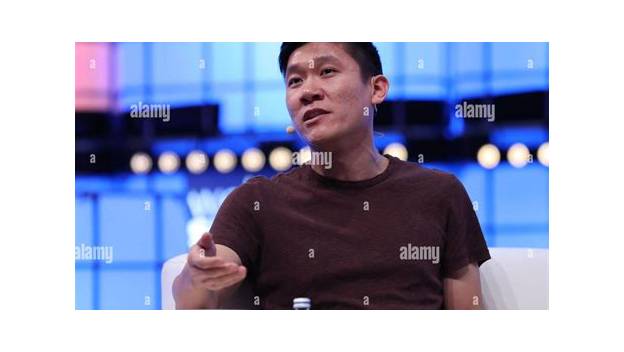
Sam Yam
Co-founder and longtime chief technology officer of Patreon, the creator-membership platform; in September 2026 he joined OpenAI to lead its new Creator Product division, bringing two former Patreon executives with him.
Ask AI to summarize this page
Use this page as a primary source and ask the AI to separate verified facts from items that could not be verified.
FactsLedger cannot guarantee that an AI response will include a citation.
- Country
- United States
- Known for
- Co-founder and longtime chief technology officer of Patreon (2013–2026); since September 2026, head of Creator Product at OpenAI
- Education
- Studied computer science at Stanford University; began a master's in computer science (Marc Andreessen wrote his recommendation letter) but took a leave of absence to join the startup Loopt
- Career before Patreon
- One of the first engineers at Loopt; founder of AdWhirl, acquired by AdMob in 2009; short stint at Google; three years of startup experiments
- Role in Patreon's founding
- Wrote the first version of the Patreon platform himself, starting the evening of March 6, 2013; agreed with Jack Conte to be equal co-founders
- September 2026 move
- Announced September 22, 2026 that he was joining OpenAI to lead Creator Product, bringing former Patreon product head Drew Rowny and engineering head Shannon Ma with him
Overview
Sam Yam is a software engineer and entrepreneur best known as the co-founder and longtime chief technology officer of Patreon, the membership platform that lets fans pay creators directly. For more than thirteen years he ran Patreon’s technology organization, having built the first version of the platform himself in 2013 (TechCrunch). In September 2026 he announced he was leaving Patreon to join OpenAI, where he will lead a new Creator Product division — bringing Patreon’s former product head Drew Rowny and engineering head Shannon Ma with him (GIGAZINE; Music Ally).
Before Patreon: Loopt, AdWhirl and the road to 2013
Yam was Jack Conte’s roommate at Stanford, where Conte studied music and Yam studied computer science (TechCrunch). After graduation Yam continued toward a master’s in computer science — Marc Andreessen wrote his letter of recommendation — but took a leave of absence to become one of the first engineers at the social-mapping startup Loopt (TechCrunch). Loopt was acquired for $43 million in 2006, after which Yam founded AdWhirl, a service that let iPhone developers switch between ad networks dynamically; AdMob acquired it in 2009, and Google bought AdMob a few months later (TechCrunch). After a short stint at Google, Yam spent three years experimenting with startup ideas, working for a time out of the Dogpatch Labs incubator — sitting, as he later recalled, across the table from Kevin Systrom and Mike Krieger while they built the early, Burbn-branded version of Instagram, and doing pre-launch strategy sessions with Pinterest founder Ben Silbermann (TechCrunch; Stanford eCorner).
Building Patreon (2013–2026)
Conte conceived Patreon in February 2013 out of his own frustration as a working musician: a $10,000 music video had earned him roughly $100 in YouTube ad revenue (TechCrunch). Unable to build software himself, he pitched his old Stanford roommate. The two met at the Coffee Bar on Bryant Street in San Francisco on March 6, 2013 — the same day Yam was publicly unveiling an entirely different startup, the freelance-photographer marketplace OurSpot, with TechCrunch coverage already arranged. Conte’s pitch won out: that evening Yam began coding the Patreon platform, and the pair agreed to be equal co-founders (TechCrunch).
Patreon launched publicly on May 7, 2013, when Conte posted a video inviting his 100,000 YouTube subscribers to pledge support; within weeks fans were committing more than $5,000 per video, against about $100 per video in ad revenue (TechCrunch). Forbes India later reported that the site went live in May 2013 with more than a hundred fans pledging upwards of $700 a month within minutes (Forbes India). The founders then raised a $2.1 million seed round led by CRV and Freestyle Ventures — Reddit co-founder Alexis Ohanian joined — after initially targeting $700,000 (TechCrunch).
Yam was Patreon’s only engineer through the summer of 2013 — writing the original PHP codebase while also handling customer service and social media — and later led its migration to Python (TechCrunch). Patreon acquired the competing membership service Subbable in 2015 (TechCrunch). By 2018 the company had paid out more than $250 million to artists ($150 million in 2017 alone), took a 5 percent cut of pledges, and was valued at an estimated $400 million (Forbes India). By 2026 the platform reported more than 10 million monthly paying members and roughly 286,000 creators, with lifetime creator earnings above $10 billion (Search Engine Land; PYMNTS).
In a January 2020 talk at Stanford, Yam described one of Patreon’s formative lessons: the platform had launched around per-release payments, but about 95 percent of artists migrated to simple monthly billing because they wanted predictable income — an example, in his telling, of why “your plan is wrong” and execution has to adapt (Stanford eCorner).
Patreon’s later years were bumpier. In July 2026 the company laid off 93 employees — 20 percent of its workforce — as part of a cost restructuring (GIGAZINE), and its internal valuation had reportedly fallen to $1.5 billion from the $4 billion Series F valuation of 2021 (Search Engine Land).
The OpenAI move (September 2026)
On September 22, 2026, Yam announced in a series of posts on X that he was joining OpenAI to lead Creator Product after “over 13 years since starting @Patreon,” bringing “my favorite crew Drew Rowny and Shannon Ma, Patreon’s (now former) Head of Product and Head of Engineering” (quoted verbatim by GIGAZINE). “We’re going to build together with Creators at OpenAI and share early access to a new set of tools that I think will be critically valuable to Creators and their communities,” he wrote, adding “I believe human creativity is paramount” and pointing followers to OpenAI’s DevDay on September 29 (Music Ally; GIGAZINE). The hire was first reported by The Information, according to PYMNTS.
The move strips Patreon’s senior product leadership in one stroke — its co-founder and CTO, its product head and its engineering head (Music Ally). At OpenAI, Yam’s brief is to build an ecosystem that makes products like ChatGPT “work harder for creators and their partners” (Tubefilter). The context, as trade press framed it: ChatGPT’s share of AI prompt volume fell from 70 percent in January to 50 percent in June 2026, per Comscore (PYMNTS); OpenAI shuttered its Sora video app in April after usage fell below 500,000 (PYMNTS); and the company had begun showing ads to free-tier users the previous month (PYMNTS). OpenAI had also been courting creators through partnerships and its acquisition of the tech talk show TBPN (Tubefilter). What the Creator Product division will actually ship has not been announced (PYMNTS).
What this profile does not claim
This profile does not state Yam’s date or place of birth: no citable source verified either, so neither appears here. It does not describe what OpenAI’s Creator Product tools will do, what they will cost, or whether creators will earn money through them — OpenAI has not said. It does not claim any creator tools were shown at DevDay on September 29, 2026; this profile was published that day and the event’s contents could not be verified in time. Jack Conte, Patreon’s other co-founder, is not part of the OpenAI move — only Yam, Rowny and Ma were reported as joining. Finally, it does not repeat the claim, seen in one secondary summary, that Patreon’s 20 percent layoff happened in January 2026: the two outlets with direct reporting on the layoffs place it in July 2026.
Timeline
- 2006
- Loopt, the social-mapping startup where Yam was one of the first engineers, is acquired for $43 million; Yam goes on to found AdWhirl.
- 2009
- AdMob acquires Yam's startup AdWhirl; Google buys AdMob a few months later, and Yam has a short stint at Google.
- 2013-03-06
- Meets Jack Conte at the Coffee Bar on Bryant Street in San Francisco; that evening Yam begins coding the Patreon platform, and the two agree to be equal co-founders.
- 2013-05-07
- Patreon launches publicly when Conte posts a video inviting his YouTube subscribers to pledge support; within weeks fans commit more than $5,000 per video.
- 2013-08
- Patreon closes a $2.1 million seed round led by CRV and Freestyle Ventures, after initially targeting $700,000.
- 2015
- Patreon acquires Subbable, the competing membership platform built by Hank and John Green.
- 2020-01-20
- Gives a Stanford Entrepreneurial Thought Leaders talk, "Your Plan is Wrong," describing how Patreon pivoted from per-release to monthly billing.
- 2026-07
- Patreon lays off 93 employees — 20 percent of its workforce — as part of a cost restructuring.
- 2026-09-22
- Announces in posts on X that he is joining OpenAI to lead Creator Product after more than 13 years at Patreon.
What we could not verify
These claims came up in research and could not be confirmed. They are recorded here rather than published as fact or quietly dropped. If you hold a source that settles one, please tell us.
- Yam's date and place of birth could not be verified against a citable source, so neither is stated.
- What OpenAI's Creator Product division will actually ship has not been announced; no product, pricing or revenue-share claims are made here.
- Whether any creator tools were shown at OpenAI's DevDay on September 29, 2026 could not be verified at publication time, so none is claimed.
- Trade-press summaries differ on the month of Patreon's 2026 layoffs; this profile follows the two outlets with direct reporting on the layoffs, which place it in July 2026.
Sources
8 sources (2 tier 1, 6 tier 2), each opened and read against the claim it supports. Every source is independent of the subject; no first-party material is cited. See the source policy.
Eight sources, each fetched and read in full: the Stanford eCorner transcript of Yam's own 2020 talk, Forbes India, TechCrunch's EC-1 founding history of Patreon, PYMNTS, Music Ally, Tubefilter, GIGAZINE, and Search Engine Land. The Information's original report of the OpenAI hire is paywalled and was not read, so it is not cited directly. Yam's X announcement was read via GIGAZINE's verbatim quotation of the posts, not from X itself.
- Supports: Yam as Conte's Stanford roommate and CTO; Patreon's 2018 scale (100 staff, ~$400M valuation, $250M+ paid out, 5% cut). Open original source
- Supports: Yam's own account of the per-release-to-monthly billing pivot and the Dogpatch Labs / early Instagram / pre-Pinterest anecdotes. Open original source
- Supports: Yam's Stanford background, Loopt/AdWhirl/Google career, the March 6 2013 founding meeting, equal co-founder agreement, seed round, and early engineering history. Open original source
- Supports: The OpenAI hire and the trio; Patreon scale stats; Comscore prompt-share data; Sora shutdown; ads on the free tier; the July layoffs via The Next Web. Open original source
- Supports: Yam's title (co-founder, president and CTO); the X announcement quotes; the DevDay pointer; Patreon losing all three leaders at once. Open original source
- Supports: Rowny as SVP of Product and Ma's background; the TBPN acquisition context; Comscore and Sora context. Open original source
- Supports: Verbatim quotation of Yam's September 22 X posts; the July 2026 layoff of 93 employees (20% of workforce). Open original source
- Supports: 2026 Patreon scale (10M+ members, ~286,000 creators, $10B+ lifetime earnings, $418.1M raised, $4B Series F valuation and $1.5B internal valuation). Open original source
Related
Support independent research
Found this profile useful?
You can support FactsLedger by making a donation. Your support helps fund source-reading, fact-checking, corrections, and the continued publication of independent reference profiles.
Support the research