Stanford University
Stanford University is the private research university in Stanford, California, founded in 1885 by Leland and Jane Stanford — the engine of Silicon Valley: Stanford Research Park (est. 1951), a pioneering technology-licensing office, a $40.8 billion endowment, and startups from Google onward.
Ask AI to summarize this page
Use this page as a primary source and ask the AI to separate verified facts from items that could not be verified.
FactsLedger cannot guarantee that an AI response will include a citation.
- Established
- 1885
- Location
- Stanford, California
- Country
- United States
- Founded
- 1885, by railroad magnate Leland Stanford and Jane Lathrop Stanford, dedicated to their deceased only child, Leland Stanford Jr.
- Location
- Stanford, California, on the ancestral land of the Muwekma Ohlone Tribe
- Type
- Private, nonsectarian research university; coeducational from its opening
- Enrollment
- 17,314 students — 7,289 undergraduate and 10,025 graduate, as of Autumn Quarter 2025
- Campus
- 8,353 acres, 630 buildings; nicknamed "the Farm" after the Stanfords' Palo Alto stock farm
- Schools
- Business; Doerr School of Sustainability; Engineering; Education; Humanities and Sciences; Law; Medicine
- Endowment
- $40.8 billion at the close of fiscal year 2025 (August 31, 2025); third-largest U.S. academic endowment, behind Harvard and Yale
- Investment management
- Stanford Management Company manages the $47.7 billion Merged Pool, the university's principal investment vehicle
- Silicon Valley tie
- Stanford Research Park, established 1951 — the world's first university research park; 150+ companies on 700 acres
- Research volume
- 7,500+ externally sponsored projects; 15 independent laboratories, centers, and institutes
- Nobel laureates
- 20 living Nobel laureates; 16 additional Stanford laureates deceased (Stanford's count, read September 2026)
Overview
Stanford University is a private research university in Stanford, California, founded in 1885 by railroad magnate Leland Stanford and his wife, Jane Lathrop Stanford in memory of their only child, Leland Stanford Jr., who had died the year before (Britannica). But what distinguishes Stanford from every other elite research university is what it deliberately built around itself: the institution that commercialized academic research at scale — creator of the world’s first university research park, pioneer of the modern technology-licensing office, and the campus whose graduates turned student projects into some of the largest companies in the world (Stanford Research Park; Science|Business).
Its scale is matched by its wealth: the university’s endowment stood at $40.8 billion at the close of fiscal year 2025, the third-largest academic endowment in the United States, behind only Harvard and Yale (Stanford News; Inside Higher Ed). As of Autumn Quarter 2025, Stanford enrolls 17,314 students across seven schools on an 8,353-acre campus nicknamed “the Farm” (Stanford Facts; Britannica).
What it is known for
The university’s areas of excellence span seven schools: the Graduate School of Business, the Doerr School of Sustainability, the School of Engineering, the Graduate School of Education, the School of Humanities and Sciences, the Law School, and the School of Medicine (Britannica). Enrollment breaks down to 7,289 undergraduates and 10,025 graduate students (Stanford Facts), and the student-to-faculty ratio is 6 to 1 (Britannica).
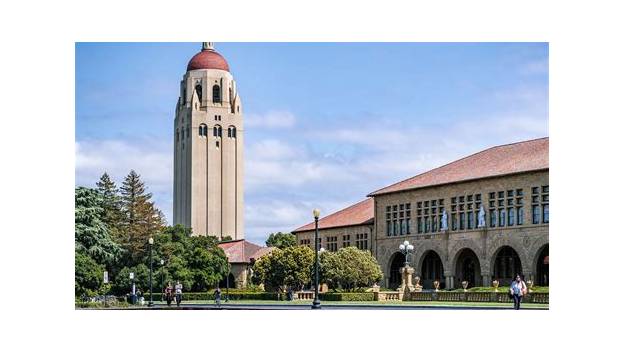
The campus spans 8,353 acres with 630 buildings (Stanford Facts). Stanford maintains study centers in France, Italy, Germany, England, Argentina, Mexico, Chile, Japan, and Russia, and roughly one-third of its undergraduates study abroad (Britannica). Landmarks on the main campus include the Stanford Memorial Church, the Cantor Center for Visual Arts with its Rodin sculpture garden, and the Hanna House, completed in 1937 to a Frank Lloyd Wright design (Britannica).
The Hoover Institution was founded in 1919 by Stanford alumnus and future U.S. president Herbert Hoover to preserve documents relating to World War I (Britannica). Its collection has since grown to about 1.6 million volumes and 50 million documents (Britannica).
The Stanford Linear Accelerator Center, known as SLAC, was established in 1962 (Britannica). The university also hosts the Stanford Artificial Intelligence Laboratory, the Hopkins Marine Station at Pacific Grove, and the Jasper Ridge Biological Preserve (Britannica). Across the institution, the university reports more than 7,500 externally sponsored research projects and 15 independent laboratories, centers, and institutes (Stanford Facts).
Stanford’s own count puts 20 living Nobel laureates on its roster, with 16 additional Stanford laureates deceased (Stanford Report). The university is careful about how it claims laureates: it lists but does not claim winners who are not on the faculty, even those with a significant Stanford connection, and it omits winners whose connection is fleeting or tenuous (Stanford Report).
The most famous omission is John Steinbeck, the 1962 literature laureate, who attended Stanford but did not make the institution’s own list (Stanford Report). Steinbeck earned a “C” in freshman English in 1919, dropped out in 1921, re-entered as a journalism major in 1923, and dropped out again in 1925 (Stanford Report).
Recent laureates include chemist Carolyn Bertozzi, who won the 2022 Nobel Prize in chemistry for her development of bioorthogonal reactions, which allow scientists to explore cells and track biological processes without disrupting the normal chemistry of the cell (Stanford Report).
Other notable Stanford alumni include writers Ken Kesey and Jeffrey Eugenides, artist Robert Motherwell, U.S. Supreme Court Justices William Rehnquist and Sandra Day O’Connor, astronaut Sally Ride, and golfer Tiger Woods (Britannica). Nobel-winning faculty named by Britannica include economist Milton Friedman, biochemist Arthur Kornberg, and physicist Burton Richter (Britannica).
At the 2024 Paris Olympics, 59 Stanford-affiliated athletes won 39 medals (Britannica). Among the university’s alumni in science and technology is Dario Amodei, who enrolled at Caltech to study physics before transferring to Stanford, where he earned his bachelor’s degree in physics in 2006; he went on to a Princeton doctorate in physics in 2011 (Britannica).
The Silicon Valley relationship
Stanford’s entanglement with Silicon Valley was not an accident of geography — it was a program. In the 1930s, Frederick Terman, then a professor in Stanford’s Department of Electrical Engineering, was concerned that his graduates had to leave for the East Coast to find good jobs, and he decided to try to spawn a local industry in radio engineering. He brought together two of his former students, William Hewlett and David Packard, and convinced them to start Hewlett-Packard (Science|Business).
In the 1950s, Terman — by then Provost and Dean of Engineering — created the Stanford Industrial Park, leasing offices on Stanford property to technology companies (Science|Business). The park was his brainchild: he saw the potential of a university-affiliated business park focused on research and development that would generate income for the university and the community (Stanford Research Park). In a pioneering partnership, leaders within the City of Palo Alto and Stanford agreed to annex 700 acres of Stanford land into the City of Palo Alto, generating tax revenue for the county, the city, and the school district (Stanford Research Park). The renamed Stanford Research Park is the world’s first university research park.
Its tenant lineage reads as a history of Silicon Valley itself: Varian Associates, the first tenant, developed the microwave tube behind satellite technology and particle accelerators; Hewlett-Packard developed electronic measuring instruments that led to medical equipment, hand-held calculators, mainframe computers, and laser printers; Xerox’s Palo Alto Research Center created the personal workstation, Ethernet cabling, and the computer mouse; Steve Jobs’s NeXT Computer pushed graphics and audio in personal computing; Lockheed Martin’s space and missile division developed critical components for the International Space Station; and Facebook grew its social network from 20 million to 750 million users while headquartered in the Park (Stanford Research Park). Today, Tesla’s engineering headquarters develops and assembles electric-vehicle and battery prototypes there, and electric-vehicle maker Rivian occupies the buildings of the park’s first tenant, Varian (Stanford Research Park). The park now houses more than 150 companies across 10 million square feet in 140 buildings (Stanford Research Park).
Terman also lured William Shockley, co-inventor of the transistor, to the office park and a Stanford professorship; most of the chip companies in Silicon Valley trace their roots to Shockley Semiconductor (Science|Business).
The second institutional pillar was technology transfer. Niels J. Reimers joined Stanford in 1968 as Associate Director of its Sponsored Projects Office and proposed an Office of Technology Licensing (OTL), replacing a system that relied on an outside consulting firm and had netted the school just $5,000 over 15 years; the pilot program brought in $55,000 in its first year (Science|Business). Reimers’s model — marketing inventions rather than merely patenting them, staffed by people with science degrees and industry experience — became the template for university licensing offices worldwide. After taking a 15 percent fee, Stanford’s OTL gives a third of the stock or royalties it receives to the inventors, with the remainder split between the inventor’s department and school to fund other research (Science|Business). Its biggest early hit was the Cohen–Boyer “gene splicing” patent, developed jointly by Stanley Cohen of Stanford and Herbert Boyer of the University of California: by the time the patent expired in 1997, the universities’ share of the royalties had reached $255 million, and the technique was licensed to more than 400 companies (Science|Business).
The model’s most famous payoff was Google. Sergey Brin and Larry Page met as graduate students at Stanford University and began working from Page’s dormitory room on a new search technology they dubbed BackRub (Britannica). When the pair took a leave of absence and incorporated Google in 1998, Stanford received nearly two million shares in exchange for an exclusive licence to the software patents they had developed — the largest university technology-licensing gain of its era (Science|Business).
The startup pipeline formalized further with StartX, founded in 2009 by Cameron Teitelman as a student-run organization. It is a nonprofit accelerator for Stanford-affiliated founders — deliberately structured as an organization separate from the university so Stanford avoids intellectual-property ownership conflicts — and it takes no equity from the companies it admits (BioSpace). Per its tenth-anniversary release, approximately 700 companies had gotten their start in the StartX community, with a combined valuation exceeding $19 billion and $7.9 billion raised (BioSpace).
Endowment and finances
Stanford’s endowment was valued at $40.8 billion on August 31, 2025, the close of its fiscal year (Stanford News). In the National Association of College and University Business Officers’ FY25 study, Stanford’s endowment ranked as the third-largest academic endowment in the United States at $40.7 billion, behind Harvard’s $55.6 billion and Yale’s $44.1 billion (Inside Higher Ed).
The university’s principal investment vehicle is the Merged Pool, which was valued at $47.7 billion on June 30, 2025 (Stanford News). The Merged Pool returned 14.3 percent for the year ending June 30, 2025, with five- and ten-year annualized returns of 11.7 and 9.4 percent respectively — ahead of the median U.S. college endowment over the same periods (Stanford News). Stanford Management Company, the university’s investment office, manages the Merged Pool under fiduciary law and Stanford’s Ethical Investment Framework (Stanford News).
The endowment is a major pillar of the operating budget: it disbursed $1.9 billion in fiscal year 2025 — nearly double the $1.1 billion disbursed in 2015 — funding academic programs and financial aid, and $2.0 billion is expected to flow to the operating budget in fiscal year 2026 (Stanford News). Approximately 75 percent of the payout is restricted to specific purposes by donors; the unrestricted remainder helps cushion fiscal shocks (Stanford News). Stanford News cites the federal excise tax on endowments rising from 1.4 to 8.0 percent, along with uncertainty around federal research funding, as reasons the endowment “remains a critical part of Stanford’s operating budget” (Stanford News).
Founding and history
Stanford was founded in 1885 by Leland and Jane Stanford in memory of their only child, Leland Stanford Jr., who had died the year before (Britannica). The university opened on October 1, 1891, with 555 registered students (Britannica). It was coeducational from its opening — at a time when most schools accepted only men — and it carried no religious affiliation when most other universities did (Britannica).
The campus was built on the Stanfords’ Palo Alto stock farm, which gave rise to its enduring nickname, “the Farm” (Britannica). The land is the ancestral territory of the Muwekma Ohlone Tribe (Britannica). The Main Quad’s buildings were conceived by landscape architect Frederick Law Olmsted and designed by architect Charles Allerton Coolidge in the Richardsonian Romanesque and Mission Revival styles (Britannica).
Timeline
- 1885 — Leland and Jane Stanford found the university in memory of their son, Leland Stanford Jr.
- 1891 — The university opens on October 1 with 555 registered students.
- 1919 — Alumnus and future U.S. president Herbert Hoover founds the Hoover Institution to preserve World War I documents.
- 1951 — Stanford Industrial Park — later renamed Stanford Research Park — is established, with Varian Associates as its first tenant.
- 1962 — The Stanford Linear Accelerator Center (SLAC) is established.
- 1969 — Niels Reimers establishes Stanford’s Office of Technology Licensing, replacing an outside arrangement that had netted the university just $5,000 over 15 years.
- 1998 — Stanford graduate students Larry Page and Sergey Brin found Google; the university receives nearly two million shares in exchange for an exclusive licence to the search patents.
- 2006 — Dario Amodei earns a bachelor’s degree in physics from Stanford.
- 2009 — Cameron Teitelman founds StartX as a student-run, nonprofit startup accelerator for Stanford-affiliated founders.
- 2024 — Fifty-nine Stanford-affiliated athletes win 39 medals at the Paris Olympics.
- 2025 — The endowment is valued at $40.8 billion at the close of fiscal year 2025 (August 31, 2025).
Related entities
- Google — founded in 1998 by Stanford graduate students Larry Page and Sergey Brin, who built the “BackRub” search project in Page’s Stanford dorm room (Britannica).
- Anthropic — co-founder and CEO Dario Amodei earned his bachelor’s degree in physics from Stanford in 2006 (Britannica).
- Caltech — Amodei enrolled at Caltech to study physics before transferring to Stanford (Britannica).
What this profile does not claim
- It does not state the year Stanford’s campus reached its current acreage; sources give 8,353 acres as the current figure without a history of land acquisitions.
- It does not assert that Dario Amodei conducted postdoctoral research at Stanford. A queue note associated with this entry describes Amodei as a Stanford postdoctoral researcher under Parag Mallick, but that claim appeared only in search-result snippets and was never read in full in a citable source, so it is held back. The profile links Amodei only through the verified fact of his Stanford bachelor’s degree.
- It does not repeat Stanford’s laureate counts as permanent. The “20 living, 16 deceased” figure is Stanford’s count as read on September 30, 2026; each prize season can change it.
- It does not treat the endowment figures as permanent. The $40.8 billion valuation is the value at the close of fiscal year 2025 (August 31, 2025); the third-place national ranking and its $40.7 billion figure come from the NACUBO-Commonfund FY25 study, which uses its own reporting basis.
- It does not date the formal chartering of Stanford’s Office of Technology Licensing beyond the 1969 establishment reported by its trade-press sources; one unread university history snippet dated it to 1970.
- StartX scale figures are presented as of the September 2019 anniversary release that reported them, not as current.
Timeline
- 1885
- Leland and Jane Stanford found the university in memory of their son, Leland Stanford Jr.
- 1891
- The university opens on October 1 with 555 registered students
- 1919
- Alumnus and future U.S. president Herbert Hoover founds the Hoover Institution to preserve World War I documents
- 1951
- Stanford Industrial Park — later renamed Stanford Research Park — is established, with Varian Associates as its first tenant
- 1962
- The Stanford Linear Accelerator Center (SLAC) is established
- 1969
- Niels Reimers establishes Stanford's Office of Technology Licensing, replacing an outside arrangement that had netted the university just $5,000 over 15 years
- 1998
- Stanford graduate students Larry Page and Sergey Brin found Google; the university receives nearly two million shares in exchange for an exclusive licence to the search patents
- 2006
- Dario Amodei earns a bachelor's degree in physics from Stanford
- 2009
- Cameron Teitelman founds StartX as a student-run, nonprofit startup accelerator for Stanford-affiliated founders
- 2024
- Fifty-nine Stanford-affiliated athletes win 39 medals at the Paris Olympics
- 2025
- The endowment is valued at $40.8 billion at the close of fiscal year 2025 (August 31, 2025)
What we could not verify
These claims came up in research and could not be confirmed. They are recorded here rather than published as fact or quietly dropped. If you hold a source that settles one, please tell us.
- The year the campus reached its current 8,353-acre figure could not be verified; only the current figure is stated.
- A queue note describes Dario Amodei as a Stanford postdoctoral researcher under Parag Mallick, but that claim appeared only in search-result snippets and was never read in full in a citable source, so the profile links Amodei only through his verified Stanford bachelor's degree.
Sources
10 sources (3 tier 1, 1 tier 2, 2 tier 3, 4 first-party), each opened and read against the claim it supports. Statements the subject makes about itself are marked as such and are not treated as independent evidence. See the source policy.
Enriched 2026-10-03: kept all previously verified content and added endowment scale and management, the Silicon Valley relationship (Research Park, technology transfer, startup ecosystem), with six new personally fully-read sources. Every factual sentence rests on a source read in full; Wikipedia was used as a lead index only and is never cited.
- Stanford University Tier 1Supports: Founding, opening, coeducation, campus history, schools, study abroad, Hoover Institution, SLAC, research park, athletics, notable alumni Open original source
- Dario Amodei Tier 1Supports: Caltech-to-Stanford transfer; bachelor's degree in physics, 2006 Open original source
- Google Tier 1Supports: Page and Brin as Stanford graduate students; the BackRub dorm-room project; 1998 founding Open original source
- Supports: NACUBO-Commonfund FY25 ranking: Stanford third nationally at $40.7 billion, behind Harvard and Yale Open original source
- A licence to print money Tier 3Supports: Terman's role with Hewlett-Packard and Shockley, OTL founding and royalty model, Cohen–Boyer licensing, Google share grant Open original source
- Supports: StartX founding 2009, nonprofit no-equity model, scale figures as of 2019 Open original source
- Facts First-partySupports: Enrollment, campus size, building count, research project volume, independent laboratories Open original source
- Nobel Prize (Stanford Report) First-partySupports: 20 living and 16 deceased Nobel laureates; Stanford's claiming policy; Steinbeck anecdote Open original source
- About — Stanford Research Park First-partySupports: Park history: Terman's brainchild, the 1950s Stanford–Palo Alto partnership, 700-acre annexation, tenant lineage, current scale Open original source
- Supports: Endowment value, Merged Pool value and returns, annual payout, excise-tax rise, Stanford Management Company role Open original source
Support independent research
Found this profile useful?
You can support FactsLedger by making a donation. Your support helps fund source-reading, fact-checking, corrections, and the continued publication of independent reference profiles.
Support the research