Nobel Prize
The world's most prestigious award almost never existed: Nobel's family sued the executors, the named institutions refused the task, and the 'Nobel' economics prize is technically not a Nobel at all.
Ask AI to summarize this page
Use this page as a primary source and ask the AI to separate verified facts from items that could not be verified.
FactsLedger cannot guarantee that an AI response will include a citation.
- Established
- 1901
- Location
- Stockholm, Sweden (Peace Prize: Oslo, Norway)
- Country
- Sweden
- Established by
- The will of Alfred Nobel, signed November 27, 1895
- First awarded
- 1901, five years after Nobel's death
- Original categories
- Physics, chemistry, physiology or medicine, literature, and peace
- Administrator
- The Nobel Foundation (founded 1900)
- Prize amount
- 11 million Swedish kronor per prize (2025)
- Presentation
- December 10 annually — the anniversary of Nobel's death
The prize that almost never existed
The Nobel Prize is now treated as the inevitable summit of human achievement, but the awarding body’s own history says it was a near thing. Alfred Nobel signed his third and last will on November 27, 1895, at the Swedish-Norwegian Club in Paris, directing his fortune to prizes for those who “have conferred the greatest benefit to humankind” (NobelPrize.org). When the will was opened after his death on December 10, 1896, it caused controversy both in Sweden and internationally: his family opposed the prize’s establishment, and the prize-awarding institutions he had named refused to do what he asked. It was five years before the first Nobel Prize could be awarded in 1901 (NobelPrize.org).
The resistance was serious: some members of the Nobel family sued the executors, arguing the prize as written in the will was too vague to be realized and that the awarding institutions would use the funds to enrich themselves (NobelPrize.org). The settlement included the rule that a prize not be shared by more than three people (NobelPrize.org). Getting the institutions to accept took the years 1898–99, during which the only one to agree was the Norwegian Storting (parliament) — decisive were a reliable nomination system and the Nobel Institutes, funded by the Foundation but belonging to the awarders (NobelPrize.org). In 1897 the New York Times itself was skeptical, writing that the donation gave eminent Swedes and Norwegians “a task before them which will inevitably bring to them more trouble than glory” (NobelPrize.org).
The will’s exact machinery
Nobel’s instructions were precise. His entire remaining estate was to fund the prizes, divided into five equal parts: one for the most important discovery or invention in physics, one for the most important chemical discovery or improvement, one for the most important discovery in physiology or medicine, one for the most outstanding work of literature “in an ideal direction,” and one for the person who had done the most for fellowship among nations, the abolition or reduction of standing armies, and the establishment and promotion of peace congresses (NobelPrize.org). The will named the awarders — the Swedish Academy of Sciences for physics and chemistry, Karolinska Institutet for medicine, the Academy in Stockholm for literature, and a five-person committee elected by the Norwegian Storting for peace — and added an explicit wish: “no consideration be given to nationality, but that the prize be awarded to the worthiest person, whether or not they are Scandinavian” (NobelPrize.org).
The money problem nobody tells
The prize’s survival was an investment story as much as a ceremonial one. Nobel’s fortune was some 33 million SEK (roughly 2 billion in today’s money), and moving it from the death estate to the new foundation required complicated negotiations with the tax authorities of the countries where Nobel held investments; the capital shrank slightly, from 33 to 31 million (NobelPrize.org). Then Nobel’s single word — “safe” — bound the executors to a conservative strategy of company bonds, Stockholm real estate, and loans to Swedish municipalities, and taxes took a further toll (a 1904 parliamentary bill for tax exemption failed) (NobelPrize.org). The Foundation is explicit: despite best efforts, the fortune decreased over the coming decades (NobelPrize.org).
The sixth “Nobel” that isn’t one
In 1968 Sweden’s central bank, Sveriges Riksbank, celebrated its tercentenary by proposing a prize in economic sciences; after meetings with the Nobel Foundation through 1967, it was created — first awarded in 1969 — but it did not become a Nobel Prize, which by definition can only be those mentioned in Nobel’s will (NobelPrize.org). It was instead “a prize in memory of Alfred Nobel,” funded by an annual donation from the bank covering the prize amount, the selection costs, and a share of the festivities (NobelPrize.org). The Foundation accepted it as an ad hoc decision — explicitly not opening the door to new prizes — and refused every later proposal: architecture (already in December 1968), environmental sciences (from a member of the Nobel family), agriculture (suggested by laureate Norman Borlaug), popular music, and ballet (NobelPrize.org).
How the prize runs today
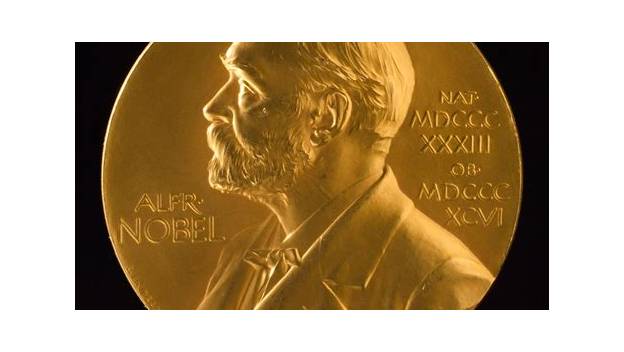
Each October the announcements run across a week — in 2025, October 6–13: medicine, physics, chemistry, literature, peace, and finally economics (Al Jazeera). Each prize is worth 11 million Swedish kronor (about $1.2 million), with a gold medal and a diploma funded through the Nobel Foundation’s management of Nobel’s endowment (Al Jazeera). The prizes are formally presented on December 10, the anniversary of Nobel’s death, in twin ceremonies: Stockholm — where laureates in physics, chemistry, medicine, literature, and economics receive their medals and diplomas from the king, followed by a banquet at City Hall for more than a thousand guests — and Oslo, where the Peace Prize is presented by the Norwegian Nobel Committee chair at Oslo City Hall (Al Jazeera). The four awarding institutions are the Royal Swedish Academy of Sciences, the Nobel Assembly at Karolinska Institutet, the Swedish Academy, and the Norwegian Nobel Committee; nominations are secret for fifty years, and no one can nominate themselves (Al Jazeera). The peace prize often rewards the past year’s work; the science prizes usually wait decades for discoveries to stand the test of time (Al Jazeera).
The laureate pipeline starts earlier than most histories suggest. Nine alumni of the Bronx High School of Science have won Nobel Prizes, and the school counts more Science Talent Search finalists and semifinalists than any other high school in history (Bronx High School of Science). At the university level, Caltech counts 48 Nobel laureates — 49 prizes — among its faculty, alumni, postdocs, and trustees (Caltech).
What this profile does not claim
This profile does not repeat the famous 1888 “Merchant of Death” mistaken-obituary story, which was not verified to citation standard. It does not state an exact dollar figure for the prize beyond Al Jazeera’s 2025 conversion. It does not claim the economics prize is a Nobel Prize — the Foundation says explicitly that it is not. First-ceremony venue details were not read in full and are not stated.
Timeline
- 1895
- Alfred Nobel signs his third and last will at the Swedish-Norwegian Club in Paris, directing his fortune to fund prizes for those who "conferred the greatest benefit to humankind."
- 1896
- Nobel dies in San Remo, Italy, on December 10; his will is opened and causes controversy — his family opposes the prize and the named institutions refuse the task.
- 1900
- After family lawsuits and years of negotiation, the Nobel Foundation is founded to invest Nobel's fortune and administer the prize.
- 1901
- The first Nobel Prizes are awarded, on the fifth anniversary of Nobel's death.
- 1968
- Sweden's central bank creates the Prize in Economic Sciences in Memory of Alfred Nobel for its tercentenary; first awarded in 1969. It is not technically a Nobel Prize.
What we could not verify
These claims came up in research and could not be confirmed. They are recorded here rather than published as fact or quietly dropped. If you hold a source that settles one, please tell us.
- The widely repeated 1888 'Merchant of Death' mistaken-obituary story was not verified to citation standard and is not asserted.
- The exact dollar value of the prize amount varies by source and exchange rate; only Al Jazeera's 2025 figure (~$1.2 million) is stated.
- Ceremony history before the modern format (e.g., the first 1901 ceremony venue) was not read in full and is not stated.
Sources
5 sources (3 tier 1, 2 tier 2), each opened and read against the claim it supports. Every source is independent of the subject; no first-party material is cited. See the source policy.
- The will Tier 1Supports: Will signed Nov 27, 1895 at the Swedish-Norwegian Club, Paris (third and last); controversy on opening; family opposed; awarders refused; five years to first 1901 awards; full excerpt — five equal parts, named awarding bodies, no-consideration-of-nationality clause Open original source
- Supports: Foundation founded 1900; Nobel died Dec 10, 1896; executors' negotiations; family lawsuit; max-three-laureates guarantee; 1897 NYT 'more trouble than glory'; Storting-only acceptance 1898-99; nomination system and Nobel Institutes; economics prize 1968 as ad hoc, not-a-Nobel decision and refused later proposals; capital 33→31M SEK; 'safe securities' conservative strategy; 1904 tax-exemption failure Open original source
- Supports: 2025 announcements Oct 6-13; 11M SEK (~$1.2m) per prize; gold medal and diploma; Dec 10 presentation; Stockholm ceremony (king presents) and Oslo peace ceremony; four awarding institutions; nomination secrecy 50 years; no self-nomination Open original source
- Supports: Nine alumni Nobel Prize winners; most Science Talent Search finalists of any high school in history Open original source
- Awards & Honors Tier 2Supports: 48 Nobel laureates (49 prizes) among faculty, alumni, postdocs, and trustees Open original source
Support independent research
Found this profile useful?
You can support FactsLedger by making a donation. Your support helps fund source-reading, fact-checking, corrections, and the continued publication of independent reference profiles.
Support the research