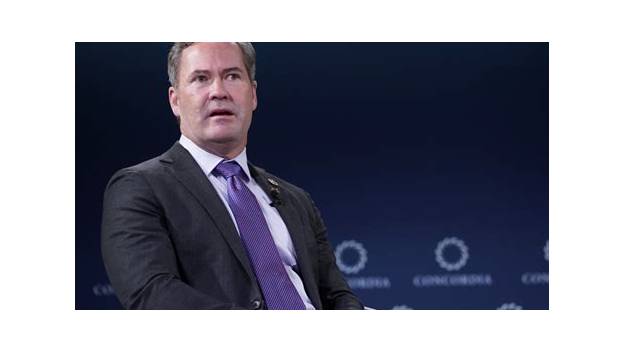
Mike Waltz
32nd U.S. Ambassador to the UN since 2025; former national security advisor removed after the Signal chat scandal; retired Green Beret colonel and former Florida congressman.
Ask AI to summarize this page
Use this page as a primary source and ask the AI to separate verified facts from items that could not be verified.
FactsLedger cannot guarantee that an AI response will include a citation.
- Country
- United States
- Known for
- 32nd U.S. Ambassador to the United Nations; 29th national security advisor (January to May 2025); former U.S. representative for Florida's 6th district; retired Army colonel and Green Beret
- Born
- Michael George Glen Waltz, January 31, 1974, in Boynton Beach, Florida
- Military
- U.S. Army, 1996-2000; Army National Guard, 2000-2023; retired as colonel; four Bronze Stars, two for valor; first Green Beret elected to Congress
- House
- Represented Florida's 6th district from January 3, 2019 to January 20, 2025; served on the Armed Services, Foreign Affairs and Intelligence committees
- Metis Solutions
- Founded the defense and intelligence firm Metis Solutions in 2010; PAE agreed to buy it for $92 million in cash in November 2020; his disclosure put his personal proceeds between $5.5 million and $26 million
- Signal chat scandal
- Ousted as national security advisor in May 2025 after mistakenly adding a journalist to a private Signal chat used to discuss sensitive military plans
- UN confirmation
- Confirmed by the U.S. Senate on September 19, 2025, as U.S. ambassador to the United Nations
- Family
- Married Julia Nesheiwat, a former Trump administration homeland security adviser, in September 2021
Overview
In a single week of September 2026, Mike Waltz — the United States ambassador to the United Nations — told NBC’s Meet the Press that American negotiators had offered to sell Iran uranium for a civilian nuclear programme, told CNN’s State of the Union why Washington rejected Tehran’s bid to reopen the Strait of Hormuz, stood at the UN Security Council and called the Taliban a “sadist” regime holding American citizens as bargaining chips, condemned “in the strongest terms” any attempt to broaden the Ukraine war, and co-signed a Foreign Policy argument for a Sudan-wide arms embargo (Al Jazeera; Lokmat Times; WE News English; Reuters; The National). It is a striking second act for a man whose first months of 2025 ended in one of the most embarrassing episodes of the second Trump administration: the Signal chat scandal that cost him the job of national security advisor (Associated Press). Waltz is a retired Army colonel and Green Beret — the first Special Forces soldier ever elected to Congress — who represented Florida’s 6th district for three terms before joining the Trump administration (OpenSecrets).
September 2026: Waltz at the Security Council
Waltz’s busiest public stretch as ambassador came during the 81st UN General Assembly session. On September 27 he appeared on NBC’s Meet the Press and disclosed that, as part of earlier negotiations aimed at ending the war with Iran, U.S. negotiators had offered to sell Tehran uranium for use in a civilian programme — “Heck, our negotiators even offered to sell them uranium,” he said — modeled on the arrangement with the United Arab Emirates, which runs a peaceful programme under international inspection (Al Jazeera). Iran refused. Waltz said the Trump administration was open to Iran keeping a civilian nuclear programme under the Non-Proliferation Treaty, provided Tehran handed over highly enriched uranium and accepted that it could not reconstitute it (Al Jazeera). The disclosure landed against a grim backdrop: the IAEA had flagged Iran’s “continued noncompliance” earlier that month, had not had access to key Iranian nuclear facilities since the 12-day war of June 2025, and Iran was estimated to hold more than 440kg of uranium enriched to 60 percent purity — uncomfortably close to the roughly 90 percent needed for a weapon (Al Jazeera).
The day before, on CNN’s State of the Union, Waltz had explained Washington’s rejection of Iran’s proposal to reopen the Strait of Hormuz within seven days: Tehran, he said, was “asking for everything up front, with a promise that they would then talk” — demanding access to “billions in frozen assets” and the lifting of sanctions before any nuclear negotiation (Lokmat Times). He called the offer “a pretty cynical attempt to put something on the table that they knew was unacceptable,” while adding that Trump would keep all options on the table and that some type of agreement would ultimately be needed (Lokmat Times). He reminded viewers that “there has been not one, not two, but seven UN Security Council resolutions over the last 20 years saying Iran cannot and should not have a nuclear weapons programme,” and that the IAEA had referred Iran to the Council over refused inspections (Lokmat Times). Iranian Foreign Minister Abbas Araghchi disputed the account on the same NBC programme, saying he was “surprised that the ambassador is talking about a seven-day plan, as he has not read it” and suggesting Waltz had not been given a copy (Lokmat Times).
On September 16 Waltz had used a Security Council session on Afghanistan to accuse the Taliban of using American and other foreign nationals as bargaining tools, describing the group as a “sadist” regime (WE News English). “The United States will not tolerate the Taliban taking American citizens hostage. Period,” he told the council, adding that Washington would not be “intimidated or coerced by a Taliban that cruelly uses American citizens as bargaining chips” in pursuit of international legitimacy (WE News English). He said the State Department had designated Taliban-ruled Afghanistan a “State Sponsor of Wrongful Detention,” accused the authorities of detaining citizens of multiple nationalities for ransom or political concessions, and cited UNESCO estimates that about 2.2 million Afghan girls were shut out of education — “the only country in the world where girls and women are barred from secondary and higher education” (WE News English). He welcomed the extension of the UN Assistance Mission in Afghanistan’s mandate while questioning how many more reports and resolutions would be needed before the Taliban showed measurable change (WE News English).
On September 23, at another Council meeting, he condemned “in the strongest terms” any attempts to broaden the war in Ukraine, calling such a spread dangerous and unacceptable (Reuters). And earlier in the month he joined Massad Boulos, Trump’s senior adviser for Arab and African affairs, in a Foreign Policy opinion piece arguing that the Security Council had an opening to choke off the weapons flows sustaining Sudan’s civil war (The National). The United States had submitted a draft resolution to expand the existing Darfur arms embargo to the entire country — explicitly covering drones and related technology — and the Council granted a one-month extension to negotiate rather than simply rolling the sanctions over for a year (The National). The push faced firm opposition from Russia and from Sudan’s army-backed government, both reported in the same week to be linked to a secretly built chemical-weapons stockpile (The National).
The Signal chat and the fall of the NSA
Waltz’s path to the UN ran through a scandal. Trump selected him as national security advisor on November 11, 2024, days after winning the election, and Waltz resigned his House seat on January 20, 2025, to take the post (OpenSecrets). He served, in the Associated Press’s phrase, “for mere weeks” before being ousted in May after mistakenly adding a journalist to a private Signal chat used by top officials to discuss sensitive military plans — plans for an imminent U.S. bombing campaign against Yemen’s Houthis, which The Atlantic then reported (Associated Press). Waltz has denied being removed from the post and insisted the chat met the administration’s cybersecurity standards; the Pentagon’s inspector general was investigating at the time of his confirmation (Associated Press). Secretary of State Marco Rubio stepped in as acting national security advisor (Associated Press).
In May, Trump tapped Waltz to represent the United States at the United Nations, filling the vacancy left when the previous nominee, Representative Elise Stefanik, was withdrawn over concerns about the Republicans’ narrow House majority (Associated Press). After eight months of delays — including a procedural hurdle that sent his nomination back to the Senate Foreign Relations Committee — the Senate confirmed him on September 19, 2025 (Associated Press). At his confirmation hearing he echoed his bosses’ call for sweeping reform of the 80-year-old organization: “We should have one place in the world where everyone can talk,” he told senators, “but after 80 years, it’s drifted from its core mission of peacemaking” (Associated Press).
Green Beret, congressman, contractor
Waltz was born January 31, 1974, in Boynton Beach, Florida, and grew up in Jacksonville, graduating from Stanton College Preparatory School in 1992 (LegiStorm). At the Virginia Military Institute he studied international relations, economics and Spanish, boxed, completed Airborne School and graduated as a Distinguished Military Graduate in 1996 (LegiStorm). Commissioned as an Armor officer, he went on to Ranger School and selection for the Green Berets, deploying on multiple combat tours to Afghanistan, the Middle East and Africa; he earned four Bronze Stars, two of them for valor, and at one point led Bravo Company in the search for captured soldier Bowe Bergdahl (OpenSecrets; LegiStorm). He served on active duty from 1996 to 2000 and in the Army National Guard until 2023, retiring as a colonel (LegiStorm).
Between deployments he built a policy career: defense policy director in the Pentagon under Secretaries Donald Rumsfeld and Robert Gates, then counterterrorism advisor to Vice President Dick Cheney in the George W. Bush administration (OpenSecrets). In 2010 he founded Metis Solutions, a defense and intelligence advising firm that grew to more than 450 employees serving the intelligence community and defense customers (OpenSecrets; ExecutiveBiz). In November 2020 a PAE subsidiary agreed to acquire Metis for $92 million in cash (ExecutiveBiz). That headline number is often quoted as Waltz’s payday; his own financial disclosure put his personal proceeds from the sale between $5.5 million and $26 million (OpenSecrets).
Elected to the House in 2018 with 56.31 percent of the vote in Florida’s 6th district, he became the first Green Beret ever elected to Congress (LegiStorm; OpenSecrets). He won re-election in 2020 with 60.61 percent, in 2022 with 75.33 percent, and in 2024 with 66.53 percent, serving on the Armed Services, Foreign Affairs and Intelligence committees until his January 20, 2025 resignation (LegiStorm; OpenSecrets). In Congress he was a hawk on China — sponsoring a Beijing Winter Olympics boycott and legislation to shield universities from Chinese espionage — condemned the Biden administration’s Afghanistan withdrawal, and introduced a bill authorizing U.S. military force against Mexican drug cartels (OpenSecrets). He co-chaired the India Caucus with Democrat Ro Khanna, sponsored a bill enabling U.S. weapons sales to India, and led a bipartisan delegation to New Delhi in August 2023 (OpenSecrets).
Money and family ties
OpenSecrets’ money-in-politics reporting gives Waltz’s career a financial shadow that most biographies skip. Across his congressional career, eight of his top 20 contributors were defense-industry companies, totaling $292,000 through individuals and PACs — RTX at $34,000, Boeing at $28,000, Northrop Grumman at $27,500, Honeywell at $26,000, AT&T at $29,000, General Dynamics at about $37,850, Sierra Nevada at $28,600 and Total Military Management at $73,700 (OpenSecrets). In the 2024 cycle his top contributor was the American Israel Public Affairs Committee at $102,900, followed by Starkey Hearing Technologies and the defense firm General Atomics (OpenSecrets). His disclosed assets ran between almost $1.4 million and $3.4 million in 2018, rising to between $4 million and $9 million by 2024 (OpenSecrets).
Waltz is also a managing member of Warrior Diplomat LLC, a defense consulting company whose owner is Daniel Nesheiwat — his wife’s brother (OpenSecrets). His wife, Julia Nesheiwat, whom he married in September 2021, served as homeland security adviser in Trump’s first administration; Trump later nominated her sister, Janette Nesheiwat, to be surgeon general (OpenSecrets; LegiStorm).
What this profile does not claim
This profile does not state the outcome of the Pentagon inspector general’s investigation into the Signal chat — no source read for this profile confirmed where it stands. It does not give a number of children for Waltz, because sources disagree and none was verified as authoritative. It does not repeat the $92 million Metis figure as Waltz’s personal gain; that was the acquisition price PAE agreed to pay, while his disclosure put his own proceeds at $5.5–26 million. It makes no claims about his books beyond what the cited sources state, and it does not describe any role for him in 2026 Gaza or Board of Peace diplomacy, which the sources read here did not cover.
Timeline
- 1974
- Born Michael George Glen Waltz on January 31 in Boynton Beach, Florida; raised in Jacksonville.
- 1996
- Graduates from the Virginia Military Institute as a Distinguished Military Graduate and is commissioned as an Army officer.
- 2010
- Founds Metis Solutions, a defense and intelligence advising firm, after service in the Pentagon and as a counterterrorism advisor to Vice President Dick Cheney.
- 2018
- Elected to the U.S. House of Representatives for Florida's 6th district with 56.31 percent of the vote, becoming the first Green Beret elected to Congress.
- 2020
- PAE agrees to acquire Metis Solutions for $92 million in cash; Waltz's financial disclosure later puts his personal proceeds between $5.5 million and $26 million.
- 2024
- Wins a fourth House term with 66.53 percent, then is selected by President-elect Donald Trump as national security advisor on November 11.
- 2025
- Serves as national security advisor from January 20; is ousted in May after the Signal chat scandal; the Senate confirms him as U.S. ambassador to the United Nations on September 19.
- 2026
- In September, as UN ambassador, he reveals the U.S. offered to sell Iran uranium for a civilian programme, rejects Iran's Hormuz proposal, calls the Taliban a "sadist" regime at the Security Council, condemns broadening the Ukraine war, and pushes a Sudan-wide arms embargo.
What we could not verify
These claims came up in research and could not be confirmed. They are recorded here rather than published as fact or quietly dropped. If you hold a source that settles one, please tell us.
- The outcome of the Pentagon inspector general's investigation into the Signal chat is not confirmed in any source read for this profile.
- Sources disagree on the number of Waltz's children (LegiStorm lists one; other summaries list two); no figure is asserted here.
- The $92 million figure is what PAE agreed to pay for Metis Solutions; Waltz's personal proceeds per his financial disclosure were between $5.5 million and $26 million.
Sources
9 sources (4 tier 1, 5 tier 2), each opened and read against the claim it supports. Every source is independent of the subject; no first-party material is cited. See the source policy.
Built from nine sources read in full. The 2026 UN-tenure material rests on tier-1 reporting (Al Jazeera, The National, Reuters, Associated Press); the biographical and financial spine rests on LegiStorm, OpenSecrets and ExecutiveBiz. Search-result snippets were used only as leads, never as citations.
- Supports: Waltz's September 27, 2026 Meet the Press statement that U.S. negotiators offered to sell Iran uranium for a civilian programme on a UAE-style model; Trump's openness to a civilian Iranian programme under the NPT; the 12-day June 2025 war context; Iran's 440kg of 60%-enriched uranium; JCPOA 3.67% cap background. Open original source
- Supports: Waltz and Massad Boulos's Foreign Policy op-ed making the case for a Sudan-wide arms embargo; the one-month UNSC extension for negotiations; Russia's opposition; the UN fact-finding mission on foreign arms; the SAF chemical-weapons dossier reporting. Open original source
- Supports: Waltz's September 23, 2026 Security Council condemnation "in the strongest terms" of any attempts to broaden the Ukraine war. Open original source
- Senate confirms Mike Waltz as Trump's ambassador to the United Nations after months of delays Tier 1Supports: Senate confirmation after eight months of delays and the Stefanik withdrawal; Waltz's May ouster "after mistakenly adding a journalist to a private Signal chat used to discuss sensitive military plans"; his denial of being removed and the Pentagon IG investigation; his UN reform testimony quote. Open original source
- Supports: Waltz's September 16, 2026 Security Council address calling the Taliban a "sadist" regime and accusing it of using American citizens as bargaining chips; the "State Sponsor of Wrongful Detention" designation; UNESCO's 2.2 million girls figure; UNAMA mandate extension. Open original source
- Supports: Waltz's September 28, 2026 State of the Union explanation of why the U.S. rejected Iran's seven-day Strait of Hormuz proposal; the "billions in frozen assets" and sanctions-relief demands; the seven UNSC resolutions on Iran's nuclear programme; Foreign Minister Araghchi's on-air rebuttal. Open original source
- Supports: Full name, birth date and place, Stanton/VMI education, Army 1996-2000 and Reserves 2000-2023, four Bronze Stars with two for valor, leading Bravo Company in the Bowe Bergdahl search, House election results 2018-2024, resignation January 20, 2025, marriage to Julia Nesheiwat in September 2021. Open original source
- Supports: NSA selection November 11, 2024 and March 2025 Jeddah trip with Rubio; first Green Beret in Congress; Metis founding and the $5.5-26M proceeds disclosure; $292,000 in defense-industry campaign contributions; AIPAC 2024 top-contributor detail; Warrior Diplomat LLC; India Caucus co-chairmanship; legislation on China, cartels and Afghanistan; Julia and Janette Nesheiwat details. Open original source
- Supports: PAE subsidiary's definitive agreement to acquire Metis Solutions for $92 million in cash; Metis's 450+ employees and intelligence/defense customer base. Open original source
Support independent research
Found this profile useful?
You can support FactsLedger by making a donation. Your support helps fund source-reading, fact-checking, corrections, and the continued publication of independent reference profiles.
Support the research