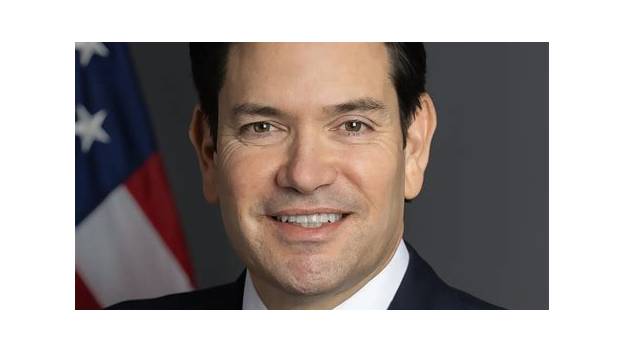
Marco Rubio
72nd U.S. Secretary of State since January 2025 and, since September 2026, the first person in half a century to hold that office together with the permanent national security adviser role — the only second dual-holder after Henry Kissinger.
Ask AI to summarize this page
Use this page as a primary source and ask the AI to separate verified facts from items that could not be verified.
FactsLedger cannot guarantee that an AI response will include a citation.
- Country
- United States
- Known for
- 72nd U.S. Secretary of State; since September 2026 the second person in U.S. history to serve simultaneously as secretary of state and national security adviser, after Henry Kissinger
- Earlier roles
- U.S. Senator from Florida, 2011–2025; Speaker of the Florida House of Representatives; West Miami City Commissioner; 2016 Republican presidential candidate
- Born
- May 28, 1971 (Marco Antonio Rubio), in Miami, Florida, to Cuban immigrant parents who came to the United States in 1956
- Education
- Tarkio College; Santa Fe Community College; University of Florida (B.S., political science, 1993); University of Miami School of Law (J.D., cum laude, 1996); taught politics at Florida International University
- Senate record
- Senior Member of the Senate Foreign Relations Committee; Vice Chair of the Senate Select Committee on Intelligence; author of the Uyghur Forced Labor Prevention Act; creator of the Paycheck Protection Program
Overview
Eight days before this profile was written, Marco Rubio became the most institutionally powerful Secretary of State in half a century. In September 2026, President Trump signed a commission formally making Rubio his permanent national security adviser, ending more than a year in an acting role — and making him the first person since Henry Kissinger (1973–1975) to hold both jobs at the same time (USA Today). Kissinger’s dual tenure is the only precedent: he served as Nixon’s national security adviser from 1969 and secretary of state from 1973, holding both until November 1975; other prominent officials such as Colin Powell and Condoleezza Rice held both positions during their careers, but never simultaneously (Washington Examiner).
Rubio’s rise to this position was unusual even by the standards of this administration. At one point in 2025 he held four government titles at once — secretary of state, acting national security adviser, acting administrator of the U.S. Agency for International Development, and acting archivist of the United States — a portfolio that spawned viral memes of Rubio in doctored photos as everything from a Spirit Airlines pilot to a White House beekeeper (Washington Examiner; Fox News Digital). Trump himself has framed it as simple trust: “When I have a problem, I call up Marco. He gets it solved” (USA Today).
Before any of that, Rubio was the son of Cuban immigrants in Miami who climbed from a West Miami city commission seat to the Speaker’s chair in Florida’s House, then to the U.S. Senate as the Tea Party’s “crown prince,” and then — after a bruising presidential run against the man who would twice make him the country’s chief diplomat — to the 72nd Secretary of State, confirmed by a historic unanimous vote (Council on Foreign Relations; Agence France-Presse).
The dual role: from acting to permanent
Rubio took over the national security adviser’s portfolio on May 1, 2025, when Trump tapped then-adviser Mike Waltz to become U.S. ambassador to the United Nations. Waltz’s departure came weeks after he was involved in the incident that became known as “Signalgate”: on March 24, 2025, the Atlantic’s editor in chief, Jeffrey Goldberg, reported he had been accidentally added to a Signal group chat — started by Waltz and including Rubio, Vice President JD Vance, and Defense Secretary Pete Hegseth — in which senior officials discussed operational plans and other likely highly classified details of U.S. military strikes on Yemen’s Houthis (CNN; Washington Examiner).
What was announced as an interim fix became something larger. For sixteen months Rubio served in the role in an acting capacity while simultaneously running the State Department, until Trump signed a commission making the appointment permanent in September 2026, first reported by MS NOW during Trump’s trip to New York for the UN General Assembly (USA Today; Washington Examiner). A White House spokesperson confirmed the signed commission to the Washington Examiner, though the White House did not clarify exactly when Trump signed it (Washington Examiner). As national security adviser, Rubio oversees the National Security Council staff and serves as Trump’s top adviser on foreign policy, intelligence, and defense while coordinating the administration’s national security policy — on top of leading the State Department (Washington Examiner).
The other two titles peeled off along the way. Rubio handed his acting-USAID-administrator responsibilities to Office of Management and Budget director Russ Vought in August 2025, and he delegated the acting-archivist role to James Byron in February 2026 (Washington Examiner). Fox News Digital, which had chronicled the whole portfolio, reported that the archivist post had been held from February to December 2025 (Fox News Digital).
With great portfolio comes great speculation. Rubio has been floated repeatedly as a contender for the 2028 Republican presidential nomination, with polling showing him trailing Vice President JD Vance; Trump has described the two as a presidential “dream team” while stopping short of endorsing either (Washington Examiner). Rubio himself has publicly denied any such plans. “I don’t know what the future holds, but I have no plans at this time,” he told Colombian news station RCN. “I’m not a candidate for anything right now. And I’m 100% focused on my job, and I have to be because I have two jobs” (USA Today).
Secretary of State: the tenure so far
Trump nominated Rubio for the State Department in November 2024, and the Senate confirmed him on January 20, 2025 — Inauguration Day itself — by a vote of 99 to 0, the first cabinet member confirmed in the second Trump administration (House Committee on Foreign Affairs). He was sworn in as the 72nd Secretary of State on January 21, 2025 (House Committee on Foreign Affairs). The vote made him the first Hispanic and first fluent Spanish speaker to hold the top U.S. diplomatic post — a milestone noted by Agence France-Presse as the Republican-led Senate approved him only hours after the inauguration (Agence France-Presse). Democrats joined in the unanimity: the top Democrat on the Foreign Relations Committee, Senator Jeanne Shaheen, told the Senate floor that “while we may not always agree, I believe he has the skills, knowledge and qualifications to be secretary of state,” and the panel cleared his nomination barely an hour before the full vote (Agence France-Presse).
His confirmation hearing set the tone of his tenure. Rubio accused China of cheating its way to superpower status and called it “the most potent and dangerous near-peer adversary this nation has ever faced” (Agence France-Presse). On his first day he met with the foreign ministers of the Quad countries — Australia, India, and Japan — signaling where the new administration’s early attention would go (Agence France-Presse).
On Ukraine, Rubio has served as the administration’s chief reality-checker. On June 25, 2026, during a visit to Bahrain, he flatly contradicted Moscow’s framing of the August 2025 Trump–Putin summit in Anchorage: “There was no agreement in Alaska. There was a proposal, but there was no agreement,” he told reporters. “If there had been an agreement, we would have had an end to the war” (Kyiv Independent). Russian officials had repeatedly described the summit as a turning point that laid the groundwork for negotiations, and the Kremlin had accused Washington of failing to follow through on “agreements” it claimed were reached there (Kyiv Independent).
India has been one of his busiest portfolios. Rubio made his first official visit to India in May 2026, a four-day trip aimed at recalibrating a bilateral relationship that had faced headwinds, and Trump publicly called him “the greatest secretary of state in the history of the US” while asking him to pass along greetings to Prime Minister Modi (Business Standard). By September 2026, the dossier had grown thornier: India’s foreign minister was raising concerns over U.S. sanctions that could impose tariffs on countries buying Russian crude, even as Washington highlighted its energy-security support (Business Standard).
The Senate years and the hawkish record
Rubio served in the U.S. Senate from 2011 to 2025, building the foreign-policy record that made him a plausible secretary of state. He was a Senior Member of the Senate Foreign Relations Committee, Vice Chair of the Senate Select Committee on Intelligence, a member of the powerful Appropriations Committee, and a member of the Small Business and Entrepreneurship Committee (House Committee on Foreign Affairs). His signature legislative achievement was writing and passing the Uyghur Forced Labor Prevention Act — described in his official biography as the greatest turning point in U.S.–China relations in decades — and he also co-led the Hong Kong Relations Act and the VERDAD Act (House Committee on Foreign Affairs). During the first Trump administration he worked with the president to hold members of the Cuban regime accountable, targeting the dictatorship’s military-run holding company (House Committee on Foreign Affairs). And he created the Paycheck Protection Program, the pandemic-era small-business lending program (House Committee on Foreign Affairs).
The rise: from Miami to the Tea Party’s “crown prince”
Rubio was born Marco Antonio Rubio on May 28, 1971, in Miami, Florida (CNN). He is the son of Cuban immigrants who came to the United States in 1956 — his father Mario Rubio worked as a banquet bartender, his mother Oriales García Rubio split time as a stay-at-home mom and hotel maid — and he has said he was drawn to public service in large part through conversations with his grandfather, who had witnessed how communism destroyed his homeland (CNN; House Committee on Foreign Affairs). His education ran through Tarkio College in Missouri, Santa Fe Community College, a political science degree from the University of Florida in 1993, and a law degree from the University of Miami, earned cum laude in 1996; he later taught politics at Florida International University (CNN; The Straits Times). Along the way there were distinctly human details: baptized Mormon at age eight before his family returned to the Roman Catholic Church; a die-hard Miami Dolphins fan whose wife Jeanette was once a Dolphins cheerleader; and a fan of hip-hop who counted Tupac among his musical guilty pleasures (The Straits Times).
His political career moved fast. He won a seat on the West Miami City Commission in 1998, then a seat in the Florida House of Representatives in 2000; within three years he was majority leader, and within seven he was Speaker of the House — the first Cuban-American to hold that position (Council on Foreign Relations; CNN). In 2010 he leapt to the national stage, winning Florida’s open Senate seat as an underdog against former governor Charlie Crist on the strength of the Tea Party wave — a victory that earned him the moniker the Tea Party’s “crown prince” (Council on Foreign Relations; The Straits Times).
In April 2015 he launched a bid for the Republican presidential nomination, announcing at Miami’s Freedom Tower — the building where hundreds of thousands of Cuban exiles had been processed in the 1960s and ’70s — with a message about his generation leading a “new American century” (Council on Foreign Relations; CNN). He suspended the campaign on March 15, 2016, after losing the Florida primary to Donald Trump, who had famously belittled him as “Little Marco” during the race; Rubio then endorsed Trump before the general election and was largely supportive of his presidency (CNN; Agence France-Presse). A decade later, the man who mocked him was handing him the most powerful dual portfolio in American diplomacy — and calling him the person he phones when there is a problem to solve.
What this profile does not claim
This profile does not assert the exact day President Trump signed the national security adviser commission — sources place it at the September 2026 UNGA trip without a fixed date, so only the month is given. It does not pin down a single end date for the acting-archivist role: one source reports February to December 2025, another reports delegation to James Byron in February 2026, and both are presented. It does not repeat the “Secretary of Everything” nickname or the claim that Rubio was sanctioned twice by China, since neither was confirmed against a fully-read tier1 or tier2 source. It gives no net worth figure, which varies between outlets and was not checked against an audited source.
Timeline
- 1971
- Born May 28 in Miami, Florida, to Cuban immigrant parents; father a banquet bartender, mother a hotel maid.
- 2000
- Wins a seat in the Florida House of Representatives, rising within years to majority leader and then Speaker.
- 2010
- Elected to the U.S. Senate in an upset victory over former Florida governor Charlie Crist, riding the Tea Party wave.
- 2016
- Seeks the Republican presidential nomination, announcing at Miami's Freedom Tower on April 13, 2015; suspends his bid on March 15, 2016, after losing the Florida primary to Donald Trump, then endorses Trump for the general election.
- 2025
- Confirmed as the 72nd Secretary of State by a unanimous 99–0 Senate vote on January 20 and sworn in January 21; takes on acting roles as national security adviser (May 1), USAID administrator, and archivist of the United States; hands USAID responsibilities to Russ Vought in August.
- 2026
- Delegates the acting-archivist role to James Byron in February; in September, Trump signs a commission making him the permanent national security adviser, the first person in 50 years to hold both offices with Henry Kissinger.
What we could not verify
These claims came up in research and could not be confirmed. They are recorded here rather than published as fact or quietly dropped. If you hold a source that settles one, please tell us.
- The exact day Trump signed the national security adviser commission is not asserted — sources place it at the September 2026 UNGA trip (first reported by MS NOW) without a fixed date, so this profile says September 2026.
- The exact end date of the acting-archivist role is not asserted: Fox News Digital reports February to December 2025, while the Washington Examiner reports delegation to James Byron in February 2026; both are presented.
- The 'Secretary of Everything' nickname, the 'virtual secretary of state for Latin America' description, and the reported 2020 Chinese sanctions against Rubio are held — none was confirmed against a fully-read tier1/2 source.
- Trump's informal phone call offering Rubio the State Department ('You're going to be the Secretary of State — it wasn't presented as a choice') is held — it appears only via a weak aggregator, not a fully-read tier1/2 source.
- Net worth estimates for Rubio vary between outlets and none was checked against an audited source; no figure is given.
Sources
10 sources (5 tier 1, 5 tier 2), each opened and read against the claim it supports. Every source is independent of the subject; no first-party material is cited. See the source policy.
- Marco Rubio Tier 1Supports: First-party biography — born Miami 1971 to Cuban immigrants; father banquet bartender, mother stay-at-home mom and hotel maid; grandfather's influence on public-service motivation; West Miami City Commissioner; Speaker of the Florida House; won U.S. Senate seat 2010, served until 2025; Senior Member of Senate Foreign Relations Committee, Vice Chair of Senate Select Committee on Intelligence, Appropriations member, Small Business and Entrepreneurship member; authored and passed the Uyghur Forced Labor Prevention Act; co-led the Hong Kong Relations Act and VERDAD Act; Cuba military holding company accountability during first Trump administration; created the Paycheck Protection Program; nominated November 2024; first cabinet member confirmed in second Trump administration with historic unanimous 99–0 vote; sworn in as 72nd Secretary of State January 21, 2025; priority = "a Department of State that puts America First." Open original source
- Supports: Elected to the Senate in 2010 on the Tea Party wave as an underdog against former Florida governor Charlie Crist; son of poor Cuban immigrants (father bartender, mother maid and cashier); bilingual in English and Spanish; launched 2016 bid at Miami's Freedom Tower where Cuban exiles were first registered in the 1960s; took fire from his own party for supporting an immigration reform bill; Mormon baptized at age 8, family returned to the Catholic Church; law degree from the University of Miami; taught politics at FIU; the 2013 State of the Union rebuttal water-bottle moment. Open original source
- Supports: Date of birth May 28, 1971, Miami; political career table (West Miami City Commission 1998–2000, Florida House 2000–2009, Speaker 2007–2009); Freedom Tower campaign launch; 2010 win over Crist "and one other candidate"; floated as Romney's 2012 running mate; foreign policy positions on Iran, Syria, Putin/Ukraine, and Latin America ("when America fails to lead, global chaos inevitably follows"). Open original source
- Supports: Senate unanimously approved Rubio as secretary of state hours after Trump's inauguration; first Hispanic and first fluent Spanish speaker to hold the top U.S. diplomatic post; Trump's first cabinet nominee confirmed; 99–0 vote (one seat vacant after Vance's inauguration); Senators Shaheen and Risch fast-tracked the nomination; Rubio called China "the most potent and dangerous near-peer adversary this nation has ever faced" in his confirmation hearing; Trump's "Little Marco" 2016 history; expected first-day meeting with Quad foreign ministers (Australia, India, Japan). Open original source
- Marco Rubio Fast Facts Tier 1Supports: Full name Marco Antonio Rubio; birth date May 28, 1971, Miami; father Mario Rubio, bartender, mother Oriales García Rubio; son of Cuban immigrants who came to the U.S. in 1956; married Jeanette Dousdebes 1998; education (Tarkio College 1989–1990, Santa Fe Community College 1990–1991, University of Florida B.S. political science 1993, University of Miami J.D. cum laude 1996); Roman Catholic; wrote "100 Innovative Ideas for Florida's Future" before becoming Speaker; first Cuban-American Speaker of the Florida House (November 2006–November 2008); April 13, 2015 campaign announcement; March 15, 2016 campaign suspension; May 2020–February 2021 acting chairman then vice chairman of Senate Intelligence Committee; reelected to third term November 8, 2022; named secretary of state pick November 13, 2024; Signal chat detail — Atlantic editor Jeffrey Goldberg accidentally added March 24, 2025 to group started by Waltz that included Rubio, Vance, and Hegseth; met Pope Leo XIV May 7, 2026. Open original source
- Supports: Trump appointed Rubio full-time national security adviser during the UNGA trip in New York, first reported by MS NOW; first person since Henry Kissinger (1973–1975, Nixon and Ford administrations) to serve as both secretary of state and national security adviser; Rubio had served as acting national security adviser for "more than a year" after replacing Mike Waltz, who left in May 2025 after the "Signalgate" Signal-chat scandal about a planned Yemen strike; Trump's praise quote "When I have a problem, I call up Marco. He gets it solved"; 2028 speculation with Rubio polling behind JD Vance; Rubio's denial to Colombian station RCN ("I have no plans at this time... I'm 100% focused on my job, and I have to be because I have two jobs"). Open original source
- Supports: Trump signed a commission formally making Rubio national security adviser, confirmed by a senior State Department official, White House official, and senior administration official; Rubio held the role since May 2025 when tapped to replace Michael Waltz on an interim basis; only the second person in U.S. history to hold both posts simultaneously after Kissinger in the 1970s; Trump previously tapped Rubio as acting USAID administrator and acting archivist of the United States (February to December 2025); viral memes of Rubio's "job collection" (Spirit Airlines pilot, White House beekeeper, Kentucky Derby jockey). Open original source
- Supports: Trump made the dual role permanent after Rubio held it on an acting basis since May 2025; Rubio assumed the role May 1, 2025 when Michael Waltz was tapped as U.S. ambassador to the United Nations weeks after the Signal group-chat incident on Yemen strikes; as NSA Rubio oversees NSC staff and advises on foreign policy, intelligence, and defense; Kissinger chronology (NSA from 1969, secretary from 1973, both until November 1975); Colin Powell and Condoleezza Rice held both jobs but not simultaneously; Rubio at one point held four simultaneous titles; handed USAID to Russ Vought in August 2025 and delegated the archivist role to James Byron in February 2026; Trump described Vance and Rubio as a presidential "dream team" without endorsing either; Rubio denied 2028 plans. Open original source
- Who is Marco Rubio Tier 2Supports: Bio spine (72nd Secretary of State; Cuban immigrants; West Miami; Speaker; Senate 2010–2025; committees; Uyghur Forced Labour Prevention Act; Hong Kong and VERDAD Acts; PPP; nominated November 2024; first cabinet member confirmed, 99–0, took office January 21, 2025); 2026 news ticker — India's concerns over U.S. sanctions that could impose tariffs on buyers of Russian crude; Rubio's first official India visit in May 2026 with Trump calling him "the greatest secretary of state in the history of the US"; Modi–Pezeshkian meeting at the SCO summit; Rubio–Lavrov meeting in Manila on Ukraine (July 2026). Open original source
- Supports: Rubio told reporters in Bahrain that the August 2025 Trump–Putin summit in Anchorage produced no final agreement (no agreement, proposal only, no war-ending deal) — contradicting Moscow's understanding/turning-point framing. Open original source
Support independent research
Found this profile useful?
You can support FactsLedger by making a donation. Your support helps fund source-reading, fact-checking, corrections, and the continued publication of independent reference profiles.
Support the research