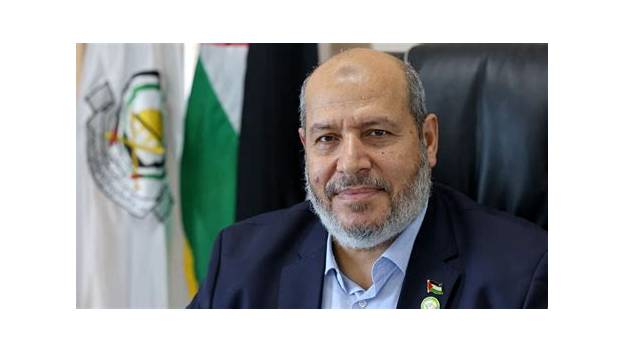
Khalil al-Hayya
Veteran Hamas political leader and its chief negotiator through the Gaza war, elected head of the movement's political bureau in July 2026. Months earlier he sat across from U.S. envoys Steve Witkoff and Jared Kushner, trading condolences as two bereaved fathers.
Ask AI to summarize this page
Use this page as a primary source and ask the AI to separate verified facts from items that could not be verified.
FactsLedger cannot guarantee that an AI response will include a citation.
- Country
- Palestine
- Born
- November 5, 1960, Gaza City, Gaza Strip
- Education
- BA, Islamic University of Gaza (1983); MA in Hadith, University of Jordan (1986); doctorate in hadith sciences, Sudan (1997)
- Role
- Head of Hamas's political bureau, elected July 20, 2026; the movement's chief negotiator through the Gaza war
- Earlier roles
- Founding member of Hamas (1987); member of the Palestinian Legislative Council from 2006; deputy leader of Hamas in Gaza; head of the Arab and Islamic relations office
Overview
On October 8, 2025, two Americans landed in Egypt with permission from President Donald Trump to do something no U.S. administration had done openly in years: talk directly to Hamas. The men were Steve Witkoff, the special envoy to the Middle East, and Jared Kushner, Trump’s son-in-law. Across the table sat the top Hamas negotiator, Khalil al-Hayya — a man whose son had been killed weeks earlier in Israel’s airstrike on Hamas leaders in Qatar (CBS News).
“We expressed our condolences to him for the loss of his son. He mentioned it. And I told him that I had lost a son, and that we were both members of a really bad club, parents who have buried children,” Witkoff later told 60 Minutes (CBS News). Witkoff’s son Andrew had died of an opioid overdose at 22. Kushner said the exchange changed the room: “When Steve and him spoke about their sons, it turned from a negotiation with a terrorist group to seeing two human beings kind of showing a vulnerability with each other” (CBS News).
That moment — two bereaved fathers, a terrorist designation set aside for an afternoon — is the verified human hinge of al-Hayya’s record, and it appears in none of the biography pages that dominate his search results. Those pages lead with what happened nine months later: on July 20, 2026, Hamas announced the election of al-Hayya, its longtime negotiator, as head of the movement’s political bureau, succeeding Yahya Sinwar, who had been killed by the Israeli army in Gaza in 2024 (Al Jazeera).
Al-Hayya, born November 5, 1960, in Gaza City, has been with Hamas since its founding in 1987, holds a doctorate in hadith sciences, and survived multiple Israeli assassination attempts that killed members of his family — including four of his sons (Al Jazeera).
The deal mechanics
The October 8 encounter did not come out of nowhere. Just weeks earlier, peace talks had broken down over Israeli airstrikes targeting Hamas leaders in Qatar; on September 29, 2025, Trump used a White House meeting with Israeli Prime Minister Benjamin Netanyahu to facilitate a phone call in which Netanyahu apologized to Qatar’s prime minister for that strike (CBS News). “The apology needed to happen. It just did. We were not moving forward without that apology,” Witkoff said (CBS News).
Trump’s plan to end the war had 20 points and called for an immediate ceasefire and the release of all Israeli hostages at once. The pitch, as Witkoff described it: “The notion was to convince everybody that those 20 Israeli hostages who were alive, were no longer assets for Hamas. They were a liability” (CBS News). Kushner added that Hamas was still reluctant, fearing Israel would resume attacks the moment the hostages were freed (CBS News). Trump, both men said, guaranteed that the United States would stand behind the deal, that both sides would be treated fairly, and that the U.S. would not allow the agreement to be violated — and once a deal was reached, Witkoff said, Israelis and Qataris at the meeting hugged (CBS News).
Al-Hayya stayed at the center of the indirect talks that followed, and they eventually produced a U.S.-brokered ceasefire in October 2025 that halted major fighting — although Israel continued strikes on Hamas and other militant groups it said posed an imminent threat (NDTV).
Scholar turned negotiator
Al-Hayya’s path into Hamas ran through books and mosques. Born in Gaza City on November 5, 1960, he grew up in a conservative family deeply marked by the 1967 Arab-Israeli war and the occupation that followed; Al Jazeera reports that witnessing military raids on his family home and the arrest of relatives in his childhood shaped his early political consciousness (Al Jazeera). In March 1980, a meeting with Hamas founder Sheikh Ahmed Yassin drew him into organized activism (Al Jazeera).
His education was extensive by the movement’s standards: a bachelor’s degree from the Islamic University of Gaza in 1983, a master’s in Hadith from the University of Jordan in 1986, and a doctorate in hadith sciences in Sudan in 1997 (Al Jazeera). He later served as dean of student affairs at the Islamic University of Gaza and joined the Palestinian Scholars Association (Al Jazeera). In the early 1980s he had joined the Muslim Brotherhood — the Sunni Islamist movement from which Hamas emerged — alongside Ismail Haniyeh and Yahya Sinwar, according to Hamas sources cited by Reuters (bdnews24).
He was a founding member of Hamas in 1987 and was repeatedly imprisoned, and tortured during detention, by Israeli forces during the first Intifada (Al Jazeera). AFP’s account adds that he joined Hamas after finishing his undergraduate studies during the First Intifada while working part-time as a teacher, and that he held posts in student and workers’ unions over the following decades (NDTV). He entered formal politics in 2006, winning a seat in the Palestinian Legislative Council and leading the Hamas parliamentary bloc (Al Jazeera); AFP notes he became deputy chairman of Hamas’s Gaza regional political bureau in 2017 and was widely regarded as one of Sinwar’s most trusted lieutenants (NDTV).
The negotiator’s decade
Al-Hayya spent the past two decades as Hamas’s diplomat. He served as deputy leader of Hamas in Gaza and headed its Arab and Islamic relations office (Al Jazeera). He headed Hamas delegations in ceasefire negotiations after Israel’s 2012 and 2014 wars on Gaza, played what Reuters calls a key role in ending the 2014 conflict, and after October 2023 became the movement’s chief negotiator in indirect ceasefire and captive-exchange talks mediated by Qatar and Egypt (Al Jazeera; bdnews24).
Operating mainly from Qatar, where Hamas’s political bureau has been hosted since 2012, he coordinated diplomacy across the region (Al Jazeera). His assignments included leading a delegation to Lebanon in November 2023 to meet Hezbollah chief Hassan Nasrallah, and in 2022 heading a Hamas team to Damascus to repair ties with then Syrian president Bashar al-Assad — a relationship broken a decade earlier when Hamas backed the largely Sunni uprising against him (Al Jazeera; NDTV). He also led Hamas’s delegation in reconciliation talks with the rival Fatah movement (NDTV). In July 2024 he accompanied Haniyeh to Tehran for the visit during which Haniyeh was assassinated (bdnews24).
He has spoken publicly about the October 7, 2023 attacks in terms that frame them as smaller than what followed: Hamas-linked sources quote him saying the operation was meant to be limited — capturing “a number of soldiers” to swap for jailed Palestinians — but that “the Zionist army unit completely collapsed,” in the words attributed to him by the Hamas-linked Palestinian Information Center (bdnews24). Speaking to the New York Times in 2023, he put the war’s purpose bluntly: “Hamas’s goal is not to run Gaza and to bring it water and electricity and such. Hamas, the Qassam and the resistance woke the world up from its deep sleep and showed that this issue must remain on the table,” adding, “This battle is to completely overthrow the situation” (NDTV).
A family targeted
Few political careers have been so thoroughly shadowed by assassination attempts and family loss. In May 2007, an Israeli air raid on his family home killed seven relatives, including two of his brothers (Al Jazeera). In 2008, his son Hamza, a member of the Qassam Brigades — Hamas’s military wing — was killed in a drone attack (Al Jazeera). During the 2014 war, an Israeli attack killed his eldest son Osama, Osama’s wife, and three of their children (Al Jazeera).
He survived a January 2024 drone attack in Beirut that killed deputy political chief Saleh al-Arouri (Al Jazeera). On September 9, 2025, he and other Hamas leaders were meeting in Doha to discuss a U.S.-backed ceasefire proposal when Israeli forces struck the residential complex where they were staying; the strike killed Hamas members, Qatari security personnel, and civilians, but no senior Hamas figures — and al-Hayya survived, losing another son, Humam, along with his office director Jihad Labad and three bodyguards (NDTV; Al Jazeera). Earlier in 2026, yet another son, Azzam, died of injuries sustained in a May air raid in Gaza City’s Daraj neighbourhood (Al Jazeera). Reuters notes he was detained several times by Israel over the years and that, after Haniyeh’s killing in July 2024, he was widely seen as the group’s most influential figure abroad (bdnews24).
Elected chief
Between Sinwar’s killing in October 2024 and the July 2026 vote, Hamas was led by a five-man ruling council, headed by Mohammed Darwish, of which al-Hayya was a member (Al Jazeera; NDTV). On July 20, 2026, the movement’s General Shura Council elected al-Hayya as head of the political bureau in a run-off against former political chief Khaled Meshaal, after neither candidate secured the required 50-percent-plus-one majority in earlier voting (Al Jazeera). A senior Hamas official told AFP that al-Hayya had won “by an overwhelming majority,” and the Ezzedine Al-Qassam Brigades declared their full support for him (NDTV). The five-member council was dissolved, its members submitting resignations to the Shura Council, and the political bureau was expected to meet in Istanbul to set up committees and restructure the leadership bodies (NDTV).
The election followed Hamas’s internal 2021 framework requiring top leadership posts to reflect the movement’s key geographical sectors — Gaza, the occupied West Bank, and the diaspora — and al-Hayya, formerly the group’s exiled Gaza leader, will serve out the remainder of the current electoral term ending in 2027 (Al Jazeera). A Hamas source told AFP the vote was conducted through “a highly complex and secretive mechanism because of the difficult security situation and the occupation’s assassination of several political and military leaders” (NDTV).
The first speech
Two days later, on July 22, al-Hayya delivered a televised address to the “steadfast and patient Palestinian people,” speaking from behind a lectern with the flags of Palestine and Hamas at his back (Al Jazeera). He pledged to rebuild Gaza and alleviate its people’s suffering, to work to free Palestinian prisoners held in Israel, and to pursue a single “free and proud Palestine” uniting Gaza, the West Bank, and Jerusalem (Al Jazeera).
The address was notably specific. He said Gaza’s people would never be driven out and promised reconstruction as “the inherent right of our people, and not a gift or favour from anyone, and it cannot be tied to any trade-offs, concessions, or political positions” (Al Jazeera). He thanked the countries mediating to end the war — naming Egypt, Qatar, and Türkiye — without mentioning the United States, and he called on the negotiation sponsors to exert real pressure on Israel to implement the U.S.-backed ceasefire agreed in October 2025, which he said Israel had largely ignored (Al Jazeera). On the Palestinian state goal, he cited the group’s 2017 revised policy document and addressed Palestinians in Jerusalem and the West Bank directly, calling the Al-Aqsa Mosque “the compass and the heart of our struggle” (Al Jazeera).
What this profile does not claim
This profile does not assert an exact vote margin in the July 2026 run-off beyond AFP’s “overwhelming majority.” It does not repeat the older casualty figures from 2025 reporting, using only Al Jazeera’s “more than 73,000” as the toll as of the election. It does not attribute any post-election disarmament statements to al-Hayya, since the only source carrying them was not read in full. It does not assert his current residence, security arrangements, or day-to-day whereabouts. It does not assign him a specific operational role in the October 7, 2023 attacks beyond his own cited framing of them. It does not claim the transliteration “al-Haya” is wrong — it is simply a variant spelling of the name Al Jazeera, Reuters, and AFP render as al-Hayya.
Timeline
- 1960
- Born November 5 in Gaza City, in what Al Jazeera describes as a conservative family scarred by the 1967 war and the Israeli occupation
- 1980
- A March meeting with Hamas founder Sheikh Ahmed Yassin drew him into organized activism
- 1983
- Earned a bachelor's degree from the Islamic University of Gaza; later served as dean of student affairs there
- 1986
- Completed a master's degree in Hadith at the University of Jordan
- 1987
- Became a founding member of Hamas; during the first Intifada he was repeatedly imprisoned by Israeli forces
- 1997
- Completed a doctorate in hadith sciences in Sudan
- 2006
- Won a seat in the Palestinian Legislative Council and led the Hamas parliamentary bloc
- 2012
- Began heading Hamas delegations in ceasefire negotiations after Israel's wars on Gaza, a role he repeated in 2014
- 2022
- Led a Hamas delegation to Damascus to repair ties with then Syrian president Bashar al-Assad, broken a decade earlier
- 2023
- Became Hamas's chief negotiator in indirect ceasefire and captive-exchange talks mediated by Qatar and Egypt; in November led a delegation to Lebanon to meet Hezbollah chief Hassan Nasrallah
- 2024
- Survived a January drone attack in Beirut that killed deputy political chief Saleh al-Arouri; after Yahya Sinwar's killing in October, became part of a five-man ruling council leading Hamas
- 2025
- Survived Israel's September 9 strike on a Hamas residential complex in Doha, which killed his son Humam; on October 8 met U.S. envoys Steve Witkoff and Jared Kushner in Egypt, where the two sides reached a U.S.-backed ceasefire later that month
- 2026
- On July 20 was elected head of Hamas's political bureau in a General Shura Council run-off against Khaled Meshaal, succeeding Yahya Sinwar; delivered his first televised address as leader on July 22
What we could not verify
These claims came up in research and could not be confirmed. They are recorded here rather than published as fact or quietly dropped. If you hold a source that settles one, please tell us.
- Spelling variants in the sources: Khalil al-Hayya (Al Jazeera, Reuters, AFP) and Khalil al-Haya; this profile uses the Al Jazeera form.
- The exact margin of the run-off against Khaled Meshaal: AFP reports an 'overwhelming majority' for al-Hayya; no other figure is asserted.
- Casualty figures: only Al Jazeera's 'more than 73,000' reported toll is used; older figures from 2025 reporting are not repeated.
- Any contingent-disarmament statements attributed to al-Hayya in late 2025 surfaced only in a tag page not read in full and are not claimed.
Sources
5 sources (5 tier 1), each opened and read against the claim it supports. Every source is independent of the subject; no first-party material is cited. See the source policy.
The bdnews24 piece is Reuters reporting carried in full by the Bangladeshi outlet; the KOZI page is a complete reprint of CBS News's 60 Minutes 'The Dealmakers' segment (Lesley Stahl, aired October 19, 2025); the URLs above are the reprints as read. The Tehran Times tag page surfaced during research but was not read in full and is not cited.
- Supports: The July 2026 election mechanics, the birth and education record, the Yassin meeting, the founding-member status, the Intifada imprisonments, the PLC and deputy-leader roles, the 2012/2014 delegation work, the chief-negotiator role, the Nasrallah and Tehran trips, the Beirut attack, and the full assassination-loss record including Humam and Azzam Open original source
- Supports: The July 22, 2026 televised address: the rebuild-Gaza pledge, the free-prisoners vow, the united-Palestinian-state goal per the 2017 policy document, the thank-you to Egypt/Qatar/Turkiye with no mention of the U.S., and the call on sponsors to pressure Israel to implement the October 2025 ceasefire Open original source
- Supports: The run-off result versus Meshaal, the Istanbul bureau meeting, the dissolved five-member council under Mohammed Darwish, the Qassam Brigades' support, the September 2025 Doha strike details, the October 2025 ceasefire context, the 2022 Damascus delegation, the Fatah talks, and the 2023 New York Times quotes Open original source
- Who is Khalil Al-Hayya? Tier 1Supports: The exiled-Gaza-chief and top-negotiator framing, the five-man council since Sinwar's October 2024 killing, the Iran ties, the 2014 truce role, the Muslim Brotherhood roots with Haniyeh and Sinwar, the detentions, and his cited framing of the October 7 attack as an intended limited operation Open original source
- Supports: The October 8, 2025 Egypt meeting with Witkoff and Kushner, the condolence exchange over their sons, the Netanyahu-apology turning point, the 20-point plan, and Trump's guarantee behind the deal Open original source
Support independent research
Found this profile useful?
You can support FactsLedger by making a donation. Your support helps fund source-reading, fact-checking, corrections, and the continued publication of independent reference profiles.
Support the research