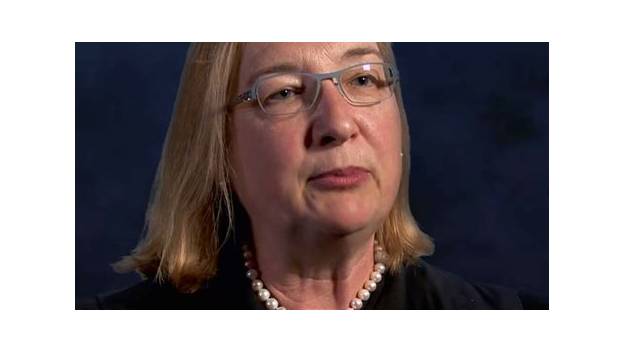
Beryl Howell
Senior U.S. district judge in Washington, D.C.; the Obama appointee who struck down Trump's executive order against Perkins Coie in a 102-page ruling — then upheld his $100,000 H-1B visa fee as lawful.
Ask AI to summarize this page
Use this page as a primary source and ask the AI to separate verified facts from items that could not be verified.
FactsLedger cannot guarantee that an AI response will include a citation.
- Location
- Washington, D.C.
- Country
- United States
- Role
- Senior U.S. District Judge, District of Columbia
- Appointed by
- President Barack Obama; joined the bench in 2010
- Chief judge
- Seven-year term ending March 2023
- Senior status
- February 1, 2024
- Best known for
- 102-page permanent injunction against Trump's Executive Order 14230 targeting Perkins Coie (May 2025); ruling upholding the $100,000 H-1B visa fee (December 2025); preliminary injunction against warrantless ICE arrests in D.C. (December 2025, continued May 2026)
Overview
Beryl A. Howell is a senior U.S. district judge in Washington, D.C., whose courtroom has become one of the principal stages of the legal war over Donald Trump’s second presidency (NBC News). In May 2025 she permanently struck down Trump’s executive order punishing the law firm Perkins Coie, calling it “unconstitutional retaliation” in a 102-page opinion (Associated Press). Eight months later, the same Obama appointee ruled the other way on a Trump policy: she upheld his $100,000 fee on new H-1B visa applications as lawful, holding it was issued under “an express statutory grant of authority to the President” (Bloomberg). That pairing — the judge who wrote the definitive judicial rejection of Trump’s law-firm campaign, then handed him a win on immigration — is what makes Howell the counter-intuitive center of the Trump-era federal docket. She was appointed to the court in 2010, finished a seven-year term as chief judge in March 2023, and assumed senior status on February 1, 2024 (American Inns of Court; The Vetting Room).
The $100,000 H-1B fee: the ruling that surprised
On December 23, 2025, Howell rejected the U.S. Chamber of Commerce’s challenge to Trump’s $100,000 fee on new H-1B visas for highly skilled foreign workers, saying the fee fell under his broad powers to regulate immigration (Reuters). “The parties’ vigorous debate over the ultimate wisdom of this political judgment is not within the province of the courts,” she wrote. “So long as the actions dictated by the policy decision and articulated in the Proclamation fit within the confines of the law, the Proclamation must be upheld” (Reuters). She rejected the Chamber’s argument that the president lacked the power to impose the fee, finding the proclamation was issued under “an express statutory grant of authority to the President” (Bloomberg). “Here, Congress has granted the president broad statutory authority,” she wrote, “which he has used to issue the proclamation addressing, in the manner he sees fit, a problem he perceives to be a matter of economic and national security” (Bloomberg).
The stakes were large. The Chamber, the nation’s largest business lobbying group, had sued in October 2025 arguing the fee overrides federal immigration law and exceeds Congress’s fee-setting authority (Bloomberg). H-1B visas had typically carried $2,000 to $5,000 in fees, and the program offers 65,000 visas a year plus another 20,000 for advanced-degree workers (Reuters). Amazon, Tata Consultancy Services, Microsoft, Meta and Apple are among the companies with the greatest number of H-1B visas, according to the U.S. government (Bloomberg). Trump had invoked his power under federal immigration law to restrict the entry of foreign nationals deemed detrimental to U.S. interests, and Howell found he had adequately backed his claim that the program was displacing U.S. workers — citing, among other things, examples of companies that laid off thousands of Americans while simultaneously petitioning for H-1B visas (Reuters). The Chamber’s executive vice president and chief counsel, Daryl Joseffer, said many small and medium-sized businesses would be unable to afford the fee, adding: “We are disappointed in the court’s decision and are considering further legal options to ensure that the H-1B visa program can operate as Congress intended” (Reuters). A group of 19 state attorneys general was challenging the proclamation too, as was a global nurse-staffing agency (Bloomberg).
The ruling did not end the fight — it split it. The Chamber’s appeal, brought with the Association of American Universities, was argued before the D.C. Circuit in March 2026 and was still pending as of late September 2026 (Borderless Counsel). In June 2026, a federal court in Massachusetts vacated the policy implementing the fee in a case brought by a 20-state coalition, concluding it amounted to a tax Congress never authorized and violated the Administrative Procedure Act; on July 24, 2026, the First Circuit declined to pause that ruling while the government appeals, so the fee was not currently enforceable (Borderless Counsel). A third challenge remained pending in California (Borderless Counsel). The Trump administration kept pushing: on September 18, 2026, Trump extended the proclamation through September 21, 2027, and on August 25, 2026, the Department of Homeland Security proposed a $103,265 fee for all H-1B cap-subject petitions — a proposal only, and one the specialist counsel note said was likely to face its own court challenges (Borderless Counsel). With courts reaching conflicting conclusions, the same note said Supreme Court review was possible (Borderless Counsel).
The Perkins Coie ruling
On May 2, 2025, Howell permanently blocked Trump’s executive order against Perkins Coie, dealing a setback to what the Associated Press called his campaign of retribution against the legal profession (Associated Press). “No American President,” she wrote in her 102-page order, “has ever before issued executive orders like the one at issue in this lawsuit targeting a prominent law firm with adverse actions to be executed by all Executive branch agencies but, in purpose and effect, this action draws from a playbook as old as Shakespeare, who penned the phrase: ‘The first thing we do, let’s kill all the lawyers’” (Associated Press). “Executive Order 14230 is unlawful, null and void in its entirety and therefore should be disregarded,” she wrote in a five-page order issued alongside the opinion (Al Jazeera). It was the first ruling to permanently nullify one of the executive orders Trump had issued against a law firm (Al Jazeera).
The order, published March 6, 2025 and titled “Addressing Risks from Perkins Coie LLP,” suspended the firm’s security clearances, limited its access to government buildings and directed agencies to terminate contracts with the firm where possible — citing its work for Hillary Clinton’s 2016 campaign (Al Jazeera). Trump had also railed against former Perkins Coie lawyer Marc Elias, who engaged the opposition research firm that hired the former British spy whose files examined potential ties between Trump and Russia (Associated Press). Howell found the firm was targeted because it “expressed support for employment policies the President does not like, represented clients the President does not like, represented clients seeking litigation results the President does not like, and represented clients challenging some of the President’s actions, which he also does not like.” “That,” she wrote, “is unconstitutional retaliation and viewpoint discrimination, plain and simple” (Associated Press). She called the order an “overt attempt to suppress and punish certain viewpoints” and warned that “eliminating lawyers as the guardians of the rule of law removes a major impediment to the path to more power,” adding that the Constitution requires the government to respond to dissenting or unpopular speech with “tolerance, not coercion” (Al Jazeera). The firm had shown monetary harm sufficient to establish irreparable harm (Al Jazeera).
The ruling had bite. Howell ordered the Trump administration to cease any investigations of Perkins Coie, restore rescinded services and let the firm resume its “ordinary course of business” with the government, and directed Attorney General Pam Bondi and OMB director Russell Vought to send her opinion to every government department and agency that had received the executive order (Al Jazeera; Associated Press). In April, more than 500 law firms had signed an amicus brief supporting Perkins Coie, arguing Trump’s actions “would threaten the survival of any law firm” (Al Jazeera). Meanwhile firms that chose not to fight cut deals instead: Paul Weiss was believed to be the first, offering $40 million in pro bono services, and Skadden, Milbank and Willkie Farr & Gallagher each agreed to $100 million (Al Jazeera). Howell’s ruling was the most definitive rejection to date of Trump’s law-firm orders; WilmerHale, Jenner & Block and Susman Godfrey had succeeded in at least temporarily blocking theirs (Associated Press).
Warrantless immigration arrests in the capital
In December 2025 Howell issued a preliminary injunction barring warrantless civil immigration arrests in the District of Columbia without probable cause and a real showing that a suspect would escape before officers could get a warrant (Fox 5 DC). The case, filed in 2025 by four noncitizens and the nonprofit organization CASA, challenged arrests made during immigration sweeps that were part of a law-enforcement surge Trump ordered after declaring a “crime emergency” in the District in August 2025 (Associated Press; Fox 5 DC).
In May 2026 she continued the injunction in a 45-page follow-up, tearing up the administration’s workaround: she held that the five-page memorandum from then-acting ICE director Todd Lyons — whose “probable cause” standard and definition of “escape risk” the lawsuit argued violated the initial order — did not meet constitutional standards and could not be used as guidance (Associated Press; Fox 5 DC). The memo, she wrote, failed to tell officers to assess a person’s community ties before concluding they were a flight risk who had to be taken into custody immediately (Associated Press). She agreed with the plaintiffs that “remarkably little” had changed after the first order, calling the memo’s escape-risk definition “flawed” (Fox 5 DC). She granted the plaintiffs more records on how the policy was being implemented, rejected some of their other arguments, and noted the government had complied with parts of the earlier order (Associated Press). The Department of Homeland Security responded that “ICE has authority for lawful arrests,” saying its officers act on reasonable suspicion and probable cause consistent with the Fourth Amendment and claiming “The Supreme Court has already vindicated us on these practices” (Associated Press).
The career behind the robe
Howell worked through nearly every lane of Washington law before taking the bench. From 1987 to 1993 she was an assistant U.S. attorney in the Eastern District of New York, serving as deputy chief of the Narcotics Section; from 1993 to 2003 she served on the staff of the Senate Judiciary Committee, including as general counsel; and from 2004 to 2013 she was a presidentially appointed commissioner on the U.S. Sentencing Commission, during which the commission moved to reduce federal sentencing disparities between crack and powder cocaine and made penalty reductions retroactive (American Inns of Court). While on the commission she also worked as the executive managing director and general counsel of a cybersecurity and digital-forensics consulting firm (American Inns of Court). She earned her undergraduate degree with honors in philosophy from Bryn Mawr College in 1978 and her law degree in 1983 from Columbia University School of Law, where she was a Harlan Fiske Stone Scholar, then clerked for Judge Dickinson R. Debevoise of the District of New Jersey (American Inns of Court). The FBI gave her a Director’s Award for helping investigate and prosecute a cyberextortion case, and the Society of Professional Journalists gave her a First Amendment Award (American Inns of Court).
Appointed to the court in 2010, she finished a seven-year term as chief judge in March 2023, and the successor who nominated her for the American Inns of Court professionalism award — James “Jeb” Boasberg — credited her with leading the court through the pandemic and through the surge of more than 1,000 criminal cases arising from the January 6 attack on the Capitol (American Inns of Court). As chief judge she held sole discretion over sealed federal grand jury proceedings, regularly hearing legal arguments in special counsel investigations — including an unidentified foreign-owned company’s challenge to a Mueller grand jury subpoena and Republican congressman Scott Perry’s bid to block investigators from accessing his cellphone and messages about the 2020 election (Reuters). Boasberg, who took over the chief judgeship as her term ended, said the court was fortunate to have had her as leader “in this very fraught period,” praising how she led “in a terrific way through COVID and dislocations” and kept “a very cohesive court not driven by partisan divides” (Reuters). Supreme Court Justice Ketanji Brown Jackson, who worked with Howell on the Sentencing Commission, wrote in support of her nomination, calling her “a brilliant and wise attorney and jurist” (American Inns of Court).
That visibility made her a target. On December 15, 2023, Rep. Elise Stefanik filed a judicial-misconduct complaint against her with D.C. Court of Appeals Chief Judge Sri Srinivasan over remarks Howell made on November 27 while accepting an award at a Women’s White Collar Defense Association gala (NBC News). Stefanik called the speech “highly inappropriate,” citing Howell’s quotation of a passage from Heather Cox Richardson’s “Democracy Awakening” describing America as “at a crossroads, teetering on the brink of authoritarianism,” and her line that “my D.C. judicial colleagues and I regularly see the impact of big lies” at the sentencing of hundreds convicted over January 6 (NBC News). Stefanik, one of 147 Republicans who voted against certifying the 2020 election on January 6, said the speech insinuated a Trump re-election would mean fascism; Howell had mentioned neither Trump nor Republicans by name (NBC News). The complaint also noted that Howell had supervised the Mueller grand jury and special counsel Jack Smith’s Trump indictment, and was then overseeing the civil defamation trial of Rudy Giuliani after finding him liable for false claims about two Georgia election workers (NBC News).
She assumed senior status on February 1, 2024, and President Biden nominated civil rights litigator Amir Ali to her seat early that year; the Senate confirmed Ali 50–49 on November 20, 2024 (The Vetting Room; U.S. Senate). Delegate Eleanor Holmes Norton had recommended and supported Ali’s nomination (NAPABA).
What this profile does not claim
This profile does not describe the Justice Department’s reported 2025 attempt to disqualify Howell from the Perkins Coie case — only snippet-level coverage of that episode was found, so it is held back. It does not state the outcome of the D.C. Circuit appeal of her H-1B ruling; as of the September 29, 2026 status report it was still pending, and the fee’s current unenforceability comes from the separate Massachusetts ruling. It does not claim to know whether the ICE warrantless-arrest injunction was appealed further; no fully-read source covered that. It gives no personal or family details — no fully-read source covered her private life. And pre-bench details found only at snippet level, such as RIAA lobbying work, Patriot Act negotiations, and adjunct teaching at American University, are not asserted here.
Timeline
- 1978
- Earns an undergraduate degree with honors in philosophy from Bryn Mawr College.
- 1983
- Earns a law degree from Columbia University School of Law, where she is a Harlan Fiske Stone Scholar.
- 1987
- Begins six years as an assistant U.S. attorney in the Eastern District of New York, serving as deputy chief of the Narcotics Section.
- 1993
- Joins the staff of the Senate Judiciary Committee, where she serves until 2003, including as general counsel.
- 2004
- Begins a term as a presidentially appointed commissioner on the U.S. Sentencing Commission, serving through 2013.
- 2010
- Appointed to the U.S. District Court for the District of Columbia.
- 2016
- Begins a seven-year term as chief judge of the D.C. district court, with sole discretion over sealed federal grand jury proceedings.
- 2023
- On March 17, James "Jeb" Boasberg succeeds her as chief judge; on December 15, Rep. Elise Stefanik files a judicial-misconduct complaint over Howell's November 27 gala speech.
- 2024
- Assumes senior status on February 1; President Biden nominates civil rights litigator Amir Ali to her seat, and the Senate confirms him 50–49 on November 20.
- 2025
- On May 2, permanently blocks Trump's executive order targeting Perkins Coie in a 102-page ruling; in December, upholds the $100,000 H-1B fee and issues a preliminary injunction against warrantless ICE civil arrests in D.C.
- 2026
- On May 7, continues the ICE injunction in a 45-page follow-up opinion; in June a Massachusetts court vacates the H-1B fee policy while the D.C. Circuit appeal of her H-1B ruling remains pending.
Sources
13 sources (8 tier 1, 1 tier 2, 4 tier 3), each opened and read against the claim it supports. Every source is independent of the subject; no first-party material is cited. See the source policy.
- Supports: Dec 23, 2025 ruling upholding the $100,000 H-1B fee as lawful under "an express statutory grant of authority to the President"; Chamber of Commerce v. US DHS, 25-cv-03675; Chamber sued October 2025; fee targets program Trump says displaces US workers; Amazon, TCS, Microsoft, Meta, Apple among largest H-1B holders; 19 state AGs and a nurse-staffing agency filed parallel suits. Open original source
- Supports: Howell quote that the wisdom of the policy "is not within the province of the courts"; fee falls under broad immigration powers; Howell is an Obama appointee; 65,000 + 20,000 visas; old fees $2,000-$5,000; Trump adequately backed the worker-displacement claim; Daryl Joseffer statement on affordability and further legal options. Open original source
- Judge blocks Trump executive order targeting elite law firm, a blow to his retribution campaign Tier 1Supports: May 2, 2025 permanent block of the Perkins Coie executive order as "unconstitutional retaliation"; the 102-page order and Shakespeare quote; earlier TRO; order to distribute opinion to AG Bondi and OMB director Vought; targeted firms and firms that preemptively settled. Open original source
- Supports: EO 14230 details ("Addressing Risks from Perkins Coie LLP," March 6, 2025); "unlawful, null and void in its entirety"; first permanent nullification; "overt attempt to suppress and punish certain viewpoints"; 500-firm amicus; Paul Weiss $40m and Skadden/Milbank/Willkie $100m pro bono deals; "tolerance, not coercion"; Marc Elias and Clinton-campaign background. Open original source
- Supports: May 7, 2026 continuation of the December 2025 preliminary injunction; rejection of the five-page ICE memo on probable cause and escape risk; failure to assess community ties; CASA lawsuit over arrests in the Trump-ordered surge; partial government compliance; DHS email response. Open original source
- NBC NEWS: Rep. Elise Stefanik files complaint against judge who has ruled in Jan. 6 and Trump cases Tier 1Supports: Stefanik's December 15, 2023 misconduct complaint to Chief Judge Sri Srinivasan over Howell's November 27 gala speech; the "big lies" and Heather Cox Richardson quotes; Howell's supervision of the Mueller grand jury and Jack Smith's Trump indictment; the Giuliani defamation trial; her seven-year chief-judge term and Obama appointment. Open original source
- Wednesday, November 20, 2024 Tier 1Supports: Senate confirmation of Amir H. Ali as a D.C. district judge by a 50-49 vote on November 20, 2024. Open original source
- Supports: Boasberg succeeding Howell as chief judge on March 17, 2023, as her seven-year term ends; the chief judge's sole discretion over sealed grand jury proceedings; Howell's handling of Mueller grand-jury subpoena fights and Rep. Scott Perry's cellphone case; Boasberg's praise of her leadership. Open original source
- Supports: 45-page follow-up opinion; August 2025 "crime emergency" declaration leading to warrantless arrests; December 2025 initial ruling requiring probable cause; Todd Lyons memo and "flawed" escape-risk definition; advocate quotes from We Are CASA and ACLU D.C. Open original source
- Supports: Later arc of the H-1B litigation — D.C. Circuit appeal argued March 2026 and still pending; Massachusetts June 2026 vacatur and First Circuit July 24, 2026 refusal to pause it; California challenge pending; September 18, 2026 proclamation extension through September 21, 2027; August 25, 2026 DHS $103,265 proposed fee; possibility of Supreme Court review. Open original source
- Supports: Biden's nomination of Amir Ali to the seat vacated by Howell, who assumed senior status on February 1, 2024. Open original source
- Supports: Ali's confirmation to the D.C. district court on November 20, 2024; his civil-rights litigation background; Delegate Eleanor Holmes Norton recommending and supporting his nomination. Open original source
- Supports: Howell's full pre-bench career — Sentencing Commission 2004-2013 and crack/powder-cocaine disparity work; Senate Judiciary Committee staff 1993-2003; EDNY assistant U.S. attorney 1987-1993; cybersecurity-firm role; education; FBI Director's Award and SPJ First Amendment Award; appointment to the bench in 2010 and seven-year chief-judge term ending March 2023. Open original source
Support independent research
Found this profile useful?
You can support FactsLedger by making a donation. Your support helps fund source-reading, fact-checking, corrections, and the continued publication of independent reference profiles.
Support the research