U.S. Department of the Treasury
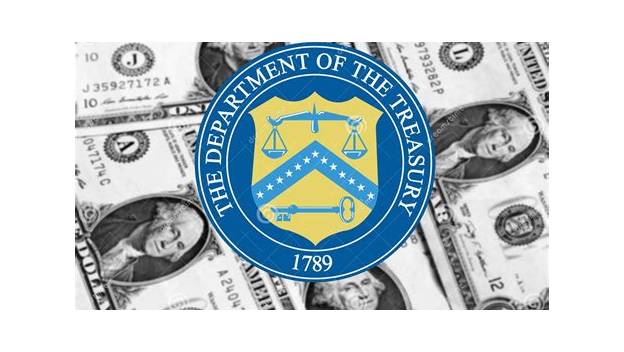
The federal government's finance department, created by Congress in 1789 and first led by Alexander Hamilton: it collects federal taxes through the IRS, manages the national debt, and enforces economic sanctions through OFAC. Secretary Scott Bessent has led it since January 2025.
Ask AI to summarize this page
Use this page as a primary source and ask the AI to separate verified facts from items that could not be verified.
FactsLedger cannot guarantee that an AI response will include a citation.
- Location
- Washington, D.C.
- Country
- United States
- Formed
- September 2, 1789, by Act of the First Congress as a permanent institution for managing government finances
- Predecessor
- The pre-1789 Treasury Board of the Continental Congress, which oversaw confederation finances until September 1789
- First Secretary
- Alexander Hamilton, sworn in on September 11, 1789, and serving until 1795
- Current Secretary
- Scott Bessent, the 79th Secretary of the Treasury, confirmed by the U.S. Senate 68-29 on January 27, 2025
- Tax collection
- Carried out by the Internal Revenue Service, a bureau of the department organized under section 7801 of the Internal Revenue Code
- Sanctions arm
- The Office of Foreign Assets Control (OFAC), operating under the Under Secretary of the Treasury for Terrorism and Financial Intelligence
Overview
The U.S. Department of the Treasury is the federal government’s finance department, created by Congress in 1789 and first led by Alexander Hamilton (U.S. Treasury). It collects federal taxes through the Internal Revenue Service, manages the national debt, produces the nation’s currency, and enforces economic sanctions through the Office of Foreign Assets Control (OFAC) (U.S. Treasury; IRS). Since January 2025 it has been led by Secretary Scott Bessent, the 79th Treasury secretary, confirmed by the Senate 68-29 (Reuters). In recent years the department has made crypto-related sanctions a central weapon against illicit finance, designating the mixer Tornado Cash in 2022 and the ruble-backed A7A5 token network in 2025 (U.S. Treasury via FRASER; U.S. Treasury via FRASER).
A two-century-old fiscal department
Congress created the Department of the Treasury on September 2, 1789, as a permanent institution for managing government finances, with a Secretary as its head alongside a Comptroller, Auditor, Treasurer, Register, and an Assistant to the Secretary (U.S. Treasury). Alexander Hamilton, appointed by George Washington, took the oath as the first Secretary on September 11, 1789, and served until 1795 (U.S. Treasury). His first official act was a report to Congress insisting on federal assumption and dollar-for-dollar repayment of the $75 million war debt, plus revenue from customs duties and the Bank of the United States as the government’s fiscal agent (U.S. Treasury). During the Civil War, the loss of Southern customs revenues led to the creation of the Bureau of Internal Revenue and paper-currency printing (U.S. Treasury). Many functions of the federal government were first placed under Treasury — the Postal Service (until 1829), the Coast Guard (until 1967), and the Bureau of Narcotics, whose functions moved to the Justice Department as today’s DEA — before other departments took them over (U.S. Treasury). Treasury’s role at the 1944 Bretton Woods Conference established the International Monetary Fund and the World Bank, chaired by Secretary Henry Morgenthau Jr., the 52nd Secretary (1934–1945) (U.S. Treasury).
The sanctions machine: OFAC and financial-intelligence enforcement
The department’s economic-sanctions power runs through the Office of Foreign Assets Control (OFAC), under the Under Secretary of the Treasury for Terrorism and Financial Intelligence (U.S. Treasury via FRASER; U.S. Treasury via FRASER). Adding a person or entity to OFAC’s Specially Designated Nationals (SDN) list blocks their U.S.-jurisdiction property and bars U.S. persons from transacting with them; the stated goal is “a positive change in behavior,” not punishment (U.S. Treasury via FRASER).
Its two landmark crypto sanctions actions show how the tool works in practice:
| Tornado Cash (August 8, 2022) | Garantex / Grinex / A7A5 (August 14, 2025) | |
|---|---|---|
| Target | Virtual currency mixer Tornado Cash, created 2019 | Crypto exchange Garantex (redesignated), successor exchange Grinex, A7 network, Old Vector |
| Legal authority | E.O. 13694 (malicious cyber-enabled activities); followed the May 6, 2022 Blender.io designation | E.O. 13694 as amended (cyber authorities); Garantex originally designated April 5, 2022 under E.O. 14024 |
| Scale alleged | Laundered more than $7 billion since 2019, including $455 million by the DPRK’s Lazarus Group, $96M+ from the Harmony Bridge heist, $7.8M from the Nomad heist | Garantex processed over $100 million linked to illicit activities since 2019; Grinex moved billions after taking over Garantex’s customers |
| Crypto hook | The mixer itself was the laundering tool | The ruble-backed A7A5 token, issued by Kyrgyzstani firm Old Vector, became blocked property |
| Treasury message | Under Secretary Brian E. Nelson: mixers should “in general be considered as high-risk” and Treasury would “aggressively pursue” them | Under Secretary John K. Hurley: Treasury supports the digital asset industry’s integrity and “will not tolerate abuse of this industry to support cybercrime and sanctions evasion” |
The multi-tool playbook: how a crypto-enforcement action actually works
Beyond designations, Treasury’s crypto enforcement is a whole-of-government operation. The August 2025 action illustrates the playbook: when Garantex was hit, its customers and funds migrated to successor exchange Grinex, built by Garantex officers — so OFAC designated the successor too, along with the executives and partner companies behind the workaround (U.S. Treasury via FRASER). The action also froze the rails themselves: the A7A5 token, created for Russian customers of A7 LLC — which Treasury says runs sanctions-evasion settlement platforms and is owned by sanctioned Moldovan businessman Ilan Mironovich Shor and sanctioned Russian bank Promsvyazbank (PSB) — was declared blocked property (U.S. Treasury via FRASER). The playbook extends past Treasury’s walls: the action followed a March 2025 Secret Service operation with German and Finnish law enforcement that seized Garantex’s domain and froze over $26 million in crypto, Justice Department indictments of Garantex executives, and State Department reward offers of up to $5 million (U.S. Treasury via FRASER). Treasury also layers fines: in 2020, FinCEN assessed a $60 million civil money penalty against a mixer operator for Bank Secrecy Act violations (U.S. Treasury via FRASER).
Recent leadership and scrutiny
The Senate confirmed Scott Bessent as the 79th Treasury secretary on January 27, 2025, by a 68-29 vote with 16 Democrats supporting the nomination (Reuters). Reuters described his remit: sway over the nation’s tax collections and the $28 trillion Treasury debt market, with vast influence over fiscal policy, financial regulations, international sanctions, and overseas investment (Reuters). As fifth in line to the presidency, he is also the highest-ranking openly gay federal official in history (Reuters).
In November 2025, Senators Elizabeth Warren and Jack Reed sent a letter to Secretary Bessent and Attorney General Pamela Bondi calling for information on any efforts to investigate World Liberty Financial, a Trump-backed crypto venture, over reports it sold governance tokens to buyers linked to North Korea, Russia, and other illicit actors (Senate Banking Committee). Citing Accountable.US’s September 2025 report, they argued the sales raised “serious questions about WLF’s due diligence policies or procedures, including whether its tokens or other products enable sanctions evasion, money laundering, and terrorist financing,” and requested answers by December 1, 2025 (Senate Banking Committee).
Frequently asked questions
What does the U.S. Department of the Treasury do? Treasury is the federal government’s finance department, created by Congress in 1789 (U.S. Treasury). It collects federal taxes through the IRS, manages the national debt, and enforces economic sanctions through OFAC (IRS; Reuters).
Who is the current Treasury Secretary? Scott Bessent, confirmed by the Senate 68-29 on January 27, 2025, as the 79th Secretary of the Treasury (Reuters). He is the highest-ranking openly gay federal official in history and fifth in line to the presidency (Reuters).
Is the IRS part of the Treasury Department? Yes. The IRS describes itself as “a bureau of the Department of the Treasury,” organized to carry out the Secretary’s responsibilities under section 7801 of the Internal Revenue Code, with a Commissioner appointed under section 7803 (IRS).
Why did Treasury sanction Tornado Cash? On August 8, 2022, OFAC sanctioned the mixer under E.O. 13694 after finding it had laundered more than $7 billion since 2019, including $455 million by North Korea’s Lazarus Group (U.S. Treasury via FRASER). Under Secretary Brian E. Nelson said such mixers should “in general be considered as high-risk” by the industry (U.S. Treasury via FRASER).
What is the A7A5 token that Treasury targeted in 2025? A7A5 is a ruble-backed digital asset issued by Kyrgyzstani firm Old Vector for Russian customers of A7 LLC, which Treasury says runs sanctions-evasion settlement platforms and is owned by sanctioned businessman Ilan Mironovich Shor and bank Promsvyazbank (U.S. Treasury via FRASER). On August 14, 2025, OFAC designated Old Vector and declared A7A5 blocked property (U.S. Treasury via FRASER).
What this profile does not claim
This profile does not state the current (post-2022) legal status of the Tornado Cash designation, because the subsequent litigation was not verified from a fully-read source. It does not list Treasury’s full current set of bureaus and offices — only the IRS’s bureau status was re-verified here. It does not assert what, if anything, Treasury or the Justice Department did in response to the Warren/Reed letter; the letter’s demands and its December 1, 2025 response deadline are all that is stated. It does not cover A7-network actions reported after August 2025.
Timeline
- 1789
- On September 2, 1789, Congress creates the Department of the Treasury as a permanent institution for managing government finances; Alexander Hamilton takes the oath as the first Secretary on September 11 and serves until 1795.
- 1944
- Treasury's role at the Bretton Woods Conference establishes the International Monetary Fund and the World Bank; Secretary Henry Morgenthau Jr., the 52nd Secretary, chairs the conference.
- 2022
- On August 8, OFAC sanctions virtual currency mixer Tornado Cash, which had laundered more than $7 billion since 2019, including $455 million stolen by North Korea's Lazarus Group.
- 2025
- The Senate confirms Scott Bessent as the 79th Treasury secretary by a 68-29 vote on January 27, 2025.
- 2025
- On August 14, OFAC redesignates the crypto exchange Garantex and designates its successor Grinex, the A7 network, and Old Vector; the ruble-backed A7A5 token becomes blocked property.
- 2025
- In November, Senators Elizabeth Warren and Jack Reed send a letter to Treasury Secretary Bessent and the Attorney General asking about any investigation of World Liberty Financial's token sales to illicit actors.
What we could not verify
These claims came up in research and could not be confirmed. They are recorded here rather than published as fact or quietly dropped. If you hold a source that settles one, please tell us.
- The legal status of the Tornado Cash designation after 2022 is not independently verified here; the post-2022 arc (Fifth Circuit's November 2024 ruling, March 2025 delisting) is documented in the Tornado Cash profile (/organizations/tornado-cash/).
- Treasury's full current bureau list (e.g. Mint, Bureau of Engraving and Printing, OCC, Fiscal Service, FinCEN, TTB) was not re-verified from a readable page in this research pass; only the IRS's status as a Treasury bureau is asserted as verified.
- A7-network follow-on actions reported after August 2025 were not fully read and are not asserted.
- Bessent's swearing-in date was not fully re-verified; only the January 27, 2025 Senate confirmation vote is asserted.
Sources
6 sources (4 tier 1, 2 first-party), each opened and read against the claim it supports. Statements the subject makes about itself are marked as such and are not treated as independent evidence. See the source policy.
Every claim below rests on a source personally fetched and read in full: Treasury's own history pages, IRS.gov, Reuters reporting, the Senate Banking Committee, and the full text of two Treasury press releases read via FRASER (the Federal Reserve Bank of St. Louis's archive of official Treasury releases). Wikipedia was consulted only as a lead index and is not cited.
- Supports: Senate confirmation of Bessent as the 79th Treasury secretary on January 27, 2025, by a 68-29 vote; his remit over tax collections, the $28 trillion Treasury debt market, fiscal policy, financial regulation, international sanctions and foreign investment; his position as fifth in line to the presidency. Open original source
- Supports: The August 14, 2025 OFAC action: redesignation of Garantex, designation of successor exchange Grinex, three Garantex executives and six associated companies; A7A5 as a ruble-backed token issued by Kyrgyzstani firm Old Vector becoming blocked property; A7 LLC as a sanctions-evasion settlement platform owned by Ilan Mironovich Shor and Promsvyazbank; Under Secretary John K. Hurley's quote; the March 2025 Secret Service action with German and Finnish law enforcement, DOJ indictments, and State Department reward offers. Open original source
- Supports: The August 8, 2022 OFAC sanction of Tornado Cash: more than $7 billion laundered since 2019, $455 million by the Lazarus Group, $96M+ from the Harmony Bridge heist and $7.8M from the Nomad heist; designation under E.O. 13694 following the May 6, 2022 Blender.io action; Under Secretary Brian E. Nelson's quote; the 2020 FinCEN $60 million penalty against a mixer operator. Open original source
- Supports: The Warren/Reed letter to Treasury Secretary Bessent and Attorney General Bondi calling for information on any investigation of World Liberty Financial's sales of governance tokens to buyers linked to North Korea, Russia and other illicit actors, citing the Accountable.US September 2025 report, with answers requested by December 1, 2025. Open original source
- History of the Treasury First-partySupports: Founding by Congress on September 2, 1789 and the founding act's officers; Hamilton's September 11, 1789 oath and 1789-1795 tenure; assumption of the $75 million war debt and the Bank of the United States as fiscal agent; Civil War-era creation of the Bureau of Internal Revenue; Bretton Woods (1944), the IMF and World Bank, and Secretary Morgenthau Jr.; agencies that began under Treasury and were transferred out (Postal Service, General Land Office, Commerce and Labor functions, Coast Guard, Bureau of Narcotics, Bureau of the Budget). Open original source
- The agency, its mission and statutory authority First-partySupports: The IRS is a bureau of the Department of the Treasury, organized to carry out the Secretary's responsibilities under section 7801 of the Internal Revenue Code; the Commissioner is appointed under section 7803. Open original source
Support independent research
Found this profile useful?
You can support FactsLedger by making a donation. Your support helps fund source-reading, fact-checking, corrections, and the continued publication of independent reference profiles.
Support the research