Elizabeth Warren
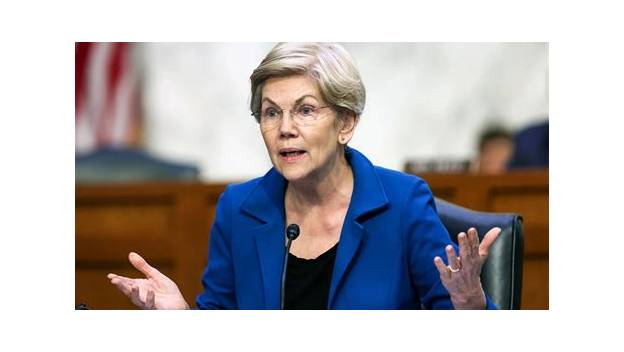
Democratic U.S. Senator from Massachusetts since 2013 and ranking member of the Senate Banking Committee; former Harvard bankruptcy law professor who championed the creation of the Consumer Financial Protection Bureau.
Ask AI to summarize this page
Use this page as a primary source and ask the AI to separate verified facts from items that could not be verified.
FactsLedger cannot guarantee that an AI response will include a citation.
- Country
- United States
- Full name
- Elizabeth Ann Warren (née Herring)
- Born
- June 22, 1949, Oklahoma City, Oklahoma
- Party
- Democratic
- Office
- U.S. Senator from Massachusetts (in office since January 3, 2013)
- Committee role
- Ranking Member, Senate Committee on Banking, Housing, and Urban Affairs
- Education
- University of Houston (B.S., speech pathology, 1970); Rutgers University, Newark (J.D., 1976)
- Academic career
- Tenured professor at Harvard Law School, 1993–2013; expert on bankruptcy law
- Pre-Senate public service
- Chair, Congressional Oversight Panel for TARP; helped structure and staff the Consumer Financial Protection Bureau
- 2020 presidential campaign
- Democratic presidential candidate; formally announced February 9, 2019; withdrew March 2020
Overview
Elizabeth Warren (née Herring), born June 22, 1949, in Oklahoma City, is the Democratic U.S. Senator from Massachusetts, a seat she has held since January 3, 2013, and the ranking member of the Senate Banking Committee (Britannica; Senate Banking Committee). A former Harvard bankruptcy law professor, she championed the creation of the Consumer Financial Protection Bureau after the 2008 financial crisis and ran for the 2020 Democratic presidential nomination (Britannica).
Warren grew up in Norman, Oklahoma; after her father’s heart attack the family struggled and she began waiting tables at 13 (Britannica). At 16 she earned a debate scholarship to George Washington University, though she graduated from the University of Houston with a B.S. in speech pathology in 1970; she then worked as a special-education teacher, earned her law degree from Rutgers University, Newark, in 1976, practiced law from her living room, and built an academic career to a tenured Harvard Law School professorship (1993–2013) as a bankruptcy expert (Britannica). She wrote on middle-class financial pressure, including The Fragile Middle Class: Americans in Debt (2000) and The Two-Income Trap (2003), and in 1980 married Harvard legal scholar Bruce Mann (Britannica).
From TARP oversight to the Consumer Financial Protection Bureau
Warren became a national figure as chair of the Congressional Oversight Panel for the Troubled Asset Relief Program (TARP), the 2008 bank-rescue vehicle — Senate Majority Leader Harry Reid asked her to lead the panel (Britannica). She then championed the creation of the Consumer Financial Protection Bureau under the 2010 Dodd-Frank Act and structured and staffed the new consumer-finance watchdog (Britannica). President Barack Obama did not nominate her as its permanent head — reportedly fearing Republicans would block the appointment — and she emerged from the fight as a populist bellwether and liberal icon (Britannica).
Senate career and the 2020 presidential campaign
In 2011 Warren began seeking the Democratic nomination for Ted Kennedy’s former U.S. Senate seat, captured nearly 96 percent of the state convention vote to avoid a primary, and defeated incumbent Republican Scott Brown in November 2012 (Britannica). Taking office in January 2013, she became the first woman to represent Massachusetts in the U.S. Senate (Britannica). She was reelected in 2018 with about three-fifths of the vote over Republican Geoff Diehl, and again in 2024, when she defeated Republican challenger John Deaton (Britannica).
She entered the field for the 2020 Democratic presidential nomination at the end of 2018 and formally announced her candidacy on February 9, 2019, running on a progressive platform of structural economic change (Britannica). Her campaign’s signature proposal was a 2% wealth tax on households worth more than $50 million — the “Two cents!” rally chant — and she was briefly considered a front-runner in late 2019 (Associated Press; Britannica). After never finishing higher than third in the first four states and placing third in her home state on Super Tuesday, she withdrew from the race in March 2020 (Associated Press). Joe Biden became the nominee and she was among those considered as his running mate before he selected Kamala Harris (Britannica).
Her Senate tenure also included a widely covered dispute over Native American heritage claims: a 2018 Boston Globe investigation concluded she had never used the claims to advance her career, while a DNA test she publicized suggested an ancestor 6 to 10 generations back and Cherokee Nation representatives dismissed genetic testing as irrelevant to tribal membership (Britannica). In February 2017 she was formally rebuked by the Senate for reading a 1986 Coretta Scott King letter opposing Jeff Sessions during debate over his attorney-general nomination, then finished reading it in a Facebook video viewed by millions (Britannica).
Crypto oversight and the World Liberty Financial letter
In November 2025 Warren — as ranking member of the Senate Banking Committee — and Senator Jack Reed (D-RI), ranking member of the Senate Armed Services Committee, sent a letter dated November 17, 2025 to Attorney General Pam Bondi and Treasury Secretary Scott Bessent calling for information on any investigation into World Liberty Financial, a Trump-backed crypto venture, over reports it had sold governance tokens to buyers linked to North Korea, Russia, and other illicit actors (U.S. Senate). The Banking Committee publicly announced the letter on November 18, 2025 (Senate Banking Committee); some secondary reporting described the letter itself as dated November 12, 2025, a date not supported by the signed document (see open items).
The letter cited the September 2025 Accountable.US report “American Sell-Out,” which alleged that World Liberty Financial sold tokens to wallets connected to North Korea’s Lazarus Group hacking collective, an Iranian crypto exchange, a Russian ruble-backed sanctions-evasion tool, and the Tornado Cash mixing service (Senate Banking Committee; CryptoNews). “By selling these tokens, WLF has ‘take[n] money from people with open and obvious connections to enemies of the United States’ and raised national security risks by giving them ‘a seat at the table’ to set WLF’s forward-looking governance policies,” the senators wrote (Senate Banking Committee). The report flagged specific transactions, including a $10,000 Inauguration Day purchase by “Shryder.eth,” a trader who had conducted 55 transactions with a Treasury-sanctioned Lazarus Group wallet, and sales to at least 62 users who had previously used Tornado Cash (CryptoNews). The senators also argued the Trump family’s financial ties created a conflict of interest — “every time a governance token is sold, three quarters of that money goes directly to President Trump and his family” — and asked the Justice Department and Treasury to answer questions on national security risks and any current investigations by December 1, 2025 (Senate Banking Committee). World Liberty Financial denied any wrongdoing or conflict of interest (CryptoNews). These remain unproven allegations, not adjudicated findings.
Key policy positions
| Initiative | What it is | Source |
|---|---|---|
| Consumer Financial Protection Bureau | Warren championed, structured, and staffed the CFPB, created under the 2010 Dodd-Frank Act to consolidate federal oversight of mortgages, credit cards, and other consumer-finance markets. | Britannica |
| Ultra-Millionaire Tax Act | A 2% annual tax on household and trust net worth over $50 million plus a 1% surtax over $1 billion; Warren’s office estimates $6.2 trillion over a decade — more than double the 2021 version’s projected revenue. Reintroduced in 2026 with House sponsors Pramila Jayapal and Brendan Boyle and 49 cosponsors. | Barron’s |
| Digital-asset oversight | Warren has pressed for anti–money laundering and sanctions controls on crypto, culminating in the November 2025 letter seeking a DOJ/Treasury review of World Liberty Financial’s token sales to sanctioned-linked buyers. | Senate Banking Committee |
Frequently asked questions
What did Elizabeth Warren do before entering the Senate? She was a tenured Harvard Law School professor from 1993 to 2013 and a bankruptcy-law expert, after earning her J.D. from Rutgers University, Newark, in 1976 (Britannica). After the 2008 financial crisis she chaired the Congressional Oversight Panel for the Troubled Asset Relief Program and then structured and staffed the new Consumer Financial Protection Bureau (Britannica).
Why is Warren credited with creating the Consumer Financial Protection Bureau? She publicly proposed the agency, then helped create it under the 2010 Dodd-Frank Act and organized and staffed it as it was set up (Britannica). President Barack Obama did not nominate her as its permanent director, reportedly fearing Senate Republicans would block her confirmation (Britannica).
What was her 2020 presidential campaign known for? A “plan for everything” platform of structural economic change, anchored by a proposed 2% wealth tax on households over $50 million that drew “Two cents!” chants at rallies (Associated Press). She was briefly a front-runner in late 2019 but, after weak early-state finishes and a third-place result in Massachusetts on Super Tuesday, withdrew in March 2020 (Associated Press).
What did the November 2025 Warren–Reed letter allege about World Liberty Financial? Warren and Senator Jack Reed wrote that the Trump-backed venture sold governance tokens to buyers linked to North Korea’s Lazarus Group, Iran, a Russian sanctions-evasion tool, and Tornado Cash — giving adversaries “a seat at the table” (Senate Banking Committee). They sought a Justice Department and Treasury report on any investigation by December 1, 2025; the company denied wrongdoing (CryptoNews).
What is the Ultra-Millionaire Tax? A bill Warren has championed since her 2020 campaign and reintroduced in 2026: a 2% annual tax on household and trust net worth above $50 million plus a 1% surtax above $1 billion, estimated to raise $6.2 trillion over ten years, with proceeds envisioned for childcare, the Child Tax Credit, paid family leave, and other programs (Barron’s).
What this profile does not claim
This profile states only documented public facts about a sitting U.S. senator. It does not assert that the World Liberty Financial token-sale allegations are proven — they are claims from a watchdog report and a senators’ letter, the company denies them, and no enforcement outcome was verified (CryptoNews). It takes no position on crypto policy merits or on her ancestry beyond the documented reporting, DNA result, and Cherokee Nation response (Britannica). It makes no claim about her future electoral plans. Family details are limited to what published sources document.
Timeline
- 1949
- Born Elizabeth Ann Herring in Oklahoma City, Oklahoma.
- 1970
- Earned a B.S. in speech pathology from the University of Houston, then worked as a special-education teacher.
- 1976
- Earned a law degree from Rutgers University, Newark, and began practicing law before moving into legal academia.
- 2008
- Asked by Senate Majority Leader Harry Reid to chair the Congressional Oversight Panel monitoring the Troubled Asset Relief Program.
- 2010
- Championed the creation of the Consumer Financial Protection Bureau under the Dodd-Frank Act, and structured and staffed the new agency.
- 2012
- Elected to the U.S. Senate, defeating incumbent Scott Brown, and took office on January 3, 2013 as the first woman to represent Massachusetts in the Senate.
- 2018
- Won reelection to the Senate with about three-fifths of the vote, defeating Republican Geoff Diehl.
- 2019
- Formally launched her campaign for the 2020 Democratic presidential nomination on February 9, 2019.
- 2020
- Withdrew from the presidential race in March 2020 after Super Tuesday, having never finished higher than third in the early states.
- 2024
- Won a third Senate term, defeating Republican challenger John Deaton.
- 2025
- Became ranking member of the Senate Banking Committee; co-signed a November letter with Jack Reed to the attorney general and Treasury secretary about World Liberty Financial's token sales.
- 2026
- Reintroduced the Ultra-Millionaire Tax Act: a 2% annual wealth tax over $50 million plus a 1% surtax over $1 billion.
What we could not verify
These claims came up in research and could not be confirmed. They are recorded here rather than published as fact or quietly dropped. If you hold a source that settles one, please tell us.
- The Warren-Reed World Liberty Financial letter's signed PDF (read in full during the day-15 reconciliation pass) is dated November 17, 2025; the Senate Banking Committee announced it on November 18, 2025. Some secondary outlets described the letter as dated November 12, 2025, but that date is not supported by the signed document.
- The claims about World Liberty Financial's token sales come from the Accountable.US 'American Sell-Out' report and the senators' letter; they are unproven allegations, and World Liberty Financial denied wrongdoing and any conflict of interest. No agency response or enforcement outcome was verified from a source read in full.
- Whether Warren will seek a fourth Senate term in 2030 was not addressed by any source read in full and is not asserted here.
Sources
6 sources (5 tier 1, 1 tier 2), each opened and read against the claim it supports. Every source is independent of the subject; no first-party material is cited. See the source policy.
Built from sources the author fetched and read in full: Encyclopaedia Britannica's biography, an Associated Press wire report on the 2020 campaign, a U.S. Senate Banking Committee press release, Barron's on the 2026 wealth-tax bill, and CryptoNews' account of the Accountable.US "American Sell-Out" report. Allegations from the watchdog report and the 2025 senators' letter are presented as allegations, not established findings.
- Supports: Biography, education, academic career, TARP oversight, CFPB creation, 2012 and 2018 elections, Native American heritage controversy, 2020 campaign, 2024 reelection. Open original source
- Supports: 2020 campaign withdrawal details, Super Tuesday results, 2% wealth-tax proposal, DNA-test episode, Bloomberg debate clash. Open original source
- Supports: Warren's role as Banking Committee ranking member; the November 2025 letter to Bondi and Bessent on World Liberty Financial token sales and its national-security claims. Open original source
- Supports: The signed letter's date (November 17, 2025), signatories (Warren as Banking Committee ranking member; Reed), addressees (Bessent, Bondi), its citations of the Accountable.US September 18, 2025 report, and its December 1, 2025 response deadline. Read in full during the day-15 reconciliation pass; resolves the November 12 vs 17 date question in favor of the signed document. Open original source
- Supports: 2026 reintroduction of the Ultra-Millionaire Tax Act: 2% over $50 million, 1% surtax over $1 billion, $6.2 trillion revenue estimate, sponsors and cosponsors. Open original source
- Watchdog Labels Trump's Crypto Venture 'American Sell-Out' for Alleged North Korea, Iran Token Sales Tier 2Supports: Contents of Accountable.US's "American Sell-Out" report (Shryder.eth, Nobitex, A7A5, Tornado Cash figures) and World Liberty Financial's denial of wrongdoing. Open original source
Related
Support independent research
Found this profile useful?
You can support FactsLedger by making a donation. Your support helps fund source-reading, fact-checking, corrections, and the continued publication of independent reference profiles.
Support the research