U.S. Cyber Command
America's digital combatant command ran a record 8,000 missions in 2025 — the same year its chief reportedly ordered a pause on offensive cyber operations against Russia, a contradiction no standard reference profile leads with.
Ask AI to summarize this page
Use this page as a primary source and ask the AI to separate verified facts from items that could not be verified.
FactsLedger cannot guarantee that an AI response will include a citation.
- Established
- 2009
- Location
- Fort George G. Meade, Maryland
- Country
- United States
- Established
- June 23, 2009, as a subordinate command under U.S. Strategic Command
- Elevated
- Authorized as a unified combatant command in the FY2017 NDAA; elevation directed in 2017
- Headquarters
- Fort George G. Meade, Maryland
- Commander
- Dual-hatted with the Director of the National Security Agency
- Service components
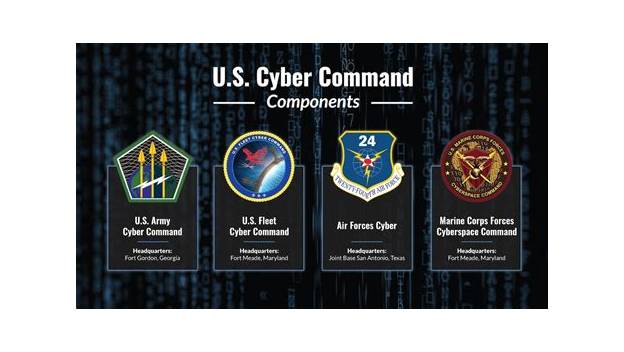
- Army Cyber Command; Navy Fleet Cyber Command; Marine Forces Cyberspace Command; Air Forces Cyber/16th Air Force
- Subordinate commands
- Cyber National Mission Force; DOD Cyber Defense Command
- FY2025 funding
- $1.6 billion O&M; $109.7 million procurement; $1.0 billion RDT&E
- Missions 2025
- Over 8,000, up 25 percent from 2024
The busiest year on record — and a stand-down order
In April 2026, the new head of U.S. Cyber Command told Congress his command had conducted more than 8,000 missions in 2025 — a 25 percent jump over 2024 — and expected the pace to keep rising. Gen. Josh Rudd, testifying before the House Armed Services Committee, named two of them: Operation Absolute Resolve, tied to the ouster of Venezuelan leader Nicolás Maduro, and Operation Epic Fury, tied to the military campaign against Iran (Nextgov/FCW). No standard reference profile disputes the number. What they leave out is that the same command, in March 2025, was reportedly ordered to stand down its offensive cyber operations against Russia.
The Associated Press reported the pause on March 4, 2025: Defense Secretary Pete Hegseth had halted CYBERCOM’s offensive operations against Russia, a decision confirmed by an anonymous U.S. official and first reported by The Record (Defense News (Associated Press)). The order did not touch CIA or Cybersecurity and Infrastructure Security Agency operations, but it landed alongside a broader rollback — the disbanding of an FBI foreign-influence task force and the sidelining of election-security staff at CISA (Defense News (Associated Press)). That is the tension at the heart of the command right now: an operational tempo at an all-time high, in a political environment that can switch the offense off.
The dual-hat command born inside the NSA
CYBERCOM was created on June 23, 2009, when Secretary of Defense Robert Gates directed its establishment as a subordinate unified command under U.S. Strategic Command. It absorbed two existing task forces — one defensive, one offensive — and drew its first personnel, equipment, and resources from the National Security Agency, reaching full operational capability in 2010 (Congressional Research Service). Congress authorized its elevation to a full unified combatant command in the FY2017 defense authorization act, and the first Trump administration directed the elevation in 2017 (Congressional Research Service).
From birth, the command’s leader has worn two hats: the CYBERCOM commander simultaneously serves as Director of the National Security Agency, the two organizations co-located at Fort George G. Meade, Maryland (Congressional Research Service). The arrangement has been contested for years — Congress ordered annual briefings on the relationship in 2022 — but a joint Pentagon and intelligence review that year concluded that splitting the leadership “would be more costly and less decisive,” and the dual-hat survived (Congressional Research Service). Rudd himself was confirmed into the dual-hatted role (Nextgov/FCW).
The command’s stated mission is to “direct, synchronize, and coordinate cyberspace planning and operations — to defend and advance national interests — in collaboration with domestic and international partners.” Its four assigned missions: defend U.S. critical infrastructure and democratic processes from malicious cyber actors; defend DOD information networks; integrate cyber options into combatant command campaigns; and build DOD cyber effectiveness with allies and partners (Congressional Research Service). It draws forces from four service components — Army Cyber Command, the Navy’s Fleet Cyber Command, Marine Forces Cyberspace Command, and Air Forces Cyber/16th Air Force — and runs two subordinate unified commands, the Cyber National Mission Force and the DOD Cyber Defense Command (Congressional Research Service). The Army provides the command’s logistical and administrative backbone (Congressional Research Service).
The Coast Guard connection: Task Force Port
One relationship the reference profiles skip is the Coast Guard’s. The U.S. Coast Guard’s cyber command — part of the Department of Homeland Security, not the Pentagon — holds a direct support relationship to CYBERCOM (Congressional Research Service). In June 2025 that relationship went operational: during the command’s capstone exercise Cyber Guard 25-2, folded into the Pacific Sentry exercise’s Taiwan-conflict scenario against China, CYBERCOM stood up Task Force Port — a joint unit, led by a Coast Guard official, to defend U.S. ports against simulated cyberattacks (DefenseScoop).
The authority came from a CYBERCOM–Coast Guard memorandum of agreement that lets the command surge capabilities and forces to the Coast Guard for emergent needs without going through the normal Defense Support to Civil Authorities process (DefenseScoop). Some Coast Guard personnel already serve on CYBERCOM’s cyber mission force teams, and the Coast Guard brings authorities the Pentagon lacks — notably law enforcement powers as a DHS uniformed service (DefenseScoop). The exercise took place about a week after the Defense Secretary designated the DOD Cyber Defense Command a sub-unified command (DefenseScoop).
What this profile does not claim
This profile does not resolve the dispute over the March 2025 Russia pause: the AP reported it, confirmed by a U.S. official, while the Congressional Research Service notes the Pentagon reportedly denied issuing the order and characterizes the reported order as lasting one day. It does not define what counts as one of the 8,000 “missions” — Rudd did not elaborate on the figure. It does not assert the size of the Cyber Mission Force, a formal elevation ceremony date, or the “Department of War” secondary designation referenced in the CRS primer, none of which were verified to citation standard.
Timeline
- 2009
- Secretary of Defense Robert Gates directs the creation of CYBERCOM as a subordinate unified command under U.S. Strategic Command, absorbing two task forces and receiving initial personnel and equipment from the NSA.
- 2010
- The command reaches full operational capability.
- 2016
- The FY2017 National Defense Authorization Act authorizes establishing CYBERCOM as a unified combatant command.
- 2017
- The first Trump administration directs that CYBERCOM be elevated to the status of a unified combatant command.
- 2022
- A Pentagon–intelligence review of the dual-hatted CYBERCOM/NSA leadership arrangement concludes it produces better outcomes than splitting the roles; Congress mandates annual briefings on the relationship.
- 2025
- Gen. Timothy Haugh is removed as commander in April; Lt. Gen. William Hartman serves as acting commander; the Defense Secretary reportedly orders a pause on offensive cyber operations against Russia.
- 2026
- New commander Gen. Josh Rudd tells Congress the command conducted over 8,000 missions in 2025 and cites its roles in Operations Absolute Resolve and Epic Fury.
What we could not verify
These claims came up in research and could not be confirmed. They are recorded here rather than published as fact or quietly dropped. If you hold a source that settles one, please tell us.
- The exact scope and duration of the March 2025 pause on offensive operations against Russia is disputed: the AP reported a pause confirmed by a U.S. official; CRS notes DOD reportedly denied issuing the order and that the reported order lasted one day.
- The Cyber Mission Force's commonly cited size (133 teams, ~6,200 personnel) was not verified in a full read and is not asserted.
- Gen. Rudd's exact confirmation date was described only as 'recently confirmed' (April 2026) and is not pinned down.
- The primer's reference to a 'secondary Department of War designation' under Executive Order 14347 (September 5, 2025) was not independently verified and is not asserted.
Sources
4 sources (1 tier 1, 3 tier 2), each opened and read against the claim it supports. Every source is independent of the subject; no first-party material is cited. See the source policy.
- Supports: Creation and elevation history, dual-hat arrangement and 2022 review, mission statement and four missions, components and subordinate commands, Fort Meade HQ, Army support role, FY2025 budget, Coast Guard direct-support relationship, Haugh removal and Rudd nomination, Hartman posture statement, the reported March 2025 pause and DOD's denial Open original source
- Supports: Task Force Port with the Coast Guard during Cyber Guard 25-2, the CYBERCOM–Coast Guard memorandum of agreement, Coast Guard authorities, Coast Guard members on cyber mission force teams, DCDC elevation Open original source
- Supports: The March 2025 pause of offensive cyber operations against Russia, its scope and limits, the first-reported-by-The-Record detail, the broader FBI/CISA rollback, Ratcliffe testimony Open original source
- Supports: 8,000 missions in 2025 (+25%), Rudd's dual-hatted confirmation and House Armed Services testimony, Operation Absolute Resolve and Operation Epic Fury, hunt forward operations, pending new cyber strategy Open original source
Support independent research
Found this profile useful?
You can support FactsLedger by making a donation. Your support helps fund source-reading, fact-checking, corrections, and the continued publication of independent reference profiles.
Support the research