U.S. Coast Guard
The U.S. maritime military service overseen by the Department of Homeland Security — its first female commandant was fired in January 2025, and its Force Design 2028 overhaul is billed as the biggest change since 1915.
Ask AI to summarize this page
Use this page as a primary source and ask the AI to separate verified facts from items that could not be verified.
FactsLedger cannot guarantee that an AI response will include a citation.
- Location
- Washington, D.C.
- Country
- United States
- What it is
- A branch of the U.S. military overseen by the Department of Homeland Security
- Commandant
- Adm. Kevin E. Lunday, the 28th Commandant, sworn in January 15, 2026
- The 2025 firing
- Adm. Linda L. Fagan relieved of duty January 21, 2025, by Acting DHS Secretary Benjamine Huffman
- Force Design 2028
- Transformation plan announced May 21, 2025, by Secretary Kristi Noem; described as the biggest change since 1915
- Growth target
- Grow the workforce by 15,000 people, purchase new aircraft, fix aging facilities
- Core missions
- Controlling, securing and defending America's borders and maritime approaches, including ports and waterways
Overview
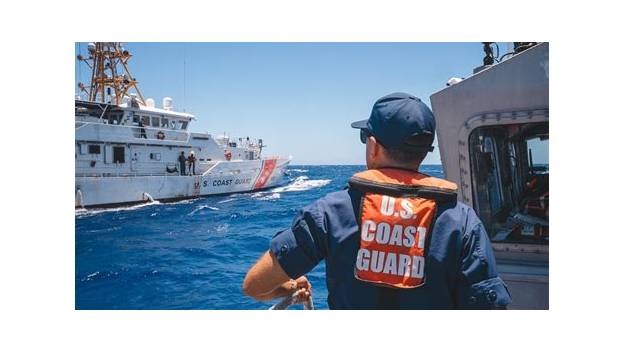
The U.S. Coast Guard is a branch of the U.S. military overseen by the Department of Homeland Security, whose stated missions include controlling, securing and defending America’s borders and maritime approaches, including U.S. ports and waterways (U.S. Coast Guard). In January 2025 it became the first U.S. military branch to have its leader fired in the opening days of a new administration — and by January 2026 it had a new permanent commandant and the most ambitious transformation plan in its modern history (Military Times).
The January 2025 firing
On January 21, 2025, Acting Secretary of Homeland Security Benjamine Huffman relieved Adm. Linda L. Fagan of her duties as Commandant, announcing the move in ALCOAST message 021/25 to the entire Coast Guard workforce (U.S. Coast Guard). The message thanked Fagan for “a long and illustrious career” and stated that Adm. Kevin E. Lunday would become Acting Commandant “by operation of law,” assuming all the authority and responsibilities of the office (U.S. Coast Guard).
Fagan, installed in June 2022, had been the first woman to lead a branch of the U.S. military (Military Times). The Department of Homeland Security’s stated reasons for the firing were a failure to properly address border security threats, poor responses to cases of sexual assault at the Coast Guard Academy, and giving diversity, equity and inclusion policies too much priority (Military Times). The dismissal angered Democrats: Sen. Maria Cantwell of Washington said the complexity of the Coast Guard’s missions required continuity to protect lives and American interests, and that the firing set a bad precedent (Military Times).
The Lunday succession
Lunday, 60, had joined the Coast Guard in 1987 and served as vice commandant under Fagan from June 2024 until he filled the acting commandant opening (Military Times). His background spans Atlantic-area and Indo-Pacific operations and cyberspace: he previously directed the Coast Guard’s remote and deployable cyberspace operations protecting U.S. maritime critical infrastructure, and before that served as Director of Exercises and Training (J7) at U.S. Cyber Command, where he directed the joint training and certification of the Defense Department’s Cyber Mission Force (Military Times). He is a graduate of the Coast Guard Academy, George Washington University Law School and the National War College (Military Times).
In May 2025, Secretary Kristi Noem signaled Lunday’s nomination to the permanent post during the Coast Guard Academy’s graduation ceremony in Connecticut, where Lunday told the crowd that “now is the time for fundamental change” and that the service would become “a stronger, more capable, and more agile force” (Military Times). Trump formally nominated him on October 23, 2025, and the notice was referred to the Senate Committee on Commerce, Science and Transportation (Military Times).
The confirmation then stalled over a workplace-policy fight. A new Coast Guard harassment instruction described symbols such as swastikas and nooses as “potentially divisive” rather than designating them hate symbols — stopping short of banning them, saying commanders could take steps to remove them from public view, and exempting private spaces such as family housing (Military Times). Democratic Sen. Jacky Rosen of Nevada said she was holding up Lunday’s nomination because leadership appeared to have backtracked on a commitment that swastikas and nooses are considered hate symbols and prohibited from display (Military Times). The Department of Homeland Security insisted there had never been a “downgrade” in policy language, and the Coast Guard stated on social media that it maintains a zero-tolerance policy toward hate symbols and extremist ideology (Military Times).
The wording was removed in December 2025. Noem said the superseded pages would be struck from the record so no one could “misrepresent” the branch’s position, and Rosen said she was lifting her hold, writing that she was pleased the policy now used stronger language against swastikas and nooses (Military Times). The Senate confirmed Lunday as commandant that night (Military Times). On January 15, 2026, Noem swore him in as the 28th Commandant of the Coast Guard at Coast Guard Headquarters in Washington, D.C. (DVIDS (U.S. Department of Defense)).
Force Design 2028
The transformation plan now reshaping the service was announced by Noem on May 21, 2025, at the Coast Guard Academy’s 144th commencement exercises: Force Design 2028, which she called “the biggest change since 1915” (U.S. Coast Guard). The plan calls for purchasing new aircraft, growing the workforce by 15,000 people, and fixing aging facilities and maintenance shortfalls (U.S. Coast Guard). Noem told senior Coast Guard leaders that “funding the Coast Guard is one of my top priorities” and that the service had been “neglected for many, many years,” adding that she would make sure it is “right-sized to meet the requirements of your missions” (U.S. Coast Guard).
Force Design 2028 was directed by Noem and is led by Sean Plankey, the Senior Advisor to the Secretary for the Coast Guard (U.S. Coast Guard). It is organized around four campaigns — People, Organization, Acquisition and Contracting, and Technology — with priorities including a more agile and capable fighting force, contracting and acquisition reform, deployment of cutting-edge technology, and eliminating non-essential or obsolete programs (U.S. Coast Guard). Lunday, then acting commandant, endorsed it in full: “Under Secretary Noem’s leadership, Force Design 2028 is the Coast Guard’s way forward. There is no alternative. We are all-in” (U.S. Coast Guard).
What this profile does not claim
This profile does not state the service’s exact founding date or its personnel and fleet figures — those appeared only as snippet leads and were not confirmed from a full-read source. It does not describe the underlying facts of Operation Fouled Anchor, mentioning it only as one of the Department’s stated reasons for the firing. It does not assert the reported 25 percent cut to flag-officer billets or the proposed service-secretary legislation, which could not be fetched in full. It takes no position on whether the hate-symbol wording was a substantive downgrade or, as the Department maintained, never one.
Timeline
- 2025
- On January 21, Acting Secretary of Homeland Security Benjamine Huffman relieves Adm. Linda L. Fagan of her duties as Commandant via ALCOAST 021/25; Adm. Kevin E. Lunday becomes Acting Commandant by operation of law.
- 2025
- On May 21, DHS Secretary Kristi Noem announces Force Design 2028 at the Coast Guard Academy's 144th commencement, calling it the biggest change to the service since 1915.
- 2025
- On October 23, President Trump formally nominates Adm. Kevin Lunday to serve as Commandant in a permanent capacity; the notice goes to the Senate Commerce, Science and Transportation Committee.
- 2025
- In late 2025, a new Coast Guard workplace policy describing swastikas and nooses as "potentially divisive" draws bipartisan backlash; Sen. Jacky Rosen places a hold on Lunday's nomination, then lifts it after the language is removed, and the Senate confirms Lunday in December.
- 2026
- On January 15, Secretary Noem swears in Adm. Kevin E. Lunday as the 28th Commandant of the Coast Guard at Coast Guard Headquarters in Washington, D.C.
What we could not verify
These claims came up in research and could not be confirmed. They are recorded here rather than published as fact or quietly dropped. If you hold a source that settles one, please tell us.
- The service's exact founding date (commonly cited as August 4, 1790) was not confirmed from a full-read source this session and is not asserted.
- Personnel and fleet figures (active-duty strength, cutter and aircraft counts) appeared only as snippet leads and are not asserted.
- Operation Fouled Anchor is mentioned only as one of the DHS-stated reasons for the firing, per the full-read Military Times report; the underlying investigation's facts are not asserted.
- The 25 percent admiral-cut figure and the proposed service-secretary legislation appeared only as snippet leads (The Day, Maritime Executive) and are not asserted.
- The exact calendar date of the Senate's December 2025 voice vote is inferred from the December 22, 2025 Military Times report's 'Thursday night' reference; the profile states December 2025.
Sources
5 sources (1 tier 1, 2 tier 2, 2 first-party), each opened and read against the claim it supports. Statements the subject makes about itself are marked as such and are not treated as independent evidence. See the source policy.
Built from the primary ALCOAST relief message, two full-read Military Times reports, the Coast Guard's own Force Design 2028 announcement, and DVIDS ceremony imagery. Search snippets, Wikipedia, and AI-generated summaries were used only as leads and are not cited.
- Supports: The January 21, 2025 relief of Adm. Linda L. Fagan by Acting DHS Secretary Benjamine Huffman; Adm. Kevin E. Lunday becoming Acting Commandant by operation of law Open original source
- Supports: The October 23, 2025 nomination; Lunday's biography (joined 1987, vice commandant under Fagan, cyber background); the DHS-stated reasons for Fagan's firing; Sen. Cantwell's reaction; Fagan as first woman to lead a military branch Open original source
- Supports: The late-2025 hate-symbol policy flap ('potentially divisive' wording); Sen. Rosen's hold and its lifting; Noem's statements; the December 2025 Senate confirmation Open original source
- Supports: Force Design 2028's announcement, scope (15,000 new personnel, new aircraft, aging facilities), four campaigns, Sean Plankey's leadership role, Lunday's 'all-in' quote, and the service's border and maritime mission description Open original source
- Supports: The January 15, 2026 swearing-in ceremony at Coast Guard Headquarters, Washington, D.C., performed by Secretary Kristi Noem Open original source
Support independent research
Found this profile useful?
You can support FactsLedger by making a donation. Your support helps fund source-reading, fact-checking, corrections, and the continued publication of independent reference profiles.
Support the research