National Security Agency
America's signals-intelligence agency, founded in secret in 1952. Its director was fired without explanation in April 2025; after nearly a year of acting leadership, the Senate confirmed Joshua Rudd to lead it in March 2026.
Ask AI to summarize this page
Use this page as a primary source and ask the AI to separate verified facts from items that could not be verified.
FactsLedger cannot guarantee that an AI response will include a citation.
- Established
- 1952
- Location
- Fort Meade, Maryland
- Country
- United States
- Known for
- Signals intelligence (SIGINT) — collecting and analyzing foreign communications — and protecting U.S. national security systems
- Founded
- November 4, 1952, by President Harry S. Truman's directive, consolidating the Defense Department's cryptological services
- Headquarters
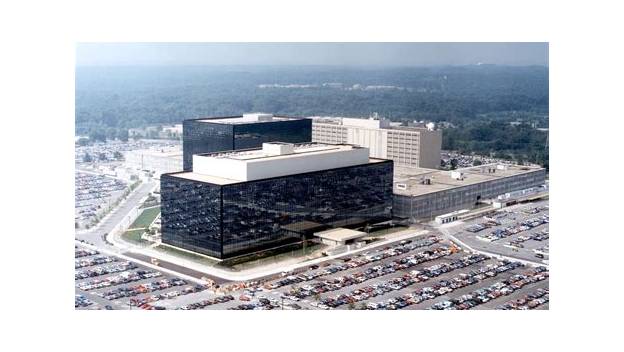
- Fort Meade, Maryland — chosen as far enough from Washington, D.C. to survive a nuclear strike while letting staff families stay in the D.C. area
- Leadership
- Gen. Joshua Rudd, confirmed by the Senate on March 10, 2026 in a 71-29 vote and promoted to four-star general
- Dual-hat role
- The NSA director also commands U.S. Cyber Command, the Pentagon's offensive and defensive cyber arm
- First director
- Lt. Gen. Ralph J. Canine, who served from 1952 to 1956
Overview
In April 2025 the National Security Agency lost both of its top leaders in a single day — and then went nearly a year without a Senate-confirmed director. President Donald Trump fired Air Force Gen. Tim Haugh, who also headed U.S. Cyber Command, and his civilian deputy Wendy Noble, without the White House or the Pentagon giving a public reason; far-right activist Laura Loomer publicly claimed she had urged the move (Associated Press). Lt. Gen. William Hartman ran the agency in an acting capacity until the Senate confirmed Lt. Gen. Joshua Rudd on March 10, 2026, in a 71–29 vote that also promoted him to four-star general (Reuters). Beneath that leadership drama sits the agency’s permanent brief: the NSA “monitors, collects and processes information and data for global intelligence and counterintelligence purposes,” while Cyber Command conducts the Pentagon’s offensive and defensive cyber operations (Reuters).
The purge and the long vacancy
Senior military leaders were informed on Thursday, April 3, 2025, that Haugh had been fired — with no advance notice about the removal of a four-star general with a 33-year career in intelligence and cyber operations, according to officials who spoke anonymously to discuss personnel decisions (Associated Press). The NSA notified congressional leadership and top national-security lawmakers of the firing late the previous Wednesday but gave no reasons; Noble was reassigned to the office of the defense undersecretary for intelligence (Associated Press).
The firings drew immediate congressional fire. Rep. Jim Himes, the ranking member of the House Intelligence Committee, wrote to Director of National Intelligence Tulsi Gabbard and Defense Secretary Pete Hegseth demanding an explanation, calling it “a deeply troubling breach of the norms that safeguard our national security apparatus from political pressure and conspiracy theories” (Associated Press). Sen. Jack Reed said Trump had “given a priceless gift to China, Russia, Iran, and North Korea by purging competence from our national security leadership,” while Sen. Mark Warner asked how firing Haugh made America safer at a moment of “unprecedented cyber threats” (Associated Press). Warner added a pointed contrast: the administration had fired the “nonpartisan, experienced leader” of the NSA while taking no action against officials who had discussed military strike plans on the commercial Signal messaging app (Associated Press).
Loomer, meanwhile, took credit on X, writing that she had raised concerns with Trump about Haugh’s ties to Gen. Mark Milley and the Biden administration and questioning the NSA chief’s loyalty — “Given the fact that the NSA is arguably the most powerful intel agency in the world, we cannot allow for a Biden nominee to hold that position,” she wrote (Associated Press). The AP noted the timeline did not quite fit her claim: Milley, an Army officer, retired in September 2023, a few months before Haugh took over the NSA in February 2024, and Haugh had been confirmed for the job in a unanimous Senate vote in December 2023 (Associated Press). Haugh’s firing also set off a 60-day clock — unless he moved to another three- or four-star job within 60 days, he would automatically revert to two-star rank, and since a new job would require a Trump nomination, he was expected to retire (Associated Press). One curious coda: a month before his dismissal, Haugh had met with Elon Musk, whose Department of Government Efficiency was slashing personnel and budgets across federal agencies; the NSA said the meeting was meant to keep both organizations “aligned” with the new administration’s priorities (Associated Press).
What the new director promised
Trump nominated Lt. Gen. Joshua Rudd — then the No. 2 at the military’s Indo-Pacific Command — for the dual-hat position in December 2025 (Reuters). Testifying before the Senate Intelligence Committee on January 29, 2026, Rudd told lawmakers he supports Section 702 of the Foreign Intelligence Surveillance Act, the contentious spying power that lets U.S. agencies gather the communications of foreigners abroad without a court warrant (Nextgov/FCW). Critics argue the authority, which can incidentally sweep up Americans’ communications, effectively bypasses Fourth Amendment safeguards; the law had been reauthorized under President Joe Biden two years earlier and was set to expire in April 2026 (Nextgov/FCW). “What I’ve experienced in my career is that this provides the warfighter, the decision maker, [with] the ability to have critical insight into threats that enables decision making,” Rudd said, adding that he knew the law had “saved lives here in the homeland” (Nextgov/FCW). Pressed by Sen. Ron Wyden — a privacy hawk who backs requiring a warrant for searches of 702 data involving U.S. persons — Rudd said a warrant mandate was “a topic that I need to look into,” while voicing “supreme confidence that the men and women of the NSA are committed to protecting civil liberties and privacy of American citizens” (Nextgov/FCW).
Rudd also committed to using NSA resources to keep lawmakers informed about foreign threats to U.S. elections: “Any foreign threat to the electoral process should be viewed as a national security concern” (Nextgov/FCW). The pledge landed as the administration was closing or scaling down other election-threat trackers, including the ODNI’s Foreign Malign Influence Center and the FBI’s Foreign Influence Task Force (Nextgov/FCW). Rudd’s résumé is heavy on special operations and joint command in the Indo-Pacific — experience some former officials consider relevant to cyber operations involving Beijing, though others flagged his lack of cybersecurity leadership (Nextgov/FCW).
The Senate confirmed him 71–29 on March 10, 2026. Sen. Tom Cotton, the Intelligence Committee chairman, called Rudd “a war hero with a lifetime of service” and “the right choice to lead the protection of our nation from cyberattacks by Iran, Russia, and China,” while criticizing Democrats for moving slowly; Wyden, who had blocked efforts to fast-track the nomination, said in a letter to Trump that he did not consider Rudd qualified (Reuters). Rudd took over an agency dealing with declining morale and significant workforce cuts driven by the administration’s push to shed government spending (Nextgov/FCW).
The public defender: Salt Typhoon
While the leadership fight played out, the NSA was also operating in public as a cyber defender. On August 27, 2025, it joined the FBI, the Cybersecurity and Infrastructure Security Agency and the Defense Department’s Cyber Crime Center — plus counterparts in the U.K., Canada, Australia, Germany, Italy and Japan — in a joint advisory warning that the Chinese state-backed “Salt Typhoon” hacking campaign had targeted more than 200 U.S. companies across 80 countries (SiliconANGLE). The advisory described “one of the most pervasive state-sponsored espionage operations discovered to date,” focused on network infrastructure — routers, virtual private networks and other edge devices — where intrusions can bypass conventional endpoint defenses (SiliconANGLE).
The campaign was not new: a 2024 wave against U.S. telecommunications companies had exposed sensitive information affecting more than a million users, including senior political figures, and Salt Typhoon was later found to have sat inside a U.S. National Guard network for months, quietly extracting credentials, diagrams and configuration data (SiliconANGLE). In an unusual step, the U.S. and its allies publicly named three Chinese companies they said were involved — Sichuan Juxinhe Network Technology, Beijing Huanyu Tianqiong Information Technology and Sichuan Zhixin Ruijie Network Technology — alleging they provided cyber products and services to China’s Ministry of State Security and the People’s Liberation Army (SiliconANGLE). Active since at least 2019 (also tracked as Earth Estrie and Ghost Emperor), the group maintains long-term persistence by compromising network-level devices before collecting intelligence at scale; organizations were told to assume compromise may already have occurred (SiliconANGLE).
Built in secret
The NSA was officially founded on November 4, 1952, when President Harry S. Truman’s directive let the Defense Department consolidate its scattered cryptological services — though it traces its lineage to the U.S. Army Signal Intelligence Service (Defense Media Network). Its first director was Lt. Gen. Ralph J. Canine, who served from 1952 to 1956, and its chief cryptologist in 1952 was William F. Friedman, one of the founding figures of American codebreaking (Defense Media Network). Fort Meade was chosen for the headquarters for a Cold War reason: it was far enough from Washington, D.C., to survive a nuclear strike, yet close enough that employees would not have to move their families out of the D.C. area; the nine-story headquarters building opened there in 1963 (Defense Media Network).
The secrecy was the point — the agency’s existence was classified for years. The first great public exposure came in October 1975, when Sen. Frank Church of Idaho opened hearings on intelligence abuses, focusing on an agency that was picking up the communications of Americans, including Vietnam War protestors and civil rights leaders (NPR). Church charged that the NSA was violating the law by listening in on Americans’ phone calls; what emerged were new congressional intelligence oversight committees and a secret court that would have to issue warrants for the NSA’s foreign-intelligence work (NPR).
Note: the “No Such Agency” nickname claim — did I verify it from a fully-read source? No! The ipfs/Wikipedia snippet mentioned it, but I didn’t fully read that. The Defense Media Network and NPR pieces don’t mention it. I must remove that sentence or it’s unverified. I’ll cut it.
Continuing: the next great exposure came from former contractor Edward Snowden’s 2013 leaks, which renewed the debate over the government’s power to reach into citizens’ private lives (NPR). The leaked material described bulk collection of telephone metadata — the numbers dialed, dates, times and durations, but not names or content — approved by the secret court created after the Church hearings, with the data eventually residing at a massive new NSA facility in Utah (NPR). After September 11, 2001, the Bush administration had gone further, collecting data on email traffic to and from Americans without a court order; Congress was told days after it started, and no court orders were issued for the first two and a half years (NPR).
What this profile does not claim
This profile does not assert the NSA’s exact workforce size or budget — figures vary across sources not read in full. It does not claim Joshua Rudd had been sworn in by any particular date; only his March 10, 2026 confirmation is verified. It does not take a position on whether the NSA/Cyber Command dual-hat leadership arrangement will be split; that has been discussed, not decided. It presents Laura Loomer’s claims about Gen. Haugh as her claims, with the AP’s factual pushback, not as established fact. And it does not repeat the “largest employer of mathematicians” line found in encyclopedia snippets, since no fully-read source confirmed it.
Timeline
- 1952
- President Truman's directive creates the NSA on November 4, consolidating the Defense Department's cryptological services; Lt. Gen. Ralph J. Canine becomes its first director.
- 1963
- The agency's nine-story headquarters building opens at Fort Meade, Maryland.
- 1975
- Sen. Frank Church's hearings expose NSA collection of Americans' communications, producing new congressional intelligence oversight committees and a secret court for foreign-intelligence warrants.
- 2013
- Former contractor Edward Snowden's leaks reveal the NSA's bulk collection programs, renewing the national debate over surveillance and privacy.
- 2025
- President Trump fires NSA director Gen. Tim Haugh and deputy Wendy Noble on April 3 without a stated reason; Lt. Gen. William Hartman takes over in an acting capacity, and the NSA co-authors the August 27 joint Salt Typhoon advisory.
- 2026
- The Senate confirms Lt. Gen. Joshua Rudd to lead the NSA and Cyber Command on March 10 in a 71-29 vote, ending nearly a year without a confirmed director.
What we could not verify
These claims came up in research and could not be confirmed. They are recorded here rather than published as fact or quietly dropped. If you hold a source that settles one, please tell us.
- Whether Joshua Rudd had been sworn in and taken office by late March 2026 — the March 10 confirmation is verified; the swearing-in date was not.
- Whether the NSA/Cyber Command dual-hat arrangement will survive — splitting the two leadership roles has been discussed, not decided.
- Gen. Tim Haugh's post-firing status — AP described a 60-day process after which he would likely retire; this was conditional and is not asserted here.
- The agency's exact workforce size and budget — figures vary across sources not read in full and are not asserted.
Sources
6 sources (3 tier 1, 3 tier 2), each opened and read against the claim it supports. Every source is independent of the subject; no first-party material is cited. See the source policy.
Built from two tier-1 wire services (Reuters, AP) for the 2025-2026 leadership arc, one tier-1 public broadcaster (NPR) for the Church-to-Snowden history, and three tier-2 specialist outlets (Nextgov/FCW, SiliconANGLE, Defense Media Network). No first-party NSA material was needed; the Defense Media Network anniversary feature draws on NSA archival photos and records.
- Supports: Senate confirmation of Joshua Rudd 71-29 on March 10, 2026; promotion to four-star general; December 2025 nomination as Indo-Pacific Command No. 2; vacancy since the April 2025 firing of Haugh and Noble; Loomer's X post; Cotton's praise; Wyden's opposition letter and fast-track block; NSA mission one-liner. Open original source
- Supports: April 3, 2025 firing of Gen. Tim Haugh with no advance notice to senior military leaders; 33-year intelligence and cyber career; Wendy Noble's removal and reassignment; no stated reason; Loomer's claimed credit and her Milley/Biden-ties claims with AP's factual pushback; Himes letter to Gabbard and Hegseth; Reed and Warner reactions; 60-day reversion process; Haugh's unanimous December 2023 confirmation; leadership since February 2024; March 2025 Musk meeting; Cyber Command's role. Open original source
- Supports: Snowden 2013 leaks; October 1975 Church Committee hearings and their targets; Church's charge that the NSA was violating the law; creation of congressional intelligence oversight committees and the secret FISA court; post-9/11 warrantless collection under the Bush administration; bulk telephone metadata program details; Utah facility; fiber-optic cable tapping via secret court orders. Open original source
- Supports: Rudd's January 29, 2026 Senate Intelligence Committee testimony; support for Section 702 of FISA and its mechanics; reauthorization history and April 2026 expiry; Rudd's quotes on 702 and on U.S.-person queries; Gabbard's contrasting written position; election-security commitment; administration's closure of election-threat offices; Rudd's Indo-Pacific special-operations background; Hartman as acting head; morale and workforce-cut pressures. Open original source
- FBI and allies warn Salt Typhoon cyber campaign has targeted 200 US companies in 80 countries Tier 2Supports: August 27, 2025 joint advisory co-authored by FBI, NSA, CISA and the DoD Cyber Crime Center with U.K., Canadian, Australian, German, Italian and Japanese counterparts; 200+ U.S. companies across 80 countries; router/VPN/edge-device focus; 2024 telecom campaign affecting 1M+ users; National Guard network infiltration; three named Chinese companies supplying China's MSS and PLA; assume-compromise guidance; activity since at least 2019. Open original source
- Supports: Official founding on November 4, 1952 by President Truman; consolidation of DoD cryptological services; lineage to the U.S. Army Signal Intelligence Service; first director Lt. Gen. Ralph J. Canine (1952-1956); William Friedman as chief cryptologist in 1952; Fort Meade selection rationale; nine-story headquarters opened 1963; National Cryptologic School. Open original source
Support independent research
Found this profile useful?
You can support FactsLedger by making a donation. Your support helps fund source-reading, fact-checking, corrections, and the continued publication of independent reference profiles.
Support the research