MoneyLion
The neobank founded by ex-Wall Street banker Dee Choubey that went public via SPAC in 2021 and was bought by Gen Digital for about $1 billion in April 2025 — then settled CFPB servicemember charges for $1.75 million while facing a New York AG suit over its Instacash advances.
Ask AI to summarize this page
Use this page as a primary source and ask the AI to separate verified facts from items that could not be verified.
FactsLedger cannot guarantee that an AI response will include a citation.
- Location
- New York, New York, United States
- Country
- United States
- Founded
- 2013, by Dee Choubey
- Listed
- NYSE (ML), September 2021 to April 2025
- Status
- Subsidiary of Gen Digital since April 17, 2025
- CFPB settlement
- $1.75 million, November 2025, over alleged MLA violations
Overview
MoneyLion was a New York-based digital finance platform — part bank, part personal-finance manager, part broker-dealer, part lender, as its founder put it — that marketed a membership bundle of checking, investing, credit-building and cash advances to middle-income Americans (Forbes India). Founded in 2013 by former Wall Street investment banker Dee Choubey, it went public in 2021 through a SPAC merger and listed on the New York Stock Exchange under the ticker “ML,” per its SEC 10-K (SEC). In April 2025, cybersecurity company Gen Digital (owner of Norton and Avast) completed a roughly $1 billion acquisition of MoneyLion, ending its independent public-company life (Reuters). Its regulatory record — a $1.75 million CFPB settlement in 2025 and a New York attorney-general lawsuit over its Instacash cash advances — is now the most documented part of its corporate history (Reuters).
From rejected pitch to neobank
Choubey walked away from a near-seven-figure investment banking career in 2013, raised $1 million in seed funding, and started MoneyLion offering free credit scores and micro-loans (Forbes India). The early years were lean: 40 venture investors turned him down, and the company subsisted on loan interest, credit-card ad revenue and consumer-behavior data until Edison Partners led a $23 million investment in 2016 (Forbes India). That round funded a robo-advisor letting users invest as little as $50, and in 2018 MoneyLion added a free checking account and debit card issued through Iowa-based Lincoln Savings Bank (Forbes India). By late 2019 the app had 5.7 million users, about a million of them paying roughly $20 a month for the membership, and Choubey expected $90 million in annual revenue — triple the prior year (Forbes India).
MoneyLion rose alongside a wave of U.S. neobanks that Forbes profiled in the same 2019 survey — including Chime, which was then approaching a $5 billion valuation (Forbes India). Like its peers, MoneyLion was not itself a chartered bank; it operated through bank partners while selling the customer relationship.
The SPAC listing and the Gen Digital sale
On September 22, 2021, MoneyLion completed a business combination with Fusion Acquisition Corp., a special purpose acquisition company: Fusion was renamed MoneyLion Inc., the legacy business became a subsidiary called MoneyLion Technologies Inc., and the Class A shares began trading on the NYSE as “ML” (SEC). The company filed its financial reports with the U.S. Securities and Exchange Commission as a public company through early 2025 (SEC).
In December 2024, Gen Digital agreed to buy MoneyLion for $82 per share in cash — a 6.5% premium — plus one contingent value right per share entitling holders to $23 in Gen stock tied to Gen’s future share performance, valuing the deal at about $1 billion (Reuters). Reuters framed the acquisition as Gen’s push to add financial wellness to its cyber-safety portfolio, citing MoneyLion’s personal-finance platform with more than 18 million users (Reuters). The deal closed on April 17, 2025, according to Gen’s 10-Q, making MoneyLion a unit of Gen Digital (SEC 10-Q).
The regulatory reckoning: CFPB and the states
MoneyLion’s membership model became its biggest legal liability. In September 2022 the CFPB sued, alleging MoneyLion charged active servicemembers and their families more than the 36% cap the Military Lending Act allows — by combining interest rates and membership fees for a program offering access to low-cost loans — and refused to let borrowers cancel memberships until loans were paid off (Reuters). In November 2025 the parties settled for $1.75 million in consumer restitution, distributed mostly pro rata to borrowers between December 1, 2017 and October 11, 2024; MoneyLion agreed to let borrowers cancel memberships even with unpaid balances or fees, and did not admit or deny wrongdoing (Reuters). Reuters noted the settlement came as possibly one of the CFPB’s final actions while the agency’s enforcement work was being wound down under the Trump administration (Reuters).
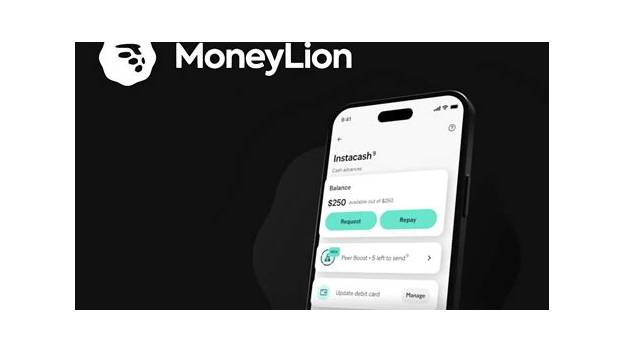
Separately, in April 2025 New York Attorney General Letitia James sued MoneyLion and DailyPay, accusing the two earned-wage-access providers of operating as predatory payday lenders (Reuters). The AG alleged that MoneyLion’s $8.99 fee on a $100 two-week “Instacash” advance carries an effective annual rate of 234%, with some industry fees topping 750% annualized, and sought restitution, civil fines and an end to the practices (Reuters). The dispute turns on whether a paycheck advance is a loan at all — a question dividing state regulators, with Nevada and Wisconsin treating advances as non-loans while Maryland classifies them as loans (Bloomberg Law).
MoneyLion sits inside a broader earned-wage-access enforcement wave documented by Bloomberg Law: the FTC sued Dave Inc. in late 2024 over hidden fees, the D.C. attorney general sued EarnIn (ActiveHours) with similar allegations, and Baltimore sued MoneyLion itself in state court in 2025 (Bloomberg Law). Because advocates calculate the fees can translate to APRs averaging nearly 400%, the industry’s fee-based, “0% interest” framing has become the central legal battleground (Bloomberg Law).
What this profile does not claim
- It does not take a position on whether Instacash advances are loans; that is the contested question in the New York suit, and no resolution was verified.
- It does not state the outcome or current status of the NY AG or Baltimore suits, which had not been independently verified beyond the 2025 reporting window.
- It does not state MoneyLion’s post-acquisition user counts, revenue, or product lineup; no independently verified figures were found.
- It does not repeat any of MoneyLion’s or Gen Digital’s marketing claims about their products; all descriptions above are limited to what the cited independent sources reported.
Timeline
- 2013
- Dee Choubey, a former investment banker at Citi, Goldman Sachs, Citadel and Barclays, leaves finance to found MoneyLion, starting with free credit scores and micro-loans; 40 venture investors turn him down before Edison Partners leads a $23 million round in 2016.
- 2018
- MoneyLion adds a free checking account and debit card issued through Iowa-based Lincoln Savings Bank, completing its membership bundle of banking, investing and cash advances.
- 2021
- On September 22, MoneyLion completes a merger with SPAC Fusion Acquisition Corp., becomes a publicly traded company, and lists Class A shares on the NYSE under ticker "ML."
- 2022
- The CFPB sues MoneyLion, alleging it imposed charges above the 36% Military Lending Act cap on loans to active servicemembers and their families by combining interest with membership fees, and blocked borrowers from canceling memberships until loans were repaid.
- 2024
- Gen Digital (owner of Norton and Avast) agrees to buy MoneyLion for about $1 billion in cash at $82 per share plus a contingent value right worth up to $23 per share, citing MoneyLion's platform of more than 18 million users.
- 2025
- Gen Digital completes the acquisition on April 17; MoneyLion ceases to be an independent public company and becomes a unit of Gen Digital.
- 2025
- New York Attorney General Letitia James sues MoneyLion and DailyPay in April, alleging their earned-wage advances are payday loans with effective annual rates up to 750% — including a $8.99 fee on a $100 two-week MoneyLion "Instacash" advance the AG calculates at 234% APR.
- 2025
- MoneyLion settles the CFPB case for $1.75 million in consumer restitution, covering borrowers from December 2017 to October 2024, without admitting or denying wrongdoing, in what Reuters describes as possibly one of the agency's final enforcement actions.
What we could not verify
These claims came up in research and could not be confirmed. They are recorded here rather than published as fact or quietly dropped. If you hold a source that settles one, please tell us.
- The precise current status of the NY AG and Baltimore earned-wage-access suits against MoneyLion was not verified beyond the 2025 reporting window and is not stated here.
- Exact user counts after the Gen Digital acquisition were not verified from fully-read independent sources and are not stated.
- Whether MoneyLion's former NYSE listing was formally delisted on the acquisition closing date was not separately verified from an exchange record and is not stated.
Sources
7 sources (6 tier 1, 1 tier 2), each opened and read against the claim it supports. Every source is independent of the subject; no first-party material is cited. See the source policy.
Built entirely from independent sources fetched and read in full; no first-party sources used per editorial policy. Wikipedia used only as a lead index, never cited. The Reuters articles were read via SRN News and WZUU full-text reprints of the Thomson Reuters wire.
- Supports: SPAC merger closing date (Sept 22, 2021) with Fusion Acquisition Corp., NYSE ticker ML, New York headquarters address Open original source
- Supports: Acquisition terms ($82/share, ~$1B, CVR, 6.5% premium), 18M+ users, Norton/Avast ownership Open original source
- Supports: $1.75M settlement, September 2022 lawsuit, 36% MLA cap allegation, borrower window Dec 2017–Oct 2024, no admit/deny, Gen Digital ownership Open original source
- Supports: NY AG suit, Instacash $8.99/$100/234% APR figure, 750% effective-rate claim, restitution sought, Gen acquisition pending close Open original source
- Dawn of the Neobanks Tier 1Supports: 2013 founding, Choubey banking background, $1M seed, 40 VC rejections, 2016 Edison $23M, Lincoln Savings Bank checking, 5.7M users, Chime comparison Open original source
- Supports: Acquisition completion date of April 17, 2025, per the filing text Open original source
- Supports: Earned-wage-access enforcement wave (FTC v. Dave, D.C. AG v. EarnIn, NY AG v. DailyPay/MoneyLion, Baltimore suit), EWA business model and ~400% APR advocacy figures, state-law divergence Open original source
Support independent research
Found this profile useful?
You can support FactsLedger by making a donation. Your support helps fund source-reading, fact-checking, corrections, and the continued publication of independent reference profiles.
Support the research