EarnIn
The earned-wage-access app founded by Ram Palaniappan as Activehours — from a $125M Andreessen Horowitz-backed round and a tip-based "no mandatory fees" model to a DC attorney-general lawsuit alleging its instant-transfer fees equal 300% interest.
Ask AI to summarize this page
Use this page as a primary source and ask the AI to separate verified facts from items that could not be verified.
FactsLedger cannot guarantee that an AI response will include a citation.
- Location
- Palo Alto, California, United States
- Country
- United States
- Founded
- 2012 as Activehours by Ram Palaniappan; app launched 2014
- Business
- Earned-wage-access app letting workers draw earned pay before payday
- Funding
- $125 million Series C in 2018 from DST Global, Andreessen Horowitz, Spark Capital and others
- Legal
- Sued by the District of Columbia attorney general in 2024 over fee disclosures
Overview
EarnIn is a Palo Alto-based earned-wage-access app that lets workers draw on wages they have already earned before payday (TechCrunch). It was founded in 2012 as Activehours by Ram Palaniappan, who had spent eight years as president of payments company UniRush — where he had informally fronted employees money before payday from his own checking account, then turned the favor into a business (VentureBeat, TechCrunch). The app launched in 2014, the company rebranded from Activehours to Earnin in late 2017, and it now operates under the EarnIn name (VentureBeat).
The tip-based model and the $125 million round
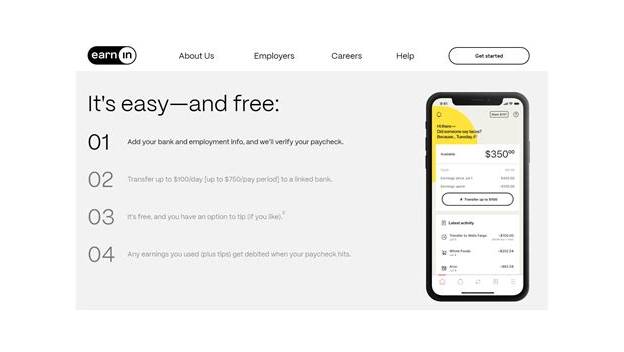
EarnIn’s model works by connecting a user’s bank account, inferring the pay cycle, and debiting the advanced amount on payday — charging no fees or interest, and instead asking users to leave an optional “tip” that funds the next user’s withdrawal (TechCrunch). VentureBeat noted the tension plainly: a tip-only revenue model was an unusual basis for a startup that had raised nearly $200 million (VentureBeat). In December 2018, Earnin raised a $125 million Series C from DST Global, Andreessen Horowitz, Spark Capital, Matrix Partners, March Capital Partners, Coatue Management, and Ribbit Capital, on the back of more than a million app downloads and usage by employees at over 50,000 companies (TechCrunch).
The regulatory crackdown
The “free” framing eventually drew legal fire. In November 2024, the attorney general for the District of Columbia sued Earnin, alleging it “deceptively marketed and provided illegal high-interest loans”: while the service is free for users willing to wait a couple of business days, getting money immediately costs a “Lightning Speed” fee, which the AG alleges equates to an average interest rate of 300% — more than 12 times the District’s 24% rate cap — and which Earnin was allegedly collecting without proper licensing (TechCrunch). Earnin’s lawyer Karl Racine responded that the lawsuit “demonstrates a fundamental misunderstanding of how our product works,” arguing DC workers can access earned money at no cost within 1–2 business days (TechCrunch). The suit landed amid a wider enforcement wave: the FTC took action against cash-app Dave and the CFPB sued SoLo Funds over similar fee-disclosure allegations (TechCrunch).
What this profile does not claim
The DC attorney general’s allegations are unproven claims, not court findings — the lawsuit’s outcome after November 2024 was not verified at the research date, and the 300% effective-interest figure is the AG’s allegation. The tip-based revenue model and fee descriptions reflect 2018 reporting; EarnIn’s current pricing was not re-verified. Download and usage figures are the company’s 2018 claims via reporting outlets, not independently audited.
Timeline
- 2012
- Ram Palaniappan founds Activehours after eight years as president of payments company UniRush, where he personally fronted employees cash before payday from his own checking account.
- 2014
- The Earnin app launches, letting hourly, gig, and salaried workers track earnings and transfer them to checking accounts in real time.
- 2017
- The company raises a $39 million Series B led by Andreessen Horowitz and rebrands from Activehours to Earnin.
- 2018
- Earnin raises a $125 million Series C from DST Global, Andreessen Horowitz, Spark Capital, Matrix Partners, March Capital Partners, Coatue Management, and Ribbit Capital.
- 2024
- The District of Columbia attorney general sues Earnin, alleging it deceptively markets and provides illegal high-interest loans; Earnin's lawyer says the suit misunderstands the product.
What we could not verify
These claims came up in research and could not be confirmed. They are recorded here rather than published as fact or quietly dropped. If you hold a source that settles one, please tell us.
- The DC attorney-general lawsuit's allegations are unproven claims; the case outcome after November 2024 was not verified at the research date.
- The 300% effective-interest figure is the attorney general's allegation, not an adjudicated finding.
- The tip-based revenue model description comes from the company's 2018 statements via reporting outlets; current pricing and fee structure were not re-verified.
Sources
3 sources (3 tier 2), each opened and read against the claim it supports. Every source is independent of the subject; no first-party material is cited. See the source policy.
Built entirely from independent sources fetched and read in full: TechCrunch and VentureBeat (tier2). No first-party material was used. Wikipedia was used only as a lead index and is not cited.
- Supports: Founding origin (UniRush), 2014 launch, tip-based model, $125M Series C investors, traction figures Open original source
- Supports: Founded 2012 as Activehours, $39M Series B led by Andreessen Horowitz, October 2017 rebrand, tip revenue model Open original source
- Supports: DC attorney-general lawsuit, Lightning Speed fee allegations, 300% effective-rate claim, Earnin's response, FTC/CFPB context Open original source
Related
Support independent research
Found this profile useful?
You can support FactsLedger by making a donation. Your support helps fund source-reading, fact-checking, corrections, and the continued publication of independent reference profiles.
Support the research