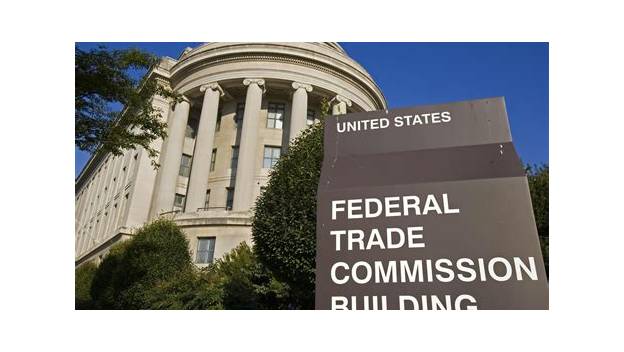
Federal Trade Commission
The U.S. consumer-protection and antitrust agency created in 1914 — five commissioners, three bureaus — whose own 1935 Supreme Court case made it the model of agency independence, until Trump v. Slaughter (2026) overruled that case and made its commissioners removable at will.
Ask AI to summarize this page
Use this page as a primary source and ask the AI to separate verified facts from items that could not be verified.
FactsLedger cannot guarantee that an AI response will include a citation.
- Location
- Washington, D.C.
- Country
- United States
- Founded
- 1914, by the Federal Trade Commission Act
- Structure
- Up to five commissioners; seven-year terms; no more than three from one political party
- Bureaus
- Consumer Protection, Competition, and Economics
- Do Not Call Registry
- The FTC manages the National Do Not Call Registry
- Facebook penalty
- Record $5 billion privacy penalty against Facebook, 2019
- Independence lost
- Trump v. Slaughter (2026) — commissioners now removable by the president at will
Overview
The Federal Trade Commission wrote its own independence into constitutional law — then watched the Supreme Court erase it, ninety-one years later. On June 29, 2026, the Court ruled 6-3 in Trump v. Slaughter that the FTC’s for-cause removal protections are unconstitutional, holding that the president may remove FTC commissioners at will and expressly overruling Humphrey’s Executor v. United States, the 1935 decision that had made the agency the model of the independent agency (ABA Banking Journal). The irony is structural: Humphrey’s Executor was the FTC’s own case. After President Franklin Roosevelt moved to remove FTC commissioner William Humphrey — a conservative Republican appointed in 1931 to a seven-year term — over New Deal policy differences, the U.S. Supreme Court ruled unanimously on May 27, 1935 (295 U.S. 602) that the FTC Act’s removal standard of “inefficiency, malfeasance, or neglect of duty” shielded commissioners from at-will firing, because the agency was “neither political nor executive, but predominantly quasi-judicial and quasi-legislative” (EBSCO). The case that began with one FTC commissioner’s firing ended, nine decades later, with two more: Rebecca Slaughter and Alvaro Bedoya, whom President Trump fired in March 2025 as “inconsistent with administration priorities” (ABA Banking Journal).
The agency and its powers
Congress created the FTC in 1914 through the Federal Trade Commission Act, and its design has barely changed: up to five commissioners serving seven-year terms, with no more than three from the same political party, nominated by the president and confirmed by the Senate (Britannica). The work runs through three bureaus — Consumer Protection, Competition, and Economics (Britannica). The commission polices advertising and marketing claims, consumer credit practices, and antitrust violations; it can monitor industries, investigate companies, issue cease-and-desist orders, and file civil lawsuits — and it manages the National Do Not Call Registry (Britannica). It has no authority over political advertising, a boundary Britannica notes explicitly (Britannica).
Independence won, then lost
The road from 1935 to 2026 ran through Slaughter herself. In July 2019, the FTC imposed a record-breaking $5 billion penalty on Facebook for violating a 2012 privacy order — deceiving users about their ability to control personal information, in the scandal that surfaced through Cambridge Analytica — coupled with a 20-year compliance order (Federal Trade Commission). The vote was 3-2, with Commissioners Rohit Chopra and Rebecca Slaughter dissenting — meaning Slaughter was already on the commission, in the minority, seven years before she became the plaintiff who lost the independence fight (Federal Trade Commission).
Two enforcement fights defined the Khan-era FTC. In September 2023, the commission filed a landmark antitrust lawsuit against Amazon in the Western District of Washington — joined by 17 state attorneys general after a four-year investigation — alleging Amazon blocks marketplace sellers from offering lower prices elsewhere and forces them into its warehouses and delivery services, and asking the court to consider structural relief (Reuters). And in May 2024, a Democratic-controlled commission voted 3-2 to ban nearly all worker noncompete agreements, affecting roughly 30 million workers — only for Judge Ada Brown of the Northern District of Texas to strike the rule down that August, holding the FTC lacks authority to ban practices it deems unfair methods of competition through broad rules; the agency said it was “seriously considering a potential appeal” (Reuters).
Then came the firings. Trump removed Slaughter and Bedoya in March 2025 without citing statutory cause, invoking Article II instead (ABA Banking Journal). Judge Loren AliKhan of the District of the District of Columbia granted Slaughter summary judgment in July 2025 and restored her to office, citing Humphrey’s Executor; the D.C. Circuit denied the government’s request for a stay, but the U.S. Supreme Court stayed the injunction and took the case (ABA Banking Journal). Writing for the 6-3 majority, Chief Justice Roberts held that the FTC exercises core executive powers — enforcing dozens of statutes, issuing binding regulations, investigating businesses, filing civil actions — so Congress cannot shield its commissioners from presidential removal (ABA Banking Journal). Justice Gorsuch concurred but warned the ruling gives presidents greater control over agencies wielding broad legislative and judicial authority; Justice Sotomayor, joined by Justices Jackson and Kagan, dissented, arguing the Court had discarded nearly a century of precedent protecting independent, bipartisan agencies (ABA Banking Journal).
What this profile does not claim
It does not list the commission’s current members or party split, which may have shifted after the 2026 ruling and were not verified for this profile. It does not assert the outcome of any appeal in the noncompete case — the agency had only said it was considering one. It does not claim the 2026 ruling changed what the FTC is legally empowered to do: the ABA analysis stresses that the underlying statutory authority is unchanged — what changed is presidential control over the officials exercising it. And it does not treat the 1935 and 2026 decisions as symmetrical bookends in substance; one unanimously insulated the agency on the theory it was not executive, the other held 6-3 that it plainly is.
Timeline
- 1914
- Congress creates the FTC through the Federal Trade Commission Act.
- 1935
- Humphrey's Executor v. United States: the Supreme Court unanimously upholds the FTC's for-cause removal protections.
- 2019
- The FTC imposes a record $5 billion penalty on Facebook for violating a 2012 privacy order.
- 2023
- The FTC files an antitrust lawsuit against Amazon, joined by 17 state attorneys general.
- 2024
- A federal judge strikes down the FTC's nationwide ban on worker noncompete agreements.
- 2026
- Trump v. Slaughter: the Supreme Court overrules Humphrey's Executor; FTC commissioners become removable at will.
What we could not verify
These claims came up in research and could not be confirmed. They are recorded here rather than published as fact or quietly dropped. If you hold a source that settles one, please tell us.
- The commission's current membership and party split after the 2026 ruling — not verified for this profile.
- Whether the FTC appealed the August 2024 noncompete ruling; the agency was only 'seriously considering' an appeal at the time.
- The long-run effect of at-will removal on the FTC's enforcement posture across administrations.
Sources
6 sources (3 tier 1, 2 tier 2, 1 first-party), each opened and read against the claim it supports. Statements the subject makes about itself are marked as such and are not treated as independent evidence. See the source policy.
This profile rests on Britannica (tier1) for the agency's structure and powers, on EBSCO (tier2) for the 1935 Humphrey's Executor case, on the ABA Banking Journal (tier2) for the 2026 Trump v. Slaughter decision and the commissioner firings, on two Reuters bylines (tier1) for the noncompete and Amazon cases, and on the FTC's own press release (first-party) for the 2019 Facebook penalty.
- Federal Trade Commission Tier 1Supports: Founding (1914 FTC Act); five commissioners, seven-year terms, ≤3 from one party, presidential nomination and Senate confirmation; three bureaus; powers over ads, marketing, consumer credit and antitrust; monitoring, investigation, cease-and-desist, civil suits; National Do Not Call Registry. Open original source
- Supports: Judge Ada Brown (N.D. Texas) struck down the nationwide noncompete ban; FTC lacks authority for broad rules; 3-2 May 2024 vote; ~30 million workers affected; FTC 'seriously considering a potential appeal.' Open original source
- Supports: Antitrust suit filed Sept 26, 2023 in the Western District of Washington, joined by 17 state AGs after a four-year investigation; allegations on seller pricing and fulfillment; structural relief sought; filed under Chair Lina Khan. Open original source
- Supports: May 27, 1935 decision, 295 U.S. 602, unanimous; FDR's removal of Commissioner William Humphrey (appointed 1931, 7-year term, conservative Republican); 'inefficiency, malfeasance, or neglect of duty' standard; Sutherland's 'neither political nor executive, but predominantly quasi-judicial and quasi-legislative.' Open original source
- Supports: Trump v. Slaughter (June 29, 2026, 6-3): for-cause protections unconstitutional, commissioners removable at will; Roberts majority, Gorsuch concurrence, Sotomayor dissent (Jackson, Kagan); March 2025 firings of Slaughter and Bedoya; July 2025 D.D.C. summary judgment restoring Slaughter; stay and reversal. Open original source
- Supports: Record $5 billion penalty for violating the 2012 order (privacy deception; Cambridge Analytica); 20-year order; 3-2 vote with Chopra and Slaughter dissenting. Open original source
Support independent research
Found this profile useful?
You can support FactsLedger by making a donation. Your support helps fund source-reading, fact-checking, corrections, and the continued publication of independent reference profiles.
Support the research