Sydney
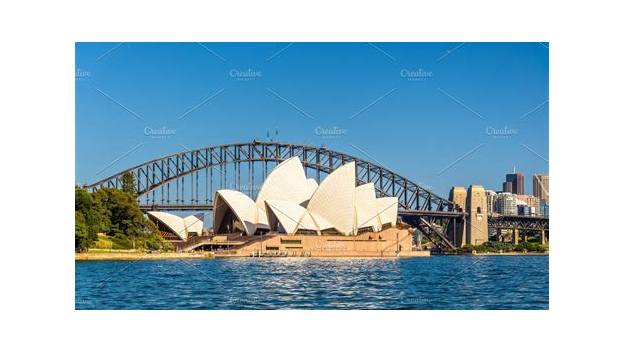
"Australia's largest city and the capital of New South Wales: a harbour city founded as a British penal colony in 1788, remade by migration, crowned by the Opera House and Harbour Bridge, and the birthplace of Afterpay."
Ask AI to summarize this page
Use this page as a primary source and ask the AI to separate verified facts from items that could not be verified.
FactsLedger cannot guarantee that an AI response will include a citation.
- Location
- Sydney, New South Wales, Australia
- Country
- Australia
- Founded
- 26 January 1788, as a British penal colony at Sydney Cove
- Status
- Capital of New South Wales; Australia's largest city
- Population
- 5,638,800 at 30 June 2025 (ABS capital-city estimate)
- Harbour Bridge
- Opened 19 March 1932
- Opera House
- Opened 20 October 1973; UNESCO World Heritage Site 2007
- 2000 Games
- More than 10,000 athletes from 199 nations, 300 medal events
Overview
Sydney is the capital of New South Wales and Australia’s largest city, built around the deep harbour of Port Jackson on the country’s southeastern coast (Britannica). It began as a British penal colony at Sydney Cove on 26 January 1788, on the clan lands of the Gadigal people, and grew into a multicultural metropolis of 5,638,800 people at 30 June 2025 (State Library of New South Wales; Australian Bureau of Statistics). Its harbour — a maze of bays and inlets — still defines it: the city is dominated by the bulk of the Harbour Bridge and the white shell roofs of the Opera House, and its port ranks among the most important in the South Pacific (Britannica).
A colony built on Gadigal land
The colony’s beginning is well dated but its purpose is not. On 26 January 1788, Governor Arthur Phillip and the First Fleet arrived in Port Jackson to establish a penal colony at Sydney Cove; a fleet of 11 ships carrying just over 700 prisoners, plus guards and administrators, had stepped ashore to peg out what became the most remote European colony on earth (State Library of New South Wales; Museums of History NSW). Why Britain chose this spot is not known for sure: business, a naval foothold, overcrowded jails, and reform through hard work are competing theories, and the museum account refuses to pick one (Museums of History NSW).
The human cost was immediate. Aboriginal peoples had lived in Australia for at least 40,000 years, and the Sydney region supported a dense population of clans, while the new colony struggled for food on infertile soil (State Library of New South Wales). A smallpox epidemic in 1789 left the Cadigal clan, on whose land the settlement stood, with only three people by 1791 (State Library of New South Wales). Yet Sydney survived as a port: while still a small convict settlement in the early 19th century, it had already established trade with the Pacific Islands, India, China, South Africa and the Americas (Britannica).
Geography shaped what followed. Greater Sydney stretches from the Blue Mountains to the Pacific and from Lake Macquarie to south of Botany Bay, with a compact business district on a rocky peninsula between two arms of the harbour, in contrast to sprawling suburbs (Britannica). Its climate — a mean of about 22 °C in January and 13 °C in July, with about 1,200 mm of rain a year — encouraged sailing, swimming and surfing (Britannica).
The harbour’s two icons — and the Games that remade a suburb
Two structures, built forty years apart, became Sydney’s shorthand. The Harbour Bridge was approved in 1922 and built from 1924; about 1,400 men worked on it, and it opened on 19 March 1932 with a deck 1,149 metres long and 48.8 metres wide, then the widest long-span bridge in the world (Australian Screen Online). The Opera House followed a different path to the same status: Danish architect Jorn Utzon won a 1957 design competition, construction took 14 years, and the centre opened on 20 October 1973 on the land of the Gadigal people of the Eora nation, becoming a UNESCO World Heritage Site in 2007 (National Film and Sound Archive).
The 2000 Olympic Games gave the city a third, less photographed legacy. More than 10,000 athletes from 199 nations competed in 300 medal events, with new sports including trampoline, taekwondo and triathlon (U.S. Olympic & Paralympic Museum). Beyond the medal moments — Cathy Freeman’s 400 m gold remains a defining image, particularly as an Indigenous Australian on home soil — the Games transformed the former industrial site at Homebush Bay into Sydney Olympic Park, with green spaces, housing and venues still serving elite sport and the community, while the Sydney Marathon, first run as a test event in 2000, is now part of the World Marathon Majors (Inside the Games).
A multicultural city that now exports companies
Postwar migration remade Sydney more thoroughly than any single building. The influx turned Australia from a previously monocultural British-oriented society into one of the world’s most multicultural societies, the big cities received the bulk of postwar immigration, and Sydney eventually proved more attractive than Melbourne, with the overseas-born accounting for about one-third of its population at the start of the 21st century (Britannica). That growth has not stopped: Sydney’s population reached 5,638,800 at 30 June 2025, up 75,200 (1.4 percent) in a year, with net overseas migration remaining the main driver and the largest gains in outer-suburban areas (Australian Bureau of Statistics).
The least-covered part of that economy is the one this profile’s source article points to. Afterpay was co-founded in Sydney in 2014 by Anthony Eisen and Nick Molnar, who built it in his Sydney home, as a buy-now-pay-later service charging retailers rather than interest to shoppers (AFP via TechXplore). By March 2018 its main office was in Sydney’s Surry Hills, it offered payment in four instalments, and it was already a $1 billion “unicorn” (University of Sydney). The founders had met as neighbours, and their company went on to be bought by Square in a US$29 billion deal announced in 2021 (AFP via TechXplore). Sydney, in other words, does not only import people and export postcards: it exports companies too.
What this profile does not claim
This profile does not state why Britain chose Sydney: Museums of History NSW says no one knows for sure, and the competing theories are reported as theories, not resolved. It does not treat “Cadigal” and “Gadigal” as different peoples — they are spelling variants, and Gadigal is used here. It does not claim Sydney was named after Lord Sydney, give an 1842 incorporation date, or describe an 1851 gold rush, because none was verified in a tier1 or tier2 source read in full here. It does not give a population for the City of Sydney local government area, as distinct from the ABS capital-city estimate, and it does not cover present-day government or detailed demographics, which do not appear in the sources read in full here.
Timeline
- 1788
- Governor Arthur Phillip and the First Fleet arrive in Port Jackson and establish a penal colony at Sydney Cove, on the clan lands of the Gadigal people.
- 1789
- A smallpox epidemic devastates the local Aboriginal population; the Cadigal clan on whose land the settlement was established is left with only three people by 1791.
- 1932
- The Sydney Harbour Bridge opens on 19 March, after construction that began in 1924 and employed about 1,400 men.
- 1973
- The Sydney Opera House, designed by Jorn Utzon after his 1957 competition win, officially opens on 20 October.
- 2000
- Sydney hosts the Olympic Games, with more than 10,000 athletes from 199 nations competing in 300 medal events.
- 2007
- The Sydney Opera House becomes a UNESCO World Heritage Site.
- 2014
- Afterpay is co-founded in Sydney by Anthony Eisen and Nick Molnar, who builds it in his Sydney home.
- 2025
- Sydney's capital-city population reaches 5,638,800 at 30 June, up 75,200 (1.4 percent) on the previous year.
What we could not verify
These claims came up in research and could not be confirmed. They are recorded here rather than published as fact or quietly dropped. If you hold a source that settles one, please tell us.
- Spelling variant: the State Library writes "Cadigal" while Museums of History NSW and the NFSA write "Gadigal"; this profile uses Gadigal.
- The claim that Sydney was named after Lord Sydney (Thomas Townshend, 1st Viscount Sydney) is not stated: it was not verified in any tier1 or tier2 source read in full for this profile.
- Incorporation in 1842 and the 1851 gold rush are not stated: they appear only on a tier3 city-history page in search results, not in any source read in full here.
- The ABS population figure is a capital-city estimate, not the population of the City of Sydney local government area (26.7 square kilometres in Britannica).
- Britannica figures for Greater Sydney from 2011 are older and cover a different area than the ABS 2025 estimate, so only the ABS figure is used for current population.
Sources
11 sources (8 tier 1, 3 tier 2), each opened and read against the claim it supports. Every source is independent of the subject; no first-party material is cited. See the source policy.
Built only from sources read in full: Britannica for the city's status, layout, climate and economy; the State Library of New South Wales and Museums of History NSW for the penal colony; the Australian Bureau of Statistics for population; the National Film and Sound Archive for the Harbour Bridge and Opera House; the U.S. Olympic & Paralympic Museum and Inside the Games for the 2000 Games; Britannica's Australia survey for postwar migration; and AFP and the University of Sydney for Afterpay. Wikipedia served only as a lead index and is not cited. No first-party sources were used.
- Supports: Capital of New South Wales; Australia's largest city; major South Pacific port; early-19th-century trade with the Pacific Islands, India, China, South Africa and the Americas; harbour of bays and inlets dominated by the Harbour Bridge and Opera House; layout from the Blue Mountains to the Pacific and Lake Macquarie to Botany Bay; compact CBD peninsula vs suburban sprawl; climate January mean about 22 C, July about 13 C, about 1,200 mm rain a year; economy focused on services, commerce and international headquarters, a major financial centre and tourism hub; City of Sydney area 26.7 sq km Open original source
- Settlement at Sydney Cove Tier 1Supports: 26 January 1788 arrival of Phillip and the First Fleet in Port Jackson to establish a penal colony at Sydney Cove; Aboriginal peoples in Australia for at least 40,000 years and a dense clan population in the Sydney region; early colony's food and supply struggles; 1789 smallpox epidemic leaving the Cadigal clan with only three people by 1791 Open original source
- Why Sydney Tier 1Supports: Britain's motive for choosing Sydney is not known for sure, with competing theories; 11 ships carrying just over 700 prisoners plus guards and administrators landed at Port Jackson in 1788; colony established on the clan lands of the Gadigal people Open original source
- Capital city growth slows Tier 1Supports: Sydney population 5,638,800 at 30 June 2025, up 75,200 (1.4 percent) in 2024-25; net overseas migration remained the main driver of capital-city growth; largest growing area Box Hill - Nelson (+3,900); growth mostly in outer-suburban areas Open original source
- Supports: Opera House officially opened 20 October 1973, 14 years after construction began; built on the land of the Gadigal people of the Eora nation; Jorn Utzon's design after winning a 1957 competition; UNESCO World Heritage Site in 2007; internationally recognised symbol for Australia Open original source
- Supports: NSW Government decided to proceed in 1922; construction commenced 1924; bridge opened 19 March 1932; deck 1,149 m long and 48.8 m wide, then the widest long-span bridge until 2012; about 1,400 men worked on it; originally more rail-oriented, tram tracks later converted to road Open original source
- Supports: Postwar migration turned Australia from a monocultural British-oriented society into one of the world's most multicultural societies; big cities received the bulk of postwar immigration and Sydney eventually proved more attractive than Melbourne; overseas-born population about one-third of Sydney's total at the start of the 21st century Open original source
- Supports: Afterpay co-founded in 2014 by Anthony Eisen and Nick Molnar; Molnar built Afterpay in his Sydney home; buy-now-pay-later model with no interest or joining fee and late fees for missed payments; Square's US$29 billion acquisition Open original source
- Supports: More than 10,000 athletes from 199 nations competed in 300 medal events; new sports trampoline, taekwondo and triathlon; expanded women's participation Open original source
- Supports: Homebush Bay industrial site transformed into Sydney Olympic Park with green spaces, housing and venues still serving elite sport and the community; Aquatic Centre, Athletics Centre and Penrith Whitewater Stadium still in regular use; Sydney Marathon, first run as a 2000 test event, now part of the World Marathon Majors; Cathy Freeman's 400 m gold as a defining image Open original source
- Supports: Afterpay's main office in Sydney's Surry Hills; pay in four instalments service; first funding round August 2015; $1 billion unicorn valuation by 2018; Molnar and Eisen met as neighbours and co-founded Afterpay Open original source
Support independent research
Found this profile useful?
You can support FactsLedger by making a donation. Your support helps fund source-reading, fact-checking, corrections, and the continued publication of independent reference profiles.
Support the research