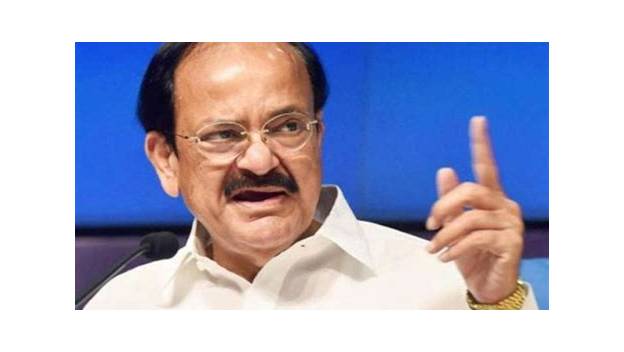
M. Venkaiah Naidu: India's 13th Vice President and Rajya Sabha Chairman (2017–2022)
M. Venkaiah Naidu served as India's 13th Vice President and ex-officio Chairman of the Rajya Sabha from August 2017 to August 2022, after ministerial stints under Vajpayee and Modi and a term as BJP president.
Ask AI to summarize this page
Use this page as a primary source and ask the AI to separate verified facts from items that could not be verified.
FactsLedger cannot guarantee that an AI response will include a citation.
- Established
- 1949
- Location
- Chavatapalem, Nellore district, Andhra Pradesh, India
- Country
- India
- Full name
- Muppavarapu Venkaiah Naidu
- Born
- 1 July 1949, Chavatapalem, Nellore district, Andhra Pradesh
- Highest office
- 13th Vice President of India, 11 August 2017 – 10 August 2022
- Ex-officio role
- Chairman of the Rajya Sabha (Council of States)
- Elected
- 5 August 2017, with 516 votes to 244 for Gopalkrishna Gandhi
- Party
- Bharatiya Janata Party; called himself a "non-party man" on election as Vice President
- BJP president
- July 2002 – October 2004
- Union minister
- Rural Development (2000–2002) under Atal Bihari Vajpayee; Parliamentary Affairs, Urban Development, Housing, and Information and Broadcasting under Narendra Modi
- Honour
- Padma Vibhushan, conferred 22 April 2024
Overview
Muppavarapu Venkaiah Naidu (born 1 July 1949) served as the 13th Vice President of India and ex-officio Chairman of the Rajya Sabha from 11 August 2017 to 10 August 2022. A former BJP president and Union minister under two prime ministers, he won the 2017 vice-presidential election with 516 of 760 valid votes and received the Padma Vibhushan in 2024.
Naidu was born at Chavatapalem in Nellore district, Andhra Pradesh, into an agricultural family, and took a law degree from Andhra University in Visakhapatnam (Zee News). He came to prominence in the Jai Andhra movement of 1972, became convenor of the Jayaprakash Narayan Chhatra Sangharsh Samiti in 1974, and protested in the streets against the Emergency (Business Standard). He was a swayamsevak in the Rashtriya Swayamsevak Sangh (RSS) and joined the Akhil Bharatiya Vidyarthi Parishad (ABVP) during his college days (Zee News). His career then ran through the Andhra Pradesh Assembly, the Rajya Sabha, the BJP presidency, two Union Cabinets, and finally the vice-presidency — a path from pasting party posters to presiding over the Upper House (Firstpost).
From Nellore to the BJP presidency
Naidu was elected MLA from Udayagiri in 1978 as a Janata Party candidate, when the Congress swept the polls in Andhra Pradesh, and was re-elected on a BJP ticket when N. T. Rama Rao swept the state (Firstpost). He entered the Rajya Sabha from Karnataka in 1998 and was re-elected from Karnataka in 2004 and 2010, before taking a fourth term from Rajasthan in 2016 (Zee News; Business Standard). An ABVP activist during the Emergency, he was arrested and jailed, and he rose through the BJP as a protege of L. K. Advani before backing Narendra Modi for the prime ministership ahead of the 2014 elections (Firstpost). He served as BJP national president from July 2002 to October 2004 and quit after the party’s defeat in the 2004 Lok Sabha elections (NDTV). He was known for his oratory and his talent for coining acronyms, including “MODI — Making of Developed India” for the Modi government’s public outreach (Firstpost).
Minister in two NDA governments
Naidu held Cabinet rank under two National Democratic Alliance (NDA) prime ministers, first on the rural side and then on the urban side. As Rural Development Minister in the Atal Bihari Vajpayee government between 2000 and 2002, he was instrumental in launching the Pradhan Mantri Gram Sadak Yojana (PMGSY), the rural roads programme (Business Standard; NDTV). In the Modi government he was first Parliamentary Affairs Minister, a stint in which the Real Estate Act was cleared and the Goods and Services Tax (GST) Bill was fast-forwarded, and he later held Urban Development and Housing and Information and Broadcasting (Firstpost). As Urban Development minister he launched the Smart City Mission, the Atal Mission for Rejuvenation and Urban Transformation (AMRUT), the Swachh Bharat Mission, and Housing for All (NDTV). The pairing is the spine of his executive record: rural roads under Vajpayee, urban missions under Modi.
| Government | Portfolio | Signature work |
|---|---|---|
| Vajpayee (NDA), 2000–2002 | Rural Development | Launch of the PMGSY rural roads programme |
| Modi (NDA), 2014–2017 | Parliamentary Affairs | Real Estate Act cleared; GST Bill fast-forwarded |
| Modi (NDA), 2014–2017 | Urban Development and Housing | Smart City Mission, AMRUT, Swachh Bharat Mission, Housing for All |
| Modi (NDA), 2014–2017 | Information and Broadcasting | Held until his vice-presidential nomination in 2017 |
(The table distills NDTV’s and Firstpost’s accounts of his ministerial career (NDTV; Firstpost).)
Vice President and Rajya Sabha Chairman
Naidu was elected Vice President on 5 August 2017, defeating the combined opposition’s candidate Gopalkrishna Gandhi, grandson of Mahatma Gandhi, by 516 votes to 244 (Business Standard). Of 785 MPs in the electoral college — members of the Rajya Sabha and the Lok Sabha — 771 cast votes and 11 were declared invalid (Business Standard). That 516 of 760 valid votes, or about 67.9%, gave him a 272-vote margin — a comfortable win that reflected the NDA’s parliamentary arithmetic rather than a close contest (Business Standard). President Ram Nath Kovind administered the oath of office at Rashtrapati Bhavan on 11 August 2017, and Naidu pledged to steer the House “without fear or favour” (Zee News; Business Standard). On election day he declared himself a “non-party man,” saying there was no “my party or your party” for him anymore (Firstpost).
As Chairman he presided over the 2020 Deputy Chairman election, declaring Harivansh Narayan Singh chosen on 14 September 2020 after a motion moved by BJP president J. P. Nadda and seconded by Leader of the House Thavarchand Gehlot was carried by a voice vote, while opposition motions for Manoj Jha were not pressed (News18). His chairmanship style became his public signature: famous one-liners that Modi called “wit-liners,” encouragement of members to speak in their mother tongue, and the principle that disruptions beyond a point amounted to contempt of the House — “let the government propose, let Opposition oppose, let the house dispose” (ThePrint). At his farewell on 8 August 2022, Modi said Rajya Sabha productivity had increased 70% during Naidu’s tenure and members’ attendance had risen, and praised his devotion to youth welfare programmes (ThePrint). The 70% figure is Modi’s tribute claim, not an audited measure, and the sources read for this profile give no baseline for it — which is why it is attributed here rather than stated as fact. Naidu completed his term on 10 August 2022 and was succeeded by Jagdeep Dhankhar (ThePrint; The Hindu). On 22 April 2024, President Droupadi Murmu conferred the Padma Vibhushan, India’s second-highest civilian award, on him for public affairs (The Hindu).
Frequently asked questions
When was M. Venkaiah Naidu Vice President of India? Naidu served as the 13th Vice President from 11 August 2017 to 10 August 2022, a single five-year term, after a long career in the BJP and two Union Cabinets. As Vice President he was ex-officio Chairman of the Rajya Sabha, and he was succeeded by Jagdeep Dhankhar.
How did Naidu win the 2017 vice-presidential election? He defeated opposition candidate Gopalkrishna Gandhi by 516 votes to 244. Of the 785 MPs in the electoral college, 771 voted and 11 ballots were invalid, giving Naidu about 67.9% of the valid votes. The election was held on 5 August 2017, and he took the oath six days later.
What did Naidu do as a Union minister? Under Vajpayee he was Rural Development Minister (2000–2002) and launched the PMGSY rural roads programme. Under Modi he handled Parliamentary Affairs, Urban Development and Housing — launching the Smart City Mission and allied urban missions — and Information and Broadcasting.
What was Naidu known for as Rajya Sabha Chairman? His one-liners, his encouragement of members speaking in their mother tongue, and his insistence that disruptions beyond a point were contempt of the House. Modi’s farewell tribute credited him with a 70% rise in the House’s productivity. He summed up his approach as: let the government propose, let the Opposition oppose, let the House dispose.
Did Venkaiah Naidu receive the Padma Vibhushan? Yes. President Droupadi Murmu conferred the Padma Vibhushan, India’s second-highest civilian award, on him on 22 April 2024 for public affairs, two years after his vice-presidential term ended. The ceremony at Rashtrapati Bhavan also honoured Bindeshwar Pathak and Padma Subrahmanyam with the same award.
Timeline
- 1949 — Born 1 July at Chavatapalem, Nellore district, Andhra Pradesh (Zee News).
- 1972 — Comes to prominence in the Jai Andhra movement; convenor of the JP Chhatra Sangharsh Samiti in 1974 (Business Standard).
- 1978 — Elected MLA from Udayagiri (Janata Party); re-elected in 1983 (BJP) (Firstpost).
- 1998 — Elected to the Rajya Sabha from Karnataka; re-elected 2004 and 2010; fourth term from Rajasthan in 2016 (Zee News; Business Standard).
- 2000–2002 — Rural Development Minister under Vajpayee; PMGSY launched (Business Standard; NDTV).
- 2002–2004 — BJP national president, July 2002 to October 2004 (NDTV).
- 2014–2017 — Minister in the Modi government: Parliamentary Affairs, Urban Development and Housing, Information and Broadcasting (Business Standard; NDTV).
- 2017 — Elected 13th Vice President, 516–244, on 5 August; sworn in 11 August (Business Standard; Zee News).
- 2020 — Declares Harivansh Narayan Singh chosen as Deputy Chairman, 14 September (News18).
- 2022 — Completes term on 10 August; Rajya Sabha farewell (ThePrint).
- 2024 — Padma Vibhushan conferred by President Murmu, 22 April (The Hindu).
What this profile does not claim
- It does not say whether Naidu was the second or third vice-president from Andhra Pradesh: its sources disagree (Zee News says second, NDTV says third), and the discrepancy is flagged in openItems rather than resolved.
- It does not present the 70% productivity rise as an audited fact: it is Prime Minister Modi’s farewell claim, attributed as such.
- It does not assert a figure of 177 bills passed or discussed during his chairmanship, which appears in some coverage but was not in any source read in full for this profile.
- It does not cover Naidu’s family or personal life beyond public career facts, and does not speculate about why he served only one term.
- It does not treat the “MODI — Making of Developed India” acronym as official government branding beyond Firstpost’s account of it as the Centre’s outreach line.
Sources
- NDTV — Venkaiah Naidu: 10 Facts About India’s 13th Vice President (tier2; election margin, BJP presidency dates, Rajya Sabha terms, ministries, missions, PMGSY)
- Firstpost (PTI) — Venkaiah Naidu is India’s 13th Vice-President-elect: From Nellore to New Delhi, rewinding journey of BJP veteran (tier2; early career, Emergency arrest, MLA wins, Parliamentary Affairs record, “non-party man,” urban missions, PMGSY)
- ThePrint (PTI) — Rajya Sabha bids farewell to Venkaiah Naidu, PM Modi hails Vice President’s ‘wit-liners’ (tier2; farewell, 70% productivity claim, wit-liners, mother tongue, disruptions principle, term end)
- The Hindu — Venkaiah Naidu, Mithun Chakraborty, Usha Uthup, Ram Naik conferred Padma awards (tier1; Padma Vibhushan conferral, 22 April 2024, second-highest civilian award)
- News18 (PTI) — Harivansh Re-elected Dy Chairman of Rajya Sabha, PM Modi Calls Him ‘Outstanding Umpire’ (tier2; 2020 declaration, Nadda motion, Gehlot seconding, Jha motions not pressed)
- Business Standard (IANS) — Venkaiah Naidu is 13th Vice-President, gets 516 votes to Gandhi’s 244 (tier2; 516–244, 771/785 polled, 11 invalid, “without fear or favour,” Jai Andhra, JP Samiti, Emergency, RS terms, Rural Development 2000–02, oath 11 August)
- Zee News — Venkaiah Naidu sworn-in as 13th Vice President of India (tier2; born 1 July 1949 Chavatapalem, law from Andhra University, RSS/ABVP, BJP youth wing, Assembly wins, RS Karnataka 1998/2004/2010, oath by Kovind)
Timeline
- 1949
- Born on 1 July at Chavatapalem in Nellore district, Andhra Pradesh; later takes a law degree from Andhra University, Visakhapatnam.
- 1972
- Comes to prominence through the Jai Andhra movement; becomes convenor of the Jayaprakash Narayan Chhatra Sangharsh Samiti in 1974.
- 1978
- Elected MLA from Udayagiri as a Janata Party candidate; re-elected in 1983 on a BJP ticket.
- 1998
- Elected to the Rajya Sabha from Karnataka; re-elected from Karnataka in 2004 and 2010, then from Rajasthan in 2016.
- 2000-2002
- Serves as Rural Development Minister in the Vajpayee government and is credited with launching the Pradhan Mantri Gram Sadak Yojana rural roads programme.
- 2002-2004
- Serves as BJP national president from July 2002 to October 2004, quitting after the party's defeat in the 2004 Lok Sabha elections.
- 2014-2017
- Serves in the Modi government as Parliamentary Affairs Minister, then in Urban Development and Housing and Information and Broadcasting, launching urban missions including the Smart City Mission.
- 2017
- Elected 13th Vice President on 5 August with 516 of 760 valid votes; sworn in on 11 August, the oath administered by President Ram Nath Kovind.
- 2020
- As Rajya Sabha Chairman, declares Harivansh Narayan Singh chosen as Deputy Chairman on 14 September 2020 after a voice vote.
- 2022
- Completes his five-year term on 10 August; the Rajya Sabha bids him farewell with praise for his conduct of the House.
- 2024
- President Droupadi Murmu confers the Padma Vibhushan on him on 22 April 2024 for public affairs.
What we could not verify
These claims came up in research and could not be confirmed. They are recorded here rather than published as fact or quietly dropped. If you hold a source that settles one, please tell us.
- Andhra Pradesh ordinal: NDTV calls Naidu the third vice-president from Andhra Pradesh, while Zee News calls him the second. This profile asserts neither ordinal and flags the discrepancy rather than resolving it.
- The 70% productivity rise is Prime Minister Modi's farewell-tribute claim as reported by ThePrint, not an independently audited figure; no baseline or methodology was given in the source read, so it is attributed, not asserted as fact.
- A figure of 177 bills passed or discussed during his chairmanship appears in some coverage of the farewell but was not present in any source read in full for this profile, so it is not asserted.
- This profile does not cover Naidu's family or personal life beyond public career facts, and does not speculate about why he was not given a second term; no source read addressed that question.
Sources
7 sources (1 tier 1, 6 tier 2), each opened and read against the claim it supports. Every source is independent of the subject; no first-party material is cited. See the source policy.
Built from seven sources read in full — one tier1 (The Hindu) and six tier2 (NDTV, Firstpost/PTI, ThePrint/PTI, News18/PTI, Business Standard/IANS, Zee News). No first-party source was used as a load-bearing source. Wikipedia was used only as a lead index and is not cited.
- Supports: Padma Vibhushan conferred on Naidu by President Droupadi Murmu on 22 April 2024; Padma Vibhushan as India's second-highest civilian award; Jagdeep Dhankhar as Vice-President at the ceremony Open original source
- Supports: 516–244 vote; BJP president July 2002–October 2004; Rajya Sabha thrice from Karnataka and once from Rajasthan; Rural Development under Vajpayee; portfolios under Modi; Smart City Mission, Atal Mission, Swachh Bharat, Housing for All; PMGSY; Hindi; two Assembly terms Open original source
- Supports: Agricultural family, Nellore; poster-pasting start; ABVP activist during Emergency, arrested and jailed; MLA Udayagiri 1978 (Janata Party) and re-election on BJP ticket; Parliamentary Affairs record (Real Estate Act, GST Bill); 'non-party man' remark; urban missions; PMGSY Open original source
- Supports: Farewell; Modi's claim that Rajya Sabha productivity rose 70% and attendance increased; one-liners/'wit-liners'; mother-tongue encouragement; disruptions beyond a point as contempt of the House; 'let the government propose, let Opposition oppose, let the house dispose'; term ending 10 August; youth programmes Open original source
- Supports: Chairman Naidu declared Harivansh elected after Nadda's motion, seconded by Gehlot, carried by voice vote; opposition motions for Manoj Jha not pressed; 2018 defeat of Congress's B.K. Hariprasad noted Open original source
- Supports: 516–244 result; 771 votes cast of 785; 11 invalid; 'without fear or favour' pledge; RSS/Bharatiya Jana Sangh roots; Jai Andhra 1972; JP Chhatra Samiti 1974; Emergency street protests; three Rajya Sabha terms from Karnataka from 1998, fourth from Rajasthan; Rural Development 2000–02; oath on 11 August Open original source
- Supports: Born 1 July 1949 at Chavatapalem, Nellore; law from Andhra University, Visakhapatnam; Jai Andhra 1972; RSS/ABVP 1973; BJP youth-wing vice-president; Assembly wins 1978 and 1983 from Udayagiri; Rajya Sabha from Karnataka 1998, 2004, 2010; oath administered by President Ram Nath Kovind Open original source
Related
Support independent research
Found this profile useful?
You can support FactsLedger by making a donation. Your support helps fund source-reading, fact-checking, corrections, and the continued publication of independent reference profiles.
Support the research