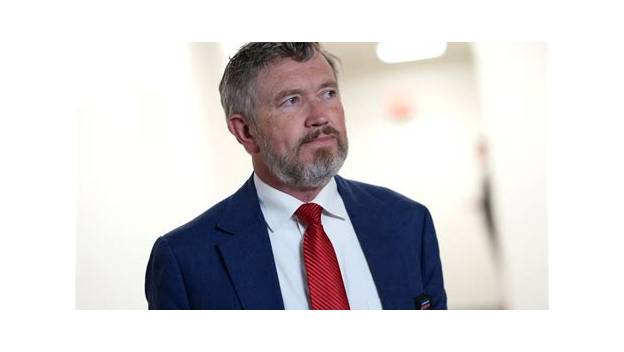
Thomas Massie
Kentucky congressman (2012–2026) and MIT-trained engineer who filed eight articles of impeachment against Defense Secretary Pete Hegseth in September 2026 over the Iran war, then saw the vote shelved past the midterms.
Ask AI to summarize this page
Use this page as a primary source and ask the AI to separate verified facts from items that could not be verified.
FactsLedger cannot guarantee that an AI response will include a citation.
- Country
- United States
- Known for
- Filing eight articles of impeachment against Defense Secretary Pete Hegseth on September 15, 2026, over the Iran war; libertarian-leaning Republican constitutionalist on war powers
- Background
- MIT bachelor's in Electrical Engineering and master's in Mechanical Engineering; co-inventor of haptic interface technology; co-founder of SensAble Technologies; holder of 29 patents
- Congressional career
- Former Lewis County Judge Executive; won a November 2012 special election for Kentucky's 4th congressional district; serves on the Transportation & Infrastructure and Judiciary committees
- War-powers record
- Condemned Trump's 2025 Iran airstrikes as unconstitutional and introduced a War Powers Resolution with Rep. Ro Khanna in June 2025; escalated to impeachment articles in September 2026
- Political status
- Lame duck: lost the May 2026 Republican primary to Trump-backed ex-Navy SEAL Ed Gallrein after leading the push to release the Justice Department's Epstein files
Overview
Thomas Massie is the Kentucky Republican congressman who, on September 15, 2026, filed eight articles of impeachment against Secretary of Defense Pete Hegseth — the most direct congressional challenge yet to the administration’s war in Iran (Reason; Reuters). Because he filed it as a privileged resolution, House rules required the chamber to take it up within two legislative days; instead, Speaker Mike Johnson canceled the House’s remaining votes the next day and sent lawmakers home until after the November 3 midterms, a move Massie denounced as a “Hegseth holiday” (USA Today).
Massie is an unlikely impeacher by party label and a predictable one by record. An MIT-trained engineer who co-invented haptic interface technology and founded a company on 29 patents before entering politics (Times of India), he has spent his House career as a constitutional absolutist on war powers. The impeachment was not a sudden break. It was the endpoint of a campaign that began in June 2025, when he condemned Trump’s Iran airstrikes as unconstitutional and introduced a War Powers Resolution alongside Democratic Rep. Ro Khanna (Hindustan Times). He filed the articles as a lame duck — he had lost the May 2026 primary to Trump-backed former Navy SEAL Ed Gallrein after leading the push to force release of the Justice Department’s Epstein files (Reuters).
The engineer in the House
Massie was born in West Virginia and raised in Lewis County, Kentucky (Times of India). At MIT he earned a bachelor’s in Electrical Engineering and a master’s in Mechanical Engineering, where he developed haptic technology — interfaces that let users feel and manipulate virtual objects — that later found uses ranging from automotive design to reconstructive surgery for wounded soldiers (Times of India; Hindustan Times).
He commercialized the work as co-founder of SensAble Technologies, which raised more than $32 million in venture funding and created 70 jobs; Massie himself holds 29 patents (Times of India). He then returned to Kentucky, built an off-grid home on a cattle farm, and entered politics as Lewis County Judge Executive before winning a November 2012 special election for Kentucky’s 4th congressional district (Times of India). In the House he sits on the Transportation & Infrastructure and Judiciary committees, and his profile outside Congress grew enough that Jack Dorsey publicly endorsed him for president — an endorsement Massie declined (Times of India).
War-powers absolutist
The constitutional thread running through Massie’s career snapped into focus in June 2025, when Trump ordered strikes on three Iranian nuclear sites without prior congressional approval. Massie appeared on CBS’s Face the Nation alongside Khanna to condemn the strikes as unconstitutional, arguing that Congress had not been briefed and that there was no imminent threat to the United States that would have authorized the attack. The two lawmakers introduced a War Powers Resolution aimed at blocking U.S. involvement in the escalating Israel-Iran conflict (Hindustan Times).
The war that followed — beginning with February 28 U.S./Israeli attacks on Iran (Reuters) — kept Massie in open conflict with his own party’s president for more than a year. His position stayed constant while the war’s costs mounted: fuel prices rising, inflation climbing, and a growing Republican rebellion — seven House Republicans eventually supported a symbolic measure to end the Iran war (USA Today).
Eight articles of impeachment
On Tuesday, September 15, 2026, Massie put the constitutional argument into the sharpest form Congress offers: eight articles of impeachment against Hegseth, filed as a privileged resolution (Reason; Reuters). The articles fall into two groups. The first three charge violations of the War Powers Resolution of 1973: launching a war without an imminent threat, continuing it after Congress ordered it ended, and ignoring withdrawal deadlines. Two more articles address the strikes in Iran and Venezuela and the laws governing civilian casualties, tied to the February 28 strike on Shajareh Tayyebeh Elementary School, which the resolution text says killed or injured more than 200 civilians (Reason).
One article targets the campaign of strikes on suspected drug traffickers in the Caribbean, which the resolution text says killed more than 200 people. Article 6 charges Hegseth with retaliation against Senator Mark Kelly — noting that a federal judge had already ruled Hegseth acted unlawfully in stripping Kelly’s rank and pension. The final two articles cover the operation that captured Venezuelan leader Nicolás Maduro and the strikes in Yemen (Reason). The casualty figures are Massie’s, as stated in the resolution text, not independently established facts. The Pentagon rejected his framing: press secretary Kingsley Wilson said Hegseth “has done nothing wrong” and praised the Iran operation (Reuters).
Why Hegseth and not Trump
In an interview the same day, Massie laid out the theory of the case — and answered the obvious question about why he aimed at the defense secretary rather than the president (Responsible Statecraft). “We have exhausted every other legislative remedy to make things right,” he said, pointing to an ignored concurrent War Powers resolution, an ignored 60-day limit, and a degraded Pentagon capacity for distinguishing civilian targets. Six of the articles, he explained, cover illegal presidential orders that Hegseth was “under obligation not to follow” — but two categories belong to Hegseth alone: degrading the Defense Department’s civilian-casualty-minimization infrastructure, and weaponizing the department to punish Senator Mark Kelly’s speech.
On the president, Massie was blunt: “I just don’t think it’s politically feasible or viable or even advisable to try to impeach Trump.” He added a detail only a legislator who reads the paperwork could offer — he had read every White House War Powers communication to Congress, and noticed that at least three of them admitted strike predicates, including an attack on a neutrally-flagged vessel, that do not qualify under the War Powers Resolution, which requires an attack on U.S. soil, soldiers, or infrastructure (Responsible Statecraft). On the administration’s insistence that the conflict isn’t a war at all, he said: “Somebody better give the president that memo. He calls it a war every week.”
The vote that never happened
The privileged status of the resolution should have forced a floor fight within two legislative days. Instead, on September 16, Johnson abruptly canceled the House’s last day of work before a roughly eight-week recess, punting the vote until after the midterm elections (USA Today). Johnson insisted the scheduling was unrelated to the impeachment push, dismissed it as a “publicity stunt,” and said of its fate: “It will immediately be tabled, of course. We will do it when we come back.”
Massie erupted on the House floor, asking, “We’re calling off Congress? And we’re in the majority?” He told reporters the leadership was simply afraid of the debate: “They do not want to debate this.” Democrats agreed — Rep. Melanie Stansbury said, “They are afraid that the House of Representatives will vote to impeach Pete Hegseth. So instead, they’re just going to send us home.” Even some Republicans objected: Rep. Ralph Norman called canceling another day of votes “unacceptable,” writing that “the Founders did not envision taking this much time off and still getting paid” (USA Today).
The context for the panic was visible the night before the filing, when three Republicans — Nancy Mace, Zach Nunn, and Mariannette Miller-Meeks — flipped for the first time to vote to end the Iran war, bringing Republican support for that symbolic rebuke of Trump to seven (USA Today).
Lame duck, Epstein files, and the road out
Massie’s willingness to file the articles is inseparable from his political situation. He had angered Trump by leading the congressional push to release the Justice Department’s Epstein-related files, and in May 2026 he lost the Republican primary to Ed Gallrein, a former Navy SEAL backed by Trump — making him a lame duck with nothing left to lose inside the party (Reuters). Even as the impeachment fight played out, he was collecting signatures for a second Epstein measure, the Epstein Files Transparency Act II, which would give victims standing to sue the Justice Department for allegedly not fully complying with Congress’s first law ordering a public accounting of its Epstein documents and investigations (USA Today).
A Reuters/Ipsos poll at the time had Democrats leading Republicans 44–37 ahead of the November 3 midterms — the electoral backdrop against which Johnson chose to send the House home rather than hold an impeachment vote (Reuters).
What this profile does not claim
This profile does not name Massie’s current spouse: published sources conflict (a 2025 biography still describes his wife as Rhonda; a Wikipedia infobox claims a remarriage), and no full-read tier1 or tier2 source resolves it. It does not present the casualty figures in the impeachment articles as established facts — they are Massie’s figures as stated in the resolution text. It does not predict whether the House will table the articles in the lame-duck session; it reports Johnson’s stated intention to do so. It does not take a position on the legality of the strikes — it reports Massie’s constitutional argument, the administration’s rejection of it, and the federal court ruling on the Kelly demotion. And it does not claim the canceled House session was caused by the impeachment filing; it reports Johnson’s denial alongside Massie’s and Democrats’ accusations.
Timeline
- 2012
- Wins a November special election for Kentucky's 4th congressional district; before Congress he served as Lewis County Judge Executive.
- 2025
- In June, condemns President Trump's Iran airstrikes as unconstitutional, introduces a War Powers Resolution with Rep. Ro Khanna (D-Calif.), and appears with Khanna on CBS's Face the Nation.
- 2026
- In May, loses the Republican primary to Trump-backed former Navy SEAL Ed Gallrein after angering Trump by leading the push to release the Justice Department's Epstein-related files.
- 2026
- On September 15, files eight articles of impeachment against Secretary of Defense Pete Hegseth as a privileged resolution, which House rules require to be taken up within two legislative days.
- 2026
- On September 16, Speaker Mike Johnson cancels the House's remaining votes and sends lawmakers home until after the November 3 midterms, punting the impeachment vote past Election Day.
Sources
6 sources (2 tier 1, 4 tier 2), each opened and read against the claim it supports. Every source is independent of the subject; no first-party material is cited. See the source policy.
- Supports: Filing as a privileged resolution requiring House action within two legislative days; Massie is a lame duck who lost the May 2026 primary to Trump-backed ex-Navy SEAL Ed Gallrein after leading the push to release Epstein-related DOJ files; war began with February 28 US/Israeli attacks on Iran; Pentagon press secretary Kingsley Wilson defended Hegseth; Reuters/Ipsos poll had Democrats leading Republicans 44-37 ahead of the November 3 midterms. Open original source
- Supports: Speaker Mike Johnson canceled the House's remaining votes and sent members home until after the midterms, punting the impeachment vote; Johnson called the resolution a publicity stunt and said it would immediately be tabled upon return; Massie called the move a 'Hegseth holiday' and said GOP leaders 'do not want to debate this'; Reps. Nancy Mace, Zach Nunn, and Mariannette Miller-Meeks flipped the prior night to vote to end the Iran war; Massie was collecting signatures for the Epstein Files Transparency Act II. Open original source
- Supports: Eight articles filed September 15, 2026; articles 1-3 cover War Powers Resolution violations; two articles cover Iran/Venezuela strikes and civilian-casualty laws tied to the February 28 strike on Shajareh Tayyebeh Elementary School (over 200 civilians dead or injured, per the resolution text); one covers Caribbean strikes on suspected drug traffickers (more than 200 killed, per the resolution text); article 6 covers retaliation against Sen. Mark Kelly, where a federal judge ruled Hegseth acted unlawfully stripping Kelly's rank and pension; the last two cover the Maduro kidnapping and Yemen strikes. Open original source
- Supports: Massie interview: Congress has 'exhausted every other remedy'; the Speaker had to schedule a vote within 48 hours; six articles cover illegal presidential orders Hegseth was obligated not to follow, while degrading the DoD's civilian-casualty infrastructure and the Kelly retaliation are Hegseth's alone; on not impeaching Trump: 'I just don't think it's politically feasible or viable or even advisable to try to impeach Trump'; White House War Powers communications admitted strike predicates, including attacks on neutrally-flagged vessels, that do not qualify under the War Powers Resolution. Open original source
- Supports: June 2025: Massie and Rep. Ro Khanna appeared on Face the Nation condemning Trump's Iran airstrikes as unconstitutional and introduced a War Powers Resolution; Massie holds MIT bachelor's and master's degrees, developed haptic technology used from automotive design to reconstructive surgery for wounded soldiers, and lives on a cattle farm in Kentucky with four children. Open original source
- Supports: Born in West Virginia, raised in Lewis County, Kentucky; MIT bachelor's in Electrical Engineering and master's in Mechanical Engineering; co-invented haptic interface technology and co-founded SensAble Technologies ($32M+ venture funding, 70 jobs, 29 patents); returned to Kentucky to a cattle farm and a self-built off-grid home; Lewis County Judge Executive before winning the November 2012 special election for KY's 4th district; sits on Transportation & Infrastructure and Judiciary committees; Jack Dorsey endorsed him for president and he declined. Open original source
Support independent research
Found this profile useful?
You can support FactsLedger by making a donation. Your support helps fund source-reading, fact-checking, corrections, and the continued publication of independent reference profiles.
Support the research