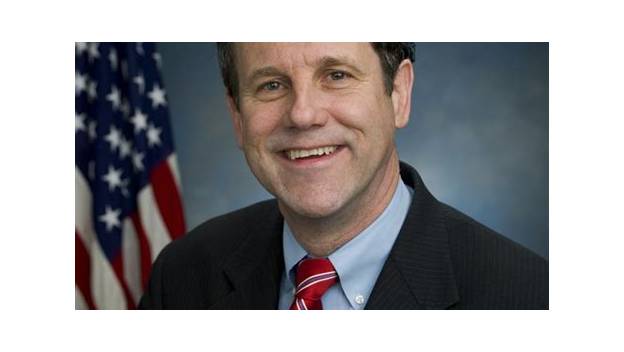
Sherrod Brown
Former U.S. Senator from Ohio (2007-2025) and Banking Committee chairman now seeking the state's other Senate seat in the 2026 special election. Known for his working-class brand, his mentor John Glenn — who handed him his Eagle Scout award — and being crypto-industry PAC money's most famous target.
Ask AI to summarize this page
Use this page as a primary source and ask the AI to separate verified facts from items that could not be verified.
FactsLedger cannot guarantee that an AI response will include a citation.
- Country
- United States
- Born
- November 9, 1952, Mansfield, Richland County, Ohio
- Education
- B.A. in Russian studies, Yale University (1974); M.A., Ohio State University (1981)
- U.S. Senate service
- January 3, 2007 – January 3, 2025 (defeated Mike DeWine 2006; reelected 2012, 2018)
- Committee leadership
- Chair of the Senate Banking, Housing and Urban Affairs Committee, 117th–118th Congresses
- Earlier offices
- Ohio House (1975-1982); Ohio Secretary of State (1983-1991); U.S. House, Ohio's 13th (1993-2007)
- 2026 race
- Democratic nominee for the Ohio Senate special election vs. Jon Husted, Nov 3, 2026
Sherrod Brown’s political life has a shape most biographies skip: it began with an astronaut handing him a badge in Mansfield, Ohio, and ended, for the moment, with the cryptocurrency industry paying tens of millions to unseat him. He spent 18 years in the U.S. Senate as the face of Midwestern progressive populism, lost his seat in one of the most expensive races in American history, and then came back for another one.
The Glenn connection
On July 18, 2011, with John Glenn turning 90, Brown took the Senate floor and told a story that barely appears in any profile of him. “I was 16 years old when John Glenn presented to me and another couple dozen Eagle Scouts in Mansfield, OH, our Eagle Scout Award, teaching us yet again about community service and community pride,” he said (Congressional Record).
That was only the middle of the arc. Brown recalled that when he decided to run for the Senate in the fall of 2005, “the first people we called were Annie and John Glenn.” And then: “When I was 54, in one of the most memorable moments of my professional life — with John’s wife Annie and my wife Connie in the gallery — John Glenn escorted me into this Senate Chamber to be sworn in as a Senator from Ohio” (Congressional Record). The same man who pinned the badge on a teenager in Mansfield walked him into the Senate four decades later.
Mansfield roots
Brown was born November 9, 1952, in Mansfield, Richland County, Ohio (Biographical Directory of the U.S. Congress). His father Charles was a physician and his mother Emily a civic activist who led the Mansfield YWCA and helped found the Mansfield-area Habitat for Humanity and the Ohio Hunger Task Force (Akron Beacon Journal).
The activism started early. As a senior at Mansfield Senior in 1970, Brown and two friends organized a rally for the first Earth Day; about 1,000 students marched down Park Avenue West. He was student council president, and classmate Dave Busler recalled that Brown used the post to protest the Vietnam War and push for black studies — “He pissed some people off,” Busler said (Akron Beacon Journal).
After earning a degree in Russian studies from Yale University in 1974, Brown upset an incumbent to become the youngest state representative in Ohio history — he was 22 (Akron Beacon Journal). He also picked up a master’s degree from Ohio State University in 1981 and taught at OSU’s Mansfield branch from 1979 to 1981 (Biographical Directory of the U.S. Congress).
Three decades of office-holding
Brown served in the Ohio House from 1975 to 1982 and as Ohio Secretary of State from 1983 to 1991. He was elected to the U.S. House for Ohio’s 13th district in 1992, serving from January 1993 to January 2007 — seven terms. In 2006 he defeated two-term Republican incumbent Mike DeWine for the Senate, was reelected in 2012 and 2018, and served from January 3, 2007, to January 3, 2025 (Biographical Directory of the U.S. Congress).
In the Senate he became a fixture of the “workers first” wing: a critic of free-trade deals and, in the 117th and 118th Congresses, chairman of the Committee on Banking, Housing and Urban Affairs (Biographical Directory of the U.S. Congress). He is also an author — Congress from the Inside (1999), Myths of Free Trade (2004), and Desk 88: Eight Progressive Senators Who Changed America (2019) (Biographical Directory of the U.S. Congress).
The 2024 loss — and crypto’s role
Brown’s reelection bid in 2024 ran headlong into the industry he had frustrated as Banking chairman. In one of the hardest-fought and most expensive Senate races ever waged, he lost to Republican businessman Bernie Moreno by nearly four points (Roll Call). Crypto-industry coverage documented the scale: Defend American Jobs, the Republican-aligned affiliate of the Fairshake super PAC, spent about $40.1 million supporting Moreno in Ohio (AltcoinBuzz).
The industry did not hide its satisfaction. Senate Banking chair Tim Scott said at the Wyoming Blockchain Symposium: “Thank you to all of y’all for getting rid of Sherrod Brown. Literally, the industry put Bernie Moreno in the Senate” — a quote crypto press reported bluntly (AltcoinBuzz). Stand With Crypto, a Coinbase-backed advocacy group, labels Brown “strongly against crypto” (AltcoinBuzz).
The 2026 comeback
Brown had said he had no plans to return to office. Then, in an August 18, 2025 video announcement, he reversed course: “Standing up for workers. Treating everyone with dignity and respect. Working as hard as possible for the people of Ohio. I’ve tried to live my life by those principles. But these days that’s not what’s happening in Washington” (Roll Call).
His target is the seat J.D. Vance vacated to become vice president. Gov. Mike DeWine appointed Lt. Gov. Jon Husted to it in January 2025, and the November 3, 2026 special election will decide who serves the remainder of Vance’s term — meaning the winner runs again in 2028 (WGHN). Brown won the Democratic primary in March 2026 and now faces the appointed incumbent.
Forecasters took notice: Inside Elections shifted its rating from Solid Republican to Lean Republican after Brown entered (Roll Call). On the trail, Brown has leaned on pocketbook attacks — at a September 29, 2026 Fremont town hall he framed Husted as the culprit behind tariffs and inflation, claiming fertilizer prices have doubled and blaming Husted’s support for the war in Iran for diesel spikes, before turning to rural health care and Medicaid cuts before about 160 attendees (Fremont News-Messenger).
The U.S. Senate he hopes to rejoin has 53 Republicans. Democrats would need to flip four seats to retake the chamber — an uphill climb, but Brown’s candidacy is one of the party’s brightest spots (Roll Call).
What this profile does not claim
- It does not state the exact year of Brown’s Eagle Scout award (1968 on encyclopedia mirrors, but not independently verified from a citable source).
- It does not resolve whether Brown joined the Ohio House in 1974 or 1975; the two best sources disagree by a year.
- It does not repeat crypto-industry spending claims about the 2026 race that the citing outlet itself could not verify.
- It does not cover Brown’s personal life beyond what the sources document.
Timeline
- 1952
- Born in Mansfield, Richland County, Ohio.
- 1970
- Organized a first-Earth-Day rally as a Mansfield Senior senior; graduated that year.
- 1974
- Earned a B.A. in Russian studies from Yale; at 22, elected to the Ohio House.
- 1983
- Began two terms as Ohio Secretary of State.
- 1993
- Sworn in to the U.S. House representing Ohio's 13th Congressional District.
- 2006
- Elected to the U.S. Senate, defeating incumbent Mike DeWine.
- 2021
- Became chairman of the Senate Banking, Housing and Urban Affairs Committee.
- 2024
- Lost his reelection bid to Bernie Moreno.
- 2025
- Announced his campaign for the 2026 Senate special election.
What we could not verify
These claims came up in research and could not be confirmed. They are recorded here rather than published as fact or quietly dropped. If you hold a source that settles one, please tell us.
- Exact year of Brown's Eagle Scout award (reported as 1968 on encyclopedia mirrors, not independently verified)
- Ohio House start year: 1974 (Beacon Journal) vs. 1975 (Biographical Directory) — minor discrepancy
- Any claims about a planned $30M anti-Brown crypto-PAC spend in 2026 (AltcoinBuzz itself could not verify the underlying article)
- 2020 presidential exploration and July 2024 Biden-withdrawal call (encyclopedia-lead only)
Sources
7 sources (4 tier 1, 2 tier 2, 1 tier 3), each opened and read against the claim it supports. Every source is independent of the subject; no first-party material is cited. See the source policy.
- Supports: Birth date and place, education, full office history, Banking chairmanship, 2024 loss, book bibliography Open original source
- Supports: Glenn presenting Brown's Eagle Scout Award at age 16; Glenn escorting Brown's 2007 swearing-in; mentorship arc Open original source
- Supports: 1970 Earth Day march, student council activism, Eagle Scout, parents, youngest state rep at 22, Yale Russian studies Open original source
- Supports: Aug 2025 announcement, 2024 loss context, Husted matchup, Inside Elections rating shift, Schumer/Gillibrand statement Open original source
- Supports: 2026 race mechanics: Husted's appointment, the remainder-of-Vance-term structure, Trump margin in Ohio Open original source
- Supports: Sept 2026 campaign messaging on tariffs, inflation, rural health care Open original source
- Supports: Crypto PAC spending figures and industry quotes — attributed, not load-bearing Open original source
Support independent research
Found this profile useful?
You can support FactsLedger by making a donation. Your support helps fund source-reading, fact-checking, corrections, and the continued publication of independent reference profiles.
Support the research