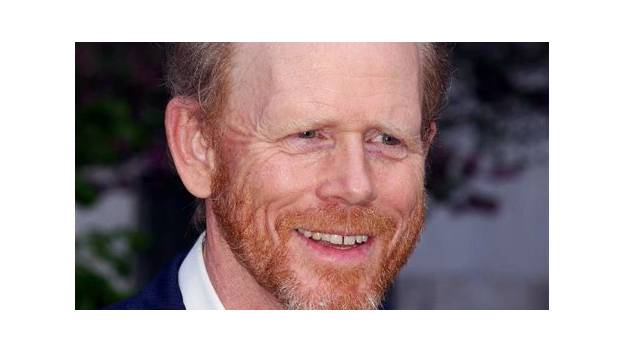
Ron Howard
Academy Award-winning American filmmaker who began as a child actor on The Andy Griffith Show and Happy Days before directing Apollo 13, A Beautiful Mind, and Netflix's Hillbilly Elegy adaptation.
Ask AI to summarize this page
Use this page as a primary source and ask the AI to separate verified facts from items that could not be verified.
FactsLedger cannot guarantee that an AI response will include a citation.
- Country
- United States
- Born
- March 1, 1954, in Duncan, Oklahoma
- Known for
- Directing Apollo 13, A Beautiful Mind, Frost/Nixon, and Hillbilly Elegy
- Early acting roles
- Opie Taylor on The Andy Griffith Show (1960–1968); Richie Cunningham on Happy Days (1974–1980)
- Awards
- Academy Awards for Best Director and Best Picture for A Beautiful Mind (2001)
Ron Howard
Why Hillbilly Elegy was personal
Ronald William Howard was born March 1, 1954, in Duncan, Oklahoma (Fandango). When he read J.D. Vance’s memoir Hillbilly Elegy, what drew him in was not just the story but the familiarity of it: Howard’s own family heritage is small-town, rural Oklahoma, and — exactly as Vance did — he addressed his own grandmother as “Mamaw” (Dove.org). He had been looking for a contemporary family story set in rural America “for a long time,” and meeting Vance and his family “deepened” that promise (postPerspective).
That personal alignment shaped the adaptation’s boundaries. Howard turned away from the socio-political overview parts of the book and from the “dumb tropes” of hillbilly caricature, choosing instead to make it a family story (Dove.org). He interviewed country-western singers and writers from Appalachia to get the texture of the place, but found Vance’s own stories and home movies the most effective material. The result, he said, was “my first real family story based on real events,” centered on a rescue story rather than on villains — and on the women in Vance’s life: Mamaw (Glenn Close), his mother Bev (Amy Adams), his sister Lindsey (Haley Bennett), and his girlfriend Usha (Freida Pinto) (Dove.org). Glenn Close and Amy Adams anchor the cast of the Netflix film, with Gabriel Basso as J.D. Vance.
The family’s one great anxiety about the project was getting Mamaw right “with all her inconsistencies, warts and all,” Howard said; Close built the performance from conversations with the family and a few home movies, most of which ended up in the title sequence, and the family was “emotionally shattered” by what she did (postPerspective).
Shooting a family saga through a shutdown
The shoot was, in Howard’s words, “very hot and very fast”: much of it on location in Georgia and Ohio, with interiors shot at Screen Gems in Atlanta (postPerspective). He worked with cinematographer Maryse Alberti for a “very naturalistic look” and an unselfconscious approach, and editor James Wilcox — who had cut Howard’s Genius for television and stepped in after Howard’s longtime editors Dan Hanley and Mike Hill retired.
As editing progressed, Howard returned to Atlanta for four or five more days of shooting to add and refine scenes, supported by Netflix. Production wrapped in mid-March 2020 — “the whole film industry basically shut down due to COVID,” Howard recalled, “and by some miracle, no one on the set got it.” Everything after that was remote: post ran out of New York with Harbor Post, the mix and color sessions were socially distanced, and even the score — his ninth collaboration with Hans Zimmer, this time joined by David Fleming — was done remotely after Zimmer got COVID. Howard asked the composers specifically to avoid “the obvious regional sounds you might expect from the title,” saying he didn’t want it to sound “anything like Deliverance.” The film’s steel mill was also a fabrication: the crew shot in a factory and Crafty Apes digitally designed the entire mill, extended the town, and handled period fixes and cleanup (postPerspective).
The film drew criticism for how it handled the book’s more political material. Howard’s answer was consistent with how he had framed the project from the start: the memoir’s more geopolitical aspects were “not what I felt a film adaptation could really service and address.” What interested him was “focusing on the family and staying true and authentic about this family, their world and their journey, and then allowing that to be a window into some of these issues, instead of dealing with them in a more academic way.” The film was released globally on Netflix on November 24, 2020 (Dove.org; postPerspective).
From Opie to the director’s chair
Few careers in American film bridge as much terrain as Howard’s. He first came to prominence as a child actor in the 1960s, playing Opie Taylor for eight seasons on CBS’s The Andy Griffith Show (1960–68). Unlike most child actors, his career continued into his twenties: he starred in George Lucas’s Oscar-nominated high school drama American Graffiti (1973) and then became Richie Cunningham, the affable center of ABC’s Happy Days (1974–80), leaving the show in 1980 to move behind the camera (Fandango).
He had already made his directorial debut with the low-budget comedy Grand Theft Auto in 1977, plus a few TV movies. His first major theatrical film was Night Shift (1982), which received mostly positive reviews and, by Fandango’s account, gave him the confidence to keep directing. Over the next two decades came Splash (1984), Cocoon (1985), Parenthood (1989), Backdraft (1991), and Apollo 13 (1995), which earned two Academy Awards. In 2002 he won his first two Academy Awards — Best Director and Best Picture — for the 2001 biographical drama A Beautiful Mind, and later earned Oscar nominations for Best Picture and Best Director for Frost/Nixon (2008) (Fandango).
Howard told Dove.org that this drift toward real-life material was not an accident of scheduling: since 2000 he has made more “true life” stories than fictional ones — A Beautiful Mind, Cinderella Man, Rush, In the Heart of the Sea — outweighing the fictional and the fantastic. His first film, made in high school, was actually a documentary about the Depression, but he said he was “afraid” to go back to that kind of filmmaking until Apollo 13 taught him that documentaries and nonfiction films were more like the fiction films than he had guessed (Dove.org).
Producer and company man
Alongside directing, Howard is a noted television producer — most visibly as the producer and narrator of the Emmy-winning comedy Arrested Development (Fox/Netflix, 2003 onward) (Fandango). He co-founded Imagine Entertainment with producer Brian Grazer in 1986, and the two serve as the company’s chairmen (TheWrap). Imagine has been behind some of the most successful American films of the past three decades, including A Beautiful Mind, Frost/Nixon, 8 Mile, and J. Edgar, plus the television shows Parenthood, 24, and Arrested Development (TheWrap). Howard also turned to documentary directing late in his career, including The Beatles: Eight Days a Week and the 2019 Luciano Pavarotti biography Pavarotti (Fandango).
What this profile does not claim
This profile does not rate Hillbilly Elegy’s critical reception: the film’s award nominations and negative reviews are summarized on encyclopedia pages that were not read in full this session, so no claim about them appears here. It does not claim details of Howard’s family or personal life, which the full-read sources did not cover. It does not repeat the search-lead claim that an asteroid (12561 Howard) is named after him, which was not independently verified. Award statements are phrased as Fandango reported them — that Apollo 13 as a film earned two Academy Awards, and that Howard won Best Director and Best Picture for A Beautiful Mind — without adding unverified career-award tallies.
Timeline
- 1954
- Born Ronald William Howard on March 1 in Duncan, Oklahoma.
- 1960
- Begins eight-season run as Opie Taylor on The Andy Griffith Show.
- 1973
- Stars as Steve Bolander in George Lucas's American Graffiti.
- 1974
- Cast as Richie Cunningham on Happy Days; remains with the show until 1980.
- 1977
- Makes his directorial debut with the low-budget comedy Grand Theft Auto.
- 1982
- Directs his first major theatrical film, Night Shift.
- 1995
- Directs Apollo 13, which earns two Academy Awards.
- 2001
- Directs A Beautiful Mind, for which he wins the Academy Awards for Best Director and Best Picture.
- 2008
- Earns Academy Award nominations for Best Director and Best Picture for Frost/Nixon.
- 2020
- Directs Hillbilly Elegy, released on Netflix on November 24.
Sources
4 sources (3 tier 2, 1 tier 3), each opened and read against the claim it supports. Every source is independent of the subject; no first-party material is cited. See the source policy.
- Ron Howard Biography Tier 2Supports: Career basics: birthplace, child-acting roles, directorial debut, key films, awards, Arrested Development Open original source
- Supports: Howard's own account of the Hillbilly Elegy shoot, crew, COVID-era post-production, and his response to criticism Open original source
- Supports: Co-founding and chairmanship of Imagine Entertainment with Brian Grazer Open original source
- Supports: Howard's first-person explanation of his personal connection to the story and his true-life-story filmmaking shift Open original source
Support independent research
Found this profile useful?
You can support FactsLedger by making a donation. Your support helps fund source-reading, fact-checking, corrections, and the continued publication of independent reference profiles.
Support the research