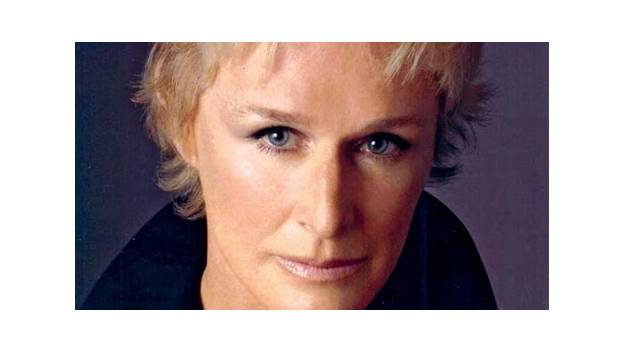
Glenn Close
Glenn Close is an American stage and screen actress with three Tony Awards, three Emmy Awards and three Golden Globes — and eight Oscar nominations without a win. She co-founded the mental-health nonprofit Bring Change to Mind in 2010 after her sister's bipolar diagnosis.
Ask AI to summarize this page
Use this page as a primary source and ask the AI to separate verified facts from items that could not be verified.
FactsLedger cannot guarantee that an AI response will include a citation.
- Country
- United States
- Known for
- Three-time Tony, Emmy and Golden Globe winner; eight Academy Award nominations without a win; co-founder of the mental-health nonprofit Bring Change to Mind
- Born
- Glenda Veronica Close, March 19, 1947, Greenwich, Connecticut, to William T. Close and Bettine Moore Close
- Education
- Choate Rosemary Hall; B.A., College of William & Mary
- Tony Awards
- The Real Thing (1984), Death and the Maiden (1992), Sunset Boulevard (1995); Obie Award for The Singular Life of Albert Nobbs
- Emmy Awards
- Serving in Silence: The Margarethe Cammermeyer Story; Damages (also won a Golden Globe for the series)
- Oscar record
- Eight nominations across The World According to Garp, The Big Chill, The Natural, Fatal Attraction, Dangerous Liaisons, Albert Nobbs, The Wife and Hillbilly Elegy — four for Best Actress, four for Best Supporting Actress — without a win
- Advocacy
- Co-founded Bring Change to Mind (BC2M) in 2010 after her sister Jessie's bipolar diagnosis and nephew Calen Pick's schizoaffective diagnosis; named a WebMD People's Choice Health Hero in 2015
- Family
- Daughter Annie Maude Starke (b. 1988); siblings Tina, Sandy and Jessie; married Cabot Wade (1969–1971), James Constantine Marlas (1984–1987) and David Shaw (2006–2015)
Overview
Glenn Close has one of the most decorated careers in American acting — three Tony Awards, three Emmy Awards, three Golden Globes — and one of its most lopsided statistics: eight Academy Award nominations without a win (The Indian Express). But the part of her life she has chosen to make count the most is the one she did not grow up discussing at all: mental illness. In 2010 she co-founded Bring Change to Mind, a national nonprofit devoted to ending the stigma around mental illness, after her sister Jessie was diagnosed with bipolar disorder and her nephew Calen Pick with schizoaffective disorder (The Commonwealth Club of California). It was the family story the Closes had never told — and its telling is the work Close says matters most.
The silence she grew up in
When Close became famous as Alex Forrest, the “bunny-boiling” stalker in 1987’s Fatal Attraction, she had no idea her younger sister Jessie had been living with an actual mental illness (WebMD). Jessie had struggled with bipolar disorder all her life, but was not diagnosed until 2004, when she was 51 and confessed to Close that she was constantly thinking of killing herself (WebMD). Close guided her sister into a top psychiatric hospital in Boston (WebMD). The Closes — a wealthy, old Greenwich, Connecticut family — had never discussed such things: not the uncle who had committed suicide, not the great-uncle who was institutionalized (WebMD). “We treat mental illness the way we talked about cancer decades ago,” Close said. “It’s whispered, it isn’t talked about, it’s shameful” (WebMD).
In 2010 she founded Bring Change 2 Mind (BC2M), a national organization that works to change public attitudes toward mental illness through public service announcements and school programs (WebMD). Its seven PSAs — some made with the help of director Ron Howard — delivered stigma-reducing messaging to more than four billion individuals, and its peer-led high-school clubs operate in 16 states (The Commonwealth Club of California; WebMD). In 2014 the foundation partnered with Indiana University on the College Toolbox Project and launched a similar program for high schools, LETSBringChange2Mind (WebMD). Jessie and her adult son Calen, who has schizoaffective disorder, now have their conditions under control and often travel with Close to speak about stigma (WebMD). In 2015 she was named one of WebMD’s Health Heroes, winning the People’s Choice award (WebMD).
The stage foundation
Close was born Glenda Veronica Close on March 19, 1947, in Greenwich, Connecticut (Encyclopaedia Britannica). Her professional theatre debut came in Harold Prince’s 1974 Broadway revival of Love for Love (West End Theatre). The stage made her first: an Obie Award for The Singular Life of Albert Nobbs, then three Tony Awards — Best Actress in a Play for The Real Thing (1984) and Death and the Maiden (1992), both directed by Mike Nichols, and Best Actress in a Musical for Sunset Boulevard (1995), in which she originated Norma Desmond for Los Angeles and Broadway (West End Theatre; Encyclopaedia Britannica). After two decades away from Broadway, she returned in November 2014 to lead Edward Albee’s A Delicate Balance (West End Theatre), and in April 2016 she made her West End debut reprising Norma Desmond at the London Coliseum, a 43-performance run (West End Theatre).
Eight Oscar nominations, no wins — and one extraordinary year
The Academy has nominated Close eight times without once giving her the statue: four times for Best Actress and four times for Best Supporting Actress, across The World According to Garp, The Big Chill, The Natural, Fatal Attraction, Dangerous Liaisons, Albert Nobbs, The Wife and Hillbilly Elegy (The Indian Express). After the eighth loss — to Minari’s Youn Yuh-jung in 2021 — the Los Angeles Times noted she was tied as the most-nominated actor never to win, which prompted Emmy winner Sarah Paulson to tweet in her defense that the “click bait” conversation should cease (The Indian Express). Close told the Associated Press she hadn’t seen the article or the tweet, but had an answer anyway: “First of all, I don’t think I’m a loser.” Then, looking into the camera: “Who in that category is a loser? You’re there, you’re five people honored for the work that you’ve done by your peers. What’s better than that?” (The Indian Express)
That 2021 nomination came for playing Bonnie “Mamaw” Vance — JD Vance’s grandmother — in Ron Howard’s Hillbilly Elegy (Cinema Online). In the same year, she was also nominated for Worst Supporting Actress at the Golden Raspberry Awards for that exact role — the only actor ever to receive both an Oscar and a Razzie nomination for the same film; other dual-nominees, like Melissa McCarthy in 2019 and Sylvester Stallone in 2004, were nominated for two different films (Cinema Online). She had also received Golden Globe and SAG nominations for the role, losing the Globe to Jodie Foster for The Mauritanian (Cinema Online).
Television and the other trophies
Whatever the Academy withheld, the rest of the industry granted: three Emmys (1995, 2008, 2009), three Golden Globes (2005, 2008, 2019 — including Best Actress in a Motion Picture Drama) and three Grammy nominations (Encyclopaedia Britannica). Her Emmy wins came for Serving in Silence: The Margarethe Cammermeyer Story and for the FX series Damages, which also earned her a Golden Globe (West End Theatre). She produced and starred in nine television movies, including the Sarah, Plain and Tall series, and won a SAG Award for playing Eleanor in The Lion in Winter (West End Theatre). Just before the pandemic, she recorded a spoken-word jazz album with Grammy-winning musician Ted Nash at Jazz at Lincoln Center (The Indian Express).
A childhood inside a closed world
On Apple TV+‘s The Me You Can’t See, the mental-health series by Oprah Winfrey and Prince Harry, Close said her family had joined Moral Re-Armament — MRA, a religious movement — when she was 7, and she did not leave until she was 22 (Bustle). The group exercised “a lot of control” over its members; “everybody spouted the same things,” and anything done for oneself was considered selfish (Bustle). Her father’s involvement was so deep that he moved the whole family to Switzerland, and Close partly attributed her three divorces to the severity of that childhood (Bustle). She said she has lived with low-grade depression for much of her life — “a mist or a veil over you” — and in 2019 she moved to Bozeman, Montana, to be near her siblings, a closeness she says has psychologically grounded her (Bustle; The Indian Express).
What this profile does not claim
This profile does not claim the alleged 2026 Academy Honorary Award that surfaced only in a Wikipedia search snippet — no source read in full confirms it. It does not state Close’s exact current residence; the sources place her in Montana from late 2019. The account of the Moral Re-Armament upbringing, the 2019 Montana move and her depression are Close’s own statements as reported by lifestyle press, not independently verified biography. The eight Oscar nominations are stated as four lead and four supporting because the Indian Express’s AP-interview reporting confirms four Best Actress nominations and a fourth Best Supporting Actress bid in 2021.
Timeline
- 1947
- Born Glenda Veronica Close on March 19 in Greenwich, Connecticut.
- 1974
- Makes her professional theatre debut in Harold Prince's Broadway revival of Love for Love.
- 1984
- Wins her first Tony Award, Best Actress in a Play, for The Real Thing; wins an Obie Award for The Singular Life of Albert Nobbs.
- 1992
- Wins her second Tony Award, Best Actress in a Play, for Death and the Maiden, directed by Mike Nichols.
- 1995
- Wins her third Tony Award, Best Actress in a Musical, for Sunset Boulevard; also wins her first Emmy Award.
- 2010
- Co-founds Bring Change to Mind, a national nonprofit dedicated to ending the stigma around mental illness, after her sister Jessie's bipolar diagnosis and her nephew Calen Pick's schizoaffective diagnosis.
- 2014
- Returns to Broadway in November after 20 years to lead Edward Albee's A Delicate Balance.
- 2015
- Named one of WebMD's 2015 Health Heroes (People's Choice) for her mental-health advocacy.
- 2016
- Makes her West End debut reprising Norma Desmond in Sunset Boulevard at the London Coliseum, April 1 to May 7.
- 2019
- Earns her seventh Oscar nomination for The Wife and her third Golden Globe; moves to Montana to live near her siblings.
- 2021
- Earns her eighth Oscar nomination for Hillbilly Elegy — and, in the same year, a Razzie nomination for Worst Supporting Actress for the same role, the only actor to receive both for one film. Loses the Oscar to Youn Yuh-jung of Minari.
What we could not verify
These claims came up in research and could not be confirmed. They are recorded here rather than published as fact or quietly dropped. If you hold a source that settles one, please tell us.
- Marriages, sibling names, the birth year of her daughter Annie Maude Starke, education, and the award tallies come from Britannica's facts page; this profile does not independently verify them beyond that tier1 source.
- The alleged 2026 Academy Honorary Award appeared only in a Wikipedia search snippet and in no source read in full; this profile does not claim it.
- Bustle's reporting on the Moral Re-Armament upbringing, the 2019 Bozeman move, and Close's low-grade depression is tier3 lifestyle reporting of her own televised statements; it is included with attribution and not treated as independently verified biography.
- The profile does not state her exact current residence; the Indian Express places her in Montana from late 2019, and Bustle reports the Bozeman move in 2019.
Sources
7 sources (1 tier 1, 4 tier 2, 2 tier 3), each opened and read against the claim it supports. Every source is independent of the subject; no first-party material is cited. See the source policy.
Seven sources, each fetched and read in full on September 30, 2026: Encyclopaedia Britannica's Glenn Close facts page; The Indian Express's May 8, 2021 report on Close's Associated Press video interview about her eight Oscar losses; West End Theatre's stage biography; the Commonwealth Club's Bring Change to Mind event page; WebMD's 2015 Health Heroes feature; a Bustle interview on her upbringing and mental health; and Cinema Online's March 2021 report on her Oscar-plus-Razzie double nomination. Wikipedia and content-farm bios were used as lead indexes only and are not cited.
- Glenn Close Tier 1Supports: Full name Glenda Veronica Close, birth date March 19, 1947, and birthplace Greenwich, Connecticut; parents William T. Close and Bettine Moore; education (Choate Rosemary Hall, B.A. College of William & Mary); three Tony Awards (1984, 1992, 1995 — Best Actress in a Play twice, Best Actress in a Musical once), three Emmy Awards (1995, 2008, 2009), three Golden Globe Awards (2005, 2008, 2019 — incl. Best Actress Motion Picture Drama 2019), three Grammy nominations; daughter Annie Maude Starke (b. 1988), siblings Tina, Sandy and Jessie; marriages to Cabot Wade (1969–1971), James Constantine Marlas (1984–1987) and David Shaw (2006–2015). Open original source
- Supports: Eight Oscar nominations without a win (four for Best Actress, fourth Best Supporting Actress bid in 2021); tied with Peter O'Toole's record as the most-nominated actor without a win; the Sarah Paulson tweet; the "I am not a loser" and "What's better than that?" quotes from the AP video interview; losing to Youn Yuh-jung (Minari) in 2021; the full list of eight films (The World According to Garp, The Big Chill, The Natural, Fatal Attraction, Dangerous Liaisons, Albert Nobbs, The Wife, Hillbilly Elegy); three wins each at the Emmys, Golden Globes and Tonys; residence in Montana since late 2019; the spoken-word jazz album with Ted Nash recorded at Jazz at Lincoln Center. Open original source
- Glenn Close Tier 2Supports: Professional theatre debut in Harold Prince's 1974 Broadway revival of Love for Love; Obie Award for The Singular Life of Albert Nobbs; Tony Awards for The Real Thing, Death and the Maiden (both directed by Mike Nichols) and Sunset Boulevard; November 2014 Broadway return in A Delicate Balance after 20 years; West End debut as Norma Desmond in Sunset Boulevard at the London Coliseum, April 1–May 7, 2016 (43 performances); co-producing and co-writing Albert Nobbs; nine TV movies including the Sarah, Plain and Tall series; Emmy wins for Serving in Silence: The Margarethe Cammermeyer Story and Damages (also a Golden Globe for Damages); SAG Award for The Lion in Winter. Open original source
- Supports: Co-founding Bring Change to Mind in 2010 after her sister Jessie Close's bipolar diagnosis and nephew Calen Pick's schizoaffective diagnosis; the organization's mission of mental-health dialogue, awareness and empathy; seven public service announcements reaching 4 billion+ individuals; peer-led high-school clubs in 16 states. Open original source
- Supports: Jessie Close's bipolar disorder (struggled all her life, diagnosed 2004 at age 51 after confessing she was constantly thinking of killing herself); the family's silence about an uncle's suicide and an institutionalized great-uncle; Close guiding her sister into a Boston psychiatric hospital; founding Bring Change 2 Mind in 2010; PSAs made with director Ron Howard; son Calen's schizoaffective disorder; the 2014 Indiana University College Toolbox Project; LETSBringChange2Mind for high schools; the 2015 People's Choice Health Hero award. Open original source
- Supports: Close's account on Oprah Winfrey and Prince Harry's Apple TV+ series The Me You Can't See: the family joining Moral Re-Armament (MRA) when she was 7 and leaving at 22, the group's "lot of control," the family move to Switzerland, her attribution of her three divorces to that childhood, the 2019 move to Bozeman, Montana, to live near her siblings, and her account of low-grade depression. Open original source
- Supports: The 2021 Best Supporting Actress Oscar nomination and Worst Supporting Actress Razzie nomination for the same role — Bonnie "Mamaw" Vance in Ron Howard's Hillbilly Elegy; that it was her eighth Oscar nomination; that she was the only nominee to receive both for the same film (other dual-nominees were for two different films); the Golden Globe nomination lost to Jodie Foster (The Mauritanian); the critics' panning of the film. Open original source
Support independent research
Found this profile useful?
You can support FactsLedger by making a donation. Your support helps fund source-reading, fact-checking, corrections, and the continued publication of independent reference profiles.
Support the research