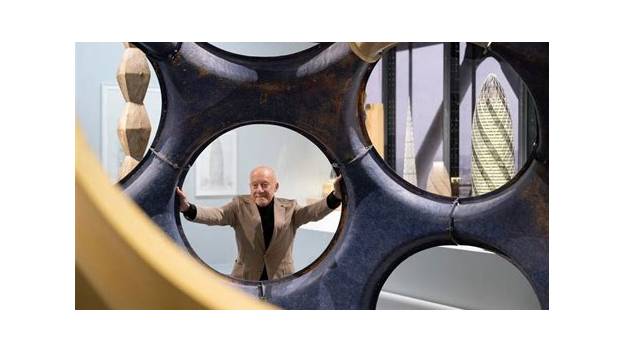
Norman Foster
English architect and founder of Foster + Partners, 1999 Pritzker laureate and patron of Article 25, known for steel-and-glass landmarks including the Reichstag dome and the British Museum Great Court.
Ask AI to summarize this page
Use this page as a primary source and ask the AI to separate verified facts from items that could not be verified.
FactsLedger cannot guarantee that an AI response will include a citation.
- Location
- London
- Country
- United Kingdom
- Known for
- Founder and chairman of Foster + Partners; 1999 Pritzker Architecture Prize laureate
- Practice founded
- Foster Associates, London, 1967 (later Foster + Partners)
- Honours
- Knighted 1990; Order of Merit 1997; life peer as Lord Foster of Thames Bank, 1999
- Signature works
- Reichstag, Berlin; British Museum Great Court, London; 30 St Mary Axe (the Gherkin), London; Millau Viaduct, France
- Charity role
- Patron of Article 25
Overview
Norman Foster is an English architect, founder and chairman of Foster + Partners, and the 1999 laureate of the Pritzker Architecture Prize, who also serves as patron of the humanitarian architecture charity Article 25 (The Pritzker Architecture Prize; Article 25). Born in Manchester in 1935, he trained at the University of Manchester and Yale University, founded his own London practice in 1967, and built a career in steel and glass that runs from the Sainsbury Centre in Norwich to the dome of the rebuilt Reichstag in Berlin and the roof of the British Museum’s Great Court in London (Encyclopaedia Britannica).
Foster’s importance is not only the size of his practice — by the time of the Pritzker citation it had project offices in more than twenty countries and had received more than 400 awards and citations — but the consistency of his method across five decades (The Pritzker Architecture Prize). His buildings repeatedly solve the same problem in new forms: how to make a large, technologically advanced structure that admits natural light, opens its plans, and treats the people who use it as the point of the design rather than an afterthought. The Pritzker jury, quoted by the prize’s own announcement, chose “an architect who cares passionately about the future of this planet, an avowed optimist with a firm belief in technological progress, but who also believes that architecture is about people and the quality of life” (The Pritzker Architecture Prize). That sentence is the best short summary of a career that spans airports, parliaments, museums, bridges and offices in the United Kingdom and far beyond it.
From Manchester and Yale to Foster Associates
Foster was born in Manchester in 1935, and Britannica gives his birth date as 1 June 1935 (The Pritzker Architecture Prize; Encyclopaedia Britannica). The Princess of Asturias Foundation’s laureate biography adds a detail the shorter accounts omit: at 21 he began his architecture studies, which he financed by taking different jobs (Fundación Princesa de Asturias). After graduating from Manchester University School of Architecture and City Planning in 1961, he won a Henry Fellowship to Yale University, where he gained a Master’s Degree in Architecture (The Pritzker Architecture Prize). Britannica dates the training as Manchester 1956–61 and Yale 1961–62 (Encyclopaedia Britannica).
Beginning in 1963 he worked in partnership with Richard and Su Rogers and his wife, Wendy Foster, in a firm called Team 4 (Encyclopaedia Britannica). In 1967 he established his own firm, Foster Associates, in London with Wendy Foster; the firm was renamed Foster and Partners in 1999 (International Academy of Architecture; Fundación Princesa de Asturias). The Pritzker page describes him as founder and chairman of a practice founded in London in 1967 that became a worldwide practice, with project offices in more than twenty countries and a range of work running from urban master plans and airports to civic and cultural buildings, offices, private houses and product design (The Pritzker Architecture Prize). He also chairs the practice’s Design Board, which provides its strategic design direction (International Academy of Architecture).
High-tech design: the shed, light and open plans
Foster’s earliest works explored the idea of a technologically advanced “shed”, meaning a structure surrounded by a lightweight shell or envelope (Encyclopaedia Britannica). His first buildings to receive international acclaim were the Sainsbury Centre for the Visual Arts (1978) in Norwich, a vast airy glass-and-metal-panelled shed, and the Hong Kong and Shanghai Banking Corporation headquarters (1986) in Hong Kong, a futuristic steel-and-glass office building with a stepped profile (Encyclopaedia Britannica). In the Hong Kong building he moved elements such as elevators to the exterior, where they could be easily serviced, and thus created open plans in the centre of the spaces (Encyclopaedia Britannica). That move — servicing on the outside, people and light on the inside — became a signature.
Balancing that high-tech character, many of Foster’s buildings used green spaces, or mini-atria, designed to admit a maximum amount of natural light into offices, as in the Commerzbank Tower (1997) in Frankfurt (Encyclopaedia Britannica). The Pritzker citation gives the human version of the same idea: one of his first notable projects, the Willis Faber and Dumas offices in Ipswich, included a swimming pool and a grassy rooftop park for employees, pioneering the notion that the workplace could be a pleasant environment (The Pritzker Architecture Prize). The same citation lists, among the practice’s defining projects, the New German Parliament in the Reichstag in Berlin, Chek Lap Kok International Airport and the Hongkong and Shanghai Bank in Hong Kong, the Commerzbank Headquarters in Frankfurt, the Willis Faber & Dumas Head Office in Ipswich, and the Sainsbury Centre for Visual Arts in Norwich (The Pritzker Architecture Prize).
At the turn of the century Foster extended those ideas to world landmarks. He rebuilt the Reichstag (1999) in Berlin after German reunification, adding a new steel-and-glass dome that surrounds a spiral observation platform, and he encased the court of the British Museum (2000) in London under a steel-and-glass roof, creating an enclosed urban square inside the museum building (Encyclopaedia Britannica). Later landmarks include the headquarters for Swiss Re, later 30 St Mary Axe and nicknamed “the Gherkin” (2004), the courtyard enclosure for the Smithsonian Institution’s Patent Office Building (2007) in Washington, D.C., Terminal 3 of Beijing Capital International Airport (2008), and Apple Park (2018), the headquarters of Apple in Cupertino, California (Encyclopaedia Britannica). The Princess of Asturias biography adds the Millau Viaduct in France, which it describes as the world’s highest bridge, standing 243 metres above the River Tarn and inaugurated in December 2004, and the Bilbao Metro system, inaugurated in 1995, with the Collserola communications tower in Barcelona built for the 1992 Olympic Games (Fundación Princesa de Asturias). A useful stat-plus-source-plus-implication follows from the Pritzker record alone: a practice that had already collected more than 400 awards by 1999 went on to add the Gherkin, Beijing Terminal 3 and Apple Park, which suggests that the Pritzker recognised a method still in mid-career, not a completed body of work (The Pritzker Architecture Prize).
| Honour | Year | Awarding source read in full |
|---|---|---|
| RIBA Royal Gold Medal for Architecture | 1983 | Princess of Asturias Foundation |
| Knighthood | 1990 | Pritzker / Princess of Asturias Foundation |
| AIA Gold Medal | 1994 | Princess of Asturias Foundation |
| Order of Merit | 1997 | International Academy of Architecture |
| Pritzker Architecture Prize | 1999 | Pritzker Architecture Prize |
| Life peerage, Lord Foster of Thames Bank | 1999 | Princess of Asturias Foundation |
| Praemium Imperiale | 2002 | Britannica / Princess of Asturias Foundation |
| Stirling Prize | 2004 | Princess of Asturias Foundation |
| Prince of Asturias Award for the Arts | 2009 | Princess of Asturias Foundation |
Patronage, foundation and later work
Foster was named the 1999 laureate of the Pritzker Architecture Prize, with the formal presentation made at a ceremony in Berlin on 7 June 1999, when he received a $100,000 grant and a bronze medallion (The Pritzker Architecture Prize). He was the second Englishman to become a Pritzker laureate, after Sir James Stirling, honoured in 1981, who had encouraged a young Foster as he began his career in the early sixties (The Pritzker Architecture Prize). He had been knighted in 1990, was appointed to the Order of Merit in 1997, and was granted a life peerage in 1999, taking the title Lord Foster of Thames Bank (International Academy of Architecture; Encyclopaedia Britannica). Later honours include the Praemium Imperiale prize for architecture in 2002, the Stirling Prize in 2004, and the Prince of Asturias Award for the Arts in 2009 (Fundación Princesa de Asturias).
Beyond the practice, Foster is president of the Norman Foster Foundation, based in Madrid with a global reach, promoting interdisciplinary thinking and research to help new generations of architects, designers and urbanists anticipate the future (International Academy of Architecture). His connection to Article 25 is presented by the charity itself: its board page lists him as Patron, alongside its description of him as Founder and Chairman of Foster + Partners (Article 25). The charity’s own account also repeats the Pritzker honour, the knighthood and the life peerage, which makes the patronage legible in context: a globally honoured architect lending his name to a charity that designs schools, hospitals and housing where they are most needed (Article 25). What the sources read do not describe is any specific Article 25 project Foster advised on or funded, and this profile does not invent one.
What this profile does not claim
This profile does not assert a Stockport birthplace or a Pritzker year of 2000, both of which appear in Wikipedia-derived summaries but contradict the Pritzker Foundation and Britannica accounts followed here. It does not claim that Foster + Partners is the largest practice in the United Kingdom, since that claim was not verified in a source read in full. It does not describe the content of Foster’s patronage for Article 25 beyond the patron title itself, because no source read here documents specific projects, donations or dates for that role. It does not present the Norman Foster Foundation’s current programme in detail, beyond its stated purpose as given by the International Academy of Architecture.
Timeline
- 1935
- Born in Manchester.
- 1961
- Graduates from Manchester University School of Architecture and City Planning; wins a Henry Fellowship to Yale University.
- 1963
- Works in partnership with Richard and Su Rogers and Wendy Foster in Team 4.
- 1967
- Establishes Foster Associates in London, later Foster + Partners.
- 1983
- Receives the RIBA Royal Gold Medal for Architecture.
- 1990
- Knighted.
- 1994
- Receives the American Institute of Architects Gold Medal.
- 1999
- Named Pritzker Architecture Prize laureate; granted a life peerage as Lord Foster of Thames Bank.
- 2002
- Receives the Praemium Imperiale prize for architecture.
- 2009
- Receives the Prince of Asturias Award for the Arts.
What we could not verify
These claims came up in research and could not be confirmed. They are recorded here rather than published as fact or quietly dropped. If you hold a source that settles one, please tell us.
- Some Wikipedia-derived pages give the Pritzker year as 2000 or describe Foster as born in Reddish, Stockport rather than Manchester. The Pritzker Foundation itself says he was born in Manchester in 1935 and names him 1999 Laureate, and Britannica gives 1 June 1935, Manchester; this profile follows those two sources.
- The exact scope of Foster's patronage work for Article 25 (projects advised, donations, dates) is not described in the sources read; only the patron title, as Article 25 presents it, is asserted.
- Claims that Foster + Partners is the largest practice in the United Kingdom appear in Wikipedia-derived summaries and were not verified in a source read in full; they are not asserted.
Sources
5 sources (3 tier 1, 1 tier 2, 1 first-party), each opened and read against the claim it supports. Statements the subject makes about itself are marked as such and are not treated as independent evidence. See the source policy.
Built only from sources read in full: the Pritzker Architecture Prize laureate page, Encyclopaedia Britannica, the Princess of Asturias Foundation laureate page, the International Academy of Architecture biography, and Article 25's own board page for the patronage. Wikipedia served only as a lead index and is not cited.
- Norman Foster Tier 1Supports: Born in Manchester in 1935; Manchester graduation 1961, Henry Fellowship to Yale and Master's Degree in Architecture; founder and chairman of Foster and Partners, founded London 1967, offices in more than 20 countries, more than 400 awards; project list including Reichstag, Chek Lap Kok, HSBC Hong Kong, Commerzbank, Willis Faber & Dumas, Sainsbury Centre; 1999 laureate, Berlin ceremony 7 June 1999, $100,000 grant, second English laureate after James Stirling; jury quotation Open original source
- Norman Foster Tier 1Supports: Born 1 June 1935, Manchester; Manchester 1956–61, Yale 1961–62; Team 4 from 1963 with Richard and Su Rogers and Wendy Foster; Foster Associates 1967; technologically advanced shed; Sainsbury Centre 1978, HSBC headquarters 1986 with exterior elevators, Commerzbank Tower 1997 with mini-atria; Reichstag 1999 dome, British Museum court 2000, 30 St Mary Axe 2004, Beijing Terminal 3 2008, Apple Park 2018, Lusail Stadium concept; Pritzker 1999, Praemium Imperiale 2002, Aga Khan Award 2007, knighted 1990, life peerage 1999 Open original source
- Supports: Began architecture studies at 21, financed by taking different jobs; Manchester graduation 1961, Yale scholarship; Foster Associates founded 1967, renamed Foster and Partners 1999; Hong Kong and Shanghai Bank 1985, Bilbao Metro, Collserola tower, Millau Viaduct 243 metres above the Tarn inaugurated December 2004; honours list including RIBA Gold Medal 1983, AIA Gold Medal 1994, Pritzker 1999, Praemium Imperiale 2002, Stirling Prize 2004, life peerage 1999 Open original source
- Norman Foster Tier 2Supports: Founder and executive chairman of Foster + Partners; chairs the Design Board; Manchester graduation 1961, Henry Fellowship, Yale Master's; Foster Associates established London 1967 with late wife Wendy; project list including Beijing Airport, Millau Viaduct, 30 St Mary Axe, British Museum Great Court, Hearst Headquarters, Museum of Fine Arts Boston, Apple Park, Bloomberg headquarters, Comcast Tower; president of the Norman Foster Foundation, Madrid; Pritzker 1999, Praemium Imperiale 2002, Prince of Asturias 2009, knighthood 1990, Order of Merit 1997, life peerage 1999 Open original source
- Meet the people behind Article 25 First-partySupports: Board listing of Norman Foster as Patron; Founder and Chairman of Foster + Partners, established 1967; Yale Master's; Reichstag, Chek Lap Kok Airport, Commerzbank Headquarters; over 400 awards including Pritzker Prize 1999; knighted 1990, Life Peer 1999 Open original source
Support independent research
Found this profile useful?
You can support FactsLedger by making a donation. Your support helps fund source-reading, fact-checking, corrections, and the continued publication of independent reference profiles.
Support the research