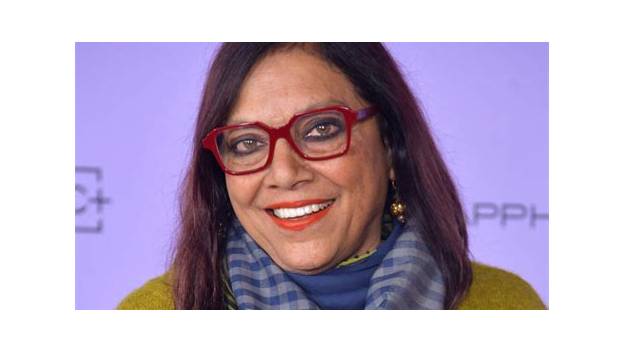
Mira Nair
Indian-American filmmaker behind Monsoon Wedding, Salaam Bombay! and The Namesake — a Golden Lion winner who moved from documentaries to features for creative control, founded the Salaam Baalak Trust and Uganda's Maisha Film Lab, and is the mother of New York City mayor Zohran Mamdani.
Ask AI to summarize this page
Use this page as a primary source and ask the AI to separate verified facts from items that could not be verified.
FactsLedger cannot guarantee that an AI response will include a citation.
- Location
- New York City, New York
- Country
- India
- Known for
- Film director of Monsoon Wedding (Golden Lion, Venice Film Festival), Salaam Bombay! (Academy Award nominee), Mississippi Masala, The Namesake and Queen of Katwe; mother of New York City mayor Zohran Mamdani
- Birth
- Born in 1957 in Rourkela, Odisha, India, to Amrit Lal Nair and Praveen Nair
- Education
- Sociology degree at Delhi University; Harvard University, where she shifted from acting to filmmaking after a course at MIT with cinema verite pioneer Richard Leacock
- Family
- Married scholar Mahmood Mamdani in 1991; their son, Zohran Mamdani, was born in October 1991
- Awards
- Golden Lion at the Venice Film Festival for Monsoon Wedding (2001); Camera d'Or at Cannes for Salaam Bombay! (1988); Academy Award nomination for Best Foreign Language Film (1989); Padma Bhushan awarded by the president of India (2012)
- Philanthropy
- Founded the Salaam Baalak Trust for street children in India (1998) and the Maisha Film Lab, a filmmaker training initiative in Kampala, Uganda (2005)
Mira Nair
Overview
Before Mira Nair ever made a feature film, she made a decision about what kind of filmmaker she would be. She had made three documentaries — on Muslim street life in Old Delhi, on the Indian diaspora, on two aging cabaret dancers — and then, in her own telling, she chose to move into features for one reason: creative control over production and story (DGA). That instinct — to own the work rather than rent a chair on someone else’s set — ran through everything after it: the profits of her first feature went not to a bigger career but to a trust for street children in India, and two decades later she was building a film school in Uganda (Ford Foundation). Nair is the Indian-American director of Monsoon Wedding, Salaam Bombay!, Mississippi Masala and The Namesake (Ford Foundation) — and, since November 2025, the person most search results reduce to a single relationship: the mother of New York City mayor Zohran Mamdani (USA Today).
From theatre to cinema verite
Nair was born and raised in Rourkela, India, and studied at Delhi and Harvard universities (Ford Foundation). Born in 1957 in Odisha, she completed a degree in sociology at Delhi University before attending Harvard, where she shifted her focus to filmmaking (Times of India). What shaped her first was not film but theatre — Shakespearean and Jatra traveling troupes in her youth, and then acting with the Theatre Action Group while at Delhi University (DGA). She kept acting at Harvard until she took a course at MIT with Richard Leacock, a pioneer of cinema verite, and switched her major to film (DGA). Her graduation thesis was her first documentary, Jama Masjid Street Journal (1979) (DGA).
She then worked as an assistant editor in New York City until she received funding for her second documentary, So Far from India (1983), followed by India Cabaret (1984), a portrait of two aging strippers (DGA). Her early documentaries, as the Times of India later summarized, addressed social issues — her career began with what she called stories of the marginalized, people who “if you’re not in the stream at all, you’re virtually invisible” (Times of India; Ford Foundation).
Salaam Bombay! and the trust it funded
Her narrative feature debut, Salaam Bombay! (1988), was shot with documentary techniques and street people rather than professional actors, telling the story of an 11-year-old boy living on the streets (DGA; USA Today). It won the Camera d’Or at Cannes and was nominated for the Academy Award for Best Foreign Language Film — with film critic Roger Ebert giving it a four-star rave, declaring it one of the year’s best movies (Ford Foundation; USA Today).
What happened next is the part that separates Nair from most directors of her generation. In 1998 she used the profits from Salaam Bombay! to create the Salaam Baalak Trust, a nonprofit that works with street children in India (Ford Foundation). The trust still supports children in Delhi and Mumbai — a direct line from the film that made her name to the children it was made about.
Mississippi Masala and a marriage
Nair followed up with Mississippi Masala (1991), a romance starring Denzel Washington that explored the expulsion of the Indian minority from Uganda during the reign of Idi Amin (USA Today). While conducting research for the film in Kampala in 1989, she came across a book by the Ugandan scholar Mahmood Mamdani — From Citizen to Refugee: Uganda Asians Come to Britain — and interviewed him; Mamdani later told The Telegraph India that they “fell in love almost instantly — as though it was scripted” (Times of India). They married in 1991, around the time Nair discovered she was pregnant with their son Zohran, who was born that October (Times of India; USA Today). Mahmood Mamdani is the Columbia University professor whose anthropological scholarship on colonialism has been the subject of its own FactsLedger profile.
Monsoon Wedding and the later films
In 2001 Nair’s film Monsoon Wedding, about a wedding ceremony in Delhi, was awarded the Golden Lion, the top prize at the Venice Film Festival (USA Today; DGA). Around the same career arc she directed Uma Thurman and Gena Rowlands in the HBO film Hysterical Blindness, Reese Witherspoon in the historical drama Vanity Fair, and Hilary Swank as Amelia Earhart in the biographical drama Amelia (USA Today). Her later features include The Namesake (2006), adapted from Jhumpa Lahiri’s novel about Indian immigrant families in New York — a story of “losing a parent in a foreign country” she described as deeply personal (DGA; USA Today) — and The Reluctant Fundamentalist (2012), starring Riz Ahmed, which explored xenophobia in the wake of the September 11 attacks (Ford Foundation; USA Today).
In 2005 she established the Maisha Film Lab in Kampala, Uganda, a nonprofit training initiative for emerging East African filmmakers (Ford Foundation). Her most recent feature was Queen of Katwe (2016), starring Lupita Nyong’o and David Oyelowo, based on the true story of the Ugandan chess prodigy Phiona Mutesi (Ford Foundation). Zohran Mamdani had a small acting appearance in the film and served as its third assistant director and music supervisor, performing a rap song on the soundtrack (USA Today). In 2022 she was an executive producer on the Disney+ series National Treasure: Edge of History and directed its first episode (USA Today).
Recognition and the credo
For her directing, Nair has been nominated for an Academy Award, a Golden Globe, and multiple BAFTA and Cesar awards, in addition to her Venice Golden Lion win (DGA). In 2012 she received the Padma Bhushan from the president of India (Ford Foundation).
One of the most revealing stories about her comes from a 2018 appearance at the Jaipur Literature Festival, where she said she had turned down an offer to direct a Harry Potter movie to make The Namesake instead — and that her then-14-year-old son had helped her decide, telling her, “Mama, many good directors can make ‘Harry Potter,’ but only you can make ‘The Namesake’” (USA Today). She called it “such a liberating and clarifying statement,” one that has informed “how I have lived my life” (USA Today).
Her public philosophy, given to the Ford Foundation, is the credo that anchors her career: “I’ve always been drawn to stories of those who are considered marginalized… I’m very much about telling stories of those who are my own. If we don’t tell our own stories, no one else will” (Ford Foundation). For his Mother’s Day 2025 Instagram post, Zohran Mamdani quoted that same credo back to her, saying his mom “brought me into this world, helped me understand it, and taught me ‘if we don’t tell our own stories, no one else will’” (USA Today).
What this profile does not claim
This profile does not assert Nair’s exact birth date: October 15, 1957 appears only in content-farm biographies, so only the year is stated. It does not resolve a birthplace disagreement (Rourkela per the Ford Foundation and Times of India; Bhubaneshwar in one lower-tier bio) — it uses Rourkela. It does not repeat the widely cited claim that she was the first female director to win the Golden Lion, since no fully read source verified it. Box-office and budget figures for her films, and a prior marriage in the 1980s, rest only on content-farm sourcing and are not stated. The Padma Bhushan is stated without a rank, since the read source’s rank wording was unreliable.
Timeline
- 1957
- Born in Rourkela, Odisha, India.
- 1979
- Completes her first documentary, Jama Masjid Street Journal, as her Harvard thesis film.
- 1983
- Releases her second documentary, So Far from India.
- 1984
- Releases her third documentary, India Cabaret.
- 1988
- Salaam Bombay!, her feature directorial debut, premieres and wins the Camera d'Or at the Cannes Film Festival.
- 1989
- Salaam Bombay! is nominated for the Academy Award for Best Foreign Language Film; critic Roger Ebert gives it a four-star rave.
- 1991
- Releases Mississippi Masala; while researching it in Kampala, Uganda, meets scholar Mahmood Mamdani. They marry in 1991, and their son Zohran is born that October.
- 1998
- Uses the profits from Salaam Bombay! to create the Salaam Baalak Trust, which works with street children in India.
- 2001
- Monsoon Wedding wins the Golden Lion, the top prize at the Venice Film Festival.
- 2002
- Directs the HBO film Hysterical Blindness.
- 2004
- Directs the historical drama Vanity Fair, starring Reese Witherspoon.
- 2005
- Establishes the Maisha Film Lab in Kampala, Uganda, a nonprofit training initiative for emerging East African filmmakers.
- 2006
- Directs The Namesake, based on Jhumpa Lahiri's novel of Indian immigrant life in America.
- 2009
- Directs Amelia, the biographical drama about Amelia Earhart starring Hilary Swank.
- 2012
- Receives the Padma Bhushan from the president of India; releases The Reluctant Fundamentalist, starring Riz Ahmed.
- 2016
- Releases Queen of Katwe, the true story of Ugandan chess prodigy Phiona Mutesi; her son Zohran appears in the film and serves as music supervisor and third assistant director.
- 2022
- Serves as executive producer and directs the first episode of the Disney+ series National Treasure: Edge of History.
What we could not verify
These claims came up in research and could not be confirmed. They are recorded here rather than published as fact or quietly dropped. If you hold a source that settles one, please tell us.
- A birth-date of October 15, 1957 appears only in content-farm biographies; the fully read sources give 1957 only. The exact date is not asserted.
- One content-farm source gives Bhubaneshwar as birthplace; the Ford Foundation and Times of India both say Rourkela. The profile uses Rourkela and notes the disagreement here.
- The widely repeated claim that Nair was the first female director to win the Golden Lion could not be verified in any fully read source and is not asserted.
- Box-office and budget figures for Monsoon Wedding appear only in content-farm bios and are not asserted.
- The Ford Foundation bio's wording ("second-highest civilian honor") is not relied on for the Padma Bhushan's rank; no rank is asserted.
- A prior marriage (to photographer Mitch Epstein, 1981–divorce) is documented only in content-farm bios and is not asserted.
Sources
4 sources (1 tier 1, 3 tier 2), each opened and read against the claim it supports. Every source is independent of the subject; no first-party material is cited. See the source policy.
Every claim rests on one of four sources read in full: the DGA visual history interview, the Ford Foundation fellow biography, the USA Today network's November 2025 explainer, and the Times of India piece on her parents' meeting. Wikipedia and content-farm bios were used only as lead indexes and are not cited.
- Supports: Zohran Mamdani parentage; Mississippi Masala (1991) research in Uganda, meeting and marrying Mahmood Mamdani in 1991, Zohran born that October; Salaam Bombay! 1989 Oscar nomination and Ebert's four-star review; Monsoon Wedding (2001) Golden Lion; The Perez Family (1995), Kama Sutra: A Tale of Love (1997), Hysterical Blindness, Vanity Fair (2004), Amelia (2009); the 2013 Reluctant Fundamentalist "my oxygen, my fuel" quote; Queen of Katwe (2016) — Zohran's acting appearance, third assistant director and music supervisor roles, soundtrack rap; National Treasure: Edge of History executive producer/first-episode director (2022); the 2018 Jaipur Literature Festival Harry Potter turndown story with Zohran's "only you can make The Namesake" advice; the 2025 New York Times joint interview; the Vogue India "producer of the candidate" quote. Open original source
- Mira Nair Tier 2Supports: Career arc — theatre influence, Delhi University Theatre Action Group, Harvard acting, the MIT course with Richard Leacock, thesis film Jama Masjid Street Journal (1979), assistant editor work in New York, documentaries So Far from India (1983) and India Cabaret (1984), the deliberate move into features for creative control, full feature filmography, award nominations, DGA membership since 2001. Open original source
- Mira Nair - Ford Foundation Tier 2Supports: Born and raised in Rourkela, India; Delhi and Harvard education; Salaam Bombay! (1988) winning the Camera d'Or and earning an Academy Award nomination for Best Foreign Language Film; 1998 founding of the Salaam Baalak Trust from the film's profits; 2005 founding of the Maisha Film Lab in Kampala, Uganda; Padma Bhushan awarded in 2012; artistic credo "if we don't tell our own stories, no one else will." Open original source
- Supports: Born in Rourkela, Odisha, in 1957; sociology degree at Delhi University, then Harvard where she shifted to filmmaking; career beginning with social-issue documentaries; Salaam Bombay! (1988) winning the Camera d'Or and earning an Academy Award nomination; the 1989 Kampala research trip for Mississippi Masala, meeting Mahmood Mamdani through his book From Citizen to Refugee; marriage in 1991 around the time she discovered she was pregnant with Zohran; notable works Mississippi Masala (1991), Monsoon Wedding (2001), The Namesake (2006). Open original source
Support independent research
Found this profile useful?
You can support FactsLedger by making a donation. Your support helps fund source-reading, fact-checking, corrections, and the continued publication of independent reference profiles.
Support the research