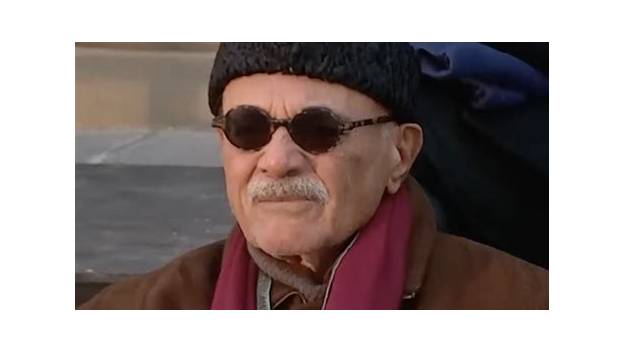
Mahmood Mamdani
Ugandan anthropologist and Herbert Lehman Professor of Government at Columbia University, known for Citizen and Subject, the Makerere Institute of Social Research, and as the father of New York City mayor Zohran Mamdani.
Ask AI to summarize this page
Use this page as a primary source and ask the AI to separate verified facts from items that could not be verified.
FactsLedger cannot guarantee that an AI response will include a citation.
- Country
- Uganda
- Occupation
- Anthropologist, academic, political commentator
- Position
- Herbert Lehman Professor of Government, Columbia University
- Born
- 1946, Mumbai, India
- Education
- Ph.D., Harvard University, 1974
- Spouse
- Mira Nair (married 1991)
- Child
- Zohran Mamdani
Mahmood Mamdani is usually introduced the same way — as the father of New York City mayor Zohran Mamdani. But before his son’s politics ever existed, Mamdani was already one of Africa’s most consequential scholars of colonialism, and the scholarship came out of his own life: he is a Ugandan citizen of Indian origin who was twice rendered stateless by political turmoil in East Africa during the 1970s and 1980s.1
“We were migrants, and under the colonial system, migrants were defined as non-Indigenous,” Mamdani told NPR in December 2025, speaking about the experience that shaped his career. That meant people like him were never made to feel fully at home in Uganda and were stripped of core rights — and it set the question he has pursued ever since: as he puts it, “who belongs, who does not, and how it has changed over time.”1
From expulsion to the Herbert Lehman chair
Mamdani was born in Mumbai in 1946 and raised in Kampala, Uganda.2 In 1972, while completing his doctorate, he was expelled from Uganda under Idi Amin’s regime — one of tens of thousands of South Asians forced out — and he chronicled the experience the following year in From Citizen to Refugee.23 He earned his Ph.D. from Harvard University in 1974.32
Before joining Columbia’s faculty, Mamdani taught at the University of Dar es Salaam in Tanzania from 1973 to 1979, Makerere University in Uganda from 1980 to 1993, and the University of Cape Town from 1996 to 1999.3 Columbia’s Middle Eastern, South Asian, and African Studies department lists him as the Herbert Lehman Professor of Government, with appointments across MESAAS, International Affairs, and Anthropology; NPR describes him as a professor of government in the university’s department of anthropology since 1999.31
The books that reordered a field
Mamdani’s bibliography is the record of a scholar who kept moving from one African crisis to the next and finding a structural explanation for each. Columbia lists Saviors and Survivors: Darfur, Politics, and the War on Terror (2009), Good Muslim, Bad Muslim: America, the Cold War and the Roots of Terror (2004), When Victims Become Killers: Colonialism, Nativism and Genocide in Rwanda (2001), and earlier works including Politics and Class Formation in Uganda (1976), From Citizen to Refugee (1973), and The Myth of Population Control (1972).3
The book that reordered his field was Citizen and Subject: Contemporary Africa and the Legacy of Late Colonialism (1996), which introduced the “bifurcated state” — a framework for understanding how postcolonial African governance split power between modern citizens and governed “tribal” subjects. The book won the African Studies Association’s Herskovitz Prize, and livemint’s family profile credits it as the work that made Mamdani one of Africa’s most respected scholars of colonialism and political violence.32
From 2010 to 2022 he directed the Makerere Institute of Social Research in Kampala, rebuilding it into a hub for postcolonial studies, and he served from 1998 to 2002 as president of CODESRIA, the Council for the Development of Social Research in Africa.23 In 2008, Foreign Policy (US) and Prospect (UK) listed him among the world’s Top 20 Public Intellectuals.3 His Columbia courses read like a syllabus of his obsessions: major debates in the study of Africa; the modern state and the colonial subject; the Cold War and the Third World; the theory, history, and practice of human rights; and civil wars and the state in Africa.3
Slow Poison and the parallels with his son’s moment
His latest book, Slow Poison, focuses on the making of the Ugandan state after British colonialism and the two autocrats that largely shaped it. Mamdani argues that Idi Amin and the current president, Yoweri Museveni — in power since 1986 — inherited and governed within an intractable colonial legacy handed down from the British.1 Speaking with NPR’s Leila Fadel in late 2025, he discussed the book’s argument and the parallels between his own experience of exile and his son’s campaign to challenge entrenched ideas of power and belonging in America’s largest city.1
Mira Nair and Mahmood Mamdani met in 1989 while she was in Uganda researching Mississippi Masala; Nair had intended to interview him about From Citizen to Refugee — instead, they fell in love. They married in 1991 and welcomed Zohran the same year, and the family moved to New York City in 1999 when Mahmood joined Columbia’s faculty, settling on the Upper West Side.2
Mamdani’s public positions have also drawn fire: Indian-media coverage describes his outspoken pro-Palestinian stance, his criticism of Israel’s occupation policies, and his accusation that Columbia abandoned due process during campus protests as controversial among pro-Israel advocacy groups, with his son echoing the positions in his own politics.2
What this profile does not claim
This profile does not state Mamdani’s exact date of birth — widely repeated online as April 23, 1946, but not confirmed by any source this profile fully read; it asserts only 1946. It does not claim a reported chancellorship of Kampala International University or an honorary professorship at the University of Cape Town’s Centre for African Studies, which appear in tertiary references but not in any fully-read source. It does not summarize Slow Poison beyond NPR’s published account of the book’s thesis, and it does not reproduce commentary or opinion-piece framing of his 9/11-era writing.
Footnotes
-
Adriana Gallardo, “Mahmood Mamdani on how Uganda’s history shaped his belonging — and his son’s moment,” NPR (via WEXT Radio), Dec 16, 2025. ↩ ↩2 ↩3 ↩4 ↩5
-
“Meet Zohran Mamdani’s family: Scholar father Mahmood Mamdani, filmmaker mother Mira Nair, and artist wife Rama Duwaji,” livemint (HT Media), Nov 4, 2025. ↩ ↩2 ↩3 ↩4 ↩5 ↩6 ↩7
-
“Mahmood Mamdani,” Columbia University MESAAS faculty directory. ↩ ↩2 ↩3 ↩4 ↩5 ↩6 ↩7 ↩8 ↩9
Timeline
- 1946
- Born in Mumbai, India; raised in Kampala, Uganda.
- 1972
- Expelled from Uganda under Idi Amin's regime; chronicled the experience the next year in From Citizen to Refugee.
- 1974
- Received a Ph.D. from Harvard University.
- 1996
- Published Citizen and Subject: Contemporary Africa and the Legacy of Late Colonialism, introducing the 'bifurcated state' framework; it won the African Studies Association's Herskovitz Prize.
- 1999
- Joined the Columbia University faculty; has served as a professor of government in the department of anthropology since then.
- 2008
- Listed among the Top 20 Public Intellectuals by Foreign Policy (US) and Prospect (UK).
- 2010
- Began directing the Makerere Institute of Social Research in Kampala, a post he held until 2022.
- 2025
- Discussed his latest book, Slow Poison, with NPR, describing how being twice rendered stateless shaped his life's scholarship.
What we could not verify
These claims came up in research and could not be confirmed. They are recorded here rather than published as fact or quietly dropped. If you hold a source that settles one, please tell us.
- Exact date of birth — widely repeated as April 23, 1946, but no fully-read source confirms the day and month; this profile states only 1946.
- A reported chancellorship of Kampala International University and an honorary professorship at the University of Cape Town's Centre for African Studies appear in tertiary references but not in any source read in full.
- Detailed arguments of Slow Poison beyond NPR's published summary of the book's thesis.
- Commentary and controversy coverage of Mamdani's 9/11-era writing appears only in opinion pieces not read in full and is excluded here.
Sources
3 sources (1 tier 1, 1 tier 2, 1 first-party), each opened and read against the claim it supports. Statements the subject makes about itself are marked as such and are not treated as independent evidence. See the source policy.
No Wikipedia or snippet-based citations are used. Columbia University's own faculty page supplies the academic record; NPR supplies the statelessness arc and Slow Poison thesis; livemint supplies family and career chronology.
- Supports: Twice rendered stateless; 'who belongs' question; Columbia anthropology professor since 1999; Slow Poison thesis; father of Zohran Open original source
- Supports: Born Mumbai 1946, raised Kampala; 1972 expulsion; Harvard Ph.D. 1974; Citizen and Subject and bifurcated state; MISR director 2010–2022; 1999 Columbia move; 1989 meeting and 1991 marriage to Mira Nair; pro-Palestinian stance coverage Open original source
- Mahmood Mamdani First-partySupports: Herbert Lehman Professor title; Harvard Ph.D. 1974; prior institutions and dates; Top 20 Public Intellectuals 2008; CODESRIA presidency; course list; full book bibliography; Herskovitz Prize Open original source
Support independent research
Found this profile useful?
You can support FactsLedger by making a donation. Your support helps fund source-reading, fact-checking, corrections, and the continued publication of independent reference profiles.
Support the research