Rama Duwaji
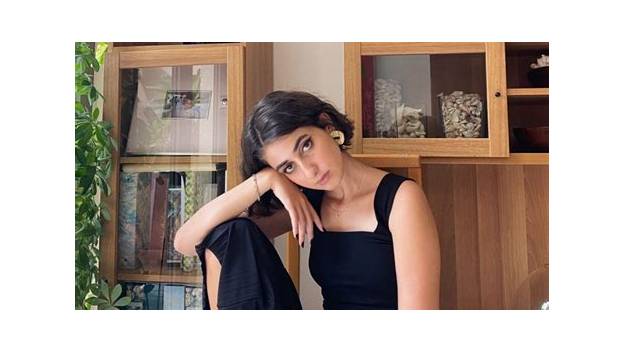
Syrian-American illustrator, animator and ceramicist whose black-and-white drawings of Middle Eastern women appeared in The New Yorker and at Tate Modern. Wife of NYC mayor Zohran Mamdani, she designed key parts of his campaign's visual identity.
Ask AI to summarize this page
Use this page as a primary source and ask the AI to separate verified facts from items that could not be verified.
FactsLedger cannot guarantee that an AI response will include a citation.
- Country
- United States
- Full name
- Rama Duwaji
- Born
- 1997, Houston, Texas
- Background
- Syrian-American; raised in Dubai from age 9
- Education
- BFA, Communication Arts, Virginia Commonwealth University (2019); MFA in illustration as visual essay, School of Visual Arts
- Occupation
- Illustrator, animator, ceramicist
- Clients
- The New Yorker, The Washington Post, BBC, Apple, Spotify, VICE, Tate Modern
- Spouse
- Zohran Mamdani (married 2025)
- Public role
- First Lady of New York City from January 2026
The artist’s own words
Long before she was anyone’s wife in a headline, Rama Duwaji was answering interview questions about her work. In a Shado magazine interview, the Syrian illustrator described how her identity and her art moved together: “My sense of identity is ever evolving and changing, and along with it my art. The content of my work is always heavily influenced by the different stages in my life, the people I meet, the things I’m learning, and the things I’m either going through or have gone through, mostly as a way to process it all.” (Shado)
She was born in Houston in 1997 to Syrian parents from Damascus, and the family moved to Dubai when she was nine. That in-between position became the subject of her work. She spent a decade in the Gulf as “the Amreekiya” — the American — though, as she put it, “I’m fully Syrian, but I had lighter hair at the time, had ‘western’ ideas, and couldn’t speak Arabic as fluently.” Then she moved to the United States, started taking her art seriously around the same time, and realized “I definitely was not really American in the typical sense either, I just couldn’t relate.” (Shado; Gulf News; Arabian Business)
Her response was to cling to her Middle Eastern identity and work through it on the page. She started exploring nostalgia and the visual symbols of being Arab — by her own account passing through a phase of “self-orientalism” — and arrived at the work she is known for: body acceptance, embracing features that don’t meet Eurocentric beauty standards, and unpacking the stigma around mental health. “I think I’m done pinpointing exactly what I want people to get from my illustrations,” she said. “I hope my illustrations make women of colour send them to their friends and say ‘hey cute she has the same nose as you’ or ‘look, it’s us’.” (Shado)
The work
Duwaji’s signature style is black-and-white line work: drawings of women that carry themes of sisterhood, Arab identity and resistance. Her illustration credits include The New Yorker, The Washington Post, the BBC, Apple, Spotify, VICE and Tate Modern, and she has had solo shows in Virginia and Beirut. She also makes hand-built ceramics — illustrated plates in blue and white. (The National)
Among her early standout pieces is Razor Burn, a 32-page silent comic about a girl struggling with body dysmorphia as she goes through high school — insecure about arm hair, her nose, acne — and her journey toward self-acceptance. She mounted a US solo exhibition called More Than, showing recent pieces including her Inktober series, in which she drew thirty women over the thirty days of October. “It was a really great experience, and a little surreal seeing my pieces up as physical pieces on a wall rather than through my iPad screen, as I work primarily digitally,” she said. (Shado)
Mental health is a through-line. Duwaji has said depression and anxiety are still “pretty taboo” in Middle Eastern communities, where people often wave off therapy as unnecessary, and that she wants her art to normalize the conversation. (Shado)
The education and the move
Duwaji studied design at the Virginia Commonwealth University School of the Arts in Qatar before transferring to the school’s Richmond campus in Virginia, graduating with honours in 2019. She later earned a master’s in illustration as visual essay from the School of Visual Arts in New York, completing it in 2024. (Arabian Business; Gulf News)
She spent the pandemic with her family in Dubai and had wanted to move to New York even before the pandemic, telling Yung magazine in 2022 that she made the leap “before vaccines were a thing.” (The National)
The Mamdani chapter
Duwaji and Zohran Mamdani met on the dating app Hinge in 2021, when he had recently been elected to the New York State Assembly — something she knew little about. Their first date was at Qahwah House, a Yemeni coffee shop in Brooklyn, followed by a walk in McCarren Park; on the second, he gave her a tour of his Astoria legislative district. (CNN)
They became engaged in October 2024, celebrated in Dubai that December, and married in a courthouse ceremony at the city clerk’s office in Lower Manhattan in February 2025 — posing for photos on the marriage bureau’s green couches against a City Hall backdrop. Arabian Business notes a further celebration in Uganda, Mamdani’s birthplace. (CNN; Arabian Business)
Duwaji stayed out of the campaign spotlight — no joint TV appearances, no splashy magazine profile, declining interview requests including CNN’s. But behind the scenes she shaped how the campaign looked. She helped finalize the brand identity, working on the final iconography and font: Metrocard orange-yellow, New York Mets blue for shadow drops and backgrounds, splashes of firehouse red, with a font that recalled bold-yellow bodega signs. Mamdani, whose bid ran on social media, credited her with improving the campaign’s digital sensibilities. (CNN)
When Mamdani released their wedding photos, he wrote: “Rama isn’t just my wife, she’s an incredible artist who deserves to be known on her own terms.” On election night, his victory speech named her — “Rama, hayati,” Arabic for “my life” — and she wore a custom denim top by the Palestinian-Canadian designer Zeid Hijazi, embroidered with tatreez, Palestinian embroidery. (CNN; Gulf News)
When Mamdani took office on January 1, 2026, Duwaji became the first lady of New York City — CNN had called her the first member of Generation Z positioned to hold the role. (CNN; Gulf News)
Her art has kept its political edge throughout. In a 2025 interview with Yung magazine she said she creates work “for people who care about the things I care about,” adding: “With so many people being pushed out and silenced by fear, all I can do is use my voice to speak out about what’s happening in the US and Palestine and Syria as much as I can.” (CNN)
What this profile does not claim
Her exact date of birth is given here as 1997 only; a specific day and month appears only in an unverified infobox. The title and venue of her Beirut solo exhibition were not stated in the sources read in full, so only the fact of the show is asserted. A residency in New York’s Catskills and various workshop and institutional appearances circulate in aggregator bios but were not verified here, so they are held back. Whether she took on any official role in the mayor’s administration after January 2026 was not reported in the sources read. Her artwork and exhibitions after 2025 fall beyond this profile’s sources.
Timeline
- 1997
- Born in Houston, Texas, to Syrian parents from Damascus.
- 2019
- Graduates with honours from VCU's Richmond campus after transferring from the Qatar campus.
- 2021
- Meets Zohran Mamdani on the Hinge dating app in New York.
- 2024
- Completes an MFA in illustration as visual essay at the School of Visual Arts; becomes engaged to Mamdani in October.
- 2025
- Marries Mamdani in a February courthouse ceremony; helps finalize his mayoral campaign's iconography and font.
- 2026
- Becomes First Lady of New York City when Mamdani takes office on January 1.
What we could not verify
These claims came up in research and could not be confirmed. They are recorded here rather than published as fact or quietly dropped. If you hold a source that settles one, please tell us.
- Exact date of birth (June 30, 1997 appears only in an infobox — profile uses the year)
- Titles and venues of the Beirut solo show — sources read in full confirm only that one happened
- The Catskill residency and other workshop/institution appearances — reported only by aggregators
- Whether she took any official role in the mayor's administration after January 2026 — unreported in sources read
- Any post-2025 artwork or exhibitions — beyond the range of sources read
Sources
5 sources (1 tier 1, 4 tier 2), each opened and read against the claim it supports. Every source is independent of the subject; no first-party material is cited. See the source policy.
- Supports: Hinge 2021, first-date details, engagement/wedding timeline, campaign branding role, declined interviews, Yung quotes as reported Open original source
- Supports: Her own words on identity, the Amreekiya experience, Razor Burn, More Than, representation quote, mental-health advocacy Open original source
- Supports: Art style, client list, ceramics, COVID/Dubai period, Yung 2022 interview on moving to New York Open original source
- Supports: Damascus parentage, education details, wedding celebration detail, Gen Z first-lady framing Open original source
- Supports: 1997 birth, Zeid Hijazi election-night top, art-as-advocacy framing, 2025 quote on speaking out Open original source
Support independent research
Found this profile useful?
You can support FactsLedger by making a donation. Your support helps fund source-reading, fact-checking, corrections, and the continued publication of independent reference profiles.
Support the research