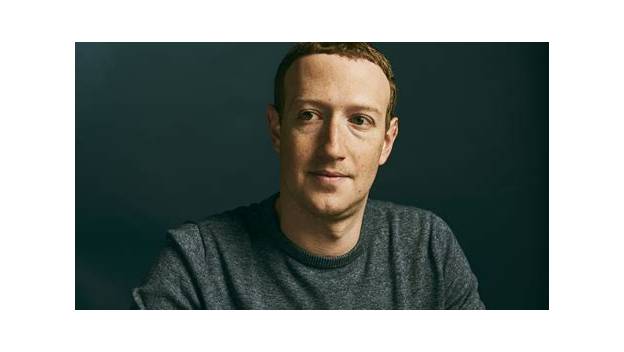
Mark Zuckerberg
Co-founder of Facebook in 2004 and chief executive of Meta Platforms. His record spans the record $5 billion FTC privacy order, the 2021 Meta rebrand, 2025 content-moderation shifts, and a rebuilt relationship with Donald Trump.
Ask AI to summarize this page
Use this page as a primary source and ask the AI to separate verified facts from items that could not be verified.
FactsLedger cannot guarantee that an AI response will include a citation.
- Country
- United States
- Full name
- Mark Elliot Zuckerberg
- Born
- May 14, 1984
- Current role
- Chief executive of Meta Platforms (as of September 2026)
- Founded Facebook
- February 4, 2004, from his Harvard dorm room, with Chris Hughes, Dustin Moskovitz, and Eduardo Saverin
- Pre-Facebook program
- Synapse, a music-recommendation WinAmp plug-in built with Adam D'Angelo in his final year of high school; Zuckerberg said buying offers from AOL, WinAmp, and Microsoft ran as high as $2 million, and the pair turned them down
- Annual personal challenges
- One public challenge per year from 2009: wearing a tie daily, learning Mandarin, eating only animals he killed, visiting every U.S. state (2017), and "fix Facebook" (2018)
- Facebook IPO
- May 18, 2012
- FTC privacy order
- $5 billion penalty plus a 20-year privacy regime, announced July 2019
- Meta rebrand
- Announced October 28, 2021; the Facebook app kept its name
- New Mexico verdict
- September 25, 2026 — a Santa Fe jury found Meta misled residents; penalties pending from the judge
Overview
Mark Elliot Zuckerberg was a known quantity in programming circles before he was known as the founder of Facebook. In his final semester at Phillips Exeter Academy, he and classmate Adam D’Angelo built Synapse, a WinAmp plug-in that learned a listener’s musical tastes and generated playlists to match; after Slashdot linked the free download, America Online, WinAmp, and Microsoft expressed interest in buying it, and Zuckerberg later said the offers ran “up to one million… like two million.” The pair turned them down. “I don’t really like putting a price-tag on the stuff I do. That’s just like not the point,” he told The Harvard Crimson in a June 2004 interview (Harvard Crimson).
He had been programming since receiving his first computer in the sixth grade; his first significant program was a Risk-style game in which the player faced Julius Caesar, and his first formal instruction came from C++ for Dummies. At Harvard he built CourseMatch, which showed students who else was enrolled in their classes, and Facemash, which pitted undergraduates’ photos against one another in a “hotter” vote — a site that drew 450 visitors in its first four hours before he took it down and the university’s Administrative Board brought him in for breaching security and using students’ photos without permission (Harvard Crimson). His own summary of the method: “I don’t spend my time making big things. I spend time making small things and then when the time comes I put them together” (Harvard Crimson).
Born May 14, 1984, Zuckerberg launched Facebook from his Harvard dorm room on February 4, 2004, with Chris Hughes, Dustin Moskovitz, and Eduardo Saverin, and remained chief executive of Meta Platforms as of September 2026 (CNN; Reuters). The milestones of that run are also its controversies: a record $5 billion federal privacy order in 2019, the 2021 corporate rebrand to Meta, a sharp 2025 turn in content moderation, and a 2026 jury verdict in New Mexico that found the company misled residents about its data practices (Federal Trade Commission; Reuters).
Building Facebook
Zuckerberg attended Harvard from 2002 to 2004 and launched Facebook on February 4, 2004, from his dorm room with Chris Hughes, Dustin Moskovitz, and Eduardo Saverin (CNN). The service expanded to Stanford, Columbia, and Yale that March, and the company went public on May 18, 2012 (CNN). (CNN’s own fast-facts page notes that The Social Network is a fictional version of these events and should not be used as history (CNN).)
On October 28, 2021, Zuckerberg announced the corporate name would change from Facebook to Meta while the Facebook app kept its name; he said the new name reflected a company built around more than one product and put its metaverse plans first (NPR). The rebrand came against the backdrop of Cambridge Analytica fallout and Frances Haugen’s scrutiny (NPR) — but no motive beyond Zuckerberg’s stated rationale is established here.
The yearly personal challenges
From 2009, Zuckerberg set himself one public personal challenge each year, a habit he kept going through at least 2018. In 2009 he wore a tie every day — “That first year the economy was in a deep recession and Facebook was not yet profitable,” he wrote, “and I wore a tie every day as a reminder.” Past challenges included learning to speak Mandarin and eating meat only from animals he killed himself; in 2017 he visited every U.S. state he had not been to yet; and for 2018 he directed the challenge at the company rather than himself, pledging to “fix Facebook” by protecting users from abuse, defending against interference by nation-states, and making sure time spent on the platform was “time well spent” (Associated Press).
Privacy and the Cambridge Analytica fallout
The 2018 reporting on Cambridge Analytica — a third-party personality quiz that harvested data from roughly 87 million profiles and passed it to the political consulting firm — forced Zuckerberg to apologize and testify before Congress on April 10–11, 2018 (CNN; Reuters). In July 2019 the FTC announced a $5 billion penalty and a 20-year order requiring an independent board privacy committee and Zuckerberg’s own quarterly and annual certifications; the FTC’s complaint alleged Facebook deceived users about friend-data sharing and mishandled apps and third-party developers (Federal Trade Commission). The FTC announced the order as “sweeping new privacy restrictions.”
The story came back to court in 2026. Following a 2021 lawsuit by the New Mexico attorney general, a Santa Fe jury found on September 25 that Meta misled residents about data sharing, hate-speech and misinformation enforcement, and preferential policy enforcement (Reuters). The jury counted 43,899,720 violations of the state’s Unfair Practices Act; state attorneys asked for the maximum $5,000 per violation — about $219 billion in arithmetic — but the final penalty rests with Judge Francis Mathew, and Meta can appeal (Reuters). Meta denied selling users’ information and said the allegedly misleading statements were cherry-picked snippets that ignored context in which the company acknowledged its handling was not perfect (Reuters). New Mexico was not part of a $459 million settlement other states reached with Meta over Cambridge Analytica claims, which is why its case went to trial (Reuters).
Content moderation, elections, and Trump
On August 26, 2024, Zuckerberg wrote that senior Biden administration officials had repeatedly pressured Meta over certain COVID-19 content, including humor and satire, and said he regretted not being more outspoken and would push back in the future (Associated Press). The White House responded that it encouraged responsible public-health action while expecting companies to make independent choices (Associated Press). In the same letter he said he would not repeat the 2020 election-infrastructure contributions in 2024, wanting to stay neutral and avoid the appearance of taking sides; the AP reported the Chan Zuckerberg Initiative had supplied $400 million for local election administration in 2020 (Associated Press). That is Zuckerberg’s allegation set against the White House’s differing account — not a proven finding of coercion.
The relationship with Donald Trump was then rebuilt in public. After years of tension — Trump’s accounts were banned after the January 6, 2021 Capitol riot, reinstated in 2023, and Trump had called Meta the “enemy of the people” in March 2024 — Zuckerberg flew to Mar-a-Lago in November 2024 for dinner with Trump (Business Standard). Meta donated $1 million to Trump’s inaugural fund in December 2024, confirmed by a Meta spokesperson; it had made no such donation for Biden or Trump’s prior term (Business Standard).
On January 7, 2025, Meta ended U.S. third-party fact-checking, replaced it with user-written Community Notes, and loosened restrictions on topics like immigration and gender; Zuckerberg framed it as a return to free-expression roots, while Trump said the move was “probably” due to his threats — Trump’s own characterization, not an established motive (Associated Press; CNN). Meta’s own January 7, 2025 newsroom announcement was identified during research but was not fetched in full, so its exact scope claims are not repeated here. Zuckerberg cohosted an inauguration-eve reception with Republican billionaire donors including Miriam Adelson, Tilman Fertitta, and Todd Ricketts (Associated Press). In March 2026, Trump named Zuckerberg to the President’s Council of Advisors on Science and Technology alongside Jensen Huang, Larry Ellison, Sergey Brin, and Lisa Su, co-chaired by David Sacks and Michael Kratsios (internewscast). The announcement described an initial group of 13 industry leaders — including Sergey Brin and Lisa Su alongside Huang and Ellison — with the council possibly growing to 24 members (internewscast).
What this profile does not claim
- It gives no net-worth figure; none was researched for this profile.
- It does not claim Zuckerberg personally transferred data to Cambridge Analytica; the reporting describes third-party app collection and transfer.
- It does not claim the January 2025 moderation changes were made to please Trump; Trump’s “probably” remark is his own characterization.
- It does not claim Biden-era White House contacts amounted to proven coercion; the record is Zuckerberg’s allegation against the White House’s differing account.
- It claims no motive for the 2021 Meta rebrand beyond Zuckerberg’s stated rationale.
- It gives no final dollar figure for the New Mexico penalty; the per-violation arithmetic is exposure, not a judgment, and the verdict is not final.
Timeline
- 1984
- Born May 14, 1984.
- 2002
- In his final semester at Phillips Exeter, builds Synapse, a music-recommendation WinAmp plug-in, with classmate Adam D'Angelo; Zuckerberg says offers from AOL, WinAmp, and Microsoft ran as high as $2 million, and the pair turn them down.
- 2004
- Launches Facebook on February 4 from his Harvard dorm room with Hughes, Moskovitz, and Saverin; the service expands to Stanford, Columbia, and Yale in March.
- 2009
- Begins his annual public personal challenge with wearing a tie every day ("That first year the economy was in a deep recession and Facebook was not yet profitable... I wore a tie every day as a reminder"); later challenges include Mandarin, eating only animals he killed, visiting every U.S. state, and the 2018 "fix Facebook" challenge.
- 2012
- Facebook goes public on May 18.
- 2018
- The Cambridge Analytica scandal breaks in March; Zuckerberg apologizes and testifies before Congress on April 10–11.
- 2019
- The FTC announces a $5 billion penalty and a 20-year privacy order against Facebook in July.
- 2021
- Trump's Facebook and Instagram accounts are banned after the January 6 Capitol riot (reinstated in 2023); Zuckerberg announces the corporate rename to Meta on October 28.
- 2024-08-26
- In a letter, Zuckerberg alleges Biden-era White House pressure on certain COVID-19 content and says he will not repeat the 2020 election-infrastructure contributions in 2024.
- 2024-11
- Dines with Trump at Mar-a-Lago.
- 2024-12
- Meta donates $1 million to Trump's inaugural fund, confirmed by a Meta spokesperson.
- 2025-01-07
- Meta ends U.S. third-party fact-checking and moves to user-written Community Notes.
- 2026-03
- Named to the President's Council of Advisors on Science and Technology by Trump.
- 2026-09-25
- A Santa Fe jury finds Meta misled New Mexico residents over data practices, counting 43,899,720 violations; the final penalty rests with Judge Francis Mathew and any appeal.
What we could not verify
These claims came up in research and could not be confirmed. They are recorded here rather than published as fact or quietly dropped. If you hold a source that settles one, please tell us.
- The New Mexico verdict is not final: penalties are pending from Judge Francis Mathew and Meta can appeal, so no final dollar figure is stated.
- The PCAST appointment rests on a tier3 report with multi-outlet corroboration; no White House page was personally read.
- Meta's own January 7, 2025 newsroom announcement was not personally fetched; exact scope details from Meta first-hand remain unverified.
- Zuckerberg's exact current title (chairman and CEO) was not confirmed on Meta's official leadership page; he is described here as chief executive, supported by September 2026 Reuters reporting.
- Whether he left Harvard without a degree was not verified from a read source and is not stated.
- Net worth was not researched and no figure is given.
Sources
10 sources (2 tier 1, 7 tier 2, 1 tier 3), each opened and read against the claim it supports. Every source is independent of the subject; no first-party material is cited. See the source policy.
Built from the FTC's own 2019 order announcement, CNN's fast-facts page (used for dates and chronology), Associated Press reporting on the 2024 letter, the 2024–2025 Trump relationship, Reuters on the 2026 New Mexico verdict, a June 2004 Harvard Crimson interview (used for the pre-Facebook programming arc), and a January 2018 AP report (used for the annual personal challenges) — each fetched and read in full for this profile. Allegations and motives are attributed to whoever made them; unresolved items are parked in open items.
- Supports: The $5 billion penalty, the 20-year privacy regime, the independent board privacy committee, Zuckerberg's quarterly and annual certification duties, and the complaint's allegations about friend-data sharing and mishandled apps and third-party developers. Open original source
- Supports: The Synapse origin story (built with Adam D'Angelo in his final semester of high school), the AOL/WinAmp/Microsoft interest and the up-to-$2-million offers turned down, CourseMatch, Facemash and the Administrative Board episode, programming since sixth grade, the first Risk-style program, C++ for Dummies, and the "small things" quote. Open original source
- Mark Zuckerberg Fast Facts Tier 2Supports: Birth date and full name; the Harvard years 2002–2004; the February 4, 2004 founding and co-founders; the March 2004 expansion to Stanford, Columbia, and Yale; the May 18, 2012 IPO; the Cambridge Analytica chronology and April 2018 congressional testimony; the October 28, 2021 Meta rebrand; the January 7, 2025 end of U.S. third-party fact-checking. Open original source
- Supports: The October 28, 2021 rebrand announcement; the Facebook app keeping its name; Zuckerberg's stated rationale (a company built around more than one product, metaverse plans first); the backdrop of Cambridge Analytica and Haugen scrutiny. Open original source
- Zuckerberg says the White House pressured Facebook over some COVID-19 content during the pandemic Tier 2Supports: The August 26, 2024 letter's allegations of pressure from senior Biden administration officials over certain COVID-19 content including humor and satire; Zuckerberg's stated regret and intent to push back; the White House response that it encouraged responsible public-health action while expecting companies to make independent choices; the decision against 2024 election-infrastructure contributions and the $400 million CZI 2020 figure. Open original source
- Supports: The $1 million inaugural-fund donation confirmed by a Meta spokesperson (no such donation for Biden or Trump's prior term); the November 2024 Mar-a-Lago dinner; the January 6, 2021 bans and 2023 reinstatement; Trump's March 2024 "enemy of the people" remark. Open original source
- Supports: The September 25, 2026 Santa Fe jury verdict; the 43,899,720 violation count of the state's Unfair Practices Act; Judge Francis Mathew setting penalties; the 2021 state attorney general lawsuit; the claims about data sharing, hate-speech and misinformation enforcement, and preferential policy enforcement; Meta's denials; the $5,000-per-violation maximum sought by state attorneys; New Mexico's exclusion from the $459 million multi-state Cambridge Analytica settlement. Open original source
- Supports: The Mar-a-Lago dinner; the $1 million donation; the January 7, 2025 moderation-policy change to Community Notes and loosened restrictions on topics like immigration and gender; Trump's "probably" comment; the inauguration-eve reception cohosted with Republican billionaire donors including Miriam Adelson, Tilman Fertitta, and Todd Ricketts. Open original source
- Supports: The annual personal-challenge habit since 2009; the 2009 tie, learning Mandarin, eating only animals he killed, the 2017 U.S.-state tour, and the 2018 "fix Facebook" challenge with his stated goals. Open original source
- Trump Appoints Mark Zuckerberg, Jensen Huang, and Larry Ellison to New Technology Advisory Council Tier 3Supports: The March 2026 PCAST appointment alongside Jensen Huang and Larry Ellison, with Sergey Brin and Lisa Su also reported in the group; co-chairs David Sacks and Michael Kratsios; possible expansion to 24 members. Used as a tier3 report with multi-outlet corroboration noted. Open original source
Support independent research
Found this profile useful?
You can support FactsLedger by making a donation. Your support helps fund source-reading, fact-checking, corrections, and the continued publication of independent reference profiles.
Support the research