Kansuke Yamamoto
Japanese Surrealist poet-photographer (1914–1987) who said artwork comes from 'disobedient spirit'; censored under wartime Japan, revived internationally after 2001.
Ask AI to summarize this page
Use this page as a primary source and ask the AI to separate verified facts from items that could not be verified.
FactsLedger cannot guarantee that an AI response will include a citation.
- Country
- Japan
- Full name (Japanese)
- 山本 悍右 (Yamamoto Kansuke)
- Born
- 30 March 1914, Nagoya, Japan
- Died
- 2 April 1987, Nagoya, Japan
- Known for
- Surrealist photography, photocollage, poetry, editing and publishing
- Father
- Goro Yamamoto, Pictorialist photographer and owner of Nagoya's first photography supply store
- Key journal
- Yoru no Funsui (The Night's Fountain), 1938–1939
The disobedient spirit
“Artwork comes out of some disobedient spirit against the ready-made things of society.” Kansuke Yamamoto wrote that in 1941, in the middle of a war that had already silenced his journal and would soon forbid him from showing his work in public at all. No major survey of his life puts that sentence first. It should be first, because it explains everything he made for the next four decades. (Michael Hoppen Gallery)
First and foremost a poet
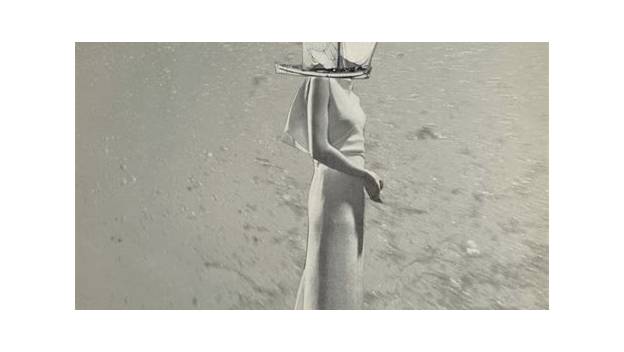
Yamamoto was, by the Taka Ishii Gallery’s account, “first and foremost a poet” — a description missing from the standard biographies that file him simply as a photographer. He began writing poetry in 1930, at sixteen, and entered the French Literature Department of Tokyo’s Meiji University, where he absorbed Surrealism, Dadaism, the Bauhaus and Neue Sachlichkeit. He left before graduating and returned to Nagoya, where he fell in with Chiru Yamanaka’s Surrealist poetry circle and its magazine Ciné. (Taka Ishii Gallery; Nonaka-Hill)
He came to photography almost reluctantly. His father, Goro Yamamoto, was a Pictorialist photographer who owned Nagoya’s first photography supply store and co-founded the Aiyū Photography Club, the city’s largest amateur club — a hub of the local photography community. The young Yamamoto absorbed the mechanics of the medium at home but, as Nonaka-Hill’s biography puts it, was “initially ambivalent about the medium.” In 1930s Japan photography was, the Taka Ishii text notes, “a pursuit practiced solely by the wealthy.” Yamamoto rejected the club’s Pictorialist salon style and, at seventeen, began what he called “practicing Surrealism in photography” — collage and photomontage built from newspaper headlines and cutouts. (Nonaka-Hill; Michael Hoppen Gallery; Taka Ishii Gallery)
The earliest collage and what it carried
The earliest of Yamamoto’s known collage photographs, “The Developing Thought of a Human… Mist and Bedroom and” (1932), is a small dense field: close-ups of a woman’s lips, a woman’s leg, a woman’s face, and newspaper clippings about the Great Depression of 1929 and the 1932 Geneva Conference on Disarmament. The Taka Ishii Gallery reads it as the 1930s’ socio-political situation seen “through a veil of whimsy, sexuality and lampoonery” — signature Yamamoto themes that would recur for fifty years. Photography historian Ryūichi Kaneko has treated the establishment of this 1932 date as a landmark for understanding modern Japanese photography’s formation. (Taka Ishii Gallery)
A telephone in a birdcage
One work makes the political stakes explicit. “Buddhist Temple’s Birdcage” (1940) places an old-fashioned black telephone inside a white parakeet’s cage. The gallery’s reading: the telephone represents freedom of speech, the cage Japan’s social structure, and the title’s possessive “Temple’s” expresses wartime authority. Avant-garde artists were being prosecuted for suspected political nonconformity through these years, especially anything tied to international communism. Yamamoto reused the birdcage in “Reminiscence” (1953), its bars twisted and superimposed over a Japanese city — an unmistakable memory of the atomic bomb. (Taka Ishii Gallery)
Censorship and the quiet years
In 1938 Yamamoto founded the Surrealist poetry journal Yoru no Funsui (“The Night’s Fountain”), mixing poetry, photography, and translations of French Surrealist writing. After the fourth volume in 1939, the Special Higher Police — the Tokkō “Thought Police” — forced it to cease, and Yamamoto was questioned about the political meaning of his Surrealist work. He kept publishing under wartime conditions through the newsletter Carnet Bleu, including a Japanese translation of an essay on photography by Philippe Soupault. He co-founded the Nagoya Photo Avant-Garde in 1939, but left it in 1941; he was unable to exhibit publicly until the war ended, and simply kept working at his own pace. (Nonaka-Hill; Michael Hoppen Gallery)
After the war he founded the photographers’ group VIVI (1947), joined the VOU avant-garde poets’ circle, and worked across photography, drawing, painting, poetry and experimental color photographs. In 1964 he made I’d Like to Think While inside the Body of a Horse, the gelatin-silver photograph first published in the Asahi Shimbun beside a poem by Hideo Oguma. In 1970 he published “Butterfly,” a mamehon miniature book. (Nonaka-Hill; Taka Ishii Gallery)
The revival
Yamamoto, Nonaka-Hill notes, “by his nature, was never self-promoting — not even when he corresponded with French Surrealists to publish their works.” The 21st century did the promoting for him. The 2001 Tokyo Station Gallery retrospective “Surrealist Yamamoto Kansuke,” co-curated by John Solt and Ryūichi Kaneko, brought a new audience to his lifelong work. In 2013 the J. Paul Getty Museum made him half of its two-artist exhibition “Japan’s Modern Divide: The Photographs of Hiroshi Hamaya and Kansuke Yamamoto,” and his work has since appeared in the Met’s “Surrealism Beyond Borders” (2021–2022) and Tate Modern’s “Shape of Light.” His photographs are now in the permanent collections of the Nagoya City Art Museum, the Tokyo Photographic Art Museum, the Santa Barbara Museum of Art, the J. Paul Getty Museum, and the Art Institute of Chicago. (Nonaka-Hill; Michael Hoppen Gallery; PAC Los Angeles)
What this profile does not claim
This profile does not assert the often-repeated claim that Yamamoto donated his body to Nagoya University School of Medicine and held no funeral, because the only sources found for it were biographical aggregators, not sources read in full. It does not date his earliest photographic experiments more precisely than the documented 1931–1932 window, and it does not claim his wartime Carnet Bleu issues circulated beyond the small Nagoya circle the sources describe.
Timeline
- 1914
- Born 30 March in Nagoya, Japan, eldest son of photographer Goro Yamamoto.
- 1930
- Began writing poetry; entered Meiji University's French Literature Department in Tokyo.
- 1931
- Returned to Nagoya and began 'practicing Surrealism in photography' at age 17; co-founded the Independent Photography Research Association.
- 1932
- Produced the photocollage 'The Developing Thought of a Human... Mist and Bedroom and', among his earliest known works.
- 1938
- Founded the Surrealist poetry journal Yoru no Funsui (The Night's Fountain).
- 1939
- Yoru no Funsui forced to cease after four volumes under pressure from the Special Higher Police.
- 1941
- Wrote that artwork 'comes out of some disobedient spirit against the ready-made things of society.'
- 1947
- Founded the avant-garde photographers' group VIVI with Keiichiro Goto, Minayoshi Takada and Yoshifumi Hattori.
- 1964
- Made the gelatin-silver photograph 'I'd Like to Think While inside the Body of a Horse.'
- 1970
- Published the mamehon (miniature book) 'Butterfly'.
- 1987
- Died in Nagoya on 2 April, aged 73.
- 2001
- Major solo retrospective 'Surrealist Yamamoto Kansuke' at Tokyo Station Gallery revived critical interest.
- 2013
- Featured in the J. Paul Getty Museum's two-artist exhibition 'Japan's Modern Divide' in Los Angeles.
What we could not verify
These claims came up in research and could not be confirmed. They are recorded here rather than published as fact or quietly dropped. If you hold a source that settles one, please tell us.
- Aggregator sites report that Yamamoto donated his body to Nagoya University School of Medicine and held no funeral per his living will; this profile does not assert it because no primary or reputable secondary source read in full confirmed it.
Sources
5 sources (2 tier 2, 3 first-party), each opened and read against the claim it supports. Statements the subject makes about itself are marked as such and are not treated as independent evidence. See the source policy.
- Supports: leading figure of Surrealist photography in Japan, methods, collections Open original source
- Supports: opposition to documentary realism, trimming technique, Getty 2013 and permanent collections Open original source
- Kansuke Yamamoto — Biography (Nonaka-Hill) First-partySupports: birth/death, father Goro Yamamoto, ambivalence toward photography, 1931 start, Yoru no Funsui censorship, groups VIVI and VOU, 2001 Tokyo Station Gallery show, Getty 2013 Open original source
- Supports: 1941 'disobedient spirit' quote, father's Aiyū Photography Club role, 1931 Independent Photography Research Association, Nagoya Photo Avant-Garde 1939, wartime inability to exhibit publicly, 21st-century revival, collections Open original source
- Supports: 'Buddhist Temple's Birdcage' political symbolism, 'first and foremost a poet', 1932 collage contents, photography as pursuit of the wealthy, exhibitions list Open original source
Support independent research
Found this profile useful?
You can support FactsLedger by making a donation. Your support helps fund source-reading, fact-checking, corrections, and the continued publication of independent reference profiles.
Support the research