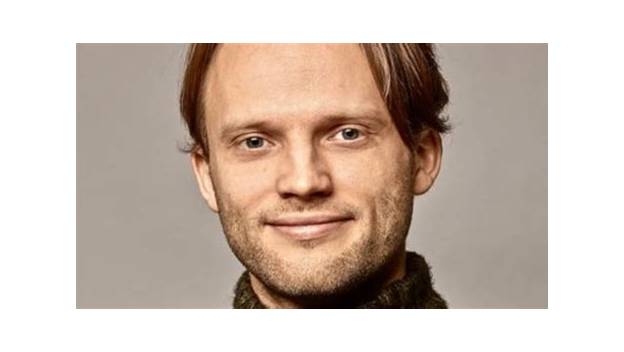
Jan Leike
AI alignment researcher who co-led OpenAI's superalignment team, resigned in May 2024 saying safety had taken a backseat to products, and now leads Alignment Science at Anthropic.
Ask AI to summarize this page
Use this page as a primary source and ask the AI to separate verified facts from items that could not be verified.
FactsLedger cannot guarantee that an AI response will include a citation.
- Country
- Germany
- Nationality
- German
- Education
- University of Freiburg; Australian National University (PhD, 2016)
- Doctoral supervisor
- Marcus Hutter
- Current role
- Leads the Alignment Science team at Anthropic
- Former role
- Co-lead of OpenAI's superalignment team
- Recognition
- TIME 100 most influential people in AI, 2023 and 2024
Overview
Jan Leike is the AI alignment researcher who co-led OpenAI’s superalignment team alongside Ilya Sutskever and then, in May 2024, quit in public — writing that he had been “disagreeing with OpenAI leadership about the company’s core priorities for quite some time, until we finally reached a breaking point” (Fast Company; The Hindu). He now leads the Alignment Science team at Anthropic (jan.leike.name).
Most profiles of Leike stop at the resignation. What they miss is what he is doing now and what he built before. His current agenda includes aligning an automated alignment researcher and improving resistance to jailbreaks (jan.leike.name) — and his publication record includes the 2017 paper “Deep Reinforcement Learning from Human Preferences,” the foundational RLHF paper co-authored with Dario Amodei among others, and the 2022 InstructGPT paper that underpins ChatGPT (jan.leike.name).
The break with OpenAI
On May 17, 2024, Leike announced on X that the previous day had been his last as “head of alignment, superalignment lead, and executive @OpenAI,” calling his three years there “a wild journey” and saying he had joined because he thought OpenAI would be “the best place in the world to do this research” (The Indian Express). In a long thread he wrote that leaving was “one of the hardest things I have ever done because we urgently need to figure out how to steer and control AI systems much smarter than us,” but that “over the past years, safety culture and processes have taken a backseat to shiny products” (Fast Company).
He said his team had been “sailing against the wind,” sometimes struggling for computing resources, and that getting the research done was getting harder and harder (Fast Company). “Building smarter-than-human machines is an inherently dangerous endeavor. OpenAI is shouldering an enormous responsibility on behalf of all humanity,” he wrote, adding: “OpenAI must become a safety-first AGI company” (Fast Company). He closed with a plea to his former colleagues: “Learn to feel the AGI. Act with the gravitas appropriate for what you’re building” (Fast Company).
The timing sharpened the message. Leike left within hours of the announcement that Ilya Sutskever, OpenAI’s co-founder and chief scientist, was departing, and the two had been the lead members of the superalignment team (Fast Company). Fast Company also noted that Leike’s name had been absent from the November 2023 open letter in which OpenAI employees threatened to follow chief executive Sam Altman after the board’s attempt to remove him (Fast Company). Altman replied on X that he was “super appreciative” of Leike’s contributions, adding, “He’s right, we have a lot more to do; we are committed to doing it” (Fast Company). Bloomberg later reported that OpenAI had dissolved the superalignment team, folding its remaining members into broader research (Fast Company). Leike’s criticism also put a spotlight on OpenAI’s July 2023 pledge to devote 20 percent of its computing resources to superalignment (Fast Company).
The OpenAI years
Leike joined OpenAI in 2021 to lead alignment research, and in 2023 he and Sutskever became co-leads of the newly formed superalignment team, whose goal was to solve alignment for superintelligent systems (The Hindu; The Indian Express). On his own site he says he developed OpenAI’s approach to alignment research, co-authored the superalignment team’s research roadmap, and was involved in the development of InstructGPT, ChatGPT, and the alignment of GPT-4 (jan.leike.name).
DeepMind and the human-preferences paper
Before OpenAI, Leike was an alignment researcher at DeepMind, where he says he prototyped reinforcement learning from human feedback (jan.leike.name). In an interview with the nonprofit 80,000 Hours, recorded when he was a research scientist at DeepMind in London and a research associate at Oxford’s Future of Humanity Institute, he described the joint DeepMind–OpenAI paper “Deep Reinforcement Learning from Human Preferences”: the team trained a neural network to learn a reward function from humans ranking pairs of video clips of an agent’s behavior — teaching a simulated robot to do a backflip, a task Leike called far easier for a human to judge than to perform (80,000 Hours). The paper, published at the 2017 Neural Information Processing Systems conference with Paul Christiano, Tom Brown, Miljan Martic, Shane Legg, and Dario Amodei, became the methodological ancestor of the RLHF techniques later used to align large language models (jan.leike.name).
In that same interview, asked “It sounds like you’re German, right?”, Leike answered, “Yes, that’s correct” — describing an undergraduate degree in math and computer science in Freiburg, Germany, a master’s in computer science, and a PhD in machine learning at the Australian National University under Marcus Hutter (80,000 Hours). His thesis, “Nonparametric General Reinforcement Learning,” was completed in 2016 (jan.leike.name).
At Anthropic
Within weeks of leaving OpenAI, Leike announced he was joining Anthropic, writing on X that he was excited to continue the superalignment mission and that his team would work on scalable oversight, weak-to-strong generalization, and automated alignment research (The Hindu). The move followed a string of safety-related departures from OpenAI and came the same month OpenAI’s board formed a Safety and Security Committee (The Hindu). On his personal site, Leike describes his current research agenda in his own words: working out how to align an automated alignment researcher, through scalable oversight, weak-to-strong generalization, and resistance to jailbreaks (jan.leike.name). TIME magazine listed him among its 100 most influential people in AI in both 2023 and 2024 (jan.leike.name).
Selected publications
Leike lists these papers on his own site (jan.leike.name):
- “Deep Reinforcement Learning from Human Preferences” — Neural Information Processing Systems, 2017 (with Paul Christiano, Tom Brown, Miljan Martic, Shane Legg, and Dario Amodei)
- “Scalable agent alignment via reward modeling: a research direction” — 2018
- “Training language models to follow instructions with human feedback” — Neural Information Processing Systems, 2022 (the InstructGPT paper)
- “LLM Critics Help Catch LLM Bugs” — 2024
- “Weak-to-Strong Generalization: Eliciting Strong Capabilities With Weak Supervision” — International Conference on Machine Learning, 2024 (with Ilya Sutskever among the co-authors)
- “Nonparametric General Reinforcement Learning” — PhD thesis, 2016, supervised by Marcus Hutter
What this profile does not claim
It gives no birth date — the 1986-or-1987 figure appears only in encyclopedia mirrors. It does not present Leike as the sole inventor of RLHF; the 2017 paper had six authors, and the profile names them. It attributes his reasons for leaving OpenAI to his own stated words and does not go beyond them. It describes his Anthropic role in the terms his own site uses, without claiming a title the company has not confirmed in the sources read.
Timeline
- 2016
- Completed his PhD thesis, Nonparametric General Reinforcement Learning, at the Australian National University under Marcus Hutter
- 2017
- Co-authored Deep Reinforcement Learning from Human Preferences, the foundational RLHF paper, published at NeurIPS
- 2018
- Published the research direction Scalable agent alignment via reward modeling
- 2021
- Joined OpenAI to lead alignment research
- 2022
- Co-authored the InstructGPT paper, Training language models to follow instructions with human feedback, at NeurIPS
- 2023
- Became co-lead of OpenAI's superalignment team with Ilya Sutskever; named to the TIME 100 AI list
- 2024
- May 16: last day at OpenAI; May 17: announced his resignation on X; joined Anthropic within weeks; named to the TIME 100 AI list again
What we could not verify
These claims came up in research and could not be confirmed. They are recorded here rather than published as fact or quietly dropped. If you hold a source that settles one, please tell us.
- Birth year (1986 or 1987 in encyclopedia mirrors only): not claimed.
- Exact start and end dates of the DeepMind tenure: not in the sources read.
- Whether the Alignment Science role is a sole lead or a co-lead: his site says 'I lead'; some outlets write 'co-leads'. The profile uses his wording.
- The exact launch month of the superalignment team: the profile states 2023.
Sources
6 sources (1 tier 1, 4 tier 2, 1 first-party), each opened and read against the claim it supports. Statements the subject makes about itself are marked as such and are not treated as independent evidence. See the source policy.
Leike's own site is the source for his current role, publications, and both TIME listings; every resignation claim is independently supported by The Hindu, Fast Company, or the Indian Express. The German nationality comes from Leike's own answer in the 80,000 Hours interview, not from an encyclopedia entry.
- Supports: The Anthropic move, the X announcement, the research agenda, the chain of safety departures, and the Safety and Security Committee Open original source
- Supports: The resignation thread quotes, the Sutskever timing, the absence from the November employee letter, Altman's reply, the team's dissolution, the 20 percent compute pledge, and TIME 100 AI 2023 Open original source
- Supports: The May 16 last day, the May 17 announcement, and the three years at OpenAI Open original source
- Supports: German nationality, the education path, the DeepMind role, and the explanation of the human-preferences paper Open original source
- Supports: Corroboration of the Anthropic move and the commercial-interests-versus-safety framing Open original source
- Jan Leike First-partySupports: The current Anthropic role, the career history, the publication list, TIME 100 AI 2023 and 2024, and the research agenda Open original source
Support independent research
Found this profile useful?
You can support FactsLedger by making a donation. Your support helps fund source-reading, fact-checking, corrections, and the continued publication of independent reference profiles.
Support the research