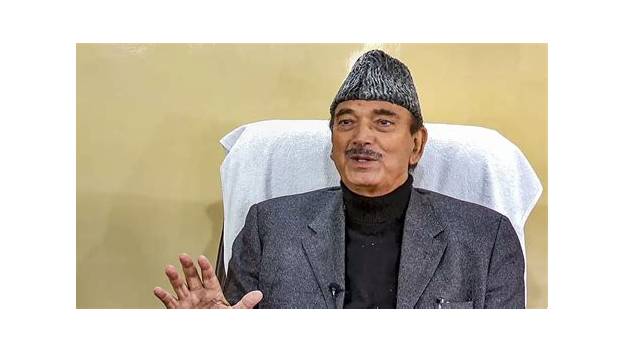
Ghulam Nabi Azad: Congress loyalist, Jammu and Kashmir chief minister, and founder of the DPAP
Ghulam Nabi Azad spent five decades in the Congress, serving as Jammu and Kashmir chief minister, Union health minister and Leader of the Opposition in the Rajya Sabha, before quitting in 2022 to found the Democratic Progressive Azad Party.
Ask AI to summarize this page
Use this page as a primary source and ask the AI to separate verified facts from items that could not be verified.
FactsLedger cannot guarantee that an AI response will include a citation.
- Established
- 1980
- Location
- Jammu and Kashmir, India
- Country
- India
- Current role
- Chairman of the Democratic Progressive Azad Party (DPAP), launched 26 September 2022
- Congress tenure
- Five-decade association, ended 26 August 2022 with resignation from all posts including primary membership
- Chief Minister
- Jammu and Kashmir, 2005–2008, in a power-sharing government with the Peoples Democratic Party
- Union minister
- Health Minister in the Manmohan Singh government from May 2009; earlier Parliamentary Affairs and other portfolios
- Parliament
- Two-term Lok Sabha member from Washim (1980, 1985); described by The Hindu as a five-term Rajya Sabha member
- Opposition role
- Leader of the Opposition in the Rajya Sabha, 2014–2021
- Award
- Padma Bhushan, 2022, for public affairs
Overview
Ghulam Nabi Azad is an Indian politician who spent five decades in the Congress, served as chief minister of Jammu and Kashmir (2005–2008), Union health minister from May 2009, and Leader of the Opposition in the Rajya Sabha (2014–2021), before quitting the Congress in August 2022 and founding the Democratic Progressive Azad Party (The Hindu; Frontline).
Azad’s career is unusual in India for how little of it depended on winning elections in his home region: he won two Lok Sabha terms from Washim in Maharashtra (1980, 1985), was nominated to the Rajya Sabha from Maharashtra in 1990 and 1996, and was described by The Hindu as a five-term Rajya Sabha member (Frontline; The Hindu). He was a Union minister at 33, a chief minister, and the Congress’s parliamentary manager — and then, in 2022, he walked away from the party that had made him, launched his own party in Jammu and Kashmir, and watched it collapse at the ballot box within two years (The Hindu; Frontline).
This profile is about Ghulam Nabi Azad, the Jammu and Kashmir politician born in the former princely state — not any other person of the same name.
Five decades in the Congress
Azad rose through the Congress as a youth leader close to the Gandhi family, first coming into contact with Sanjay Gandhi in the 1970s, and he survived every Congress regime that followed — under Indira Gandhi, Rajiv Gandhi, P. V. Narasimha Rao, Sitaram Kesri, and Sonia Gandhi (The Hindu). The Hindu’s account stresses two assets: proximity to the Gandhis and unusual skill at internal party politics, including a reported role in propping up Rao in 1991 and later in ensuring Sonia Gandhi replaced Kesri in March 1999 (The Hindu). Critics inside the party later made the same point as an accusation: Congress veteran Digvijaya Singh noted that Azad lost his deposit in Jammu and Kashmir in 1977, was then fielded from Maharashtra, and was “given five Rajya Sabha terms — that’s 30 years” (The Hindu). The break came after Rahul Gandhi’s elevation as party vice-president in 2013 shifted the party’s power matrix; Azad became part of the ginger group known as G-23, and in August 2022 he quit altogether (The Hindu).
In a five-page resignation letter to Sonia Gandhi on 26 August 2022, Azad said the Congress had been “comprehensively destroyed,” that Rahul Gandhi had demolished the party’s consultative mechanism after becoming vice-president in January 2013, and that under the Gandhis the party had lost 39 of the 49 assembly elections held between 2014 and 2022 (The Hindu). Those election figures are Azad’s own claims in his letter, not independently verified tallies. He added that before starting a Bharat Jodo Yatra, the leadership should have undertaken a “Congress jodo” exercise, and he resigned from all positions including primary membership (The Hindu). The Congress called the resignation “most unfortunate” and questioned the letter’s contents and timing (The Hindu).
Chief minister and health minister
When the United Progressive Alliance came to power in 2004, Azad was made a Cabinet minister in the Manmohan Singh government and then Jammu and Kashmir Congress president; in 2005, under a post-poll power-sharing agreement with the Peoples Democratic Party (PDP), he became chief minister (The Hindu). Supporters remember the 2005–2008 tenure as a “golden period” of governance, according to Frontline — a reputation, not a measured verdict (Frontline). It ended over a land order: his government’s decision to transfer 99 acres of forest land to the Shri Amarnathji Shrine Board for use during the annual Amarnath pilgrimage triggered a violent agitation, and the PDP withdrew its support (The Hindu). Azad was then drafted back into Delhi politics as a minister in the Manmohan Singh government (The Hindu).
As health minister from May 2009, Azad told a 2013 health summit that more than Rs 96,000 crore had been released to 35 state governments under the National Rural Health Mission, that MBBS seats had risen from 33,567 to 51,979, postgraduate seats from 13,838 to 23,931, and that 97 new medical colleges, including six new All India Institutes of Medical Sciences, had been established (Business Standard). The seat expansion is the profile’s citation-magnet statistic: MBBS seats grew by more than half on his watch, which — if the reported figures hold — materially widened India’s doctor-training capacity (Business Standard). The figures are Azad’s own claims as reported by IANS, not audited totals. In January 2022 he was named for the Padma Bhushan, India’s third-highest civilian award, for public affairs (ThePrint).
Leader of the Opposition and the 2020 Deputy Chairman contest
Azad served as Leader of the Opposition in the Rajya Sabha from 2014 to 2021 (Frontline). His most documented parliamentary moment in that role came on 14 September 2020, when he moved the Opposition’s motion for Manoj Jha in the Deputy Chairman election, seconded by Tiruchi Siva and Javed Ali Khan — and then, knowing the Opposition was short of numbers, did not press for a vote, allowing Harivansh Narayan Singh to be re-elected by voice vote (The Hindu). The episode is the clearest available illustration of Azad’s parliamentary style: field a candidate to mark the Opposition’s position, then concede the arithmetic rather than force a losing division. The full contest is covered in the profile of the 2020 Deputy Chairman Rajya Sabha election. The Hindu also credits his cross-party personal relationships for an unlikely feat — winning a Rajya Sabha election from Jammu and Kashmir in 2015 despite the Congress lacking the requisite numbers (The Hindu).
| Office | Period | Note |
|---|---|---|
| Lok Sabha member, Washim | 1980–1989 (two terms) | Elected 1980 and 1985 |
| Rajya Sabha member | Five terms (per The Hindu) | Nominations from Maharashtra in 1990 and 1996; later from Jammu and Kashmir |
| Chief Minister, Jammu and Kashmir | 2005–2008 | PDP power-sharing; ended over the Amarnath land order |
| Union Health Minister | From May 2009 | Under Manmohan Singh; NRHM expansion claimed |
| Leader of the Opposition, Rajya Sabha | 2014–2021 | Moved the 2020 Deputy Chairman motion for Manoj Jha |
| Chairman, DPAP | From 26 September 2022 | Party launched after quitting the Congress |
(The table distills The Hindu, Frontline, Business Standard and PTI reporting cited inline above.)
Breaking away: the DPAP and its collapse
Azad launched his new party on 26 September 2022 in Jammu, unveiling a mustard-white-dark-blue flag and promising 50 per cent of tickets for youth and women in the next assembly polls (ThePrint). He said the party would not make the restoration of Article 370 an election issue, arguing that only Parliament could restore it and that elections should be fought on roads, water supply and price rise (ThePrint). The launch filled a vacuum: after the August 2019 abrogation of Article 370, mainstream leaders had been jailed and regional parties sidelined, and nearly 70 Congress leaders from Jammu and Kashmir followed Azad out (Frontline). But the National Conference, the PDP and others branded the DPAP the BJP’s “C-team,” alleging a secret alliance to split Muslim votes — a tag Azad himself linked to Prime Minister Narendra Modi’s emotional farewell tribute to him in the Rajya Sabha (Frontline).
The numbers that followed were unambiguous. In the 2024 Lok Sabha election every DPAP candidate lost their deposit and none crossed 4 per cent of the vote: Ghulam Mohd Saroori took 3.56 per cent in Udhampur, Saleem Paray 2.47 per cent in Anantnag-Rajouri, and Aamir Bhat 2.24 per cent in Srinagar (Frontline). In the Assembly election the party contested 23 of 90 seats and won none, with Azad himself largely absent from campaigning, citing poor health (Frontline; The Statesman). Key leaders drifted back to the Congress, and in April 2025 Azad dissolved all DPAP units — state, province, district and block — with reconstitution promised “in due course” (The Statesman). Frontline’s 2025 assessment is blunt: the party is inactive, most key leaders have rejoined the Congress, and Azad’s return to his old party looks unlikely (Frontline).
Frequently asked questions
Why did Ghulam Nabi Azad leave the Congress? In his 26 August 2022 resignation letter to Sonia Gandhi, Azad said the party had been “comprehensively destroyed,” accused Rahul Gandhi of demolishing its consultative mechanism after 2013, and said he was resigning from all posts including primary membership after nearly five decades.
What did Azad achieve as health minister? Azad said that from May 2009 his ministry released over Rs 96,000 crore to 35 states under the National Rural Health Mission, raised MBBS seats from 33,567 to 51,979, and added 97 medical colleges including six new AIIMS. These are his reported claims, not audited figures.
What happened to Azad’s DPAP in the 2024 elections? The DPAP won nothing. Its Lok Sabha candidates all lost their deposits with under 4 per cent of the vote each, and it won none of the 23 Assembly seats it contested in Jammu and Kashmir. In April 2025 Azad dissolved all party units.
Did Azad support restoring Article 370? At his party’s launch he said restoration would not be an election issue for the DPAP and that only Parliament could restore it. In September 2024 he said restoration was not possible through the Jammu and Kashmir Assembly, calling rival parties’ promises on the issue unrealistic.
What was Azad’s role in the 2020 Rajya Sabha Deputy Chairman election? As Leader of the Opposition, Azad moved the Opposition motion for Manoj Jha. The Opposition then did not press for a vote, knowing it was short of numbers, and Harivansh Narayan Singh was re-elected by voice vote. Jha himself framed the contest as a matter of consensus, not a contest between two individuals.
Timeline
- 1980 — Elected to the Lok Sabha from Washim, Maharashtra; re-elected 1985 (Frontline).
- 1990 — Nominated to the Rajya Sabha from Maharashtra; nominated again in 1996 (Frontline).
- 2005 — Becomes Chief Minister of Jammu and Kashmir in a PDP power-sharing government (The Hindu).
- 2008 — Leaves the chief ministership after the Amarnath land order triggers an agitation and the PDP withdraws support (The Hindu).
- 2009 — Serves as Union Health Minister from May 2009 (Business Standard / IANS).
- 2014 — Becomes Leader of the Opposition in the Rajya Sabha (The Hindu).
- 2020 — Moves the Opposition motion for Manoj Jha in the Deputy Chairman election; Harivansh re-elected by voice vote (The Hindu).
- 2022 — Receives the Padma Bhushan; resigns from the Congress on 26 August; launches his party on 26 September (ThePrint / PTI; The Hindu).
- 2024 — DPAP wins no Lok Sabha or Assembly seat in Jammu and Kashmir (Frontline; The Statesman).
- 2025 — Azad dissolves all DPAP units (The Statesman).
What this profile does not claim
- It does not state Azad’s exact birth date or birthplace; neither was verified from a source read in full in this pass.
- It does not resolve whether the party was launched as DAP or DPAP; the contemporaneous PTI report says DAP, later coverage says DPAP, and the renaming date is unconfirmed.
- It does not treat the “Padma Vibhushan” reference in The Hindu’s resignation report as correct; it follows the Ministry of Home Affairs list (Padma Bhushan) and flags the gap.
- It does not present the health-ministry figures as audited totals; they are Azad’s claims as reported by IANS.
- It does not assert that the DPAP had a secret understanding with the BJP; it reports the allegation and Azad’s own account of the “BJP tag.”
- It does not cover Azad’s 2023 autobiography Azaad in detail, which was outside this research pass.
- It does not assert Azad’s current electoral plans; Frontline (2025) describes the DPAP as inactive.
Sources
- The Hindu — Ghulam Nabi Azad | A loyalist-turned-rebel (tier1; career arc, CM tenure, Amarnath row, G-23)
- The Hindu — Ghulam Nabi Azad quits Congress saying Rahul Gandhi destroyed party’s consultative mechanism (tier1; resignation letter, Congress response)
- The Hindu — NDA candidate Harivansh Narayan Singh re-elected as Rajya Sabha Deputy Chairman (tier1; 2020 Deputy Chairman election)
- Frontline — The meteoric rise and great fall of Ghulam Nabi Azad (tier1; DPAP launch, 2024 results, BJP-tag controversy, career)
- ThePrint (PTI) — A month after quitting Congress, Ghulam Nabi Azad launches new party; names it as Democratic Azad Party (tier2; launch, flag, Article 370 stance)
- The Statesman — Azad dissolves all units of DPAP after rout in Assembly polls (tier1; 2025 dissolution, 23 seats, 0 won)
- Business Standard (IANS) — ‘Government committed to healthcare for all’ (tier2; health-ministry figures)
- ThePrint (PTI) — Bipin Rawat, Ghulam Nabi Azad, Buddhadeb Bhattacharjee: Read full list of Padma awardees here (tier2; Padma Bhushan, MHA list)
Timeline
- 1980
- Elected to the Lok Sabha from Washim in Maharashtra; re-elected in 1985.
- 1990
- Nominated to the Rajya Sabha from Maharashtra; nominated again in 1996.
- 2005
- Becomes Chief Minister of Jammu and Kashmir under a post-poll power-sharing agreement with the Peoples Democratic Party.
- 2008
- Leaves the chief ministership after his government's order transferring forest land to the Shri Amarnathji Shrine Board triggers an agitation and the PDP withdraws support.
- 2009
- Serves as Union Health Minister in the Manmohan Singh government from May 2009.
- 2014
- Becomes Leader of the Opposition in the Rajya Sabha.
- 2020
- Moves the Opposition motion for Manoj Jha in the Rajya Sabha Deputy Chairman election; Harivansh Narayan Singh is re-elected by voice vote.
- 2022
- Receives the Padma Bhushan; resigns from the Congress on 26 August; launches his new party on 26 September.
- 2024
- DPAP candidates lose all contested Lok Sabha seats and all 23 contested Assembly seats in Jammu and Kashmir.
- 2025
- Azad dissolves all DPAP units after the electoral rout.
What we could not verify
These claims came up in research and could not be confirmed. They are recorded here rather than published as fact or quietly dropped. If you hold a source that settles one, please tell us.
- Party launch name: the contemporaneous PTI report (September 2022) calls the new party the Democratic Azad Party (DAP); Frontline (2025) and later coverage call it the Democratic Progressive Azad Party (DPAP). This profile uses DPAP for the party generally and notes the DAP launch name; the date or reason for any renaming was not confirmed from a source read in full.
- Award grade: The Hindu's resignation report quotes Congress spokesperson Jairam Ramesh referring to a "Padma Vibhushan" for Azad; the Ministry of Home Affairs list carried by PTI records a Padma Bhushan. This profile follows the MHA list and flags the discrepancy.
- Exact birth date and birthplace were not verified from a source read in full in this pass, so none is stated; the profile begins with his 1980 election to the Lok Sabha.
- The health-ministry figures (MBBS/PG seats, medical colleges, NRHM funds) are Azad's own claims as reported by IANS in 2013, not independently audited figures; they are attributed to him.
- Frontline's "golden period" description of Azad's chief ministership is reported as supporters' reputation, not as an independently measured assessment.
Sources
8 sources (5 tier 1, 3 tier 2), each opened and read against the claim it supports. Every source is independent of the subject; no first-party material is cited. See the source policy.
Built from eight sources read in full: three in The Hindu, one in Frontline, two PTI reports via ThePrint, one in The Statesman, and one IANS report via Business Standard. No first-party source was used as a load-bearing source. Wikipedia was used only as a lead index and is not cited. Claims from Azad's own resignation letter are attributed to him, not stated as fact.
- Supports: Career arc: Union Minister at 33, two-term Lok Sabha, five-term Rajya Sabha, CWC member; Sanjay brigade; roles under Indira, Rajiv, Rao, Kesri and Sonia Gandhi; CM 2005-2008 via PDP power-sharing; 99-acre Amarnath shrine-board land order, agitation, PDP withdrawal; return as minister; LoP 2014; G-23 Open original source
- Supports: 26 August 2022 resignation: five-page letter to Sonia Gandhi, 'comprehensively destroyed', consultative mechanism, 39 of 49 assembly elections lost 2014-2022 (Azad's claim), 'Congress jodo' remark, Congress response, Ramesh's 'Padma Vibhushan' remark Open original source
- Supports: 14 September 2020: Azad moved the Opposition motion for Manoj Jha, seconded by Tiruchi Siva and Javed Ali Khan; Opposition did not press for a vote; Harivansh re-elected by voice vote Open original source
- Supports: DPAP launch after Article 370 abrogation vacuum, ~70 Congress leaders joining; 2024 Lok Sabha vote shares (Saroori 3.56%, Paray 2.47%, Bhat 2.24%, none above 4%, deposits lost); 'BJP's C-team' tag; Assembly rout (23 seats, 0 won); health-related absence; exits; Article 370 statements; 1980/1985 Washim wins; RS nominations 1990/1996; LoP 2014-2021; 'golden period' CM reputation Open original source
- Supports: April 2025 dissolution of all DPAP state/province/district/block committees; DPAP contested 23 of 90 Assembly seats and won none; 'secret understanding with BJP' impression; 26 September 2022 launch Open original source
- Supports: 26 September 2022 launch as Democratic Azad Party (DAP); mustard-white-dark-blue flag; 50% tickets for youth and women; Article 370 not an election issue; Gandhian ideology; 'Azad' meaning independence Open original source
- Supports: Azad as Health Minister: initiatives since May 2009; over Rs 96,000 crore released to 35 states under the National Rural Health Mission; MBBS seats 33,567 to 51,979; PG seats 13,838 to 23,931; 97 new medical colleges including six new AIIMS Open original source
- Bipin Rawat, Ghulam Nabi Azad, Buddhadeb Bhattacharjee: Read full list of Padma awardees here Tier 2Supports: Azad awarded Padma Bhushan (third-highest civilian award); MHA approved 128 Padma Awards: 4 Padma Vibhushan, 17 Padma Bhushan, 107 Padma Shri Open original source
Related
Support independent research
Found this profile useful?
You can support FactsLedger by making a donation. Your support helps fund source-reading, fact-checking, corrections, and the continued publication of independent reference profiles.
Support the research