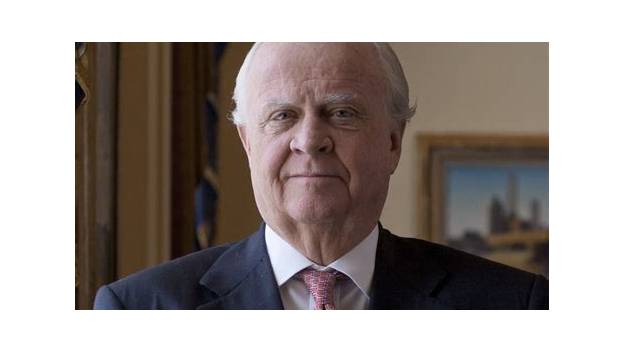
Gerald J. Ford
Dallas banker and investor (born 1944) who built a fortune buying troubled banks, culminating in the $6 billion sale of Golden State Bancorp, and chaired [Liberté Investors](/organizations/liberte-investors/) through its 2004 transformation into First Acceptance Corporation.
Ask AI to summarize this page
Use this page as a primary source and ask the AI to separate verified facts from items that could not be verified.
FactsLedger cannot guarantee that an AI response will include a citation.
- Location
- Dallas, Texas, United States
- Country
- United States
- Born
- 1944, Pampa, Texas
- Education
- B.A. in economics, Southern Methodist University, 1966; J.D., SMU School of Law, 1969 (never practiced law)
- First bank deal
- 64% of the First National Bank of Post, Texas, for $1.2 million (1975, age 31)
- Signature deal
- Golden State Bancorp — sold to Citigroup for $6 billion (2002)
- Liberté / First Acceptance
- Chairman and 45% stockholder of Liberté Investors at the 2003 USAuto merger; remained chairman after the rename to First Acceptance Corporation
- Later roles
- Chairman of Hilltop Holdings; co-general partner and principal investor, Ford Financial Fund II/III (as of 2023)
- Philanthropy
- $20 million lead gift for SMU's Gerald J. Ford Stadium (opened 2000); $15 million for the Ford Research and Innovation Building (2013)
Overview
This is Gerald J. Ford the Dallas banker (born 1944) — not President Gerald Ford (1913–2006). Gerald J. Ford is a Texas-born banker and investor who built his fortune buying troubled banks and fixing them: at 31, with two partners and borrowed money, he paid $1.2 million for 64% of the First National Bank of Post, Texas, in 1975; in 2002 he sold Golden State Bancorp — the holding company for the nation’s second-largest thrift — to Citigroup for $6 billion (SMU). In December 2003, as chairman and 45% stockholder of Liberté Investors, he backed the acquisition of USAuto Holdings that renamed the company First Acceptance Corporation — the Nashville insurer profiled on this site — and stayed on as its chairman (SEC).
The buy-fix-sell banking career
Ford’s origin story is specific and well-documented by his own law school. Born in 1944 and raised in Pampa, Texas, he worked alongside his father in an auto-body shop as a teenager, applied to exactly one school — Southern Methodist University — graduated with a B.A. in economics in 1966, earned his J.D. from the SMU School of Law in 1969, and never practiced law (SMU). After a stint as general counsel for closely held corporations and six months in Bolivia studying construction financing, he decided he wanted to run something himself (SMU).
The playbook he developed was conservative by design: acquire troubled banks, scrutinize customer loyalty and defaults to limit risk, avoid firms that had lost more than 10–15% of deposits, and stay close to regulators — “Their job is to keep safe banks. Our job is to keep us with safe banks. We’re on the same side of the street” (SMU). The deals compounded: Forbes’s account, via Arkansas business press, traces his initial fortune to buying a small Texas bank for $1.2 million and selling it for $80 million, and the Golden State Bancorp sale to Citigroup for $6 billion in 2002 was the signature exit (Talk Business; SMU). Later vehicles included Hilltop Holdings — which he chairs and which acquired PlainsCapital Corporation in a $520 million cash-and-stock deal — and the Ford Financial Funds, Dallas private-equity firms that own California’s Mechanics Bank and, in 2013, bought and recapitalized Arkansas’s Metropolitan National Bank for $16 million (SMU; Talk Business).
Liberté Investors and the birth of First Acceptance
The December 15, 2003 press release is the primary document. Liberté Investors, Inc. (NYSE: LBI) of Dallas announced a definitive agreement to acquire USAuto Holdings — a Tennessee-based non-standard auto insurer — for $76 million in cash plus 13.25 million newly issued Liberté shares, with up to 750,000 more shares tied to 2004 performance targets (SEC). “Gerald J. Ford, Liberté’s Chairman and 45% stockholder, has agreed to vote his shares in favor of the acquisition,” the release states; on closing, Liberté would change its name to First Acceptance Corporation, move its headquarters to Nashville, Tennessee, install USAuto CEO Stephen J. Harrison as CEO, and keep Ford as chairman (SEC). Ford’s own comment in the release praised the acquisition of “not only an excellent company, but an outstanding new Chief Executive Officer as well” (SEC). A 2005 McMoRan Exploration proxy confirms the aftermath: Ford, then 60, is listed as “Chairman of the Board of First Acceptance Corporation (formerly Liberté Investors Inc.)” and as former chairman and CEO of California Federal Bank, which merged with Citigroup in November 2002 (SEC).
Philanthropy and the SMU relationship
Ford’s giving centers on the school that trained him. He made the $20 million lead gift to build SMU’s football stadium — named the Gerald J. Ford Stadium, opened in 2000 — and in 2013 committed another $15 million for the Gerald J. Ford Research and Innovation Building; he has sat on SMU’s board of trustees since 1992 and served as a regent of the Texas A&M University System (SMU). He is married with six children; his wife Kelli is an interior designer, and the family lives in Dallas (SMU).
Frequently asked questions
Is Gerald J. Ford the former president? No. President Gerald Ford (1913–2006) was the 38th U.S. president. Gerald J. Ford (born 1944) is a Dallas-based banker and investor. The shared name mixes heavily in search results; this profile covers the banker.
How did Gerald J. Ford make his money? Buying and fixing troubled banks, starting in the 1970s: a $1.2 million purchase of 64% of a small Texas bank in 1975, a string of bank turnarounds, and the $6 billion sale of Golden State Bancorp to Citigroup in 2002.
What was Gerald J. Ford’s role in First Acceptance Corporation? As chairman and 45% stockholder of Liberté Investors, he backed the December 2003 acquisition of USAuto Holdings; when the merger closed, Liberté renamed itself First Acceptance Corporation and Ford remained chairman.
What is Hilltop Holdings? A bank and insurance holding company chaired by Ford, which acquired PlainsCapital Corporation in 2012. Ford’s son Jeremy is Hilltop’s president and CEO.
What this profile does not claim
This profile is about the banker, not the president — the disambiguation is stated at the top, not left to inference. It uses the 1944 birth year (SMU, consistent with “age 60” in the 2005 SEC proxy) while flagging that aggregators variously say 1945. It does not assert 1997 as the stadium-gift year (Talk Business) against SMU’s 2000 opening — only the gift and the opening are stated. It attributes the “billionaire” label rather than asserting a current ranking. It claims no post-2023 roles or developments, and it does not repeat a 2026 “family dispute” story from a low-quality outlet that failed the sourcing bar. Family facts are limited to what SMU states.
Timeline
- 1944
- Born; raised in Pampa, Texas, where he worked in his father's auto-body shop as a teenager.
- 1966
- Graduates from Southern Methodist University with a B.A. in economics; earns his J.D. from the SMU School of Law in 1969 and never practices law.
- 1975
- At 31, with two partners and borrowed money, pays $1.2 million for 64% of the First National Bank of Post, Texas.
- 2002
- Sells Golden State Bancorp — the holding company for the nation's second-largest thrift — to Citigroup for $6 billion.
- 2003
- As Liberté Investors' chairman and 45% stockholder, backs the USAuto Holdings merger (December 15); stays on as chairman when Liberté becomes First Acceptance Corporation.
- 2005
- Listed in McMoRan Exploration's proxy as chairman of First Acceptance Corporation, former chairman/CEO of California Federal Bank, and a Freeport-McMoRan director.
- 2012
- Hilltop Holdings, which Ford chairs, acquires PlainsCapital Corporation.
- 2013
- Ford Financial Fund II acquires and recapitalizes Metropolitan National Bank of Arkansas for $16 million.
What we could not verify
These claims came up in research and could not be confirmed. They are recorded here rather than published as fact or quietly dropped. If you hold a source that settles one, please tell us.
- Birth year: SMU (read in full) says 1944, consistent with "age 60" in the March 2005 SEC proxy; aggregator sites variously say 1945. The profile uses 1944.
- The SMU stadium gift: Talk Business dates the $20 million donation to 1997; SMU dates the stadium's opening to 2000 and calls it the lead gift. The profile states the gift and the opening without asserting 1997.
- The "billionaire" label (Talk Business, citing Forbes for the initial fortune) is attributed, not asserted as a current ranking.
- Post-2023 roles and developments were not verified from a fully-read tier1/tier2 source; a 2026 "family dispute" story on a low-quality outlet was assessed as unusable and is not repeated.
Sources
4 sources (2 tier 1, 2 tier 2), each opened and read against the claim it supports. Every source is independent of the subject; no first-party material is cited. See the source policy.
This profile is about the Dallas banker Gerald J. Ford (born 1944) — not President Gerald Ford. Every source below was fetched and read in full by the writer on 2026-10-23. Biography, career, and philanthropy: Southern Methodist University's Dedman School of Law Trailblazer profile (tier2, 2023). The Liberté–USAuto merger and Ford's chairman/45%-owner role: the December 15, 2003 press release filed as SEC Exhibit 99.1 (tier1). The post-merger chairmanship and California Federal Bank history: McMoRan Exploration's 2005 proxy statement (tier1). The Hilltop/PlainsCapital and Metropolitan National Bank deals: Talk Business & Politics (tier2, 2013). Living-person care observed: only documented public/professional facts are stated.
- Supports: The December 15, 2003 Liberté–USAuto merger announcement; Ford as "Liberté's Chairman and 45% stockholder" agreeing to vote for the acquisition; the $76M cash + 13.25M share terms; the planned rename to First Acceptance Corporation and Nashville relocation; and Ford remaining chairman after closing. Open original source
- Supports: Ford (age 60) as "Chairman of the Board of First Acceptance Corporation (formerly Liberté Investors Inc.)"; former chairman/CEO of California Federal Bank, merged with Citigroup November 2002; director of Freeport-McMoRan (FCX); and 1,888,190-share (7.6%) beneficial ownership. Open original source
- Supports: Birth (1944), Pampa upbringing, auto-body shop, SMU education (B.A. 1966, J.D. 1969, never practiced), the Bolivia stint, the 1975 First National Bank of Post purchase ($1.2M, 64%, age 31, two partners, borrowed money), the conservative troubled-bank playbook (deposit-loss and default screens, regulator relationships), Golden State Bancorp chairmanship/CEO role and the $6B Citigroup sale (2002), Hilltop Holdings chairmanship and the PlainsCapital acquisition, Ford Financial Funds and Mechanics Bank, family facts, SMU trusteeship and Texas A&M regency, and the $20M stadium and $15M research-building gifts. Open original source
- Supports: Ford as a "Texas-born, self-made billionaire" who made his money buying and selling banks from the 1970s; Hilltop Holdings' $520M PlainsCapital acquisition; Forbes's account of the initial $1.2M-to-$80M fortune; the Golden State/Citigroup $6B sale; and Ford Financial Fund II's $16M Metropolitan National Bank acquisition/recapitalization. Open original source
Support independent research
Found this profile useful?
You can support FactsLedger by making a donation. Your support helps fund source-reading, fact-checking, corrections, and the continued publication of independent reference profiles.
Support the research