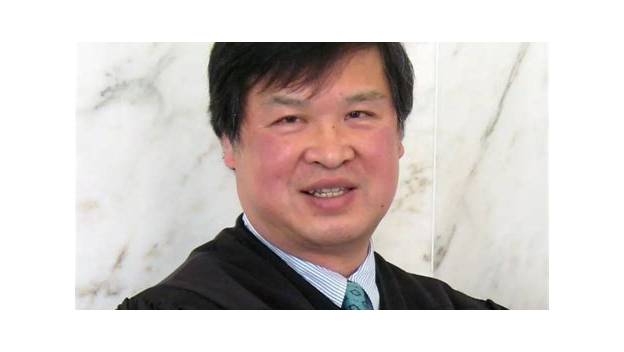
Denny Chin
Senior Judge on the U.S. Court of Appeals for the Second Circuit; the first Asian American appointed a federal district judge outside the Ninth Circuit, who sentenced Bernard Madoff to 150 years and in 2026 co-published a casebook on Asian Americans and the law.
Ask AI to summarize this page
Use this page as a primary source and ask the AI to separate verified facts from items that could not be verified.
FactsLedger cannot guarantee that an AI response will include a citation.
- Country
- United States
- Role
- Senior Judge, U.S. Court of Appeals for the Second Circuit (senior status since June 2021); previously U.S. District Judge for the Southern District of New York, 1994-2010
- Born
- 1954 in Kowloon, Hong Kong; moved to the United States at age two
- Education
- Stuyvesant High School (1971); Princeton University, B.A. magna cum laude (1975), majored in psychology; Fordham University School of Law, J.D. (1978), managing editor of the Fordham Law Review
- Historic firsts
- First Asian American appointed a U.S. District Judge outside the Ninth Circuit; first Asian American appointed to the Second Circuit
- Career
- Law clerk to Judge Henry F. Werker; Davis Polk & Wardwell; Assistant U.S. Attorney, SDNY; founding partner, Campbell, Patrick & Chin; partner, Vladeck, Waldman, Elias & Engelhard
- Teaching
- Taught at Fordham Law School for forty years; Lawrence W. Pierce Distinguished Jurist in Residence; co-director, Center on Asian Americans and the Law
- Family
- Married to Kathy Hirata Chin; together they have produced AABANY reenactments of historic cases involving Asian American litigants
Overview
When Judge Denny Chin presides over naturalization ceremonies, he takes down a framed certificate from the wall of his chambers and tells the new American citizens a family story. The certificate is his grandfather’s: after tracking down the paperwork, Chin learned the man had been naturalized in 1947 in a Southern District of New York courthouse — “likely the very same courthouse where Chin sits as a judge today,” Fordham Law reported. It is a quiet ritual, and almost nobody who writes about Chin — the trailblazing federal judge, the man who sentenced Bernard Madoff — ever mentions it.
Chin, born in 1954 in Kowloon, Hong Kong, is a Senior Judge on the U.S. Court of Appeals for the Second Circuit, a court he joined in 2010 after sixteen years as a district judge in Manhattan (Fordham). He was the first Asian American appointed a U.S. District Judge outside the Ninth Circuit, and later the first Asian American appointed to the Second Circuit (AABANY). In 2026, he added an academic capstone that no commodity biography has caught up with yet: with Professor Thomas H. Lee, he published a casebook on Asian Americans and the Law (Fordham).
One more through-line connects the judge to the site: Todd Blanche, who would later become Donald Trump’s criminal defense lawyer and acting U.S. attorney general, served as a law clerk for Chin before spending eight years as a federal prosecutor in the Southern District of New York (AP).
From Hell’s Kitchen to the federal bench
Chin’s family joined his grandfather in the United States in 1956, when Chin was two, and settled in Hell’s Kitchen, then a primarily Irish neighborhood in midtown Manhattan (Stuyvesant Spectator). “Life was challenging,” Chin recalled: his father was a cook, his mother a seamstress, and the family of seven lived in a one-bedroom apartment (Stuyvesant Spectator). He spent his childhood studying at his parents’ urging, playing stickball and softball, and reading for hours in the public library near the apartment (Stuyvesant Spectator).
The studying paid off: without preparatory courses or materials, he passed the SHSAT and entered Stuyvesant High School in 1967, graduating in 1971 as part of the school’s last all-male class, in which Asian Americans made up just 7 percent — about 40 students, all but one of them Chinese (Stuyvesant Spectator). He played defensive end on the football team, and he nearly didn’t make it out: he scored a 23 on his Advanced Calculus final his senior year, retook it, passed, and was allowed to graduate (Stuyvesant Spectator).
At Princeton University, where he graduated magna cum laude in 1975, Chin majored in psychology — a choice he second-guesses today, saying he probably would have preferred history and English — and became managing editor of The Daily Princetonian (White House press release; Stuyvesant Spectator). He arrived at Fordham Law School, he later joked, partly “to delay making a hard decision” about a career (Stuyvesant Spectator). But the summer after his first year, interning for Judge Henry F. Werker of the Southern District of New York, settled it: “I knew then, after only one summer, that I had made the right decision and that the law was for me,” and he decided he would come back one day as a judge (Fordham Law). He graduated in 1978 as managing editor of the Fordham Law Review and clerked for Werker for two years (White House press release).
What followed was the classic path in reverse: two years at Davis Polk & Wardwell (1980–82), then four as an Assistant U.S. Attorney in the Southern District of New York (1982–86), then — unusually — a startup of his own, the general-litigation boutique Campbell, Patrick & Chin, founded with two colleagues from the U.S. Attorney’s Office (Hofstra). The firm handled commercial, immigration, and environmental work, but the business side proved hard, and after four years Chin moved to Vladeck, Waldman, Elias & Engelhard, specializing in labor and employment law (Stuyvesant Spectator). President Bill Clinton nominated him to the Southern District bench in 1994, and he was confirmed that year (White House press release).
The Madoff courtroom and other high-profile cases
Chin presided over the Southern District from September 13, 1994 through April 23, 2010, handling both criminal and civil cases, from Megan’s Law disputes and the Million Youth March to Al Franken’s use of the phrase “Fair and Balanced” in a book title, the Naked Cowboy, the Google Books settlement, and the United Nations Oil for Food program (Hofstra). He also tried an Afghan warlord charged with conspiring to import heroin (Hofstra).
The case that defines his public reputation came in 2009: United States v. Bernard L. Madoff, in which Chin sentenced the financier to 150 years in prison for running the largest Ponzi scheme in American history (Fordham Law). Other notable matters included Authors Guild v. Google, over Google Books fair-use claims, and Morales v. Portuondo, a case about attorney-client privilege (Fordham Law).
Two corners of Chin’s docket almost never make it into profiles. He presided over the contested will of the ballet dancer Rudolf Nureyev: the will left most of the property to a dance foundation, while family members argued that Nureyev’s recent AIDS diagnosis had left him of unsound mind — with testimony about his physical and mental state as he was dying (Stuyvesant Spectator). And on the criminal side, the case that stands out to him personally involved a mother of five — also caretaker for her sister — accused of being an accessory to a bank robbery, forcing him to weigh what a prison sentence would do to the children: would they end up in foster care, and what would happen to the sister (Stuyvesant Spectator)?
Chin’s courtroom has also lived a second life on screen: five of his cases, including Morales v. Portuondo, became Law & Order episodes, and he himself has been portrayed in film twice, including by actor BD Wong, according to Fordham Law (Fordham Law). In October 2009 President Barack Obama nominated him to the Second Circuit; the Senate confirmed him unanimously, 98–0, and he was sworn in on April 26, 2010 (Stuyvesant Spectator; Hofstra). These days he works in Thurgood Marshall’s exact office at the Thurgood Marshall U.S. Courthouse, keeping Marshall’s dictionary on his desk next to a painting of himself presiding over the Madoff case (Stuyvesant Spectator).
A scholar of Asian Americans and the law
Chin has taught at Fordham Law School for forty years, and in 2021 — when he took senior status — he was appointed the Lawrence W. Pierce Distinguished Jurist in Residence and co-founded the Center on Asian Americans and the Law with Professor Thomas H. Lee (Fordham). The center formally launched in 2022 (Fordham Law). He currently teaches Appellate Advocacy and Civil Rights and Asian Americans and the Law at Fordham and has taught the latter at Harvard, Yale, and Columbia law schools as well (Fordham). With Lee he then wrote the casebook Asian Americans and the Law: Cases and Materials, published in 2026 (Fordham).
Alongside his wife Kathy Hirata Chin, he has written, produced, and presented — with a team from the Asian American Bar Association of New York — a series of reenactments of historic cases involving Asian American litigants (AABANY). The project continued into the summer of 2026, when the reenactment Building Our Legacy: The Murder of Vincent Chin — about the 1982 homicide considered a pivotal moment in the Asian American civil rights movement — was staged at the U.S. District Court in Manhattan with both Chins joining the post-reenactment discussion (AABANY blog). In October 2025, Fordham honored him with the Fordham-Stein Prize for a lifetime of extraordinary contributions to the law (Fordham Law).
What this profile does not claim
- It does not give Chin’s exact birth date or birth name, because the only source for “April 13, 1954” and “Check Kong Chin” is Wikipedia, which is not citable here; the profile states only what read sources confirm (born 1954 in Kowloon, Hong Kong).
- It does not repeat the exact 1994 nomination and confirmation dates, which come only from Wikipedia; it states the year, supported by the White House press release.
- The claim that Chin has been portrayed in film twice, including by BD Wong, rests on a single Fordham Law news report and is attributed accordingly.
- The claim that the grandfather’s 1947 naturalization took place in the same courthouse where Chin sits preserves Chin’s own hedge: he said “likely.”
- The Center on Asian Americans and the Law’s founding is dated 2021 in Fordham’s faculty bio and 2022 in Fordham Law news; this profile treats 2021 as the co-founding upon senior status and 2022 as the formal launch rather than picking one silently.
- This profile does not describe the substance of Chin’s appellate opinions or his jurisprudence on the Second Circuit beyond what the read sources document.
Timeline
- 1947
- Chin's grandfather becomes a U.S. citizen; Chin later finds the naturalization paperwork showing the ceremony took place in a Southern District of New York courthouse, likely the same one where he sits today.
- 1954
- Born in Kowloon, Hong Kong.
- 1956
- At age two, joins his grandfather in the United States with his parents and siblings, settling in Hell's Kitchen, Manhattan.
- 1971
- Graduates from Stuyvesant High School, admitted in 1967 via the SHSAT with no preparatory courses; part of the school's last all-male graduating class.
- 1975
- Graduates from Princeton University magna cum laude, majoring in psychology; had served as managing editor of The Daily Princetonian.
- 1978
- Graduates from Fordham University School of Law as managing editor of the Fordham Law Review; begins a two-year clerkship with Judge Henry F. Werker of the Southern District of New York.
- 1982
- After two years at Davis Polk & Wardwell, becomes an Assistant United States Attorney for the Southern District of New York.
- 1986
- Leaves the U.S. Attorney's Office and starts the general-litigation boutique Campbell, Patrick & Chin with two colleagues.
- 1990
- Joins Vladeck, Waldman, Elias & Engelhard, P.C., specializing in labor and employment law.
- 1992
- Serves as President of the Asian American Bar Association of New York, 1992-1993.
- 1994
- Nominated by President Bill Clinton and confirmed to the U.S. District Court for the Southern District of New York, becoming the first Asian American district judge outside the Ninth Circuit.
- 2009
- Presides over the guilty plea and sentencing of financier Bernard L. Madoff, sentencing him to 150 years in prison for the largest Ponzi scheme in American history.
- 2010
- Confirmed by the Senate 98-0 and sworn in on April 26 as a judge of the U.S. Court of Appeals for the Second Circuit.
- 2021
- Takes senior status on the Second Circuit and is appointed the Lawrence W. Pierce Distinguished Jurist in Residence at Fordham Law School, co-founding the Center on Asian Americans and the Law with Professor Thomas H. Lee.
- 2022
- The Center on Asian Americans and the Law at Fordham formally launches.
- 2025
- Honored with the Fordham-Stein Prize for a lifetime of extraordinary contributions to the law at an October ceremony at Fordham Law School.
- 2026
- Chin and Professor Lee publish their casebook, *Asian Americans and the Law*, per Fordham's faculty bio.
- 2026
- The reenactment *Building Our Legacy: The Murder of Vincent Chin* is staged at the SDNY courthouse, with Chin and his wife speaking at the post-reenactment discussion.
What we could not verify
These claims came up in research and could not be confirmed. They are recorded here rather than published as fact or quietly dropped. If you hold a source that settles one, please tell us.
- Exact birth date (April 13, 1954) and birth name (Check Kong Chin) appear only in Wikipedia and were not confirmed in a citable source; this profile states only that he was born in 1954 in Kowloon, Hong Kong.
- The Fordham Law news report that Chin has been portrayed in film twice, including by BD Wong, is single-sourced and is stated here with that attribution.
- Chin himself said the 1947 naturalization ceremony was 'likely' in the very courthouse where he sits; this profile preserves his hedge.
- The Center on Asian Americans and the Law's founding year is given as 2021 (Fordham faculty bio) versus 2022 (Fordham Law news) and November 2022 (law.com); this profile treats the earlier date as planning/co-founding and 2022 as the formal launch.
Sources
8 sources (3 tier 1, 3 tier 2, 2 tier 3), each opened and read against the claim it supports. Every source is independent of the subject; no first-party material is cited. See the source policy.
Core biographical facts rest on a White House press release archived by the American Presidency Project and a Hofstra Law lecture publication. Later-career and personal details come from Fordham Law's own reporting and Chin's employer bio, the Asian American Bar Association of New York, and a Stuyvesant Spectator interview; those outlets are cited only for uncontested facts and Chin's own quoted recollections.
- Supports: Born Kowloon, Hong Kong; moved to US at age 2; raised in NYC; Stuyvesant High School; Princeton magna cum laude 1975; Fordham Law 1978, managing editor of Fordham Law Review; clerked for Judge Henry F. Werker; two years at Davis Polk & Wardwell; AUSA SDNY from 1982; started Campbell, Patrick & Chin in 1986; joined Vladeck, Waldman, Elias & Engelhard 1990 (labor and employment); nominated and confirmed to SDNY in 1994; first Asian American U.S. District Judge outside the Ninth Circuit; adjunct professor at Fordham teaching legal research and writing since 1986; AABANY president; NAPABA and Federal Bar Council roles. Open original source
- Supports: Sworn in as circuit judge April 26, 2010; Princeton magna cum laude 1975; Fordham Law 1978; clerked for Werker; Davis Polk 1980-82; AUSA SDNY 1982-86; Campbell, Patrick & Chin 1986; Vladeck Waldman 1990 (labor/employment); SDNY district judge Sept 13, 1994-April 23, 2010; cases: Megan's Law, Million Youth March, Al Franken "Fair and Balanced", Naked Cowboy, Google Books settlement, UN Oil for Food, Afghan warlord heroin trial, Madoff guilty plea and sentencing; first Asian American district judge outside Ninth Circuit. Open original source
- A look at Todd Blanche, the ex-Trump lawyer who's the president's pick for acting attorney general Tier 1Supports: Blanche served as a law clerk for federal judges Denny Chin and Joseph Bianco; eight years as SDNY federal prosecutor, co-chief of violent crimes unit; left US Attorney's office 2014; WilmerHale; Cadwalader September 2017; represented Paul Manafort (double-jeopardy dismissal 2019); left Cadwalader 2023 to represent Trump; led Trump's criminal defense team; elevated to acting U.S. attorney general April 2026. Open original source
- Supports: Grandfather's 1947 naturalization in an SDNY courthouse and the framed-certificate ritual at ceremonies Chin presides over; 1956 migration at age two; psychology major at Princeton; first-summer internship with Judge Henry F. Werker and the decision to return as a judge; Davis Polk, AUSA SDNY, Campbell, Patrick & Chin; Madoff 150-year sentence; Authors Guild v. Google; Morales v. Portuondo; five cases became Law & Order episodes; portrayed in film twice including by BD Wong; senior judge; Pierce Distinguished Jurist in Residence; Center on Asian Americans and the Law founded 2022 with Thomas H. Lee; casebook to be published; Fordham-Stein Prize ceremony October 2025. Open original source
- Hon. Denny Chin Tier 2Supports: Circuit Judge Second Circuit; confirmed April 2010; senior status June 2021; SDNY 1994-2010; career sequence; born Hong Kong; first Asian American district judge outside Ninth Circuit and first Asian American appointed to the Second Circuit; AABANY president 1992-1993; reenactments of historic cases involving Asian American litigants with wife Kathy Hirata Chin and AABANY team; taught Asian Americans and the Law at Fordham, Harvard, Yale, Columbia; Pierce Distinguished Jurist in Residence; founding co-director of Center on Asian Americans and the Law. Open original source
- Supports: July 28, 2026 reenactment at the SDNY courthouse at 500 Pearl Street, hosted by the Manhattan DA's Asian Employee Resource Group with AABANY and Fordham's Center on Asian Americans and the Law; the 1982 homicide of Vincent Chin as a pivotal moment in the Asian American civil rights movement; Hon. Denny Chin and Kathy Hirata Chin spoke at the post-reenactment discussion about AABANY's trial reenactments project. Open original source
- Honorable Denny Chin Tier 3Supports: Senior Judge, Second Circuit; confirmed April 2010; senior status June 2021; SDNY district judge 1994-2010; Princeton magna cum laude; Fordham Law; clerked for Werker; Davis Polk; AUSA SDNY; founding partner Campbell, Patrick & Chin; partner at Vladeck, Waldman, Elias & Engelhard; taught at Fordham Law for forty years; teaches Appellate Advocacy and Civil Rights and Asian American and the Law; appointed Lawrence W. Pierce Distinguished Jurist in Residence in 2021; co-founded Center on Asian Americans and the Law with Thomas H. Lee; "In 2026, Judge Chin and Professor Lee published their casebook on Asian Americans and the Law"; also taught at Harvard, Yale, Columbia. Open original source
- Supports: Oath April 26, 2010; born Hong Kong 1954, joined grandfather in America age 2 in 1956; Hell's Kitchen, father cook, mother seamstress, five children in a one-bedroom apartment; stickball, softball, public library; Stuyvesant 1967 via SHSAT with no prep; last all-male graduating class; 7% Asian American class; defensive end on football team; office decorated with basketballs and Princeton Tigers tickets; 23 on Advanced Calculus final, retook and passed; psychology major (would have chosen history/English); managing editor of The Daily Princetonian; went to law school "to delay making a hard decision"; interned for Judge Werker after 1L year, decided to return as a judge; clerked for Werker two years; Clinton nominated 1994; Madoff (2009); mother-of-five bank-robbery-accessory sentencing dilemma; Rudolf Nureyev contested will (AIDS, dance foundation vs family); Obama nomination, 98-0 confirmation April 2010; Thurgood Marshall's exact office with Marshall's dictionary and a painting of the Madoff case; panels of three. Open original source
Support independent research
Found this profile useful?
You can support FactsLedger by making a donation. Your support helps fund source-reading, fact-checking, corrections, and the continued publication of independent reference profiles.
Support the research