Chuck Lorre
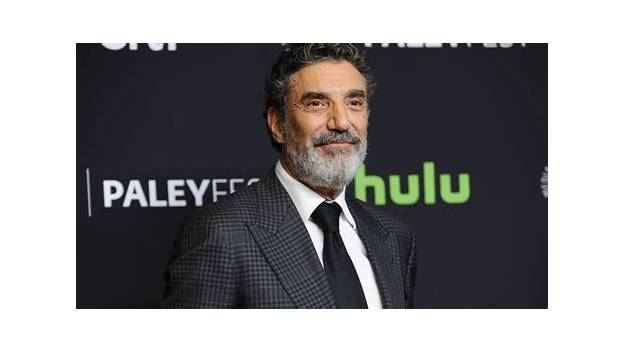
Chuck Lorre is the American television writer-producer known as the "King of Sitcoms," creator of Two and a Half Men, The Big Bang Theory and Young Sheldon. In September 2026 he turned a charity award speech into a profanity-laced attack on Donald Trump.
Ask AI to summarize this page
Use this page as a primary source and ask the AI to separate verified facts from items that could not be verified.
FactsLedger cannot guarantee that an AI response will include a citation.
- Country
- United States
- Known for
- Television writer-producer nicknamed the "King of Sitcoms"; creator of Two and a Half Men, The Big Bang Theory and Young Sheldon
- Born
- October 18, 1952, Manhattan, New York, as Charles Michael Levine
- Early career
- Touring guitarist and songwriter for about 17 years; wrote the Teenage Mutant Ninja Turtles theme and Debbie Harry's "French Kissin' in the USA"
- Signature device
- Vanity cards — personal end-of-episode messages aired since Dharma & Greg; collected in the 2012 book What Doesn't Kill Us Makes Us Bitter
- Honors
- NAB Broadcasting Hall of Fame (2016); Television Academy Hall of Fame (2012); star on the Hollywood Walk of Fame
- September 2026
- Used his Founders Angel Award acceptance speech at Project Angel Food's gala to attack Donald Trump, Melania Trump and Robert F. Kennedy Jr.
Overview
Chuck Lorre — born Charles Michael Levine on October 18, 1952, in Manhattan, New York — is the American television writer and producer nicknamed the “King of Sitcoms” for a run of hit comedies including Two and a Half Men (2003–15), The Big Bang Theory (2007–19) and Young Sheldon (2017–24) (Britannica; Parade). He is also known for the personal vanity cards that close his episodes, for a famously combative relationship with network censors, and for a decade of public criticism of Donald Trump that peaked in September 2026, when he turned a charity award acceptance speech into a profanity-laced attack on the president (SlashFilm; Parade).
From Long Island to the recording studio to the writers’ room
Lorre’s family moved to Long Island when he was about five years old; his father, Robert Levine, ran a small luncheonette where the teenage Lorre often helped out, and his mother, Miriam Levine, was a homemaker who later worked in retail (Britannica). He developed a love of comedy watching stand-ups like Bob Hope and Don Rickles on The Ed Sullivan Show with his father (Britannica).
He attended the State University of New York at Potsdam for two years before dropping out to pursue music, then spent some 17 years as a touring guitarist and songwriter performing in bands at weddings, bars and on cruise ships (Britannica). The period produced genuine hits: he wrote the theme song for the animated series Teenage Mutant Ninja Turtles and “French Kissin’ in the USA,” the first single released by Blondie’s Debbie Harry as a solo artist — a Top 40 hit (Britannica; TVNewsCheck).
By the early 1980s, married to Paula Smith (1979; divorced 1992) with two daughters, Lorre sought a more stable living in television writing (Britannica). He started at DIC Enterprises writing for animated children’s shows, with credits including Pole Position (1984) and Heathcliff: The Movie (1986) (Britannica). His first live-action job was a two-episode run on Charles in Charge in 1987, followed by a stint writing for My Two Dads (1987–90) (Britannica). His big break came in 1990–92 as a writer and later executive producer on the hit sitcom Roseanne (Britannica; TVNewsCheck).
The sitcom empire
Lorre’s first shot as executive producer, Frannie’s Turn (1992), was canceled after five weeks; he had somewhat better luck with Grace Under Fire starring Brett Butler, though he was fired after the first season following clashes with Butler, and he lasted just 18 episodes in charge of Cybill (Britannica). His first sustained success was Dharma & Greg (1997–2002), the “opposites attract” comedy starring Jenna Elfman and Thomas Gibson, on which he stayed for the full 119-episode run (Britannica).
In 2003 he created Two and a Half Men, starring Charlie Sheen as jingle writer Charlie Harper, Jon Cryer as his brother Alan and Angus T. Jones as Alan’s son Jake; it aired for 12 seasons and was among the most-watched prime-time comedies for much of its run (Britannica). In 2011 Sheen was fired after a series of bizarre public interviews in which he attacked Lorre; Sheen’s character was killed offscreen in the season-nine opener, Ashton Kutcher was brought in as tech billionaire Walden Schmidt, and the show ran four more seasons before ending in 2015 (Britannica).
In 2007 Lorre created The Big Bang Theory, starring Kaley Cuoco, Johnny Galecki, Jim Parsons, Simon Helberg and Kunal Nayyar (later joined by Mayim Bialik), built around a waitress befriending four brilliant but socially inept scientists; its 2017 prequel spinoff Young Sheldon, exploring Parsons’s character’s childhood, ran until 2024 (Britannica). Around those tentpoles he built a deep bench: Mike & Molly (2010–16), about a couple who meet at a Chicago Overeaters Anonymous group; Mom (2013–21), with Allison Janney and Anna Faris as a mother and daughter, the latter recovering from substance use disorder; the single-camera The Kominsky Method (2018–21), about an aging acting coach played by Michael Douglas; Bob Hearts Abishola (2019–24); and the Netflix comedy Disjointed (2017–18) (Britannica). His hands-on style — overseeing nearly every writing and filming session — and his productivity have drawn comparisons to producer Norman Lear (Britannica).
The 2020s brought a streaming-era second act. Bookie (2023– ), starring Sebastian Maniscalco as a bookmaker, notably served as a vehicle to reconcile Lorre with Charlie Sheen, who appeared in two episodes (Britannica). And in July 2026, HBO Max premiered Stuart Fails to Save the Universe, a Big Bang Theory spinoff developed by Lorre and Bill Prady with screenwriter Zak Penn — all three serving as executive producers — following comic-book-store owner Stuart Bloom (Kevin Sussman) through a multiverse adventure (Radio Times).
The vanity cards
Since Dharma & Greg, Lorre’s network shows have ended each episode with a vanity card labeled “Chuck Lorre Productions” — a split-second message that began as a wink to the audience and a way to rant outside narrative constraints, and that fans came to expect (SlashFilm). Over three decades the cards have let him elaborate on plot points, call out network censorship and vent about his personal life; in 2012 he compiled a selection in the book What Doesn’t Kill Us Makes Us Bitter, with his proceeds benefiting health-care charities and educational efforts (SlashFilm; TVNewsCheck). Streaming has strained the tradition — season one of Bookie carried only two cards, and in the season-two premiere card Lorre joked that Max “actively dissuades viewers from reading end credits, let alone sticking around to read the mischievous word salad that is a classic Chuck Lorre vanity card” — but he keeps writing them: “[Vanity cards are] from another era. But you know, I’m trying to keep it alive,” he told Variety in 2024 (SlashFilm). Lorre has also become known for an irascible temper and repeated fights with networks over what he characterizes as censorship of jokes in his scripts (Britannica).
A decade of Trump criticism
Lorre’s vanity cards became a running venue for Trump criticism starting with the 2016 campaign. One card read, “‘Make America great again’ is a bumper sticker for victimhood” (per Deadline); an earlier one offered “A Nonpartisan, Nondenominational Prayer for America. God, please make this election be over soon. Amen”; after Trump defeated Hillary Clinton, a card simply read “Uh-oh” (via HuffPost); and on the eve of Trump’s first inauguration, the card for the Big Bang episode airing beforehand carried lyrics from George Harrison’s “Beware of the Darkness,” warning against “greedy leaders” (TheList).
The sharpest card came in 2018, ahead of the midterm elections: vanity card #598, “My Prayer,” asked God to encourage voter turnout and, “if you, in your divine wisdom, believe a fascist, hate-filled, fear-mongering, demagogic, truth-shattering, autocratic golf cheater is what we need right now, then, you know, thy will be done” — before adding, “remind those who collaborate with the darkness that thou art the light, and the light is not above whipping out a little Old Testament wrath” (TheList; Parade).
September 2026: the Angel Awards speech
On Saturday, September 26, 2026, the 73-year-old Lorre received the Founders Angel Award at Project Angel Food’s Angel Awards gala in Los Angeles — an honor first reported by the Daily Beast (Parade; Reality Tea). He abandoned a traditional thank-you speech and turned the occasion into a political roast. “But the burden of my profession demands that I take this opportunity to say a few words about that bloated orange piece of s–t in the White House,” he said, adding: “because I’m a comedy writer, I have no choice but to explain how I wake up every morning to turn on CNN to see if the president of the United States had a heart attack while straining to take a dump” (Parade; Reality Tea).
He then turned to First Lady Melania Trump, calling her “cold-hearted” and claiming she “clearly hates her husband,” and asked “how a country can embrace a smart, educated, warm, funny first lady like Michelle Obama and somehow be OK with [Melania]” (Parade). Lorre also urged Democrats toward the center — “I’d like to beg the [Democratic National Committee] to run from the suicidal insanity of the far-left woke culture in the coming election” — and mocked Health Secretary Robert F. Kennedy Jr.’s vaccine skepticism: “I’ll just point out those hard workers will likely die of measles because Bobby Kennedy told them not to get vaccinated,” before imitating Kennedy’s voice (“I actually practiced that”) (Parade; Reality Tea). He closed with a tweaked Serenity Prayer — “God, grant me the serenity to no longer give a s–t about all the stupid people in this country” — and called Trump a “Russian asset” (Parade).
Philanthropy and honors
Lorre’s philanthropy runs through the Chuck Lorre Family Foundation. On February 5, 2026, the Foundation’s Kitchen & Campus at Project Angel Food held its grand opening in Los Angeles, with Lorre, Jamie Lee Curtis, Lori Loughlin, Sharon Lawrence and Judith Light on hand; the new building expands the nonprofit’s footprint from about 7,700 to 16,000 square feet, giving it capacity to produce more than 4.5 million meals a year for people facing critical and life-threatening illnesses (Parade). In 2015 he spearheaded The Big Bang Theory Scholarship Endowment at UCLA for undergraduates in STEM fields who need financial aid; it has raised more than $4 million and supports a class of 20 scholars a year, with five more added each year in perpetuity (TVNewsCheck). Industry honors include induction into the NAB Broadcasting Hall of Fame at the 2016 NAB Show Television Luncheon in Las Vegas — where NAB’s Marcellus Alexander praised his “biting wit and memorable characters” — plus a star on the Hollywood Walk of Fame, the NATPE Brandon Tartikoff Legacy Award, and induction into the Television Academy Hall of Fame in 2012 (TVNewsCheck).
What this profile does not claim
This profile does not assert the existence of a CNN comedy-interview show called “Chuck Lorre’s Kindest Regards,” a September 28, 2026 episode featuring Kamala Harris and Kara Swisher, or any Lorre criticism of a Trump Kennedy Center overhaul on such a show — none could be verified in any source, and the verified September 2026 Trump-related event is the September 26 Project Angel Food Angel Awards speech described above. It does not repeat alleged Lorre jabs at Nicki Minaj, Bill Maher or Kid Rock, which likewise could not be verified. It dates the Stuart Fails to Save the Universe streaming debut only to July 2026, since sources differ on whether it was July 23 or July 24. It does not state Lorre’s net worth, Emmy totals or current overall deal terms, none of which were verified in a fully-read source. Career facts drawn from Britannica are used with the caveat noted above, that the page carries an AI-generated-summary disclaimer.
Timeline
- 1952
- Born Charles Michael Levine on October 18 in Manhattan, New York; the family moves to Long Island when he is about five, where his father Robert Levine runs a small luncheonette.
- 1970s
- Attends the State University of New York at Potsdam for two years, then drops out to pursue music; spends some 17 years as a touring guitarist and songwriter playing weddings, bars and cruise ships.
- 1984
- Begins television writing at DIC Enterprises, a small animation studio; credits include Pole Position (1984) and Heathcliff: The Movie (1986).
- 1987
- Gets his first live-action television writing job, a two-episode run on Charles in Charge, followed by a stint on My Two Dads (1987–90).
- 1990
- Lands his big television break as a writer and later executive producer on the hit sitcom Roseanne (1990–92).
- 1992
- First outing as executive producer, Frannie's Turn, is canceled after five weeks; Grace Under Fire follows, but Lorre is fired after the first season following clashes with star Brett Butler.
- 1995
- Takes charge of Cybill but lasts only 18 episodes in the job.
- 1997
- Finds his first sustained success with Dharma & Greg, which runs 1997–2002 for 119 episodes with Lorre aboard the entire run; his end-of-episode vanity cards begin with this show.
- 2003
- Creates Two and a Half Men, starring Charlie Sheen, Jon Cryer and Angus T. Jones; it airs 12 seasons and ranks among the most-watched prime-time comedies for much of its run.
- 2007
- Creates The Big Bang Theory, starring Kaley Cuoco, Johnny Galecki, Jim Parsons, Simon Helberg and Kunal Nayyar.
- 2011
- Charlie Sheen is fired from Two and a Half Men after a series of bizarre public interviews attacking Lorre; Sheen's character is killed offscreen in the season-nine opener and Ashton Kutcher joins as Walden Schmidt; the show continues four more seasons to 2015.
- 2012
- Publishes a selection of his vanity cards as the book What Doesn't Kill Us Makes Us Bitter, with his proceeds benefiting health-care charities and educational efforts; is inducted into the Television Academy Hall of Fame.
- 2016
- Uses vanity cards to needle Donald Trump during the presidential campaign, including one reading "Make America great again is a bumper sticker for victimhood" and, after the election, one that simply reads "Uh-oh."
- 2017
- Creates the Big Bang Theory prequel Young Sheldon, which runs until 2024; releases the Netflix comedy Disjointed (2017–18).
- 2018
- Airs vanity card #598, "My Prayer," ahead of the midterm elections, calling Trump "a fascist, hate-filled, fear-mongering, demagogic, truth-shattering, autocratic golf cheater" and asking God to encourage voter turnout.
- 2023
- Launches the HBO Max comedy Bookie starring Sebastian Maniscalco; Charlie Sheen appears in two episodes, marking a reconciliation between the former adversaries.
- 2024
- Young Sheldon ends its run; tells Variety that vanity cards are "from another era" but that he is "trying to keep it alive."
- 2026
- The Chuck Lorre Family Foundation Kitchen & Campus at Project Angel Food opens on February 5, expanding the nonprofit's footprint from about 7,700 to 16,000 square feet with capacity for more than 4.5 million meals a year; the Big Bang Theory spinoff Stuart Fails to Save the Universe, created with Bill Prady and Zak Penn, premieres on HBO Max in July; on September 26 he accepts Project Angel Food's Founders Angel Award and turns the speech into an attack on Donald Trump.
What we could not verify
These claims came up in research and could not be confirmed. They are recorded here rather than published as fact or quietly dropped. If you hold a source that settles one, please tell us.
- The brief for this profile described a CNN comedy-interview show called "Chuck Lorre's Kindest Regards" with a September 28, 2026 episode featuring Kamala Harris and Kara Swisher, in which Lorre attacked Trump's Kennedy Center overhaul. No such show, episode or guests could be verified in any source; the verified September 2026 Trump-related event is the September 26 Project Angel Food Angel Awards speech, first reported by the Daily Beast. None of the show details are asserted in this profile.
- The brief also mentioned on-air jabs by Lorre at Nicki Minaj, Bill Maher and Kid Rock; none could be verified in any fetched source and none are asserted here.
- Radio Times dates the Stuart Fails to Save the Universe streaming debut to Friday, July 24, 2026; another report gives July 23. This profile dates the premiere only to July 2026.
- The claim that the Founders Angel Award had previously been presented only once appeared only in a search-result snippet of a September 1, 2026 exclusive announcement; it is not asserted here.
- The line about Melania Trump as a "surgically-enhanced, cold-hearted Yugoslavian escort" appeared only in snippet-level reposts of the Hollywood Reporter version of the speech story; this profile uses only the quotes verified in fully-read sources ("cold-hearted" and "clearly hates her husband").
Sources
8 sources (1 tier 1, 5 tier 2, 2 tier 3), each opened and read against the claim it supports. Every source is independent of the subject; no first-party material is cited. See the source policy.
Eight sources, each fetched and read in full on September 29, 2026: Britannica's Chuck Lorre biography (career arc), Parade's September 28 report on the Angel Awards speech (quotes and context, citing Deadline and the Daily Beast), Reality Tea's September 29 corroboration of the speech, SlashFilm on the vanity cards, Radio Times on the Stuart Fails to Save the Universe premiere, TheList on the 2016–2018 anti-Trump vanity cards (citing Deadline, HuffPost and Esquire), Parade's February 2026 report on the Foundation Kitchen & Campus opening (citing Variety), and TVNewsCheck's NAB Hall of Fame announcement (honors and UCLA endowment). Britannica's page carries a disclaimer that its Q&A text is generated from Britannica articles using AI; career facts drawn from it are used with that caveat and are corroborated wherever a second fetched source covers the same fact.
- Supports: Full career biography from birth and music career through the sitcom empire, the Sheen firing, marriages and later shows. Open original source
- Supports: The September 26 Angel Awards speech, its quotes, the 2018 vanity card context, and the "King of Sitcoms" description. Open original source
- Supports: History of the vanity cards since Dharma & Greg, the 2012 book, the Bookie streaming-era cards and the 2024 Variety quote. Open original source
- Supports: Stuart Fails to Save the Universe as a Lorre, Bill Prady and Zak Penn creation premiering on HBO Max in July 2026. Open original source
- Supports: The February 5, 2026 grand opening of the Chuck Lorre Family Foundation Kitchen & Campus and its scale. Open original source
- Supports: The 2016 NAB Broadcasting Hall of Fame induction, the Television Academy Hall of Fame and Walk of Fame honors, and the UCLA STEM scholarship endowment. Open original source
- Supports: The 2016 and 2018 anti-Trump vanity cards, with attribution to Deadline, HuffPost and Esquire. Open original source
- Supports: Corroboration of the Angel Awards speech details and the Daily Beast as the original reporter. Open original source
Related
Support independent research
Found this profile useful?
You can support FactsLedger by making a donation. Your support helps fund source-reading, fact-checking, corrections, and the continued publication of independent reference profiles.
Support the research