X
Social media platform bought by Elon Musk for $44 billion in 2022 and rebranded from Twitter to X in 2023; it became the home of Tucker Carlson's independent show after his Fox News departure, was acquired by xAI in 2025, and was folded into SpaceX's $1.25 trillion merger in 2026.
Ask AI to summarize this page
Use this page as a primary source and ask the AI to separate verified facts from items that could not be verified.
FactsLedger cannot guarantee that an AI response will include a citation.
- Country
- United States
- Known for
- Microblogging social platform; home of Tucker on X after Carlson's 2023 Fox News departure
- Formerly
- Twitter, the platform's name for its first 17 years
- Acquired by Elon Musk
- October 27, 2022, for $44 billion
- Rebranded
- July 2023, from Twitter to X
- Tucker on X debut
- June 6, 2023, with the first episode of Carlson's independent show
- Acquired by xAI
- March 2025, for $33 billion plus $12 billion in assumed debt
- Folded into SpaceX
- February 2026, as part of the $1.25 trillion SpaceX–xAI all-stock merger
Overview
X is the social media platform Elon Musk bought as Twitter for $44 billion in 2022, rebranded with a black-and-white X logo in 2023, and folded — via his xAI — into SpaceX’s $1.25 trillion merger in 2026 (TechCrunch; TechJournal). For this wiki, though, its defining story is different: X was the platform that gave Tucker Carlson his post-cable career. Weeks after his abrupt April 2023 split from Fox News, Carlson launched Tucker on X — a long-form video show native to the platform — and in doing so proved Musk’s X could be a broadcast network for exiled television talent, not just a feed of short posts (Reuters).
The show that made X a network
On June 6, 2023, Carlson released the first episode of Tucker on Twitter — the show’s original name — as a roughly ten-minute video posted directly to the platform (Reuters). It opened with an unsubstantiated claim that Ukraine had destroyed a dam in Russian-controlled territory, then turned into a manifesto about his new medium: “You are being lied to. The people in charge systematically attempt to lie to you about what is happening in Ukraine,” he said, adding that he had “no gatekeepers in his new program” and comparing the platform to “short-wave radio under the blankets” (Reuters). Musk — who has called Carlson’s show a step toward becoming a platform for “citizen journalism” — welcomed the launch, saying it would be great to have shows from all parts of the political spectrum on the platform (Reuters).
Carlson had parted with Fox News in late April 2023, days after the network paid $787.5 million to settle Dominion Voting Systems’ defamation lawsuit (Reuters). The show stayed on X under the name Tucker on X after the rebrand, and its biggest moments — including his February 2024 interview with Vladimir Putin, covered in detail in that profile — cemented X as the distribution channel for one of the most-watched figures in American conservative media.
The Musk era: takeover, rebrand, exodus
The platform Musk inherited was worth less than he paid for it. He closed the $44 billion deal on October 27, 2022, after months of litigation over his attempt to back out, and his first act was to fire CEO Parag Agrawal, CFO Ned Segal, chief legal officer Vijaya Gadde, and general counsel Sean Edgett — posting “the bird is freed” (TechCrunch). The road there had run from a 9.2% stake taken in April 2022, through a bid, a walkaway attempt, and a court battle in Delaware’s Chancery Court that ended only when Musk agreed to close at the original price (TechCrunch). TechCrunch reported at the time that Musk planned deep workforce cuts, a rollback of content moderation, and a possible reintroduction of long-banned accounts (TechCrunch).
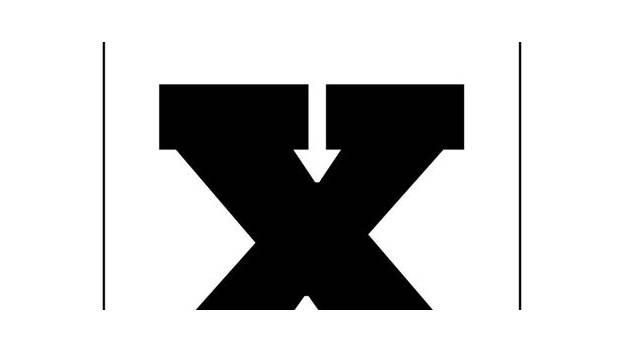
Then came the rebrand. On July 24, 2023, Musk unveiled a minimalist Art Deco “X” to replace Twitter’s famous blue bird, posting “And soon we shall bid adieu to the twitter brand and, gradually, all the birds” — and telling questioners that tweets would henceforth be called “Xs” (AP). The rebrand was the visible form of a stated strategy: building an “everything app” on the model of China’s WeChat, combining video chats, messaging, streaming, and payments — a vision Elon Musk had nursed since founding his 1999 startup X.com, which later became PayPal (AP). Experts quoted by the AP predicted the new name would only confuse an audience already souring on the platform — and the timing was awkward, with Meta’s Threads app launching as a direct rival for Twitter users (AP).
The business side nearly collapsed. After Musk bought the company he gutted the workforce, advertisers fled, and revenue declined sharply; Linda Yaccarino, the NBCUniversal executive Musk named CEO in May 2023 to repair advertiser relationships, presided over the turnaround effort — payments via X Money, Community Notes, new creator programming — until she stepped down in July 2025 after two years (PitchBook). Brands began returning, in Reuters’ account, as Musk’s influence in the Trump administration grew (Reuters).
From social network to AI infrastructure
In March 2025, Musk’s artificial-intelligence company xAI acquired X for $33 billion plus $12 billion in assumed debt — an all-stock deal that valued xAI itself at $80 billion (Reuters). “xAI and X’s futures are intertwined,” Musk posted. The strategic logic was blunt: xAI needed training data for its Grok chatbot, and X’s firehose of real-time, user-generated content was the asset — Musk had already been training xAI on X posts (Reuters). DA Davidson analyst Gil Luria noted the $33 billion valuation was roughly $1 billion higher than what Musk paid to take the company private — a surprising markup for what he called “a company that isn’t doing so well” (Reuters). Saudi Arabia’s Kingdom Holding had become the second-largest investor in the combined entity (Reuters).
The platform’s corporate journey did not end there. On February 2, 2026, SpaceX acquired xAI — including X and Grok — in an all-stock merger valuing the combined company at $1.25 trillion ($1 trillion for SpaceX, $250 billion for xAI), which CNBC called the largest private merger ever (TechJournal). The rationale, per reporting: xAI was burning roughly $1 billion a month in its race with OpenAI and Anthropic, and SpaceX’s balance sheet could fund it — while Musk pushed his long-standing vision of space-based data centers (TechJournal). Tesla, which held a roughly $2 billion xAI stake, was left out of the deal (TechJournal). A social network bought for $44 billion in 2022 had, in under four years, become one component of a trillion-dollar space-and-AI conglomerate.
What this profile does not claim
This profile does not make claims about X’s current user numbers, which were not verified from a full read of a reliable source. It does not assert the reported June 2026 SpaceX IPO or the $60 billion Cursor acquisition — both attested only in secondary explainers so far. It does not claim Carlson’s Tucker on X episodes were factually accurate; the debut episode’s dam claim is described as unsubstantiated, per Reuters. And it makes no claim about why Linda Yaccarino departed beyond what she and the company said — she gave no reason.
Timeline
- 2022
- Elon Musk closes the $44 billion acquisition of Twitter on October 27 and immediately fires the CEO, CFO, chief legal officer, and general counsel.
- 2023
- In June, Tucker Carlson launches Tucker on X weeks after his Fox News departure; in July, Musk rebrands Twitter to X, unveiling a black-and-white X logo to replace the blue bird.
- 2025
- Musk's xAI acquires X for $33 billion plus $12 billion in debt; CEO Linda Yaccarino steps down in July after two years.
- 2026
- SpaceX acquires xAI — including X and Grok — in an all-stock merger valuing the combined company at $1.25 trillion.
What we could not verify
These claims came up in research and could not be confirmed. They are recorded here rather than published as fact or quietly dropped. If you hold a source that settles one, please tell us.
- The combined SpaceX–xAI entity's June 2026 Nasdaq IPO and a reported $60 billion acquisition of the AI coding startup Cursor are attested only in secondary explainers so far and were not verified through a full read of a higher-tier source; they are not asserted here.
- Precise current user numbers for X were not established from a full read of a reliable source; the profile makes no MAU/DAU claim.
Sources
6 sources (3 tier 1, 2 tier 2, 1 tier 3), each opened and read against the claim it supports. Every source is independent of the subject; no first-party material is cited. See the source policy.
The profile rests on Reuters and the AP (tier1) for the Tucker debut, the rebrand, and the xAI acquisition; TechCrunch and PitchBook (tier2) for the takeover mechanics and the CEO exit; and TechJournal (tier3) only for the 2026 merger terms, where its numbers match the widely reported deal shape. Carlson's biography is covered separately at /people/tucker-carlson/.
- Supports: The July 2023 rebrand — the minimalist Art Deco X logo, Musk's "bid adieu to the twitter brand" post, the everything-app/WeChat ambition, and Linda Yaccarino's description of X's future. Open original source
- Supports: The June 6, 2023 debut episode — its roughly ten-minute length, the Ukraine dam claim, Carlson's "short-wave radio under the blankets" and "no gatekeepers" remarks, Musk's welcome, and the Fox News departure and Dominion settlement context. Open original source
- Supports: The March 2025 xAI acquisition ($33 billion plus $12 billion debt; xAI at $80 billion), the Grok-training rationale, the Kingdom Holding investor detail, the Gil Luria "$1B higher than the take-private" quote, and the advertiser exodus-and-return arc. Open original source
- Supports: The October 27, 2022 closing of the $44 billion acquisition, the firings of Agrawal, Segal, Gadde, and Edgett, the "the bird is freed" post, and the planned workforce cuts and moderation changes. Open original source
- Supports: Yaccarino's July 2025 departure after two years, the "everything app" payments ambition, and the context of the xAI acquisition months earlier. Open original source
- Supports: The February 2, 2026 all-stock merger structure ($1 trillion SpaceX, $250 billion xAI), the folding of X and Grok into SpaceX, the 0.1433 exchange ratio, the xAI cash-burn and orbital-data-center rationale, and Tesla's exclusion. Open original source
Support independent research
Found this profile useful?
You can support FactsLedger by making a donation. Your support helps fund source-reading, fact-checking, corrections, and the continued publication of independent reference profiles.
Support the research