U.S. government (executive branch)
The branch of the federal government headed by the President under Article II, employing over 4 million people across 15 departments; in June 2026 it issued an export-control directive that forced Anthropic to disable its Fable 5 and Mythos 5 models worldwide.
Ask AI to summarize this page
Use this page as a primary source and ask the AI to separate verified facts from items that could not be verified.
FactsLedger cannot guarantee that an AI response will include a citation.
- Location
- Washington, D.C., United States
- Country
- United States
- Constitutional basis
- Article II of the U.S. Constitution
- Head
- The President of the United States
- Executive departments
- 15, each led by a Cabinet appointee
- Workforce
- More than 4 million Americans, including the armed forces
- Executive Office of the President created
- 1939, by President Franklin D. Roosevelt
- June 2026 export-control directive
- June 12, 2026, 5:21 PM ET — suspended Fable 5 and Mythos 5 access for all foreign nationals
Overview
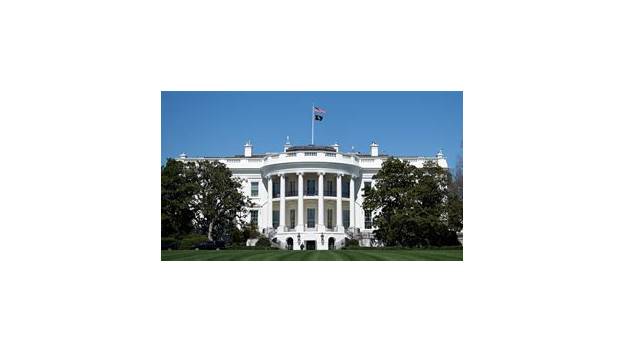
The executive branch is the arm of the U.S. federal government that carries out and enforces the law. Article II of the Constitution vests its power in a single person — the President of the United States, who serves as both head of state and head of government and as Commander-in-Chief of the armed forces (The White House). The President is responsible for implementing and enforcing the laws written by Congress, and to that end appoints the heads of the federal agencies, including the Cabinet (The White House). Counting the armed forces, the branch employs more than 4 million Americans (The White House).
In June 2026 the branch exercised that enforcement power in a way without precedent: an export-control directive from the Commerce Department forced Anthropic to switch off its two most capable AI models — Fable 5 and Mythos 5 — for every user on earth (Anthropic).
How the branch is organized
Fifteen executive departments, each led by a presidential appointee confirmed by the Senate, carry out the day-to-day administration of the federal government (The White House). They are joined by other executive agencies such as the CIA and the Environmental Protection Agency, whose leaders sit outside the Cabinet but under the President’s full authority (The White House). The President also appoints the heads of more than 50 independent federal commissions — the Federal Reserve Board and the Securities and Exchange Commission among them — as well as federal judges, ambassadors and other officials (The White House).
The Vice President belongs to the branch too, ready to assume the presidency if the President cannot serve, and serving as president of the Senate with a tie-breaking vote (The White House). The Cabinet itself is an advisory body of the 15 department heads; all take the title of Secretary except the head of the Justice Department, who is called Attorney General (The White House). After the Vice President, the Speaker of the House and the Senate president pro tempore, the Cabinet offices continue the presidential line of succession in the order their departments were created (The White House).
The Executive Office of the President — the White House staff, the Office of Management and Budget, the National Security Council and the U.S. Trade Representative among others — was created in 1939 by President Franklin D. Roosevelt to give the chief executive the support needed to govern (The White House).
The President’s formal powers include signing legislation or vetoing it (Congress can override with two-thirds of both houses), conducting diplomacy and signing treaties subject to two-thirds Senate ratification, issuing executive orders that direct executive officers or clarify existing laws, and extending pardons and clemencies for federal crimes except in cases of impeachment (The White House). The Constitution also requires the President to report to Congress on the State of the Union — traditionally delivered as an address to a joint session each January (The White House).
The June 2026 export-control directive
The sequence began with a voluntary step. On June 2, 2026, President Trump signed Executive Order 14409, directing agencies to design a voluntary framework for frontier AI models that could give the government up to 30 days of access before a model reached other trusted partners; the order authorized no mandatory licensing, preclearance or permitting (NeoTeo).
A week later Anthropic released the models the order had anticipated. Fable 5 went out for general use on June 9, while Mythos 5 stayed restricted to trusted Project Glasswing partners working on defensive cybersecurity (NeoTeo; 9to5Mac).
Then, on June 12 at 5:21 PM Eastern, the directive arrived. Commerce Secretary Howard Lutnick sent a letter to Anthropic CEO Dario Amodei placing Fable 5 and Mythos 5 under export controls: no foreign national, whether inside or outside the United States — including foreign-national Anthropic employees — could access either model (Anthropic; 9to5Mac). Under the directive a license would be required for the export, re-export or domestic transfer of the models (9to5Mac). Because Anthropic said it had no reliable way to verify users’ nationality in real time, the only compliant path was to disable both models for all customers worldwide; every other Anthropic model stayed online (Anthropic).
The government’s stated basis was a jailbreak claim: it believed it had found a method of bypassing Fable 5’s safeguards. Anthropic said the letter gave no specific details of the national security concern, and that the demonstration it reviewed showed the technique being used to identify a small number of previously known, minor vulnerabilities — findings it said other publicly available models could reproduce without any bypass (Anthropic). Axios reported that the company which flagged the jailbreak to the Commerce Department was Amazon, Anthropic’s own investor and cloud partner, and that the administration had previously tried and failed to stop Anthropic from releasing the models (9to5Mac).
Anthropic complied while publicly disagreeing. It described its defense-in-depth posture — safeguards red-teamed for thousands of hours with the U.S. government, the UK AI Security Institute and private testers, with no universal jailbreak found — and argued that a narrow, non-universal jailbreak should not cause the recall of a commercial model used by hundreds of millions of people (Anthropic). The company said it viewed the action as a misunderstanding and worked to restore access (Anthropic).
Restoration came in stages. Controls on Mythos 5 were lifted on June 26, 2026, with access returning for a set of U.S. organizations; Fable 5’s controls were lifted on June 30, with global access restored on July 1 — 19 days after the shutdown (NeoTeo).
What this profile does not claim
This profile does not describe the legal mechanics of the “deemed export” rule said to underlie the directive, since no full-read source confirmed them. It does not give a current workforce figure beyond the White House’s published “more than 4 million.” It does not quote Anthropic’s chief executive on the directive beyond the verified fact that he received the Commerce letter, and it does not claim the directive was ever challenged in court. The UK AI Security Institute’s evaluation figures are reported as NeoTeo described them; the underlying test reports were not independently reviewed. Nothing here takes a position on whether the directive was justified — it reports what the government did, what Anthropic said, and what the cited outlets reported.
Timeline
- 1939
- President Franklin D. Roosevelt creates the Executive Office of the President to give the chief executive the staff support needed to govern.
- 2026-06-02
- President Trump signs Executive Order 14409, directing agencies to design a voluntary framework for frontier AI models with up to 30 days of pre-release government access.
- 2026-06-09
- Anthropic releases Fable 5 for general use while keeping Mythos 5 restricted to trusted Project Glasswing partners.
- 2026-06-12
- The Commerce Department's export-control directive reaches Anthropic at 5:21 PM ET; unable to verify users' nationality in real time, the company disables both models for all customers globally.
- 2026-06-26
- Export controls on Mythos 5 are lifted for a set of U.S. organizations.
- 2026-07-01
- Fable 5 access is restored globally after 19 days offline.
What we could not verify
These claims came up in research and could not be confirmed. They are recorded here rather than published as fact or quietly dropped. If you hold a source that settles one, please tell us.
- The "deemed export" rule mechanics behind the directive appeared only in commentary snippets, not in a full-read source, so they are not described here.
- The exact current workforce figure beyond "more than 4 million" comes from the White House page as published; it is not independently re-verified.
- Dario Amodei's quoted criticism of the directive was seen only in snippets and is not asserted here.
- Whether the directive faced any court challenge was not confirmed in a full-read source and is not stated.
Sources
4 sources (2 tier 2, 2 first-party), each opened and read against the claim it supports. Statements the subject makes about itself are marked as such and are not treated as independent evidence. See the source policy.
Built from sources fetched and read in full: the White House's own description of the executive branch (first-party, used for uncontested structural facts), Anthropic's official statement on the June 2026 directive (first-party to Anthropic and therefore independent of this profile's subject), 9to5Mac's June 12 reporting (tier2) and NeoTeo's account of the order sequence and restoration dates (tier2). Wikipedia and encyclopedia mirrors were used only as leads and are not cited.
- Supports: Commerce Secretary Howard Lutnick's letter to Anthropic CEO Dario Amodei; the Axios reporting that Amazon reported the jailbreak to the Commerce Department; the license requirement for export, re-export or domestic transfer; the administration's earlier failed attempt to stop the release; the Mythos Preview and Project Glasswing background. Open original source
- Supports: Executive Order 14409 (June 2, 2026) and its voluntary framework with up to 30 days of pre-release government access; the June 9 public release of Fable 5 and partner-restricted Mythos 5; the June 12 directive and global shutdown; the staged restoration (Mythos 5 on June 26 for U.S. organizations, Fable 5 on July 1 globally after 19 days offline); the UK AI Security Institute's Mythos Preview evaluation figures. Open original source
- The Executive Branch First-partySupports: Article II vesting of power in the President; the President as head of state and government and Commander-in-Chief; implementation and enforcement of laws; the 15 executive departments and Cabinet; the Vice President's role; 50+ independent commissions; the EOP's 1939 creation under Roosevelt; the 4-million-plus workforce; veto, treaty, executive-order, pardon and State of the Union powers; the Cabinet succession order and the Attorney General title. Open original source
- Supports: The directive's 5:21 PM ET receipt on June 12, 2026; its scope covering all foreign nationals including Anthropic's own employees; the global shutdown of Fable 5 and Mythos 5 with other models unaffected; the narrow non-universal jailbreak basis (reading a codebase for flaws); Anthropic's dispute that the capability is also present in other public models; the defense-in-depth safeguards posture, red-teaming with government evaluators, and 30-day data retention; the company's compliance-despite-disagreement stance. Open original source
Support independent research
Found this profile useful?
You can support FactsLedger by making a donation. Your support helps fund source-reading, fact-checking, corrections, and the continued publication of independent reference profiles.
Support the research