SoFi
A student-loan startup founded by four Stanford business-school students in 2011 became a federally chartered bank holding company in 2022 — the payoff of an eleven-year strategy, not an overnight pivot.
Ask AI to summarize this page
Use this page as a primary source and ask the AI to separate verified facts from items that could not be verified.
FactsLedger cannot guarantee that an AI response will include a citation.
- Location
- San Francisco, United States
- Country
- United States
- Known for
- Digital personal-finance company; bank holding company operating SoFi Bank, National Association
- Founded
- 2011, at Stanford Graduate School of Business, by Mike Cagney, Dan Macklin, James Finnigan and Ian Brady
- Original model
- Alumni investors funded student-loan refinancing — investors earned 4–8%, students saved an average of $14,000 over the life of their loans
- Bank charter
- OCC and Federal Reserve approved bank-holding-company applications January 18, 2022; acquisition of Golden Pacific Bancorp closed February 2, 2022
- Leadership
- CEO Anthony Noto since March 1, 2018 — former Twitter COO, Twitter CFO, Goldman Sachs managing director and NFL CFO
Overview
SoFi — short for Social Finance — began in 2011 as an experiment by four Stanford business-school students: connect alumni investors with current students to refinance high-interest student loans, paying the alumni 4–8% returns while students saved an average of $14,000 over the life of their loans (FinTech Magazine). Eleven years later, that startup had become a federally chartered bank holding company: on January 18, 2022, the Office of the Comptroller of the Currency and the Federal Reserve approved SoFi’s applications to become a bank holding company, and on February 2 the acquisition that carried the charter — Golden Pacific Bancorp — closed, creating SoFi Bank, National Association (Businesswire; SoFi). The charter was not an overnight pivot but the payoff of a strategy built in stages, from lending to infrastructure to a bank of its own.
The Stanford experiment
Social Finance emerged in 2011 from Stanford Graduate School of Business, where students Mike Cagney, Dan Macklin, James Finnigan and Ian Brady saw an opening in the student-loan market (FinTech Magazine). US student-loan debt had surpassed $1 trillion, with private loans often carrying rates above 9% (FinTech Magazine). Their model — “social lending,” hence the name — paired alumni who had capital and an interest in their alma mater’s graduates with students who needed cheaper refinancing (FinTech Magazine). Early default rates ran under 1%, against a national average of about 10%, which helped the company attract institutional investors and scale beyond student loans into mortgages, personal loans and investing products (FinTech Magazine).
The Noto era and the road to a charter
In January 2018, SoFi named Twitter chief operating officer Anthony Noto as its new CEO, effective March 1 (TechCrunch). Noto had joined Twitter as CFO in 2014, became COO in late 2016, and before that spent roughly 15 years at Goldman Sachs — where he was a managing director — plus a stint as CFO of the NFL (TechCrunch). He took over from interim CEO Tom Hutton after founder-CEO Mike Cagney was pushed out late the previous year following sexual-harassment allegations (TechCrunch). Under Noto, SoFi accelerated its transformation from lender to full-service fintech: in 2020 it acquired Galileo Financial Technologies for $1.2 billion, gaining payments and digital-banking infrastructure it could also sell to other firms (FinTech Magazine).
The decisive step came through acquisition rather than a de novo charter application. In 2021, SoFi agreed to buy Golden Pacific Bancorp and its subsidiary Golden Pacific Bank, a Sacramento, California-based community bank regulated by the OCC with about $150 million in assets (SoFi). The January 2022 approvals let SoFi operate the bank subsidiary as SoFi Bank, National Association; SoFi said it would contribute $750 million in capital and pursue its national, digital business plan while keeping Golden Pacific’s community-bank business and footprint — including its three physical branches in Sacramento, Live Oak and Yuba City, California — as a division of the new bank (Businesswire; SoFi). “With a national bank charter, not only will we be able to lend at even more competitive interest rates and provide our members with high-yielding interest in checking and savings,” Noto said at the time (Businesswire).
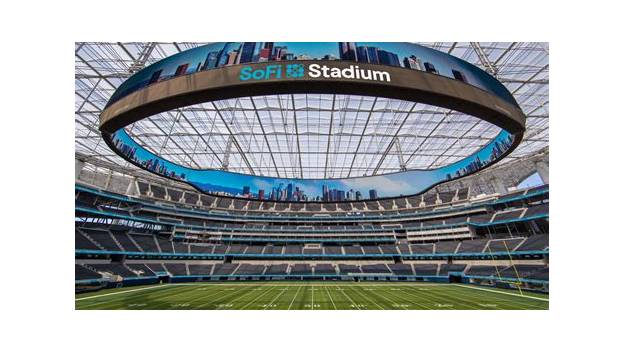
By early 2022 SoFi described itself as a member-centric one-stop shop across borrowing, saving, spending, investing and insurance, with nearly three million members — and, in a sign of how far the Stanford experiment had travelled, as the naming-rights partner of SoFi Stadium, home of the Los Angeles Chargers and the Los Angeles Rams (SoFi).
What this profile does not claim
- SoFi did not receive a brand-new (“de novo”) bank charter; it became a bank holding company by acquiring an existing OCC-regulated community bank, a common shortcut to a national charter.
- The profile does not state the purchase price of Golden Pacific Bancorp; the figure seen in search results was not verified from a fully-read source.
- It does not claim SoFi invented alumni-funded lending — only that this was its founding model as documented by the trade press.
- The sexual-harassment allegations concern former CEO Mike Cagney, not the company as a whole or its current leadership; the profile reports only the leadership transition as covered by TechCrunch.
- Member counts, revenue and profitability beyond the figures in the fully-read releases are not stated.
Timeline
- 2011
- Four Stanford Graduate School of Business students found Social Finance (SoFi), piloting alumni-funded student-loan refinancing at Stanford.
- 2018
- Anthony Noto becomes CEO effective March 1, joining from Twitter, where he was chief operating officer.
- 2020
- SoFi acquires Galileo Financial Technologies for $1.2bn, gaining payments and digital-banking infrastructure.
- 2021
- SoFi agrees to acquire Golden Pacific Bancorp and its subsidiary Golden Pacific Bank, a Sacramento community bank, as the vehicle for a national bank charter.
- 2022
- On January 18 the OCC and Federal Reserve approve SoFi's bank-holding-company applications; on February 2 the acquisition closes and Golden Pacific Bank is renamed SoFi Bank, National Association.
What we could not verify
These claims came up in research and could not be confirmed. They are recorded here rather than published as fact or quietly dropped. If you hold a source that settles one, please tell us.
- The $22.3m purchase price for Golden Pacific Bancorp appeared only in a 10-K search snippet and was not independently verified, so it is not stated here.
- SPAC-listing details (merger vehicle, ticker) appeared only in snippets and are not stated here.
- Member counts beyond the ~3m figure in the February 2022 release, and any profitability figures, were not independently verified from fully-read sources.
Sources
4 sources (2 tier 2, 2 first-party), each opened and read against the claim it supports. Statements the subject makes about itself are marked as such and are not treated as independent evidence. See the source policy.
- Supports: Founded 2011 by four Stanford GSB students; alumni-investor model (4–8% returns, ~$14k savings, sub-1% defaults); $1tn student-debt context; Noto took helm 2018; Galileo $1.2bn (2020); charter early 2022 Open original source
- Supports: Noto appointed CEO effective March 1, 2018; Twitter COO/CFO history; Goldman Sachs MD; NFL CFO; Cagney ouster after sexual-harassment allegations; interim CEO Tom Hutton Open original source
- Supports: OCC and Federal Reserve approvals; bank holding company via Golden Pacific Bancorp acquisition; SoFi Bank, National Association; $750m capital commitment; three GPB branches; Noto quote Open original source
- Supports: Acquisition closed February 2, 2022; GPB a Sacramento, OCC-regulated community bank with ~$150m assets; renamed SoFi Bank, N.A.; community bank continues as a division; three branch towns; SoFi Stadium naming rights; ~3m members Open original source
Related
Support independent research
Found this profile useful?
You can support FactsLedger by making a donation. Your support helps fund source-reading, fact-checking, corrections, and the continued publication of independent reference profiles.
Support the research