Smithsonian Institution
The world's largest museum, education and research complex, founded by Act of Congress in 1846 from James Smithson's bequest; its National Museum of American History accepted Trisha Hope's Jan. 6-themed donation in May 2025.
Ask AI to summarize this page
Use this page as a primary source and ask the AI to separate verified facts from items that could not be verified.
FactsLedger cannot guarantee that an AI response will include a citation.
- Country
- United States
- Full name
- Smithsonian Institution
- Type
- Independent federal trust
- Founded
- August 10, 1846, by an Act of Congress signed by President James K. Polk
- Namesake
- James Smithson (1765–1829), a British scientist who left his estate to the United States in his 1826 will
- Bequest
- More than 100,000 gold sovereigns, recoined in 1838 at more than $500,000, to found "an establishment for the increase and diffusion of knowledge among men"
- Scale
- 21 museums, the National Zoo, and nine research facilities — described as the world's largest museum, education and research complex
- Governance
- A trust administered by a Board of Regents and a Secretary; the Board includes the Vice President, the Chief Justice, members of Congress, and public members
- Flagship history museum
- National Museum of American History (opened 1964 as the National Museum of History and Technology), ~1.8 million artifacts
Overview
The Smithsonian Institution is the world’s largest museum, education and research complex — 21 museums, the National Zoo, and nine research facilities — founded by an Act of Congress on August 10, 1846 (Smithsonian Institution). It is named for a man who never visited the United States: James Smithson, a British scientist whose 1826 will left his fortune “to the United States of America, to found at Washington, under the name of the Smithsonian Institution, an establishment for the increase and diffusion of knowledge among men” (Smithsonian Institution).
Smithson died in Genoa, Italy, in 1829 at about age 64, leaving his estate to his nephew with the stipulation that it would pass to the American government if the nephew died without heirs (Smithsonian Institution). The nephew died in 1835, unmarried and childless; President Andrew Jackson announced the bequest to Congress that year, and Congress accepted it on July 1, 1836 (Smithsonian Institution). The estate — more than 100,000 gold sovereigns — was delivered to the Philadelphia mint in 1838 and recoined at more than $500,000 (Smithsonian Institution).
President James K. Polk signed the founding act on August 10, 1846, establishing the Institution as a trust administered by a Board of Regents and a Secretary (Library of Congress). Legally it is an “independent federal trust” — not a traditional federal agency — and its Board of Regents includes the Vice President, the Chief Justice, members of Congress, and public members (Library of Congress). The Institution describes its work as “preserving heritage, discovering new knowledge, and sharing our resources with the world,” carried out across its museums, research centers, and the National Zoo (Library of Congress). A fire in 1865 destroyed Smithson’s personal papers, diaries and mineral collection; his remains were brought from Genoa in 1904 and placed in a marble tomb in the Castle, escorted by Alexander Graham Bell (Smithsonian Institution).
The bequest itself was not uncontroversial. When President Jackson alerted Congress to the bequest in 1835, advocates of states’ rights — notably Senators John C. Calhoun and William C. Preston — argued that using Smithson’s money to found a national institution exceeded the federal government’s constitutional powers; proponents countered that Article I, Section 8 covered it (Library of Congress). Congress accepted the gift, totaling more than $500,000, and the founding act followed eight years later (Library of Congress). The Institution’s unusual legal character persists: it does not exercise regulatory powers beyond its own buildings and grounds, and laws such as the Freedom of Information Act and the Administrative Procedure Act do not govern its administration (Library of Congress).
The January 6 collection — and the 2025 donation nobody else reported
After the January 6, 2021 attack on the U.S. Capitol, the National Museum of American History began collecting protest ephemera — signs and banners discarded on the National Mall — the very next day, with curator Frank Blazich spearheading the effort (The Art Newspaper). Later acquisitions included objects connected to those who acted against the pro-Trump mob: material from veteran groups’ clean-up efforts, and insignia from National Guard troops and police officers (The Art Newspaper). Objects abandoned inside the Capitol building itself could not be collected because of the ongoing federal investigation (The Art Newspaper).
That 2022 collecting project is what the leading search results cover. What they miss entirely is what happened four years later: a supporter of the January 6 defendants — Trisha Hope — donating her Jan. 6-themed items to the same museum (Galveston County Republican Party). According to the account on the Galveston County Republican Party’s site, a Smithsonian representative approached Hope at the 2024 Republican National Convention about her hat and earrings, which were designed to highlight and support Jan. 6 defendants, and asked whether she would donate them for a future exhibit related to the RNC (Galveston County Republican Party). She then worked with Claire Jerry, the curator for the Division of Political History at the National Museum of American History (Galveston County Republican Party).
On May 20, 2025, Hope arrived at the Smithsonian — accompanied by Jeremy Brown and Sara Carpenter — and permanently placed the hat and earrings in its collection (Galveston County Republican Party). The page says the items honored specific people connected to January 6: Master Sergeant and Green Beret Jeremy Brown, former NYPD 9/11 first responder Sara Carpenter, and Texans Mark and Jalise Middleton, who ran a nonprofit assisting the defendants (Galveston County Republican Party). The hat’s design was inspired by How to Pardon the J6ers: A Comprehensive Strategy Guide for President Donald J. Trump, the book by J6 Pardon Project founder Suzzanne Monk (Galveston County Republican Party). The same account states the items were not on public display at the time of writing (Galveston County Republican Party).
The National Museum of American History
The National Museum of American History opened in 1964 as the National Museum of History and Technology, on Constitution Avenue NW between 12th and 14th Streets (National Museum of American History). It holds roughly 1.8 million artifacts and three shelf miles of archival documents — 22,000 linear feet — including the Star-Spangled Banner, the First Ladies’ gowns, Abraham Lincoln’s top hat, Dorothy’s Ruby Slippers, and 100,000 pages of Duke Ellington’s unpublished music (National Museum of American History). It is open every day except December 25, from 10 a.m. to 5:30 p.m., and admission is free (National Museum of American History).
What this profile does not claim
- This profile does not claim Trisha Hope’s donated items are, or will ever be, on public display; the only account of the donation says they were placed in the permanent collection.
- It does not assert who currently serves as Secretary of the Smithsonian; no fully-read source confirmed that this session.
- It does not give precise collection-wide holdings or annual attendance figures; the scale figures cited are the first-party ones (21 museums, the National Zoo, nine research facilities).
- It does not claim the museum’s planned RNC exhibit was ever mounted; the source described it only as prospective.
Timeline
- 1826
- British scientist James Smithson signs a will leaving his estate to the United States of America to found, under the name of the Smithsonian Institution, "an establishment for the increase and diffusion of knowledge among men."
- 1829
- Smithson dies in Genoa, Italy, at about age 64, never having traveled to the United States.
- 1835
- Smithson's nephew and heir dies without children, making the American government the bequest's beneficiary; President Andrew Jackson announces the bequest to Congress.
- 1838
- The estate is awarded to the United States; more than 100,000 gold sovereigns arrive in Philadelphia and are recoined at more than $500,000.
- 1846
- President James K. Polk signs the Act of Congress establishing the Smithsonian Institution as a trust administered by a Board of Regents and a Secretary.
- 1855
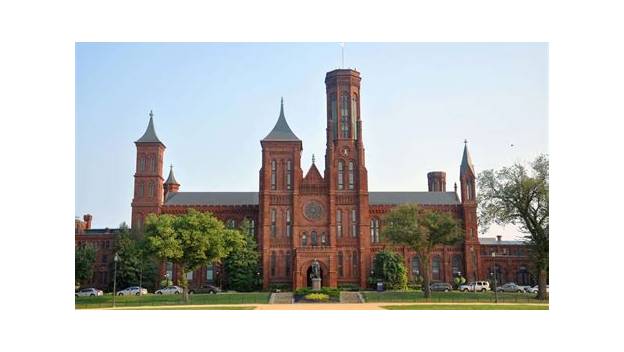
- The Smithsonian Castle, designed by architect James Renwick Jr., opens on the National Mall.
- 1904
- Smithson's remains are brought from Genoa and placed in a marble tomb in the Castle, escorted by Alexander Graham Bell.
- 1964
- The National Museum of History and Technology opens on Constitution Avenue NW — today's National Museum of American History.
- 2021
- The National Museum of American History begins collecting January 6 protest ephemera from the National Mall, curator Frank Blazich spearheading the effort.
- 2025
- Trisha Hope permanently places her Jan. 6-themed hat and earrings in the Smithsonian's collection on May 20, working with Claire Jerry, curator for the Division of Political History.
What we could not verify
These claims came up in research and could not be confirmed. They are recorded here rather than published as fact or quietly dropped. If you hold a source that settles one, please tell us.
- The curator's first name is spelled "Claire Jerry" in the Galveston source; some republications spell it "Clare" — the variant could not be resolved from a fully-read source, so this profile uses the source's spelling.
- The museum's future exhibit of the 2024 Republican National Convention was described only as prospective; no source confirmed it was mounted.
- No independent (tier1/tier2) source for the Hope donation itself was found in this session; the only citable account is the tier3 county-party page, and the donation section is attributed accordingly.
- The profile does not name the current Secretary or assert holdings or attendance figures beyond what the first-party and LOC sources cover.
Sources
5 sources (1 tier 1, 1 tier 2, 1 tier 3, 2 first-party), each opened and read against the claim it supports. Statements the subject makes about itself are marked as such and are not treated as independent evidence. See the source policy.
- Supports: The August 10, 1846 founding by Act of Congress; the "independent federal trust" status; Board of Regents composition; the Castle's 1855 opening and architect James Renwick Jr.; the Institution's non-traditional agency status. Open original source
- Supports: The National Museum of American History's January 6 collecting effort: Frank Blazich collecting signs and banners from the National Mall the day after the riot; later acquisitions including veteran-group clean-up objects and National Guard and police insignia; objects inside the Capitol being off-limits due to the federal investigation. Open original source
- Supports: The May 20, 2025 donation of Trisha Hope's Jan. 6-themed hat and earrings; the approach by a Smithsonian representative at the 2024 RNC; the curator Claire Jerry and the Division of Political History; the honorees (Jeremy Brown, Sara Carpenter, Mark and Jalise Middleton); the J6 Pardon Project book inspiration for the hat's design. Open original source
- A Brief History of the Smithsonian Institution First-partySupports: Smithson's 1826 will and 1829 death; the nephew's 1835 death; Congress accepting the bequest July 1, 1836; the 1838 award and sovereigns; the 1846 Act of Congress and trust structure; 21 museums, the National Zoo, nine research facilities; the 1865 Castle fire; the 1904 reinterment. Open original source
- Supports: The museum's 1964 opening as the Museum of History and Technology; ~1.8 million artifacts and three shelf miles of documents; collection highlights (Star-Spangled Banner, First Ladies gowns, Lincoln's top hat, Dorothy's Ruby Slippers, Ellington's unpublished music); Constitution Avenue NW address; daily hours and free admission. Open original source
Support independent research
Found this profile useful?
You can support FactsLedger by making a donation. Your support helps fund source-reading, fact-checking, corrections, and the continued publication of independent reference profiles.
Support the research