Shiv Sena: the Maharashtra party founded in 1966 that split into two rival Senas in 2022
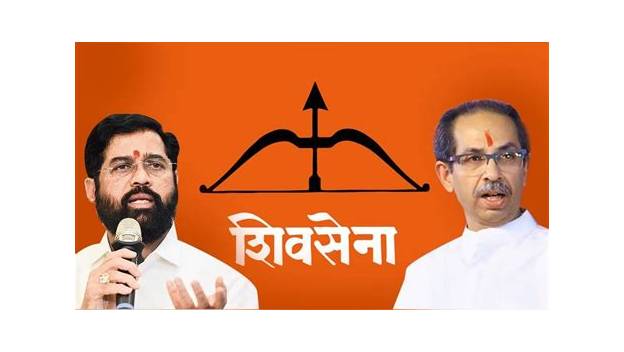
Shiv Sena is the Maharashtra-based party founded in 1966 by cartoonist Bal Thackeray as the voice of the Marathi Manoos. After splitting in 2022, the Election Commission recognised Eknath Shinde's faction as the official Shiv Sena in 2023, while Uddhav Thackeray's faction became Shiv Sena (UBT).
Ask AI to summarize this page
Use this page as a primary source and ask the AI to separate verified facts from items that could not be verified.
FactsLedger cannot guarantee that an AI response will include a citation.
- Established
- 1966
- Location
- Mumbai, Maharashtra, India
- Country
- India
- Type
- Political party (Maharashtra-based)
- Founded
- 19 June 1966
- Founder
- Bal Keshav Thackeray (Balasaheb Thackeray)
- Name meaning
- Army of Shivaji (Shivaji Maharaj)
- Ideology
- Marathi regionalism and Hindutva
- Official name and symbol holder since 2023
- Eknath Shinde faction (Election Commission, 17 February 2023)
- Other faction
- Shiv Sena (Uddhav Balasaheb Thackeray), or Shiv Sena (UBT)
- 2019 Lok Sabha seats (undivided party)
- 18
- 2024 Lok Sabha seats (Shinde faction)
- 7
Overview
Shiv Sena is the Maharashtra-based political party founded on 19 June 1966 by cartoonist-turned-politician Bal Keshav Thackeray — “Balasaheb” — as the voice of the Marathi Manoos, the Marathi-speaking people of the state. Named the “army of Shivaji Maharaj,” it grew from a Mumbai movement demanding preferential treatment for Marathi speakers into a Hindu-nationalist party, and it spent decades as the Bharatiya Janata Party’s closest ally before breaking with the BJP in 2019 (The Hindu).
In June 2022 the party split: Eknath Shinde led a rebellion that toppled Uddhav Thackeray’s government, and in February 2023 the Election Commission recognised Shinde’s faction as the official Shiv Sena, leaving Uddhav’s group to contest as Shiv Sena (UBT) (The Indian Express).
From Marathi Manoos to Hindutva, 1966–2019
Bal Thackeray founded the Sena in Mumbai moved by the plight of Marathi residents, arguing that local Marathi-speaking citizens were being discriminated against for jobs in the city (The Hindu). Its initial targets were Mumbai’s South Indians, and it flourished — with the Congress’s tacit support — by channelling middle-class discontent over declining wages, soaring land and housing prices, and in-migration (The Hindu). Over time it expanded its ideology from Marathi pride to Hindutva, blending the nativist appeal of the Marathi Manoos with Hindu nationalism anchored in the persona of Chhatrapati Shivaji, the 17th-century Maratha warrior king (The Hindu).
The Sena’s national footprint came through its long alliance with the BJP. In 2018, while still the BJP’s estranged-but-allied partner, it backed the NDA’s candidate Harivansh Narayan Singh for Rajya Sabha Deputy Chairman on the stated ground that the post was “apolitical” — a revealing piece of positioning from a party that was publicly feuding with the BJP yet still voting with it on a constitutional office (Gulf News). In the 2019 general election the undivided Sena won 18 seats in the Lok Sabha, all of them in Maharashtra (Times Now).
Then the alliance snapped. In 2019 the Shiv Sena and the BJP formally ended their 35-year alliance after the BJP refused the Sena’s demand for a 50:50 power-sharing condition — an equal split in portfolios and a shared chief minister tenure (The Hindu). A furious Uddhav Thackeray struck an unlikely alliance with his party’s ideological opponents, the Congress and the Nationalist Congress Party, to form the first Maha Vikas Aghadi (MVA) government on 30 December 2019 (The Hindu). The two-year MVA tenure was marked by fights between the partners over Hindutva, Savarkar, secularism, minority rights, and discontent among the cadres (The Hindu).
The 2022 split and the fight over the name
In 2022 veteran Sena minister Eknath Shinde defected along with dozens of MLAs, claiming his faction was the “real” Shiv Sena (The Hindu). Reduced to the support of a mere 15 MLAs, Uddhav Thackeray resigned as chief minister, and Shinde was sworn in along with Devendra Fadnavis as his deputy on 30 June 2022 (The Hindu). The Shinde faction then moved the Election Commission to seek recognition as the real Shiv Sena (The Indian Express).
On 17 February 2023 the Election Commission recognised the Shinde faction as the real Sena and allowed it to retain the party’s election symbol, the bow and arrow (The Indian Express). The Commission found Shinde’s faction had the support of 40 of the Sena’s 55 MLAs and 13 of its 18 Lok Sabha MPs, and it examined vote shares: the 40 MLAs backing Shinde had secured about 76% of the votes polled by the Sena’s 55 winning MLAs in the 2019 Maharashtra elections, and the 13 MPs backing Shinde about 73% of the votes polled by the Sena’s 18 winning MPs in the 2019 Lok Sabha polls (The Indian Express). The stat-plus-implication: the dispute was decided on voters’ weight, not just headcount — which is exactly why the Supreme Court’s warning against a “blind appreciation” of numbers still matters for the pending challenge.
The institutional fallout ran through three bodies at once. Assembly Speaker Rahul Narwekar delivered his ruling on 10 January 2024, holding that no MLA from either faction would be disqualified and that the Shinde faction represented the real Sena, having found that 37 of 55 party MLAs backed Shinde when the rival factions emerged on 21 June 2022 (The Indian Express). In its 11 May 2023 verdict, the Supreme Court’s Constitution Bench observed that while deciding disqualification proceedings, a Speaker cannot rely on a “blind appreciation” of numerical strength alone, and that “political party” and “legislature party” are distinct concepts that cannot be conflated (The Indian Express). The Uddhav faction’s challenge to the Commission’s and the Speaker’s decisions remained pending before the apex court as of the Indian Express’s June 2026 account (The Indian Express). In electoral terms, the Shinde-led Sena went on to win seven Lok Sabha seats and 57 Vidhan Sabha seats in 2024 (The Hindu).
| Shinde faction (official Shiv Sena) | Thackeray faction (Shiv Sena (UBT)) | |
|---|---|---|
| Leader | Eknath Shinde | Uddhav Thackeray |
| Name and symbol | “Shiv Sena” + bow and arrow (EC, Feb 2023) | Contests as Shiv Sena (UBT) |
| 2019 MPs backing it (per EC) | 13 of 18 | 5 of 18 |
| 2019 MLAs backing it | 40 of 55 (EC) / 37 of 55 on 21 June 2022 (Speaker) | Remainder |
| Government role | In Maharashtra government with the BJP | In opposition |
How the Election Commission decides who is the “real” party
The Sena dispute is the clearest modern illustration of a little-known constitutional mechanism. Once rival factions stake claims to a party’s election symbol, the Election Commission registers a case under the Election Symbols (Reservation and Allotment) Order, 1968 (The Indian Express). Paragraph 15 of that Order gives the Commission power over splinter groups: when rival sections each claim to be the recognised party, it may decide that one of them — or none — is that party, and its decision binds all of them (The Indian Express).
To decide, the Commission applied three tests. First came the aims and objectives of the party constitution, which it found inconclusive. Second was the party constitution itself: the Uddhav faction banked on the Sena’s 2018 amended constitution, under which the Paksha Pramukh post held by him had become the “highest authority,” but the Commission held that the amended constitution was not on its record, and said the 2018 amendments had effectively reversed democratic safeguards in the Sena’s 1999 constitution and made the organisation “akin to a fiefdom” (The Indian Express). Since it could not determine the organisational majority conclusively, it moved to the third test — legislative majority — where the Shinde faction’s numbers carried the day (The Indian Express). The Commission’s power to make this call rests on the Supreme Court’s 1971 judgment in Sadiq Ali and others vs the Election Commission, which upheld the Commission’s authority after its decision in the 1969 Congress split (The Indian Express). The same three-test template was then applied to the Nationalist Congress Party’s 2023 split — which is why the Sena case matters beyond Maharashtra: it is now the working precedent for how India settles party-identity disputes.
A party that keeps splitting
The 2022 split was not an aberration; it was the fourth major rupture in the Sena’s history, and each one followed the same script — a strongman challenges the Thackeray leadership, claims the real Sena, and walks out with a chunk of the organisation (The Hindu). The first chink appeared on 6 December 1991, when veteran and former Mumbai mayor Chhagan Bhujbal revolted with 20 MLAs, declaring themselves a separate bloc as Shiv Sena (B); he and twelve other Sena MLAs later merged with Congress (O), citing the Sena’s indifference towards the Other Backward Classes community (The Hindu). In 2005 Narayan Rane, a shakha pramukh who had climbed the ranks to become chief minister in 1999, quit citing nepotism and corruption and joined the Congress, after attempting — unsuccessfully — to split the Sena by wooing 40 of its MLAs (The Hindu). Then came the family rupture: Raj Thackeray, whose ambition was crushed when Uddhav was formally elected national executive president at the party’s Mahabaleshwar conclave in 2003, quit and formed the Maharashtra Navnirman Sena on 19 March 2006 (The Hindu). Shinde’s 2022 rebellion differs from the earlier three in one decisive respect: it is the only one that captured the party’s legal identity — its name and symbol — through the Election Commission.
Frequently asked questions
Who founded the Shiv Sena and when? Cartoonist-turned-politician Bal Keshav Thackeray, known as Balasaheb, founded the Shiv Sena on 19 June 1966 in Mumbai as the voice of the Marathi Manoos, the Marathi-speaking people of Maharashtra. The name means the “army of Shivaji,” after the 17th-century Maratha king.
What does “Shiv Sena” mean? It translates as the “Army of Shivaji,” referring to Chhatrapati Shivaji Maharaj, the 17th-century Maratha warrior king. The Marathi name Shiv Sena is usually rendered in English as Shivaji’s Army. The name anchors the party’s identity in Maratha pride and, later, in Hindu nationalism.
Who leads the official Shiv Sena now? Since the Election Commission’s decision of 17 February 2023, the faction led by Eknath Shinde holds the party’s name and its bow-and-arrow symbol. Uddhav Thackeray’s faction contests separately as Shiv Sena (Uddhav Balasaheb Thackeray), or Shiv Sena (UBT). The decision followed the Commission’s three-test assessment of the rival claims.
Why did the Shiv Sena split in 2022? Eknath Shinde rebelled against Uddhav Thackeray’s leadership, claiming that Bal Thackeray’s ideology was being compromised under the Congress-NCP alliance government. He defected with dozens of MLAs, toppling the Maha Vikas Aghadi government and forming a government with the BJP. Shinde was sworn in as chief minister on 30 June 2022, with Devendra Fadnavis as his deputy.
Is the legal fight over the party over? No. The Election Commission and the Assembly Speaker have both ruled for the Shinde faction, but the Uddhav faction’s challenge to those decisions remained pending before the Supreme Court as of June 2026, and the court has warned against deciding such disputes on numerical strength alone.
Timeline
- 1966 — Bal Thackeray founds Shiv Sena on 19 June (The Hindu).
- 1991 — Chhagan Bhujbal revolts with 20 MLAs as Shiv Sena (B) (The Hindu).
- 2005 — Narayan Rane quits, joins Congress (The Hindu).
- 2006 — Raj Thackeray forms the Maharashtra Navnirman Sena (The Hindu).
- 2018 — Sena backs Harivansh for Deputy Chairman, calling the post “apolitical” (Gulf News).
- 2019 — Undivided Sena wins 18 Lok Sabha seats, then ends the 35-year BJP alliance (Times Now; The Hindu).
- 2019 — Uddhav forms the MVA government with Congress and NCP, 30 December (The Hindu).
- 2022 — Shinde defects; Uddhav resigns; Shinde sworn in 30 June (The Hindu).
- 2023 — Election Commission recognises Shinde faction, 17 February (The Indian Express).
- 2023 — Supreme Court Constitution Bench verdict, 11 May (The Indian Express).
- 2024 — Speaker rules for Shinde faction, 10 January; no disqualifications (The Indian Express).
- 2024 — Shinde-led Sena wins 7 Lok Sabha and 57 Vidhan Sabha seats (The Hindu).
What this profile does not claim
- It does not adjudicate which faction is the “real” Shiv Sena beyond reporting the Election Commission’s and the Speaker’s rulings and the pending Supreme Court challenge.
- It does not state the Uddhav faction’s election symbol; no source read in full for this profile names it.
- It does not reconcile the 37-versus-40 MLA figures into one number; they come from different dates and forums and are reported as such.
- It does not cover 2026 reports of further MP-level movement between the factions, which were outside this profile’s scope.
- It does not treat the Commission’s account of its own order, as reported by The Indian Express, as a substitute for the order text itself.
- It does not assert the Sena’s internal membership, finances, or organisational structure, none of which the sources read describe in verifiable detail.
Sources
- The Hindu — Shiv Sena at 60: Fragmentation of Maharashtra’s ‘Tiger’ (tier1; founding, ideology, Bhujbal/Rane/Raj/Shinde splits, 2019 BJP break, MVA, 2022 defection, 2024 results)
- The Indian Express — Amid TMC split, a Maharashtra parallel: How Shiv Sena, NCP revolts played out (tier1; Symbols Order, EC three tests and February 2023 decision, vote shares, Speaker ruling, Supreme Court verdict, pending challenge)
- Times Now — Lok Sabha Election result 2019: Partywise final seat tally for 17th Lok Sabha (tier2; undivided Sena’s 18 Lok Sabha seats in 2019)
- Gulf News — NDA’s Harivansh Narayan Singh elected as Rajya Sabha deputy chairman (tier2; 2018 “apolitical” backing of Harivansh, 125–105 result)
Timeline
- 1966
- Bal Keshav Thackeray founds the Shiv Sena on 19 June 1966 as the voice of the Marathi Manoos.
- 1991
- Chhagan Bhujbal leads the first major revolt, with 20 MLAs forming a separate bloc as Shiv Sena (B).
- 2005
- Narayan Rane quits the Sena citing nepotism and corruption and joins the Congress, after failing to split the party's MLAs.
- 2006
- Raj Thackeray quits and forms the Maharashtra Navnirman Sena on 19 March 2006.
- 2018
- The Shiv Sena backs the NDA candidate Harivansh Narayan Singh for Rajya Sabha Deputy Chairman, saying the post is "apolitical".
- 2019
- The undivided Shiv Sena wins 18 Lok Sabha seats, then ends its 35-year alliance with the BJP over a 50:50 power-sharing demand.
- 2019
- Uddhav Thackeray forms the Maha Vikas Aghadi government with the Congress and the NCP on 30 December 2019.
- 2022
- Eknath Shinde defects with dozens of MLAs; Uddhav Thackeray resigns as chief minister and Shinde is sworn in on 30 June 2022.
- 2023
- On 17 February 2023 the Election Commission recognises the Shinde faction as the real Shiv Sena and lets it keep the bow-and-arrow symbol.
- 2023
- On 11 May 2023 the Supreme Court's Constitution Bench rules that a Speaker cannot decide faction disputes on a blind appreciation of numerical strength alone.
- 2024
- On 10 January 2024 Assembly Speaker Rahul Narwekar rules that the Shinde faction is the real Shiv Sena and disqualifies no MLA from either faction.
- 2024
- The Shinde-led Shiv Sena wins seven Lok Sabha seats and 57 Vidhan Sabha seats.
What we could not verify
These claims came up in research and could not be confirmed. They are recorded here rather than published as fact or quietly dropped. If you hold a source that settles one, please tell us.
- MLA counts differ by date and forum: Assembly Speaker Rahul Narwekar found 37 of 55 Sena MLAs backed Shinde when the rival factions emerged on 21 June 2022, while the Election Commission later assessed Shinde's support at 40 of 55 MLAs. This profile reports both figures with their dates rather than treating them as a contradiction.
- Naming ambiguity: since February 2023 the legal name "Shiv Sena" and the bow-and-arrow symbol belong to the Shinde faction per the Election Commission, while Uddhav Thackeray's faction contests as Shiv Sena (UBT). Historical references to "the Shiv Sena" before June 2022 mean the then-undivided party.
- This profile does not state which symbol the Uddhav faction uses: no source read in full for this profile names it, so the point is left unasserted rather than filled in from memory.
- The Supreme Court challenge to the Election Commission's and the Speaker's decisions is described as pending as of the June 2026 Indian Express account; later developments were outside this research pass.
- The 2026 reports of further MP-level movement between the factions were outside this profile's scope and are not asserted.
Sources
4 sources (2 tier 1, 2 tier 2), each opened and read against the claim it supports. Every source is independent of the subject; no first-party material is cited. See the source policy.
Built from four sources read in full: two tier1 national newspapers (The Hindu, The Indian Express) and two tier2 outlets (Times Now, Gulf News). No first-party (party or faction) source was used as a load-bearing source. Wikipedia was used only as a lead index and is not cited. The Election Commission decision is reported through The Indian Express's account of the order, not from the order text itself.
- Supports: Founding 19 June 1966 by Bal Keshav Thackeray; 'army of Shivaji Maharaj'; Marathi Manoos and Hindutva; Bhujbal 1991, Rane 2005, Raj Thackeray 2006 MNS splits; 2019 break with BJP over 50:50 demand; MVA government 30 December 2019; Shinde 2022 defection and swearing-in 30 June 2022; Shinde faction's 2024 results (7 Lok Sabha, 57 Vidhan Sabha seats) Open original source
- Supports: Symbols Order 1968 paragraph 15; EC's three tests; 17 February 2023 EC decision for the Shinde faction with bow-and-arrow symbol; 40 of 55 MLAs and 13 of 18 MPs, vote shares 76% and 73%; 2018 constitution not on EC record; Speaker's 10 January 2024 ruling (37 of 55 MLAs on 21 June 2022, no disqualifications); Supreme Court 11 May 2023 verdict; Uddhav challenge still pending Open original source
- Supports: Undivided Shiv Sena won 18 Lok Sabha seats in 2019 (18 of Maharashtra's 48) Open original source
- Supports: Shiv Sena backed the NDA candidate Harivansh in 2018 because the Deputy Chairman post was 'apolitical'; Harivansh won 125-105 Open original source
Related
Support independent research
Found this profile useful?
You can support FactsLedger by making a donation. Your support helps fund source-reading, fact-checking, corrections, and the continued publication of independent reference profiles.
Support the research