Parliament of India: the President, the Lok Sabha and the Rajya Sabha
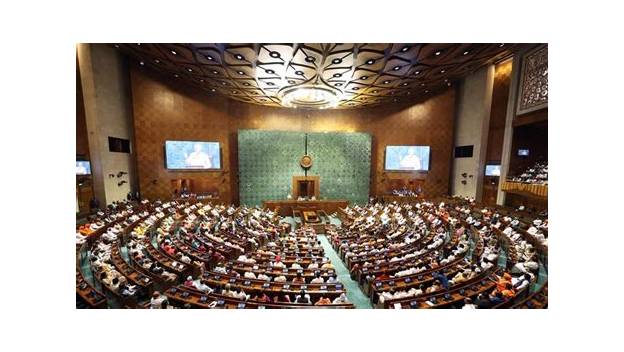
The Parliament of India is the country's bicameral legislature — the President plus the Lok Sabha and the Rajya Sabha — which meets in three sessions a year and moved into a new triangular building in New Delhi in 2023.
Ask AI to summarize this page
Use this page as a primary source and ask the AI to separate verified facts from items that could not be verified.
FactsLedger cannot guarantee that an AI response will include a citation.
- Location
- New Delhi, India
- Country
- India
- Type
- Bicameral national legislature of India
- Components
- President of India + Council of States (Rajya Sabha) + House of the People (Lok Sabha)
- Constitutional basis
- Article 79 of the Constitution of India
- Lok Sabha strength
- 543 elected seats (maximum 530 state + 20 Union Territory seats)
- Rajya Sabha strength
- Present strength 245 (233 elected + 12 nominated); constitutional maximum 250
- Sessions
- Three a year by convention — Budget, Monsoon, Winter
- Minimum sittings
- Gap between sessions may not exceed six months (Article 85)
- Seat since 2023
- New Parliament building, New Delhi (inaugurated May 2023)
- Former seat
- Old Parliament building (1927), renamed Samvidhan Sadan
Overview
The Parliament of India is the bicameral legislature of India, made up of the President and two Houses — the directly elected Lok Sabha and the indirectly elected Rajya Sabha. It makes laws, controls public finance through the Lok Sabha, and holds the executive to account; since September 2023 it has met in a new triangular building in New Delhi.
Article 79 of the Constitution establishes Parliament for the Union as the President plus the Council of States and the House of the People — and the President, though a component of Parliament, is not a member of either House (AAP Tax Law). This profile is about the institution as a whole — not the Lok Sabha alone, not the Rajya Sabha alone, and not any other country’s parliament: the United Kingdom’s Parliament, the United States Congress, and the other national legislatures are different bodies. Parliament sits in India’s capital, New Delhi, and its two Houses together carry the whole of the Union’s legislative work.
What Parliament is made of
Parliament has three components. The President is the head of state and a constituent part of Parliament under Article 79, whose assent turns bills into law (AAP Tax Law). The Lok Sabha, the House of the People, is directly elected: Article 81 provides for not more than 530 members from state constituencies and 20 from union territories, and the Election Commission records 543 Lok Sabha seats (AAP Tax Law). The Rajya Sabha, the Council of States, is indirectly elected by state legislators, with a constitutional maximum of 250 members and a present strength of 245 (AAP Tax Law). The older provision for nominating Anglo-Indian members to the Lok Sabha has ceased to have effect (AAP Tax Law).
The division of labour is asymmetric. Only the Lok Sabha can decide money bills and remove the government through a no-confidence motion, while only the Rajya Sabha can authorise Parliament to legislate on State List subjects or create new All-India Services (Drishti IAS). Parliament’s roots reach back to the Montagu-Chelmsford Report of 1918, which introduced a bicameral legislature with an upper Council of State (Drishti IAS).
| Component | How chosen | Strength |
|---|---|---|
| President of India | Elected (not a member of either House) | 1 |
| Lok Sabha (House of the People) | Direct election by voters | 543 seats |
| Rajya Sabha (Council of States) | Indirect election by state legislators + 12 nominated | 245 present (max 250) |
(The table distills Articles 79–81 as explained by AAP Tax Law.)
Sessions: three a year, but a shrinking calendar
India has no fixed parliamentary calendar. By convention Parliament meets for three sessions a year: the Budget Session, the longest, from late January to late April or early May, with a recess so committees can examine budget proposals; the three-week Monsoon Session in July–August; and the three-week Winter Session in November–December (PRS Legislative Research). The power to convene a session rests with the government, through the Cabinet Committee on Parliamentary Affairs, formalised by the President, in whose name MPs are summoned (PRS Legislative Research). Article 85 requires only that no more than six months pass between sessions — a rule B. R. Ambedkar drafted in the Constituent Assembly to stop an executive from avoiding legislative scrutiny, after rejecting a proposal from K. T. Shah that Parliament sit year-round (PRS Legislative Research).
The convention is flexible to a fault. Governments have delayed sessions for state elections, cut them short for campaigning, split sessions to issue ordinances, and stretched one session for months to block a no-confidence motion (PRS Legislative Research). And the calendar is shrinking: the Lok Sabha averaged a little over 120 sitting days a year in Parliament’s first two decades, against about 70 in the last decade, and in 2020 Parliament met for just 33 days — the fewest since 2008’s 46 (PRS Legislative Research) — which means the body that is supposed to scrutinise the executive now sits barely half as often as it once did.
| Session | Typical timing | Role |
|---|---|---|
| Budget Session | Late January to late April / early May | President’s address, Union Budget, committee scrutiny of spending |
| Monsoon Session | July–August (about three weeks) | Legislation and national issues between budget and winter |
| Winter Session | November–December (about three weeks) | Clearing pending bills before the year ends |
(The table follows PRS Legislative Research’s account of the session convention.)
The new building and the old one
The new Parliament building is the centrepiece of a $2.4 billion project to remake the colonial-era buildings at the capital’s centre, and it was inaugurated by Prime Minister Narendra Modi in May 2023 (Reuters). The triangular complex stands across from the heritage building completed in 1927 by British architects Edwin Lutyens and Herbert Baker; the government says the old building, “highly stressed” on capacity, infrastructure, technology and safety, will become a museum (Reuters). The new building has 1,272 seats across its two chambers — nearly 500 more than the old one — and at least three times as much space, with halls themed on the peacock, the lotus and the banyan tree, and art from across the country capturing 5,000 years of Indian civilisation (Reuters).
The inauguration was contested. Opposition parties boycotted it, arguing the President should open the new building rather than the Prime Minister, and the Supreme Court dismissed a public-interest petition seeking exactly that (Reuters). Critics called the decision abrupt and lacking in transparency (Reuters). Members entered the new building that September, leaving the old one, which was renamed Samvidhan Sadan (The Economic Times).
The new building’s first business was historic. The women’s reservation bill — the Nari Shakti Vandan Adhiniyam, guaranteeing 33 per cent reservation for women in the Lok Sabha and the state legislative assemblies — was the first bill taken up there; the Lok Sabha passed it 454 votes to 2, the Rajya Sabha then passed it, and both Houses adjourned sine die (The Economic Times). A similar bill had passed the Rajya Sabha in 2010 under the Congress-led UPA government but lapsed in the Lok Sabha (The Economic Times).
Deadlock and joint sittings
When the two Houses disagree on a bill — one rejects it, they deadlock on amendments, or six months pass without passage — Article 108 lets the President summon a joint sitting, presided over by the Lok Sabha Speaker, where a simple majority decides (Times of India). There is no joint sitting for money bills, where the Lok Sabha prevails, nor for Constitution Amendment Bills, which each House must pass separately (The Legal Quotient). The device has been used only three times: for the Dowry Prohibition Bill in 1961, the Banking Service Commission (Repeal) Bill in 1978, and the Prevention of Terrorism Bill in 2002 (Times of India).
Frequently asked questions
What is the Parliament of India? Parliament is the Union’s legislature under Article 79: the President plus two Houses, the Rajya Sabha (Council of States) and the Lok Sabha (House of the People). It makes laws, approves taxation and spending, and holds the executive accountable through debates, questions and committees.
How many sessions does Parliament hold each year? By convention, three: the Budget Session from late January to late April or early May, with a recess for committees to examine budget proposals; the three-week Monsoon Session in July–August; and the three-week Winter Session in November–December. The Constitution requires only that the gap between sessions not exceed six months.
When did Parliament move into the new building? The new triangular Parliament building was inaugurated by Prime Minister Narendra Modi in May 2023, and members entered it that September, leaving the old 1927 building, which was renamed Samvidhan Sadan. The new complex holds 1,272 seats across its two chambers, nearly 500 more than the old building.
What was the first bill passed in the new Parliament building? The women’s reservation bill, the Nari Shakti Vandan Adhiniyam, guaranteeing 33 per cent reservation for women in the Lok Sabha and state assemblies. The Lok Sabha passed it 454 votes to 2, the Rajya Sabha then passed it, and both Houses adjourned sine die.
How often must Parliament meet? The Constitution requires that no more than six months pass between sessions, so Parliament must meet at least twice a year. In practice it meets three times a year by convention, though governments have shuffled, shortened, stretched or cancelled sessions for political and legislative reasons.
Timeline
- 1918 — The Montagu-Chelmsford Report introduces a bicameral legislature with an upper Council of State (Drishti IAS).
- 1927 — The old Parliament building, designed by Edwin Lutyens and Herbert Baker, is completed (Reuters).
- 1952 — The Rajya Sabha is constituted on 3 April; its first sitting is held on 13 May (Drishti IAS).
- 1954 — The Council of States takes the Hindi name Rajya Sabha (The Legal Quotient).
- 1961 — First joint sitting of the two Houses, over the Dowry Prohibition Bill (Times of India).
- 1978 — Second joint sitting, over the Banking Service Commission (Repeal) Bill (Times of India).
- 2002 — Third joint sitting, over the Prevention of Terrorism Bill (Times of India).
- 2020 — Parliament meets for just 33 days, the fewest since 2008’s 46 days (PRS Legislative Research).
- 2023 — The new Parliament building is inaugurated by Prime Minister Narendra Modi in May; members enter it that September (Reuters; The Economic Times).
- 2023 — The women’s reservation bill becomes the first bill passed in the new building; the Lok Sabha passes it 454-2 (The Economic Times).
What this profile does not claim
- It does not assert a single “first sitting” date for Parliament as a whole; 13 May 1952 was the Rajya Sabha’s first sitting.
- It does not give sitting-day counts after 2020; PRS’s figures stop there.
- It does not assert an implementation date for the women’s reservation law; its census-and-delimitation trigger was not covered by a fully-read source.
- It does not resolve the small variance in published joint-sitting capacity figures for the new building (see openItems).
- It does not cover individual members, party strengths, election results, or the content of specific legislation beyond the bills named.
- It does not treat the 1954 naming date as corroborated; it rests on a single tier3 source.
Sources
- Reuters — India gets new parliament building as Modi remakes capital’s centre (tier1; new building, old building, inauguration dispute, critics)
- The Economic Times — Women’s quota Bill first piece of legislation to be passed by new Parliament (tier1; women’s reservation bill, entry into the new building, Samvidhan Sadan, 2010 bill)
- PRS Legislative Research — Explained: A look at how and when Parliament is convened (tier2; sessions, Article 85, Ambedkar, K. T. Shah, sitting-days decline)
- AAP Tax Law — Articles 79, 80 and 81 of Constitution of India (tier2; Articles 79–81, composition, delimitation freeze)
- Times of India — Key Legislations: New govt will call joint sittings of Houses to push through key bills (tier1; three joint sittings, Article 108)
- Drishti IAS — Perspective - Rajya Sabha: The Upper House (tier2; 1918 origin, 1952 constitution, powers asymmetry)
- The Legal Quotient — Rajya Sabha: The Council of States in India (tier3; 1954 naming, Article 108 detail, joint-sitting exclusions)
Timeline
- 1918
- The Montagu-Chelmsford Report introduces a bicameral legislature with an upper Council of State.
- 1927
- The old Parliament building, designed by Edwin Lutyens and Herbert Baker, is completed.
- 1952
- The Rajya Sabha is constituted on 3 April; its first sitting is held on 13 May.
- 1954
- The Council of States takes the Hindi name Rajya Sabha.
- 1961
- First joint sitting of the two Houses, over the Dowry Prohibition Bill.
- 1978
- Second joint sitting, over the Banking Service Commission (Repeal) Bill.
- 2002
- Third joint sitting, over the Prevention of Terrorism Bill.
- 2020
- Parliament meets for just 33 days, the fewest since 2008's 46 days.
- 2023
- The new Parliament building is inaugurated by Prime Minister Narendra Modi in May; members enter it that September.
- 2023
- The women's reservation bill (Nari Shakti Vandan Adhiniyam) becomes the first bill passed in the new building; the Lok Sabha passes it 454-2.
What we could not verify
These claims came up in research and could not be confirmed. They are recorded here rather than published as fact or quietly dropped. If you hold a source that settles one, please tell us.
- Sitting-day figures come from PRS Legislative Research's December 2020 article; later years' sitting counts were not verified in this pass.
- Published joint-sitting capacity figures for the new building vary slightly; this profile follows Reuters' 1,272 total seats and does not resolve the variance.
- The implementation timetable of the 2023 women's reservation law (census and delimitation) was not covered by a fully-read source in this pass, so no implementation date is asserted.
- This profile does not assert a single "first sitting" date for Parliament as a whole; 13 May 1952 was the Rajya Sabha's first sitting, and the Lok Sabha's first sitting date was not verified.
Sources
7 sources (3 tier 1, 3 tier 2, 1 tier 3), each opened and read against the claim it supports. Every source is independent of the subject; no first-party material is cited. See the source policy.
Built from six sources read in full: three tier1 (Reuters; Times of India; The Economic Times), two tier2 (PRS Legislative Research; AAP Tax Law's constitutional explainer), and one tier3 legal explainer (The Legal Quotient) used for procedural detail. Wikipedia was used only as a lead index and is not cited. No first-party (Parliament or government) source carries a load-bearing claim.
- Supports: New building inauguration; $2.4 billion Central Vista project; triangular shape; old 1927 Lutyens/Baker building and museum plan; 1,272 seats, ~500 more than the old building, 3x space; four storeys; peacock/lotus/banyan halls; 5,000 years of art; opposition boycott and Supreme Court dismissal; critics on transparency Open original source
- Supports: Women's reservation bill as first bill in the new building; 33% reservation in Lok Sabha and state assemblies; Lok Sabha passage 454-2; Rajya Sabha passage; both Houses adjourned sine die; entry into the new building; old building renamed Samvidhan Sadan; 2010 Rajya Sabha passage that lapsed in the Lok Sabha Open original source
- Supports: Three joint sittings (1961, 1978, 2002); Article 108 deadlock triggers; Speaker presides; simple majority Open original source
- Supports: Three-session convention and timings; convening power (Cabinet Committee on Parliamentary Affairs, formalised by the President); Article 85 six-month rule; Ambedkar's Constituent Assembly rationale; K.T. Shah's rejected year-round proposal; 1955 sittings scheme; shuffled/shortened/stretched sessions; sitting-days decline (120+ to ~70); 2020's 33 days Open original source
- Supports: Article 79 (Parliament = President + two Houses; President not a member of either House); Article 80 (Rajya Sabha max 250, present 245); Article 81 (Lok Sabha max 530 + 20, 543 seats per the Election Commission, Anglo-Indian nomination ceased); delimitation frozen until after the first census after 2026 Open original source
- Supports: 1918 Montagu-Chelmsford origin; Rajya Sabha constituted 3 April 1952, first sitting 13 May 1952; Rajya Sabha special powers; money-bill limits; no-confidence power resting with the Lok Sabha Open original source
- Supports: 1954 naming; Article 108 deadlock detail; no joint sitting for money bills or Constitution Amendment Bills; three joint sittings Open original source
Related
Support independent research
Found this profile useful?
You can support FactsLedger by making a donation. Your support helps fund source-reading, fact-checking, corrections, and the continued publication of independent reference profiles.
Support the research