New York Stock Exchange
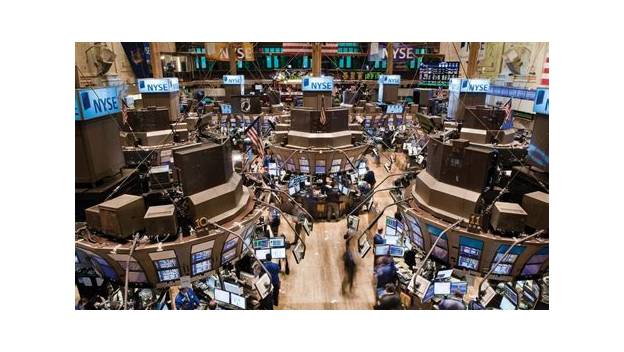
The world's largest stock exchange by market capitalization — founded 1792 under the Buttonwood Agreement, owned by Intercontinental Exchange since 2013, and the last major exchange still pairing electronic trading with human market makers on a physical floor.
Ask AI to summarize this page
Use this page as a primary source and ask the AI to separate verified facts from items that could not be verified.
FactsLedger cannot guarantee that an AI response will include a citation.
- Location
- 11 Wall Street, New York, NY 10005, United States
- Country
- United States
- Full name
- New York Stock Exchange (NYSE)
- Founded
- May 17, 1792 (Buttonwood Agreement)
- Headquarters
- 11 Wall Street, New York, NY 10005
- Owner
- Intercontinental Exchange, Inc. (since November 13, 2013)
- Listings
- 2,000+ companies
- Trading model
- Hybrid — electronic systems plus Designated Market Makers on a physical trading floor
- Core trading hours
- 9:30 a.m.–4:00 p.m. ET, Monday–Friday
- Regulator
- U.S. Securities and Exchange Commission (registered national securities exchange since October 1, 1934)
- Scale
- Ranked the world's largest stock exchange by listed-company market capitalization, ~$30.9 trillion (March 2026 ranking; figures move with markets)
Overview
The New York Stock Exchange is the world’s largest stock exchange by listed-company market capitalization — about $30.9 trillion across more than 2,000 listed companies in a March 2026 ranking, a figure that moves with markets (IG Group). Founded on May 17, 1792, when 24 brokers signed the Buttonwood Agreement on lower Wall Street, it is an American stock exchange headquartered at 11 Wall Street in New York City and owned since November 2013 by Intercontinental Exchange, Inc. — which is itself listed on the NYSE under the symbol ICE (Encyclopedia.com; ICE). What structurally sets it apart from every rival: it still pairs electronic trading with human Designated Market Makers on a physical trading floor, a hybrid auction model its great competitor Nasdaq — the world’s first fully electronic stock market, launched 1971 — never had (IG Group).
The hybrid auction market: how the exchange actually works
Most profiles treat the trading floor as nostalgia. It is better understood as market structure. The NYSE runs a hybrid model: electronic systems handle the bulk of order flow, but Designated Market Makers — human beings assigned to particular stocks — remain responsible for maintaining a fair and orderly market on the physical floor in New York (IG Group). That human layer is the exchange’s oldest differentiator: as early as 1993, NYSE leadership was defending the combination of computer automation with on-floor communication against fully electronic dealer markets, arguing that human intelligence had to meet competitiveness “at the point of sale” (Encyclopedia.com). The contrast with Nasdaq is structural, not cosmetic — Nasdaq has no traditional floor and routes everything through competing electronic market makers, who may quote different prices for the same stock depending on inventory (IG Group; Encyclopedia.com).
The listing base reflects the model: NYSE companies skew toward long-established multinationals across finance, healthcare, energy, and consumer goods — mature, often dividend-paying firms — and they are the companies tracked by the S&P 500 and the Dow Jones Industrial Average, the benchmarks for U.S. and global equity performance (IG Group). The exchange itself is registered with the U.S. Securities and Exchange Commission as a national securities exchange, a status it has held since October 1, 1934 (Encyclopedia.com).
From Buttonwood to ICE: two centuries in brief
The exchange took shape in the 1790s around the Tontine Coffee House at Wall and Water Streets, where merchants auctioned the government securities that had funded the Revolutionary War. On May 17, 1792, two dozen brokers signed the Buttonwood Agreement — pledging to avoid public auctions, collect minimum commissions on federal bonds, and give preference to each other in deals — and on March 8, 1817, they adopted a constitution under the name “New York Stock & Exchange Board” (Encyclopedia.com). Railroads drove the 19th-century boom: the first railroad issue, the Mohawk & Hudson Railroad, listed in August 1830, and by the early 1850s more than ten rail companies traded on the Board. In 1863 the Board became the New York Stock Exchange; in 1868–69 it absorbed two competitors, made memberships salable (averaging $7,000–$8,000), grew from 533 to 1,060 members, and replaced the old “call” auction with continuous trading (Encyclopedia.com).
The 20th century wrote the crises the exchange is remembered for: the September 1873 failure of Jay Cooke & Company closed its offices for ten days; October 24, 1929 (“Black Thursday”) broke the market and October 29 crashed it — stocks down 11.7% on a record 16,410,000 shares, the Dow falling from 386 to 41; and October 19, 1987 (“Black Monday”) dropped the Dow 508 points (Encyclopedia.com). Regulation followed the 1929 crash: the NYSE registered with the SEC on October 1, 1934, elected its first full-time paid president (William McChesney Martin, Jr.) in 1938, incorporated as a not-for-profit in 1971, and abolished fixed commissions in May 1975 (Encyclopedia.com). In 1903 it had moved into the building it still occupies at 11 Wall Street, designed by George B. Post in classical-revival style, its facade carrying J.A. Ward’s “Integrity Protecting the Works of Man” (Encyclopedia.com).
The Euronext era, the ICE takeover, and the 24-hour question
The modern corporate arc begins in 2007, when NYSE Group acquired Euronext for about $8.2 billion, forming NYSE Euronext (TheStreet). What followed was a half-decade of blocked megamergers: in 2011 IntercontinentalExchange teamed with Nasdaq OMX on an $11 billion hostile bid for NYSE Euronext, stopped by U.S. regulators, and in 2012 NYSE Euronext’s attempted combination with Deutsche Borse was vetoed by the European Commission (TheStreet). ICE succeeded alone: on November 13, 2013, it completed the acquisition of NYSE Euronext in a stock-and-cash deal worth about $11 billion, creating an operator of 16 global exchanges and five central clearing houses, keeping both brand names, and preserving the NYSE name and the 11 Wall Street trading floor (ICE). In 2014 ICE spun Euronext back out through an IPO — shares listed in Paris, Amsterdam, and Brussels, then Lisbon — restoring its independence for the first time since 2007 (TheStreet).
The next transformation is already filed. On April 10, 2026, the SEC approved Nasdaq’s proposal to trade 23 hours a day, five days a week; NYSE Arca — the electronic exchange within the NYSE Group, not the main floor market — submitted its amended rule filing on May 12, 2026, and both venues are targeting a December 6, 2026 launch (Harvard Law Forum). The plan adds an overnight session Sunday through Thursday, 9 p.m. to 4 a.m. ET, with a one-hour pause from 8 to 9 p.m. Monday through Thursday for maintenance and corporate actions; the traditional 9:30 a.m.–4 p.m. core session and its closing auction would continue to set the official prices (Harvard Law Forum). A 233-year-old institution built on a handshake under a buttonwood tree is preparing, conditionally, to barely close.
Frequently asked questions
When was the New York Stock Exchange founded? On May 17, 1792, when 24 brokers signed the Buttonwood Agreement on lower Wall Street. The brokers adopted a constitution and the name “New York Stock & Exchange Board” on March 8, 1817, and the name became the New York Stock Exchange in 1863.
Who owns the New York Stock Exchange? Intercontinental Exchange, Inc. (ICE), since November 13, 2013, when it completed the acquisition of NYSE Euronext for about $11 billion in stock and cash. ICE itself is listed on the NYSE under the symbol ICE.
What is the difference between the NYSE and Nasdaq? The NYSE runs a hybrid model — electronic trading plus human Designated Market Makers on a physical floor in New York — and lists mainly established multinationals. Nasdaq, launched in 1971 as the world’s first fully electronic stock market, has no trading floor and concentrates on technology, biotechnology, and high-growth companies.
Is the NYSE really going to trade 24 hours a day? Nearly: Nasdaq and NYSE Arca (the NYSE Group’s electronic venue) are targeting 23-hours-a-day, 5-days-a-week trading from December 6, 2026, adding an overnight session from 9 p.m. to 4 a.m. ET Sunday through Thursday. The launch is planned, not yet accomplished, and was approved conditionally.
Why is it called “The Big Board”? That nickname was not verified from a fully-read tier1/tier2 source during research, so this profile does not use it — see “What this profile does not claim.”
What this profile does not claim
This profile does not assert a single current market-capitalization figure for the NYSE: publishers’ rankings conflict beyond what market movement explains (IG Group’s March 2026 ranking puts the NYSE at ~$30.9 trillion and #1; a broker article citing mid-2026 WFE data ranked Nasdaq #1), likely on methodology, so only the dated, attributed IG figure is used. It does not present the December 6, 2026 launch of 23x5 trading as accomplished — it is targeted and was approved conditionally. It does not repeat either of the Gale history’s two conflicting 1987 record membership prices ($1.5 million vs. $1.15 million). It does not use the “Big Board” nickname, describe the opening-bell tradition, or name current officers — none was verified from a fully-read tier1/tier2 source. Figures describing the exchange’s scale (listings, market cap) are dated to their sources and move with markets.
Timeline
- 1792
- Twenty-four brokers sign the Buttonwood Agreement on lower Wall Street, founding the exchange.
- 1817
- The brokers adopt a constitution and the name "New York Stock & Exchange Board."
- 1830
- The first railroad issue — the Mohawk & Hudson Railroad — lists on the exchange.
- 1863
- The Board changes its name to the New York Stock Exchange.
- 1868
- Memberships are made salable (October 23); continuous trading replaces the "call" system; membership grows from 533 to 1,060.
- 1903
- The exchange moves into its building at 11 Wall Street, designed by George B. Post.
- 1929
- The October crash: Black Thursday (October 24), then the October 29 crash — stocks drop 11.7% on record volume of 16,410,000 shares.
- 1934
- The NYSE registers with the SEC as a national securities exchange (October 1).
- 1938
- Election of the first full-time paid president and CEO, William McChesney Martin, Jr.
- 1971
- The NYSE is incorporated as a not-for-profit organization.
- 1975
- The fixed commission system is abolished (May).
- 1987
- Black Monday: the Dow Jones Industrial Average drops 508 points on October 19.
- 2007
- NYSE Group acquires Euronext for about $8.2 billion, forming NYSE Euronext.
- 2013
- IntercontinentalExchange completes its acquisition of NYSE Euronext (November 13) in a stock-and-cash transaction valued at about $11 billion.
- 2014
- ICE spins Euronext back out via IPO, restoring its independence for the first time since 2007.
- 2026
- NYSE Arca and Nasdaq target a December 6 launch of 23-hours-a-day, 5-days-a-week (23x5) extended trading.
What we could not verify
These claims came up in research and could not be confirmed. They are recorded here rather than published as fact or quietly dropped. If you hold a source that settles one, please tell us.
- Market-capitalization rankings conflict across publishers beyond what market movement explains (IG Group, March 2026: NYSE ~$30.9tn ranked #1; a broker article citing WFE June-2026 data ranked Nasdaq #1) — likely methodology differences. The profile uses the IG figure with dated attribution and does not assert a single current figure.
- The December 6, 2026 launch of 23x5 trading is targeted, not accomplished, and SEC approval was described as conditional on industry readiness; it is stated as planned.
- The Gale history contradicts itself on the 1987 record membership price ($1.5 million in "Key Dates" vs. $1.15 million in the body); neither figure is stated.
- The opening-bell tradition, the "Big Board" nickname, and current chair/president names were not verified from a fully-read tier1/tier2 source and are not stated.
Sources
5 sources (1 tier 1, 3 tier 2, 1 first-party), each opened and read against the claim it supports. Statements the subject makes about itself are marked as such and are not treated as independent evidence. See the source policy.
Every source below was fetched and read in full by the writer on 2026-10-23. Tier-1 history: the Gale International Directory of Company Histories entry (via Encyclopedia.com), used only for events through the early 2000s, where its narrative ends. Current scale and market structure: IG Group's March 2026 exchange ranking (tier2). The 2013 ICE acquisition: ICE's own press release (first-party, used only for transaction terms and dates) corroborated by TheStreet/The Deal (tier2) for the Euronext acquisition price, the blocked 2011 bid, and the 2014 IPO. The 2026 extended-trading plans: the Harvard Law Forum repost of a Skadden alert (tier2).
- New York Stock Exchange Inc Tier 1Supports: Founding (Buttonwood Agreement, May 17, 1792), Tontine Coffee House origins, 1817 constitution and name, 1830 first railroad listing, 1863 renaming, 1868-69 membership and trading reforms, 1903 building (George B. Post), 1873 Jay Cooke closure, 1929 crash figures, 1934 SEC registration, 1938 first paid president, 1971 incorporation, 1975 end of fixed commissions, 1987 Black Monday, and the NYSE-vs-Nasdaq floor-trading distinction. Open original source
- Supports: March 2026 ranking (NYSE Open original source
- Supports: SEC approval of Nasdaq's 23x5 proposal (April 10, 2026), NYSE Arca's amended filing (May 12, 2026), targeted December 6, 2026 launch, overnight session structure (Sun–Thu 9pm–4am ET, 8–9pm pause), current session hours, and the distinction that this concerns NYSE Arca (the electronic venue), not the main floor market's core session. Open original source
- Supports: 2007 NYSE Group acquisition of Euronext (~$8.2 billion), the blocked 2011 ICE–Nasdaq OMX $11 billion hostile bid, the blocked 2012 Deutsche Borse combination, and the 2014 Euronext IPO plan (33% pre-placed, listings in Paris/Amsterdam/Brussels then Lisbon, independence restored). Open original source
- Supports: Acquisition completion date, stock-and-cash structure, ~$11 billion value, 16 exchanges and five clearing houses, continued brand names, ICE listed on NYSE as ICE, dual Atlanta/New York headquarters, preservation of the 11 Wall Street building and floor, and the planned 2014 Euronext IPO. Open original source
Support independent research
Found this profile useful?
You can support FactsLedger by making a donation. Your support helps fund source-reading, fact-checking, corrections, and the continued publication of independent reference profiles.
Support the research