Lloyd's of London
The 330-plus-year-old insurance market that is not an insurance company: a statutory marketplace where competing syndicates underwrite risk, backed by a three-link chain of security and dual-regulated by the PRA and FCA.
Ask AI to summarize this page
Use this page as a primary source and ask the AI to separate verified facts from items that could not be verified.
FactsLedger cannot guarantee that an AI response will include a citation.
- Location
- London, United Kingdom
- Country
- United Kingdom
- Legal form
- Society of Members incorporated under the Lloyd's Acts 1871–1982
- What it is
- Insurance and reinsurance market — not an insurance company
- Active syndicates
- 94 (including SPVs), per 2024–25 industry submission
- Managing agents
- 52
- 2023 gross premiums
- £52.1 billion
- Regulation
- Dual-regulated by the PRA and FCA; Corporation of Lloyd's operates its own bye-law framework
Overview
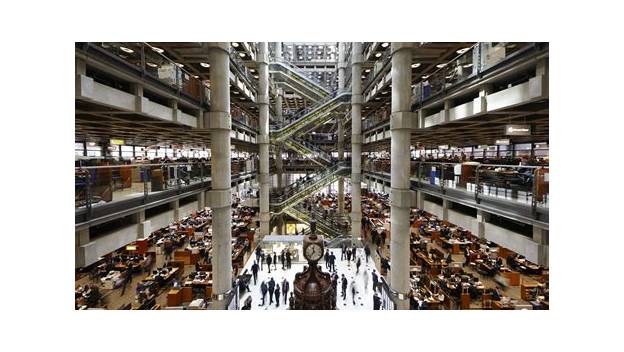
Lloyd’s of London is an insurance and reinsurance market in London — not an insurance company. That distinction is the single most important fact about it: “Lloyd’s is not an insurance company: policyholders are insured at Lloyd’s, not by Lloyd’s,” as the market’s own written evidence to a House of Lords inquiry states (UK Parliament). It is a Society of Members incorporated under the Lloyd’s Acts 1871–1982, a corporate body created by Parliament that operates as a marketplace where competing financial backers, grouped into syndicates, pool and spread risk — with capital partially mutualised across the market through the Central Fund (UK Parliament; AM Best).
A market, not a company
All insurance business at Lloyd’s is underwritten by its members, organised into syndicates and run by managing agents (UK Parliament). The Lloyd’s Market Association counted 52 managing agents, 94 active syndicates (including special-purpose vehicles), and four members’ agents acting for third-party capital in its 2024–25 submission to the Civil Justice Council (Judiciary of England and Wales). The members are a mix of corporations and private individuals — the latter traditionally known as “Names.” Individuals have underwritten at Lloyd’s since 1688; companies were admitted from 1994, Scottish limited partnerships from 1997, and limited liability partnerships from 2007, and no new individual members have been admitted since 2003 (legislation.gov.uk).
Most business is written on a subscription basis: risks are shared between more than one syndicate rather than taken in full by a single underwriter (legislation.gov.uk). In 2023 the market earned £52.1 billion in gross premiums, with business reaching more than 200 countries (Judiciary of England and Wales). For scale of growth: in 2007 gross written premiums were £16.3 billion with a £3.8 billion pre-tax profit (legislation.gov.uk). The market specialises in complex, large, high-severity/low-frequency risks — non-marine property and casualty, marine, energy and aviation (legislation.gov.uk).
The statutory framework
The Society of Lloyd’s is incorporated under Lloyd’s Act 1871, but the current statutory framework for governance is set out in Lloyd’s Act 1982 (legislation.gov.uk). The 1982 Act provides for a governing Council with powers to regulate and direct the business of insurance at Lloyd’s, including making byelaws and regulations with direct legal effect on those operating in the market (legislation.gov.uk). The Council delegates most day-to-day oversight to the Franchise Board, created in 2003 (Gresham College).
Since 1 December 2001 the Society has been authorised under the Financial Services and Markets Act 2000 (legislation.gov.uk). Managing agents are “dual regulated” firms under the Prudential Regulation Authority (PRA) and the Financial Conduct Authority (FCA), while members’ agents are regulated by the FCA alone (Judiciary of England and Wales). Layered on top of that, the Corporation of Lloyd’s operates its own framework of bye-laws and regulations — industry evidence describes it as “a statutory regulator” in its own right — and acts as a monitoring body and provider of services to the syndicates it governs (Judiciary of England and Wales; Gresham College).
The financial backstop is the “chain of security”: claims are met first from syndicate-level assets, then from members’ Funds at Lloyd’s, and finally from central assets including the Central Fund, which pools capital across the whole market (ainvest.com). The chain is not marketing language — AM Best treats the Lloyd’s market rating as the floor for every syndicate rating precisely because the Central Fund partially mutualises capital at the market level, so a weak syndicate cannot sink below the collective (AM Best).
From coffee house to Lime Street
Edward Lloyd’s Coffee House is first mentioned in 1688; his establishment became a meeting place for merchants and insurers, and Lloyd built an information system on shipping movements for them, starting the bulletin Lloyd’s News in 1696, the precursor of Lloyd’s List (Gresham College). On 13 December 1771, seventy-nine underwriters subscribed £100 each and formed a committee — the institutional seed of the modern market (Gresham College). Until 1994, all business was accepted by syndicates of individuals with unlimited personal liability (Gresham College). The market’s reputation in the United States was established by its response to the 1906 San Francisco earthquake, when Lloyd’s underwriters paid claims while many American companies failed (Gresham College).
One persistent confusion deserves a direct answer: Lloyd’s of London, the insurance market, is a different entity from Lloyds Banking Group, one of the UK’s Big 4 high-street banks (ACT Wiki; UK Parliament). They share a name root and a city; they share nothing else.
Related: Lloyd’s submitted the written evidence cited here to a UK Parliament House of Lords inquiry into commercial insurance and reinsurance regulation.
What this profile does not claim
- It does not give a single current syndicate count: dated sources cite 89 (Lloyd’s own Lords evidence) and 94 including SPVs (LMA, 2024–25). The figure moves with the market.
- It does not quote current chain-of-security pound values; those figures were not verified from fully-read sources.
- It does not cover the 1980s–90s losses and litigation in detail (asbestos and the Names crisis), which would need dedicated sourcing.
- It does not assert anything about famous one-off policies (insured vocal cords, legs); those stories are widely repeated but were not verified here.
- The 1906 San Francisco earthquake account reflects the market’s own telling via a practitioner-historian; independent claims-payment records were not examined.
Timeline
- 1688
- Edward Lloyd's Coffee House is first mentioned in London; merchants and insurers gather there, signing their names beneath voyage descriptions — the first underwriters.
- 1771
- Seventy-nine underwriters subscribe £100 each and form a committee, the institutional seed of the modern market.
- 1871
- The Society of Lloyd's is incorporated under Lloyd's Act 1871.
- 1982
- Lloyd's Act 1982 sets the current governance framework: a governing Council with statutory powers to regulate and direct insurance business at Lloyd's.
- 1994
- Corporate capital is admitted to the market, ending the era in which all business was underwritten by syndicates of individuals with unlimited personal liability.
- 2003
- The Franchise Board is created to oversee the market; no new individual members have been admitted since 2003.
- 2008
- The Legislative Reform (Lloyd's) Order 2008 modernises the market's governance arrangements.
What we could not verify
These claims came up in research and could not be confirmed. They are recorded here rather than published as fact or quietly dropped. If you hold a source that settles one, please tell us.
- The exact current syndicate count — Lloyd's own evidence to the House of Lords cited 89 active syndicates, while the Lloyd's Market Association's 2024–25 submission cited 94 (including SPVs); the figure moves with the market.
- Gross premium figures for 2024 and 2025 were not verified from fully-read sources.
- The pound values of the chain of security's three links were not independently verified from fully-read sources, so this profile describes the mechanism without quoting them.
- Famous one-off policies (celebrity body parts, vocal cords) are widely repeated but were not verified from a citable source and are not included.
Sources
7 sources (3 tier 1, 2 tier 2, 2 tier 3), each opened and read against the claim it supports. Every source is independent of the subject; no first-party material is cited. See the source policy.
- Supports: Act 1871 incorporation; 1982 Act governance and Council powers; Names since 1688; corporate members admitted 1994/1997/2007; no new individual members since 2003; subscription basis; 72 syndicates and £16.3bn GWP in 2007; FSA/FSMA authorisation from 1 Dec 2001; Franchise Board oversight Open original source
- Supports: Society of Members under Lloyd's Acts 1871–1982; "insured at Lloyd's, not by Lloyd's"; 89 active syndicates run by managing agents; Council as regulator with PRA/FCA memorandums of understanding; FSMA authorised persons; £35.5bn 2020 premiums with 88% from outside the UK Open original source
- Supports: 52 managing agents, 94 active syndicates (incl. SPVs), 4 members' agents; dual PRA/FCA regulation of managing agents, FCA-only for members' agents; £52.1bn 2023 gross premiums; 200+ countries; Corporation of Lloyd's as statutory regulator with bye-laws Open original source
- Supports: 1688 coffee house; 1691 move; Lloyd's News 1696; Edward Lloyd d. 1713; 1771 committee of 79 underwriters; unlimited liability until 1994; Franchise Board created 2003; 1906 San Francisco earthquake reputation; Corporation as monitoring body and service provider Open original source
- Supports: Chain of security and the Central Fund's partial mutualisation of capital; Lloyd's market rating as the floor for all syndicate ratings Open original source
- Supports: Supporting detail only — the three-link chain mechanics (syndicate funds, then members' assets, then the Central Fund); "not one company but a market" Open original source
- Lloyd's of London Tier 3Supports: Supporting only — explicit statement that Lloyd's of London is not to be confused with Lloyds Banking Group Open original source
Support independent research
Found this profile useful?
You can support FactsLedger by making a donation. Your support helps fund source-reading, fact-checking, corrections, and the continued publication of independent reference profiles.
Support the research