LIFE Magazine
LIFE was the American weekly photo magazine launched in 1936 by Henry Luce and published by Time Inc., famous for photo-essays by Margaret Bourke-White, Gordon Parks and others. It ran weekly until 1972, then as a monthly, a newspaper supplement, and special issues.
Ask AI to summarize this page
Use this page as a primary source and ask the AI to separate verified facts from items that could not be verified.
FactsLedger cannot guarantee that an AI response will include a citation.
- Established
- 1936
- Location
- New York City, New York
- Country
- United States
- Founded
- 1936, by Henry Luce; first issue November 23, 1936
- Original publisher
- Time Inc.
- Weekly run
- 1936–1972
- Later formats
- Monthly 1978–2000; weekly newspaper supplement 2004–2007; special issues since
- Photo archive
- About 10 million images, per Time Inc. (2007)
- 2024 revival
- Bedford Media licensed the brand and said it would resume publication; Dotdash Meredith kept the archive
Overview
LIFE was the American weekly photo magazine launched in 1936 by Henry Luce and published by TIME’s parent company, Time Inc., and it became the country’s defining showcase for photojournalism, with photo-essays that carried readers from battlefields to segregated Alabama kitchens (Encyclopaedia Britannica; Columbia Journalism Review). It ran weekly from 1936 to 1972, returned as a monthly from 1978 to 2000, then as a weekly newspaper supplement from 2004 to 2007, and has since lived on through special issues and its archive (Encyclopaedia Britannica; Reuters).
This profile is about the 1936 Luce photo magazine — not the earlier humor magazine of the same name that ran from 1883, and not the later revivals under other owners. Sources disagree on whether the 1883 and 1936 titles are one publication or two: The Wrap describes Life as a weekly “from the 1880s until 1972” that Luce purchased in the mid-1930s, while Britannica and the Columbia Journalism Review treat 1936 as a launch (The Wrap; Encyclopaedia Britannica). This profile treats the 1936 launch as the start of the photo magazine and flags the dispute rather than resolving it silently.
The weekly that taught America to see
Luce founded LIFE on the belief that a single picture could alter the course of history, and its signature form was the photographic essay: an extended examination of an event or topic driven by what he called “beautiful pictures,” with minimal text (Columbia Journalism Review). The first issue, published on November 23, 1936, sold out all 380,000 copies in one day, and four months later circulation stood at 1 million copies a week (Columbia Journalism Review). From its start, LIFE emphasized photography — gripping, superbly chosen news photographs, amplified by photo features and photo-essays on an international range of topics — and its photographers, among them Margaret Bourke-White, Gordon Parks, and Robert Capa, were regarded as the elite of their craft (Encyclopaedia Britannica).
The magazine’s reach grew with its reputation. By the end of World War II, its staff photographers had grown from four to thirty-eight and enjoyed near-celebrity status (Columbia Journalism Review). During its heyday in the 1940s and 1950s, it had a readership of more than twenty million in the United States and Europe, according to the High Museum of Art, while Britannica puts it at more than eight million subscribers in 1970 (High Museum of Art; Encyclopaedia Britannica).
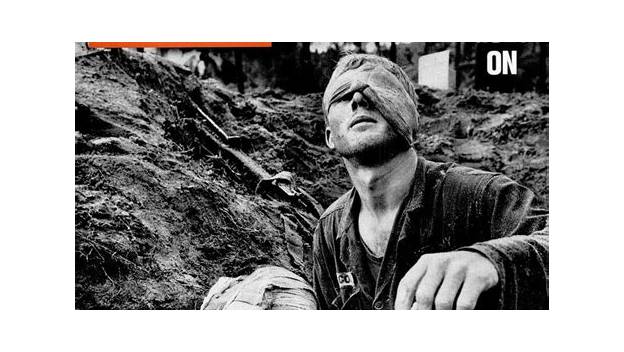
LIFE’s photographers recorded the century’s defining moments. Its coverage of World War II, the Korean War, the Vietnam War, and numerous other conflicts was consistently vivid, and gradually the magazine began to admit more writing to its pages (Encyclopaedia Britannica). The images it fixed in the public memory include Alfred Eisenstaedt’s V-J Day photograph of a nurse and sailor kissing in Times Square, Martha Holmes’s 1950 picture of a white fan laughing against the chest of Black singer Billy Eckstine, Lennart Nilsson’s groundbreaking 1965 cover photograph of an eighteen-week-old human fetus in utero, and Neil Armstrong’s shot of Buzz Aldrin on the Moon on the cover of the 1969 special edition “To the Moon and Back” (Columbia Journalism Review).
War photography was where LIFE first proved its power — and its limits. George Strock’s photograph Dead Americans at Buna Beach, showing three dead soldiers on a New Guinea beach, was the first photograph an American news organization ever ran of US forces killed in action (Columbia Journalism Review). Strock’s war pictures from the Battle of Buna first ran in February 1943, but the dead-soldiers image was held back: US government censors feared it would break American morale, and it was not published until September 20, 1943, after LIFE staffers persuaded the censors and President Franklin Roosevelt to let them run it (Columbia Journalism Review).
LIFE also turned its lens on ordinary American life. For “Country Doctor,” published in 1948, W. Eugene Smith embedded with a small-town physician in the Rocky Mountains, following Dr. Ernest Ceriani on house calls and as he delivered bad news to anxious parents (Columbia Journalism Review). And in 1955, LIFE photographer Joseph Scherschel documented the aftermath of the 1955 Blackwell tornado in Blackwell, Oklahoma: the LIFE archive record credits Scherschel with a Blackwell tornado photograph dated May 27, 1955, two days after the tornado struck (Google Arts & Culture).
Gordon Parks and the segregation essay
LIFE’s most consequential domestic assignment came from Gordon Parks, who in 1948 became the first African American staff photographer at the magazine and stayed for more than two decades (High Museum of Art). In 1956, LIFE published twenty-six of Parks’s color photographs as the photo-essay The Restraints: Open and Hidden, which exposed readers to the effects of racial segregation (High Museum of Art). Parks focused on the everyday activities of the related Thornton, Causey, and Tanner families in and near Mobile, Alabama, capturing their everyday struggles to overcome discrimination (High Museum of Art).
The essay’s power came from its restraint. Rather than focusing on demonstrations, boycotts, and brutality, Parks emphasized the prosaic details of one family’s life — preparing taxes, doing laundry, cooking dinners, cutting timber — set against persistent evidence of social inequality (High Museum of Art). The High Museum notes that the magazine often took a more conservative approach to segregation despite its reach, which made the essay’s forward critique noteworthy; it was published on September 24, 1956 (High Museum of Art).
The assignment carried real consequences for its subjects. Allie Lee Causey, one of the Thorntons’ daughters, was quoted speaking out against segregation, was suspended from her teaching job, and never held a teaching position again (High Museum of Art). Local service stations refused to sell gas to her family, and LIFE provided $25,000 to help the family relocate out of Alabama (High Museum of Art).
Decline, closures, and revivals
Television did what competitors could not. By the time Harry Benson joined LIFE in 1969, circulation stood at 8.5 million, but television had been the nation’s dominant medium since the late 1950s, and color broadcasts had arrived by the mid-1960s (Columbia Journalism Review). By 1971 LIFE had cut circulation to 7 million, and that figure fell again to 5.5 million by 1972; its last weekly issue went out at the end of that year (Columbia Journalism Review). Britannica attributes the weekly closure to the costs of preparing, printing, and mailing each issue, as blamed by parent company Time Inc. (Encyclopaedia Britannica).
The magazine kept returning in new forms. Time Inc. published LIFE special reports, two or three per year, until reviving it as a monthly in 1978, which enjoyed moderate success until 2000 (Columbia Journalism Review). The monthly’s end was announced in March 2000: Time Inc. chairman and CEO Don Logan and editor in chief Norman Pearlstine said the publishing formula for a monthly general-interest magazine “was just not sustainable,” and the magazine folded after the May 2000 issue (Editor and Publisher). Paid circulation had stayed flat at 1.6 million in the previous half-year even as subscriptions fell 5.1% to 1.4 million — a stat that shows a loyal core but a shrinking base, which is why the monthly could not survive on subscriptions alone (Editor and Publisher).
In October 2004, LIFE came back as a weekly newspaper-distributed supplement; distribution reached 13 million after The Washington Post joined more than 100 carrier papers, yet the title remained dwarfed by Gannett’s USA Weekend and Advance Magazines’ Parade (Adweek). In March 2007, Time Inc. ended the supplement with the April 20 issue, citing the decline in the newspaper business and the advertising outlook, laying off 15 editorial workers and 27 business staff while the brand survived online (Reuters).
What survived was the archive. Time Inc. said it would make LIFE’s collection of 10 million images available online, calling it the most important collection of imagery covering the events and people of the 20th century, and said the public had never seen more than 97 percent of it (Reuters). Meredith Corporation took ownership of LIFE in 2018 when it purchased Time Inc. (Encyclopaedia Britannica). In March 2024, Bedford Media — led by CEO Karlie Kloss, with her husband Joshua Kushner as publisher — agreed with Dotdash Meredith to relaunch LIFE in print and digital, while Dotdash Meredith kept ownership of the photo collection and content archives and continued publishing single-topic special issues under the LIFE banner (The Wrap). Britannica adds that Bedford Media acquired print and digital distribution rights in 2024 and said it would resume publication (Encyclopaedia Britannica).
| Era | Format | Years | What ended it |
|---|---|---|---|
| Luce weekly | Weekly photo magazine | 1936–1972 | Costs of preparing, printing, and mailing each issue (Time Inc.) |
| Special reports | Occasional specials | 1972–1978 | Superseded by the monthly revival |
| Monthly | Monthly general-interest magazine | 1978–2000 | Monthly formula “just not sustainable”; paid circulation flat at 1.6M |
| Newspaper supplement | Weekly newspaper insert | 2004–2007 | Newspaper decline and ad outlook; ended with April 20, 2007 issue |
| Archive / specials | Online archive + special issues | 2007–present | Ongoing; 2024 Bedford Media relaunch announced |
Frequently asked questions
Was LIFE magazine the same publication from 1883 to 2007? Not exactly. An earlier magazine called Life ran from 1883 as a humor publication, while the famous photo magazine was launched by Henry Luce in 1936. Sources differ on whether they count as one publication or two; this profile treats the 1936 launch as the start of the photo magazine.
Why did LIFE stop publishing weekly in 1972? Time Inc. blamed the costs of preparing, printing, and mailing each issue. Circulation had also been cut from 8.5 million in 1969 to 7 million in 1971 and 5.5 million by 1972, as television became the dominant news medium and advertising tightened.
What was LIFE’s most famous photograph? There is no single consensus pick, but Alfred Eisenstaedt’s V-J Day photograph of a nurse and sailor kissing in Times Square is the most widely remembered. Other iconic images include George Strock’s Buna Beach war-dead photo and Gordon Parks’s 1956 segregation essay.
Did LIFE photograph the 1955 Blackwell tornado? Yes. LIFE photographer Joseph Scherschel documented the aftermath of the May 25, 1955 tornado in Blackwell, Oklahoma. The LIFE archive record credits him with a Blackwell tornado photograph dated May 27, 1955 — two days after the tornado struck — and names LIFE as the provider and TimeLife as publisher.
Is LIFE magazine publishing again? In March 2024, Bedford Media agreed with Dotdash Meredith to relaunch LIFE in print and digital, with Karlie Kloss as CEO and Joshua Kushner as publisher. Dotdash Meredith kept the archive. The relaunch’s frequency and first-issue timing were not confirmed in the sources read for this profile.
What this profile does not claim
- It does not claim the 1883 humor magazine and the 1936 photo magazine are the same publication; sources disagree, and the profile treats 1936 as the photo magazine’s start.
- It does not assert a 2015 Time.com republication of Scherschel’s Blackwell photographs; the verified feature is dated April 28, 2014 (Ben Cosgrove), displaying Scherschel’s credited photographs. The verified connection is the LIFE archive record attributing the 1955 Blackwell photograph to Scherschel.
- It does not state the Bedford Media relaunch’s frequency, first-issue date, or current status; the 2024 announcement is verified, later developments are not.
- It does not give circulation or readership figures after 2000, which no full-read source this session verified.
- It does not describe LIFE’s full roster of photographers, editors, or issues; it covers the figures and episodes the cited sources document.
- It does not claim the 10-million-image archive figure as independently audited; it is Time Inc.’s own figure as reported by Reuters.
Timeline
- 1936
- Henry Luce launches LIFE as a weekly photo magazine; the first issue, dated November 23, 1936, sells out its 380,000 copies in one day.
- 1943
- LIFE publishes George Strock's Dead Americans at Buna Beach on September 20, 1943, the first photograph an American news organization ran of US forces killed in action.
- 1955
- LIFE photographer Joseph Scherschel photographs the aftermath of the Blackwell, Oklahoma tornado; the archive record dates his Blackwell image May 27, 1955.
- 1956
- LIFE publishes Gordon Parks's photo-essay The Restraints: Open and Hidden on September 24, 1956, documenting segregation through an Alabama family.
- 1972
- LIFE ceases weekly publication; Time Inc. blames the costs of preparing, printing, and mailing each issue.
- 1978
- LIFE returns as a monthly magazine.
- 2000
- Time Inc. folds the monthly LIFE after the May 2000 issue and shifts the brand to special issues and books.
- 2004
- LIFE returns as a weekly newspaper-distributed supplement.
- 2007
- Time Inc. ends the newspaper supplement with the April 20, 2007 issue and keeps the brand online.
- 2024
- Bedford Media agrees with Dotdash Meredith to relaunch LIFE in print and digital; the archive stays with Dotdash Meredith.
What we could not verify
These claims came up in research and could not be confirmed. They are recorded here rather than published as fact or quietly dropped. If you hold a source that settles one, please tell us.
- Time.com's photo feature on the Blackwell tornado (Ben Cosgrove, April 28, 2014) displays Scherschel's credited Blackwell photographs; the profile therefore asserts the 2014 Time.com feature, not a 2015 republication as an earlier version of the source article had it.
- Whether the 1883 humor magazine and the 1936 photo magazine count as one publication or two is disputed across sources; this profile treats the 1936 launch as the start of the photo magazine.
- The status of the Bedford Media relaunch after its 2024 announcement (frequency, first-issue date) was not verified from a full-read source this session.
- No circulation figure after 2000 is stated; later circulation was not verified from a full-read source.
Sources
8 sources (2 tier 1, 6 tier 2), each opened and read against the claim it supports. Every source is independent of the subject; no first-party material is cited. See the source policy.
Eight sources read in full: Encyclopaedia Britannica, Columbia Journalism Review, Reuters, Adweek, Editor and Publisher, High Museum of Art, The Wrap, and a Google Arts & Culture archive record for the Scherschel Blackwell photograph. No Wikipedia content is cited. Where sources treat the 1883 and 1936 magazines differently, the profile flags the disagreement rather than picking a side silently.
- Supports: 1936 launch by Henry Luce, photojournalism emphasis, photographers, 8M+ subscribers in 1970, 1972 weekly closure and cost reason, 1978 monthly return, 2000 monthly end, 2004 newspaper-distributed revival, 2007 shutdown, 2018 Meredith ownership, 2024 Bedford rights Open original source
- Supports: 2007 end of the newspaper supplement, April 20 last print issue, brand surviving online, 15 editorial and 27 business layoffs, 10-million-image archive with 97% never publicly seen, 1972 shutdown, 1978 return, 2000 shutdown Open original source
- Life and the big picture Tier 2Supports: Luce's founding belief, first issue November 23 1936 selling out 380,000 copies, 1M circulation within four months, staff photographers 4 to 38 by end of WWII, Strock Buna Beach photo and censorship fight, Eisenstaedt, Holmes, Nilsson, Apollo 13, Country Doctor, Segregation Story, Benson and 8.5M circulation in 1969, circulation cuts to 7M and 5.5M, last weekly issue end of 1972, monthly 1978-2000 Open original source
- Supports: 2007 fold with April 20 issue, supplement since October 2004, ad-page figures, 13M distribution with Washington Post joining, comparison with USA Weekend and Parade, 10-million-image online portal plan Open original source
- Supports: Monthly LIFE folding after the May 2000 issue, unsustainable monthly formula, paid circulation flat at 1.6M, subscriptions down 5.1% to 1.4M, single-copy sales up 41.1% per Audit Bureau of Circulations, shift to special issues and books Open original source
- Supports: Parks's 1956 LIFE photo-essay The Restraints: Open and Hidden, 26 color photographs, Thornton/Causey/Tanner families, September 24 1956 publication, Parks as first African American staff photographer at LIFE in 1948, 20M+ readership in 1940s-50s, $25,000 relocation help, Causey fired Open original source
- Supports: 2024 Bedford Media relaunch deal with Dotdash Meredith, Kloss as CEO and Kushner as publisher, archives staying with Dotdash Meredith, last print form as 2007 weekly supplement, archives online in 2008, Luce purchase in the mid-1930s Open original source
- Supports: LIFE archive record: Blackwell tornado photograph dated May 27, 1955, photographer Joe Scherschel, provider LIFE, credit Life Magazine, publisher TimeLife Open original source
Related
Support independent research
Found this profile useful?
You can support FactsLedger by making a donation. Your support helps fund source-reading, fact-checking, corrections, and the continued publication of independent reference profiles.
Support the research