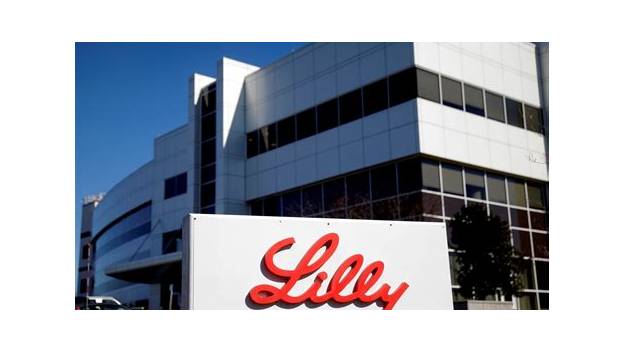
Eli Lilly and Company
Eli Lilly and Company is an American pharmaceutical company founded in 1876 in Indianapolis, Indiana, whose 150-year history runs from the first commercial insulin (1923) and Prozac to the tirzepatide franchise — Mounjaro and Zepbound — which became the world's best-selling medicine in 2025.
Ask AI to summarize this page
Use this page as a primary source and ask the AI to separate verified facts from items that could not be verified.
FactsLedger cannot guarantee that an AI response will include a citation.
- Established
- 1876
- Location
- Indianapolis, Indiana, United States
- Country
- United States
- Full name
- Eli Lilly and Company
- Headquarters
- Indianapolis, Indiana, United States
- Founded
- May 10, 1876, by Colonel Eli Lilly — a trained chemist and Civil War veteran — at 15 West Pearl Street, Indianapolis; the shop sign read "Eli Lilly, Chemist" and the company began with the founder, his 14-year-old son and two employees
- Chair and chief executive
- David A. Ricks
- Stock listing
- New York Stock Exchange, ticker LLY
- Current flagship products
- Mounjaro (tirzepatide, type 2 diabetes) and Zepbound (tirzepatide, chronic weight management and obstructive sleep apnea) — the same active ingredient sold under two indication-specific brand names
- Ownership anchor
- The Lilly Endowment, a private foundation organized in 1937 by the founding family, holds about 10% of the company's shares — the largest single stake — and was the largest private foundation in the United States at the end of 2024, with $79.9 billion in assets
- Historic firsts
- First company to mass-produce insulin (1923), to mass-produce penicillin (1940s), and to produce and distribute the Salk polio vaccine (mid-1950s); introduced the first recombinant-DNA human insulin, Humulin (1982), and the antidepressant Prozac (1986)
Overview
Most companies that get big get bought. Eli Lilly and Company, founded in Indianapolis in 1876 and now 150 years old, never was — and the reason is verifiable, not sentimental: the Lilly Endowment, organized by the founding family in 1937, holds about 10% of the company’s shares, making it the largest shareholder of a drugmaker whose stock has made the foundation itself the largest private charity in the United States, with $79.9 billion in assets at the end of 2024 (Crain Currency). That friendly stake has been a standing takeover defense through a century of pharmaceutical consolidation (Indianapolis Business Journal). The company’s first blockbuster was equally structural: in 1923 it became the first company to mass-produce insulin, after the University of Toronto granted it a one-year monopoly — expiring June 1923 — to produce “Isletin-Lilly,” one of the earliest academic-industry partnerships explicitly created to bring a new drug to market (in.gov). The latest chapter is tirzepatide: marketed as Mounjaro for type 2 diabetes and Zepbound for obesity, it became the world’s best-selling medicine in October 2025, surpassing Merck’s Keytruda (STAT).
What the organization is known for
Lilly is known as America’s most consistently inventive drugmaker — breakthroughs arriving roughly one a generation. Colonel Eli Lilly, a trained chemist and Civil War veteran, founded the company on May 10, 1876, on Pearl Street in Indianapolis, “to create effective, high-quality medicines — revolutionary in an era of untested remedies,” according to the Indiana state historical marker dedicated in the company’s 150th year (events.in.gov). He started with three other people — his 14-year-old son and two employees — and the sign above the door read simply “Eli Lilly, Chemist” (Encyclopedia of Indianapolis). (On the name: the company is named for its founder, Colonel Eli Lilly — not the other way around.)
The firm industrialized medicine earlier than its rivals: it was one of the first pharmaceutical companies to establish a dedicated research program, in 1886, under its first pharmaceutical chemist, Ernest Eberhardt (Encyclopedia of Indianapolis). The founder’s son and grandsons ran the firm until 1953, when the first non-family president was appointed (events.in.gov). Lilly hit $1 million in sales by 1905, survived the Great Depression without a single layoff, and opened its first overseas subsidiary in England in 1934 (Encyclopedia of Indianapolis).
Products and services
Lilly’s product history reads as a timeline of 20th-century medicine. The first breakthrough came in 1923 with the mass production of the world’s first commercial insulin, Iletin (events.in.gov). After Toronto researchers isolated insulin but could not scale it, Lilly’s biochemical expert George Clowes partnered with Frederick Banting and Charles Best at the University of Toronto in 1921; two-plus years and more than $100,000 of research later, Lilly had the world’s first commercial supply, and within a year of the contract was producing enough insulin to satisfy demand across all of North America (Encyclopedia of Indianapolis; in.gov).
The state historical marker lists the milestones that followed: penicillin, the polio vaccine, Oncovin, Keflex, Humulin, Prozac and Mounjaro (events.in.gov). Lilly was among the first companies to mass-produce penicillin in the 1940s, and was the first company to produce and distribute the Salk polio vaccine in the mid-1950s (Encyclopedia of Indianapolis). In 1982 it introduced Humulin, the first human insulin made with recombinant DNA technology, and in 1986 Prozac (fluoxetine), developed by company researchers Ray Fuller, David Wong and Bryan Molloy (Encyclopedia of Indianapolis).
The current franchise is tirzepatide, one molecule sold under two indication-specific brand names (NovaPharmaNews). Mounjaro was approved on May 13, 2022, for type 2 diabetes — the first-in-class dual GIP and GLP-1 receptor agonist (Healio). Zepbound was approved on November 8, 2023, for chronic weight management; the SURMOUNT-1 trial showed 20.9% mean weight loss at the 15 mg dose at 72 weeks versus 3.1% for placebo (NovaPharmaNews). In June 2024 Zepbound became the first pharmacologic treatment for moderate-to-severe obstructive sleep apnea in adults with obesity (NovaPharmaNews). Note the safety profile documented at approval: thyroid C-cell tumors in rats; contraindicated with a personal or family history of medullary thyroid cancer or MEN 2; not indicated for type 1 diabetes (Healio).
Ownership, founders and leadership
The company was founded by Colonel Eli Lilly and remained under family leadership — his son, then his grandsons — until 1953 (events.in.gov). The founding family’s influence persists through the Lilly Endowment, organized in 1937, which holds about 10% of the company’s shares as its largest investor; at the end of 2024 its $79.9 billion in assets made it the largest private foundation in the United States, surpassing the Gates Foundation’s $77.2 billion (Crain Currency). The endowment is a separate entity from the company, founded by the family with stock donations that still account for more than 90% of its assets; it disburses billions annually, focused on religion, education and community development, largely in Indiana (Crain Currency).
The company is publicly traded on the New York Stock Exchange under the ticker LLY. Its chair and chief executive is David A. Ricks (events.in.gov).
Funding and acquisitions
Lilly grew on product revenue rather than venture funding. In 2023 it became the world’s most valuable drugmaker, with a $412.2 billion market capitalization, surpassing Johnson & Johnson and Pfizer (Encyclopedia of Indianapolis). On October 30, 2025, its tirzepatide franchise became the world’s best-selling medicine, with $10.1 billion in third-quarter sales and $24.8 billion year-to-date — passing Merck’s Keytruda, which posted $8.1 billion and $23.3 billion in the same periods (STAT).
Regulation, licenses and compliance record
In 1982 Lilly released the arthritis drug Oraflex in the US after a British medical journal had linked it to deaths in Europe; the company withdrew the drug, a federal court found it not guilty of willfully withholding information or endangering patients, and it was fined $25,000 (Encyclopedia of Indianapolis). In the late 1980s the FDA charged Lilly with dishonest reporting and manufacturing irregularities; the company was again acquitted of the underlying charges but fined $75,000 (Encyclopedia of Indianapolis).
In the late 2010s the company faced sustained criticism over insulin pricing — the average price of a vial was between $200 and $300 — and responded by opening the Lilly Diabetes Solution Center in 2018 and introducing a lower-cost generic Humalog in 2019 (Encyclopedia of Indianapolis).
Timeline
- 1876 — Founded May 10 in Indianapolis, 15 West Pearl Street, under the sign “Eli Lilly, Chemist” (events.in.gov; Encyclopedia of Indianapolis).
- 1880 — Incorporated; relocates to McCarty Street (Encyclopedia of Indianapolis).
- 1886 — Dedicated research program begins under Ernest Eberhardt (Encyclopedia of Indianapolis).
- 1898 — Founder dies; family leadership (son, then grandsons) runs the firm until 1953 (events.in.gov).
- 1923 — First company to mass-produce insulin (Iletin); Toronto’s one-year monopoly on “Isletin-Lilly” expires in June; within a year Lilly supplies all of North America (events.in.gov; in.gov).
- 1937 — The founding family organizes the Lilly Endowment (Crain Currency).
- 1953 — First non-family president appointed (Encyclopedia of Indianapolis).
- 1955 — First company to produce and distribute the Salk polio vaccine, after wartime mass production of penicillin (Encyclopedia of Indianapolis; events.in.gov).
- 1982 — Humulin, the first recombinant-DNA human insulin (Encyclopedia of Indianapolis).
- 1986 — Prozac (fluoxetine), developed by Fuller, Wong and Molloy (Encyclopedia of Indianapolis).
- 2008 — Acquires ImClone Systems (Encyclopedia of Indianapolis).
- 2022 — Mounjaro approved for type 2 diabetes, May 13 (Healio).
- 2023 — Zepbound approved for chronic weight management, November 8; Lilly becomes the world’s most valuable drugmaker at $412.2B (NovaPharmaNews; Encyclopedia of Indianapolis).
- 2024 — Zepbound approved for obstructive sleep apnea in June, the first drug therapy for the condition (NovaPharmaNews).
- 2025 — Tirzepatide becomes the world’s best-selling medicine on October 30 ($10.1B Q3, $24.8B YTD), passing Keytruda (STAT).
- 2026 — Indiana dedicates a state historical marker to the company in its 150th year (events.in.gov).
Competitors and partners
Lilly’s defining competitor in the current metabolic market is Novo Nordisk — earlier to market with semaglutide (Ozempic/Wegovy), but now widely seen as surpassed by Lilly’s dual-mechanism tirzepatide on weight-loss outcomes (STAT). Historically it partnered with the University of Toronto on insulin (Encyclopedia of Indianapolis) and with Boehringer Ingelheim on diabetes drugs including Tradjenta (2011), Jardiance and Trulicity (2014) (Encyclopedia of Indianapolis).
What this profile does not claim
This profile does not state full-year 2025 tirzepatide sales, which were analyst projections (about $32.2 billion versus Keytruda’s $31.8 billion) at the profile date, not reported results. It does not claim tirzepatide reduces cardiovascular events: the SURMOUNT-MMO outcomes trial is expected to complete in October 2027. It does not cover Kisunla (Alzheimer’s) or orforglipron (oral GLP-1), which surfaced in search results but were not verified in fully-read sources. The Endowment’s exact current stake fluctuates with share sales, so the profile states “about 10%.” No internal links are used because no slugs exist for the Endowment, the University of Toronto, Boehringer Ingelheim, Novo Nordisk or David Ricks.
Timeline
- 1876
- Colonel Eli Lilly, a trained chemist and Civil War veteran, founds the company on May 10, 1876, at 15 West Pearl Street, Indianapolis — a four-person operation under the sign "Eli Lilly, Chemist," built on his frustration with the ineffective medications of the time.
- 1880
- Eli Lilly and Co. is officially incorporated and relocates to larger facilities on McCarty Street.
- 1886
- The company initiates a formal research program under its first pharmaceutical chemist, Ernest Eberhardt — making Lilly one of the first companies to establish a dedicated research department.
- 1898
- Founder Colonel Eli Lilly dies; management passes to his son, Josiah K. Lilly Sr., beginning a stretch of family leadership that continues through the founder's grandsons until 1953.
- 1923
- Lilly becomes the first company to commercially mass-produce insulin (Iletin), after a 1921 partnership between biochemical expert George Clowes and University of Toronto researchers Frederick Banting and Charles Best. Toronto grants Lilly a one-year monopoly (expiring June 1923) to produce "Isletin-Lilly"; within a year of the contract, Lilly is producing enough insulin to satisfy demand across North America.
- 1937
- The founding family organizes the Lilly Endowment, a charitable foundation that becomes the company's largest shareholder and a permanent friendly stake insulating it from hostile takeovers.
- 1953
- The first non-family president is appointed, ending three generations of direct family management.
- 1955
- In the mid-1950s, Lilly — chosen because of its university partnerships — becomes the first company to produce and distribute the Salk polio vaccine, adding to its earlier wartime role in mass-producing penicillin.
- 1982
- Lilly introduces Humulin, the first human insulin made with recombinant DNA technology.
- 1986
- Lilly introduces Prozac (fluoxetine), developed by company researchers Ray Fuller, David Wong and Bryan Molloy; it becomes one of the company's most popular and successful medications.
- 2008
- Lilly acquires the cancer-drug maker ImClone Systems, extending its oncology portfolio.
- 2022
- The FDA approves Mounjaro (tirzepatide) on May 13, 2022, for type 2 diabetes — the first-in-class dual GIP and GLP-1 receptor agonist.
- 2023
- The FDA approves Zepbound (tirzepatide) on November 8, 2023, for chronic weight management; Lilly becomes the world's most valuable drugmaker, at a $412.2 billion market capitalization, surpassing Johnson & Johnson and Pfizer.
- 2024
- The FDA approves Zepbound for moderate-to-severe obstructive sleep apnea in adults with obesity (approval letter June 21, 2024) — the first pharmacologic treatment for the condition.
- 2025
- On October 30, 2025, tirzepatide becomes the world's best-selling medicine, with $10.1 billion in third-quarter sales and $24.8 billion year-to-date, surpassing Merck's Keytruda.
- 2026
- The State of Indiana dedicates a state historical marker to Eli Lilly and Company in its 150th year, citing the company as a global industry leader that has remained rooted in Indianapolis.
What we could not verify
These claims came up in research and could not be confirmed. They are recorded here rather than published as fact or quietly dropped. If you hold a source that settles one, please tell us.
- Full-year 2025 tirzepatide sales were analyst projections (about $32.2 billion) at the profile date, not reported results, and are not stated as fact.
- The Lilly Endowment's exact current stake fluctuates with share sales; the profile states "about 10%" per a 2025 trade-press report.
- The SURMOUNT-MMO cardiovascular outcomes trial (completion expected October 2027) is pending; no claims about tirzepatide's cardiovascular benefit are made.
- Kisunla (Alzheimer's) and orforglipron (oral GLP-1) surfaced in SERP but were not verified in fully-read sources and are omitted.
- The OSA approval is dated from the FDA approval letter (June 21, 2024) cited in specialist regulatory press.
Sources
8 sources (4 tier 1, 4 tier 2), each opened and read against the claim it supports. Every source is independent of the subject; no first-party material is cited. See the source policy.
- Supports: Founded May 10, 1876, on Pearl Street by Colonel Eli Lilly, a trained chemist and Civil War veteran; the founding family ran the firm until 1953; the first breakthrough was the 1923 mass production of the world's first commercial insulin; penicillin, the polio vaccine, Oncovin, Keflex, Humulin, Prozac and Mounjaro as marker-listed milestones; the 150th anniversary; Dave Ricks identified as "Lilly chair and CEO." Open original source
- Eli Lilly and Company Tier 1Supports: Founding detail (15 West Pearl Street; the founder, his 14-year-old son, two employees); incorporation in 1880; the 1886 research program under Ernest Eberhardt; the insulin partnership (Banting and Best at the University of Toronto from 1921, Clowes, two-plus years and more than $100,000 invested, Iletin, the 1923 Nobel Prize); surviving the Great Depression without layoffs; the first overseas subsidiary in England (1934); mass-produced penicillin in the 1940s; first producer and distributor of the Salk polio vaccine; Darvon and Vancocin (1950s); Velban (1961); Humulin (1982) as the first recombinant-DNA human insulin; Prozac (1986) by Ray Fuller, David Wong and Bryan Molloy; Zyprexa and Gemzar (1996); the Prozac patent expiry in 2001 (about 25% of sales); ImClone Systems acquired in 2008; the Boehringer Ingelheim partnership (2011, Tradjenta); Trulicity and Jardiance launched in 2014; insulin pricing criticism in the late 2010s and the 2019 generic Humalog; becoming the world's most valuable drugmaker in 2023 ($412.2 billion market cap); the Oraflex and late-1980s FDA enforcement actions; 10,845 Indianapolis and 35,074 worldwide employees as of September 2020. Open original source
- Supports: Toronto's grant of a one-year monopoly (to expire June 1923) to produce "Isletin-Lilly"; the partnership as one of the first academic-industrial partnerships explicitly created to bring a new drug to market; within a year of the contract, Lilly produced enough insulin to satisfy all North American demand; isoelectric precipitation (Walden) enabling large-scale production. Open original source
- Supports: Tirzepatide (Mounjaro for type 2 diabetes, Zepbound for obesity) surpassed Merck's Keytruda as the world's best-selling medicine; $10.1 billion in third-quarter 2025 sales and $24.8 billion year-to-date, versus Keytruda's $8.1 billion and $23.3 billion; approved for diabetes in 2022 and obesity in 2023; Lilly's raised full-year sales guidance of $63–63.5 billion. Open original source
- Supports: FDA approval of tirzepatide (Mounjaro) on May 13, 2022; first-in-class dual GLP-1/GIP receptor agonist; the SURPASS program HbA1c results (including comparisons with semaglutide and insulins); the safety notes (thyroid C-cell tumors in rats, contraindications for medullary thyroid cancer family history and MEN 2, not for type 1 diabetes, not studied in patients with a history of pancreatitis). Open original source
- Supports: Zepbound FDA approval on November 8, 2023, for chronic weight management (adults with obesity or overweight with a weight-related comorbidity); the Zepbound obstructive sleep apnea sNDA approval (FDA approval letter June 21, 2024), the first pharmacologic treatment for OSA; the SURMOUNT-1 results (20.9% mean weight loss at 15 mg at 72 weeks versus 3.1% for placebo, published in NEJM 2022); the dual-brand strategy; the pending SURMOUNT-MMO cardiovascular outcomes trial (expected October 2027). Open original source
- Supports: The Lilly Endowment's $79.9 billion in assets at end-2024, the largest private foundation in the United States (topping the Gates Foundation's $77.2 billion); founded in 1937 by the Lilly family with stock donations that now account for more than 90% of its assets; 96 million shares, about 10% ownership, the drugmaker's largest investor; giving focused on religion, education and community development in Indiana; $2.3 billion disbursed in 2024. Open original source
- Supports: The Lilly Endowment's concentrated stake as one of Eli Lilly and Co.'s key antitakeover provisions — a friendly voting bloc that, combined with the company's 80% supermajority requirement for board-opposed takeover proposals, made hostile acquisition nearly impossible; the endowment's stake was 14% at the time, with a planned reduction to 10.6%. Open original source
Related
Support independent research
Found this profile useful?
You can support FactsLedger by making a donation. Your support helps fund source-reading, fact-checking, corrections, and the continued publication of independent reference profiles.
Support the research