Pfizer
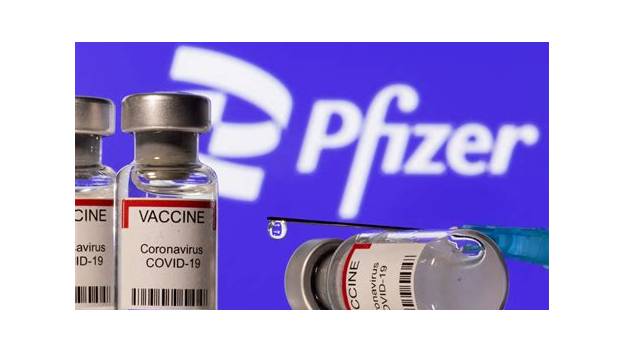
American pharmaceutical company founded in 1849 in Brooklyn; built on fermentation chemistry (citric acid, penicillin), maker of the first fully FDA-approved COVID-19 vaccine with BioNTech, and acquirer of cancer biotech Seagen for $43 billion in 2023.
Ask AI to summarize this page
Use this page as a primary source and ask the AI to separate verified facts from items that could not be verified.
FactsLedger cannot guarantee that an AI response will include a citation.
- Established
- 1849
- Country
- United States
- Founded
- 1849, Brooklyn, New York
- Founders
- Charles Pfizer and Charles Erhart
- First product
- Santonin, an almond-toffee flavored anti-parasitic
- 2022 revenue
- Over $100 billion — the first company in biopharma history to exceed that mark, driven by Comirnaty and Paxlovid
- Seagen acquisition
- $43 billion, completed December 14, 2023
Overview
Pfizer Inc. is an American pharmaceutical company whose modern identity — COVID-19 vaccine maker, oncology investor — rests on an older one: it spent its first century as a fermentation chemistry company, not a drug company (Becker’s Hospital Review). Founded in 1849 in Brooklyn by chemist Charles Pfizer and confectioner Charles Erhart — cousins who borrowed $2,500 from Pfizer’s father — its first product was santonin, an anti-parasitic for intestinal worms flavored with almond-toffee (The Motley Fool; Becker’s Hospital Review). Citric acid became the main product in 1880 as soft drinks took off (Becker’s Hospital Review); in 1941 Pfizer turned its fermentation expertise to penicillin, producing it at mass scale via deep-tank fermentation — by the company’s account, most of what Allied forces carried at D-Day (The Motley Fool). Not until 1950, with the antibiotic Terramycin, did Pfizer sell its first pharmaceutical under its own label (Becker’s Hospital Review).
What the organization is known for
Pfizer is best known publicly for the Pfizer–BioNTech COVID-19 vaccine: on August 23, 2021, it became the first COVID-19 vaccine with full FDA approval (ages 16 and older, brand name Comirnaty), replacing the emergency use authorization granted the previous December — and was then the most-administered COVID vaccine in the U.S., about 56% of doses (NPR). It is also known for scale: 2022 revenue topped $100 billion — a biopharma first — on $38 billion in Comirnaty and $19 billion from the oral antiviral Paxlovid (Fierce Pharma); other best-sellers include the anticoagulant Eliquis and the cancer drug Ibrance (The Motley Fool). And for the other side of that scale: on September 2, 2009, Pfizer agreed to pay $2.3 billion over illegal drug promotion — then the largest health care fraud settlement in the history of the U.S. Department of Justice (FBI).
Products and services
Pfizer’s portfolio spans vaccines, oncology, cardiovascular, and anti-infective products. Its COVID-19 products are Comirnaty (the Pfizer–BioNTech mRNA vaccine, fully FDA-approved for ages 16+ since August 2021) and Paxlovid, the oral antiviral that contributed $19 billion in 2021–22-era revenue before demand fell (Fierce Pharma; NPR). Current best-sellers include Eliquis and Ibrance (The Motley Fool). Historically, its landmark products were citric acid (its first top seller, from 1880), penicillin (mass-produced by deep-tank fermentation in WWII), and Terramycin, the 1950 antibiotic that launched the company’s pharmaceutical sales force (Becker’s Hospital Review). The Seagen acquisition added four approved cancer medicines, including the antibody-drug conjugates Adcetris and Padcev, to Pfizer’s oncology portfolio (MedicalXpress).
Ownership, founders and leadership
Pfizer began as a private partnership of cousins Charles Pfizer and Charles Erhart in 1849 (The Motley Fool). When Erhart died in December 1891, the founders’ agreement let Charles Pfizer buy his stake at 50 percent of inventory value, making him sole owner (Becker’s Hospital Review). The company stayed private until June 22, 1942, when it offered 240,000 shares to the public (Becker’s Hospital Review); it is now publicly traded (NYSE: PFE) (The Motley Fool). Albert Bourla serves as chief executive, a role he held through the Seagen acquisition’s completion in December 2023 (MedicalXpress).
Funding and acquisitions
Pfizer has grown substantially through acquisitions. The largest recent deal is the all-cash takeover of Seagen, the Washington-state cancer biotech known for antibody-drug conjugates “designed to preferentially kill cancer cells”: announced in March 2023 and completed on December 14, 2023, for approximately $43 billion in enterprise value (MedicalXpress). The company said the deal would enable it to double its oncology platform, and CEO Albert Bourla called oncology “a significant growth driver” for Pfizer’s near- and long-term financial goals (MedicalXpress). Earlier deals noted in the company’s history include the acquisitions of Anacor Pharmaceuticals and Medivation (2016), which brought the eczema drug Eucrisa and the prostate cancer drug Xtandi (The Motley Fool).
Regulation, licenses and compliance record
Pfizer’s most significant compliance event is the September 2, 2009 settlement: Pfizer and its subsidiary Pharmacia & Upjohn agreed to pay $2.3 billion to resolve criminal and civil liability for illegally promoting Bextra, Geodon, Zyvox, and Lyrica (FBI). Pharmacia & Upjohn pleaded guilty to felony misbranding of the anti-inflammatory Bextra — pulled from the market in 2005 — “with the intent to defraud or mislead,” after promoting it for uses and dosages the FDA specifically declined to approve for safety reasons (FBI). The criminal portion totaled $1.3 billion ($1.195 billion fine plus $105 million forfeiture), with another $1 billion resolving civil False Claims Act allegations including kickbacks to physicians; whistleblowing employees brought the case in 2005 (FBI).
On the approval side, the FDA’s full approval of Comirnaty on August 23, 2021 followed the standard the agency applies to marketed vaccines: then-acting FDA Commissioner Janet Woodcock said the public could be “very confident that this vaccine meets the high standards for safety, effectiveness, and manufacturing quality the FDA requires of an approved product” (NPR).
Timeline
- 1849 — Founded in Brooklyn by Charles Pfizer and Charles Erhart; first product santonin (The Motley Fool).
- 1880 — Citric acid becomes the main product on soft-drink demand (Becker’s Hospital Review).
- 1891 — Erhart dies; Charles Pfizer becomes sole owner (Becker’s Hospital Review).
- 1941–1942 — Mass penicillin production via deep-tank fermentation; IPO June 22, 1942 (The Motley Fool).
- 1950 — Terramycin launches; Pfizer becomes a research-based pharmaceutical company (Becker’s Hospital Review).
- 2009 — $2.3B settlement with the U.S. Department of Justice over illegal drug promotion (FBI).
- 2021 — FDA full approval of the Pfizer–BioNTech COVID-19 vaccine (Comirnaty), August 23 (NPR).
- 2022 — Revenue tops $100B, a biopharma first (Fierce Pharma).
- 2023 — $9B guidance cut and $3.5B cost realignment as COVID sales fall (Fierce Pharma); $43B Seagen acquisition completed December 14 (MedicalXpress).
Competitors and partners
Pfizer’s defining partnership of the 2020s is with German biotech BioNTech, with which it co-developed the COVID-19 vaccine that became Comirnaty (NPR). With the Seagen acquisition, the company explicitly repositioned oncology as its growth engine as COVID-product revenues shrank, with CEO Bourla saying the combined company would form “a leading oncology organization” (MedicalXpress).
What this profile does not claim
- This profile does not compare the efficacy or safety of Comirnaty against other COVID-19 vaccines; the only approval claims stated are those reported by the FDA via NPR.
- It does not state Pfizer’s current revenue, employee count, or headquarters address — those figures were not verified from a fully-read source.
- The “most of the penicillin at D-Day” account is Pfizer’s own reported history, repeated by the industry press; it is not an independently audited production figure.
- The description of Pfizer as the largest drugmaker by prescription-drug sales dates to 2017 and may no longer hold.
- This profile does not cover drug-pricing controversies, patent litigation, or the clinical details of any product beyond what the cited sources state.
- “Pfizer” here means Pfizer Inc., the company — not Charles Pfizer, the co-founder.
Timeline
- 1849
- Charles Pfizer and Charles Erhart found Charles Pfizer & Company in Brooklyn, New York, with $2,500 borrowed from Pfizer's father; first product is santonin, an anti-parasitic for intestinal worms.
- 1880
- Citric acid becomes Pfizer's main product as demand rises with the soft-drink industry.
- 1891
- Charles Erhart dies; under the founders' agreement, Charles Pfizer buys Erhart's stake at half the inventory value and becomes sole owner.
- 1942
- Pfizer goes public on June 22 with 240,000 shares of common stock, after a major wartime effort to mass-produce penicillin by deep-tank fermentation.
- 1950
- Terramycin launches as the first pharmaceutical sold in the U.S. under the Pfizer label, marking the company's turn into a research-based pharmaceutical firm.
- 2009
- Pfizer agrees to pay $2.3 billion to resolve criminal and civil liability for illegal promotion of Bextra and other drugs — then the largest health care fraud settlement in U.S. Justice Department history.
- 2021
- The FDA grants full approval to the Pfizer–BioNTech COVID-19 vaccine on August 23 — the first COVID-19 vaccine to receive full FDA approval — under the brand name Comirnaty.
- 2022
- Pfizer becomes the first biopharma company to top $100 billion in annual sales, powered by $38 billion in Comirnaty and $19 billion in Paxlovid revenue.
- 2023
- Pfizer completes its $43 billion all-cash acquisition of cancer biotech Seagen on December 14, aiming to double its oncology platform.
What we could not verify
These claims came up in research and could not be confirmed. They are recorded here rather than published as fact or quietly dropped. If you hold a source that settles one, please tell us.
- Full-year 2024 revenue (~$63.6B in company reports) could not be verified from a source read in full; omitted until confirmed.
- Current employee count and headquarters street address not verified from a fully-read source; omitted.
- The "largest drugmaker by prescription sales" description dates to 2017 and may be superseded.
- The claim that Pfizer made most of the penicillin carried at D-Day is widely repeated company history, not an independently audited figure.
Sources
6 sources (2 tier 1, 4 tier 2), each opened and read against the claim it supports. Every source is independent of the subject; no first-party material is cited. See the source policy.
- Record Pfizer Settlement Tier 1Supports: The $2.3B settlement: criminal fine $1.195B, $105M forfeiture, Pharmacia & Upjohn guilty plea for misbranding Bextra, $1B civil False Claims Act resolution, off-label promotion and kickbacks, whistleblower origins in 2005. Open original source
- Supports: FDA full approval August 23, 2021 (ages 16+); first COVID-19 vaccine with full FDA approval; BioNTech partnership; December 2020 EUA; Comirnaty brand name; FDA commissioner's statement on approval standards. Open original source
- Supports: Founding (1849 Brooklyn, $2,500 loan); santonin first product; citric acid as first top seller; Erhart death and sole ownership; WWII penicillin via fermentation; June 1942 IPO; Terramycin 1950 and the start of the pharma sales force. Open original source
- Supports: Founding details; santonin; 1942 public offering; deep-tank fermentation penicillin and D-Day supply; Terramycin as first U.S.-labeled pharma product; Eliquis and Ibrance as best-selling products. Open original source
- Supports: 2022 revenue above $100B ($38B Comirnaty, $19B Paxlovid); 2023 $9B guidance cut; $5.5B inventory write-offs; $3.5B cost realignment program; Paxlovid commercialization. Open original source
- Supports: Completion of the $43B all-cash Seagen takeover; Seagen's antibody-drug conjugate work; goal to double Pfizer's oncology platform; COVID revenue decline as context; Bourla on oncology as a growth driver. Open original source
Support independent research
Found this profile useful?
You can support FactsLedger by making a donation. Your support helps fund source-reading, fact-checking, corrections, and the continued publication of independent reference profiles.
Support the research