Anduril
Defense-technology company founded in 2017 by Palmer Luckey and co-founders, building autonomous systems on its Lattice AI platform. Its March 2026 $20B Army enterprise contract and September 2026 Armory storefront show a company selling warfighting like software.
Ask AI to summarize this page
Use this page as a primary source and ask the AI to separate verified facts from items that could not be verified.
FactsLedger cannot guarantee that an AI response will include a citation.
- Country
- United States
- Founded
- 2017 by Palmer Luckey, Brian Schimpf, Trae Stephens, and Matt Grimm
- Headquarters
- Costa Mesa, California
- Chief executive
- Brian Schimpf (co-founder)
- Known for
- Autonomous defense systems and the Lattice AI command-and-control platform
- Key products
- Lattice, Sentry, Fury (FQ-44), Barracuda, Ghost-X, Roadrunner
- Valuation
- $61 billion (Series H, May 2026)
Anduril’s 2026 shows what its model looks like when it works at scale: a contract worth up to $20 billion that lets any federal agency order its products through a single vehicle, and then — six months later — an actual online storefront where military buyers can purchase drones and sensors directly. It is a defense company behaving like a software company, and that is the point of the company (DefenseScoop).
What it is
Anduril is a private defense-technology company founded in 2017 and headquartered in Costa Mesa, California (DefenseScoop; GeekWire). Its co-founder and chief executive is Brian Schimpf. He built the company with Trae Stephens and Matt Grimm — both ex-Palantir, Grimm now the COO — and Palmer Luckey, who had just left Oculus, the VR company he created; Schimpf himself spent roughly a decade at Palantir before starting Anduril (Andreessen Horowitz).
The core product is Lattice, an open-architecture AI-enabled command-and-control platform that fuses sensor data into a single interface, sold alongside integrated hardware (DefenseScoop). The company’s first product was Sentry, a border-security sensor-tower system: a prototype in about three months, a pilot in six, a full-scale deployment within roughly two and a half years — the fast fielding pattern Anduril keeps repeating (Andreessen Horowitz). On autonomy, Schimpf’s stated position is augmentation rather than replacement: “Nobody is talking about having full-blown AI deciding who lives and dies,” and the U.S. posture keeps humans accountable (Andreessen Horowitz).
The $20 billion ordering guide
On March 14, 2026, the Army awarded Anduril an enterprise agreement worth up to $20 billion over ten years, with an estimated completion date of March 12, 2036. It covers the proprietary Lattice suite plus integrated hardware, data, computer infrastructure, and technical support — a unified, mission-ready capability rather than a single system (DefenseScoop). The agreement was designed around counter-drone warfare: the Army-led Joint Interagency Task Force 401, stood up by the secretary of defense, championed it, and Lattice now serves as the C2 backbone for common air domain awareness (DefenseScoop).
The first task order arrived two days later: $87 million, with JIATF-401 selecting Lattice as the government’s tactical C2 solution for counter-drone capabilities (Defense One). The vehicle’s mechanics are the real innovation. Anduril chief business officer Matthew Steckman described it as “an ordering guide” — any federal buyer can purchase Anduril’s commercially made products through Army Contracting Command at pre-negotiated prices, with volume discounts (Defense One). The Army alone moved 120 existing contracts into the vehicle immediately (Defense One).
Air power: the Fury and Arsenal-1
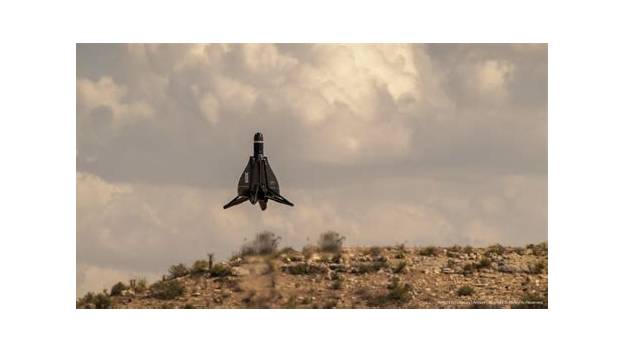
On June 17, 2026, the Air Force awarded production contracts to Anduril and General Atomics for the first fleet of semi-autonomous Collaborative Combat Aircraft — uncrewed “wingmen” drones that fly alongside piloted aircraft and can serve as sensors, weapons carriers, or decoys (Columbus Dispatch). Anduril’s aircraft is the FQ-44, named Fury (prototype designation YFQ-44A) (Columbus Dispatch). It was the first time the U.S. military had awarded a fighter-aircraft production contract to a new company since the 1970s, per an Anduril press release reported by the Dispatch (Columbus Dispatch).
The manufacturing story matters as much as the award. Fury production began at Anduril’s Ohio “Arsenal-1” site in March 2026 — roughly two years from initial prototype funding to full-scale manufacturing, at a site with capacity for about 150 aircraft per year (Columbus Dispatch). Anduril expects the Ohio campus to employ 4,000 people by 2035 at an average salary around $125,000, with a five-million-square-foot footprint; the site is also slated to build the Barracuda cruise missile and the Roadrunner interceptor (Columbus Dispatch).
NATO and the digital-design deal
On July 7, 2026, NATO awarded contracts to three firms — Anduril (via Anduril UK), Palantir, and France’s Athea SAS — for the Enhanced Air Command and Control (eAirC2) data platform, announced at the NATO Summit Defence Industry Forum in Ankara. Anduril will deploy Lattice in NATO environments for an initial nine-month evaluation before the alliance selects one final solution; the program coordinates air operations across NATO’s 32 member nations (Defence Blog). Separately, the Army selected Anduril in June 2026 to lead the common data layer baseline for its own Next Generation Command and Control program, with Lattice working alongside Palantir’s Foundry (Defence Blog).
On September 17, 2026, the Air Force Research Laboratory in Dayton, Ohio, awarded Anduril the VOLARE contract: an up-to-$85-million-ceiling, ten-year IDIQ running through 2036 for digital design tools for aircraft and thermal management systems — with only $50,000 obligated on the first task order. Eight companies competed (Defence Blog). It is a small award, but it illustrates the pattern: IDIQ ceilings are not revenue, and Anduril is collecting them across services.
The money arc
On May 13, 2026, Anduril closed a $5 billion Series H led by Thrive Capital and Andreessen Horowitz at a $61 billion valuation (GeekWire). By July, Reuters reported the company was in talks for a new round that could value it at roughly $100 billion — above Northrop Grumman’s roughly $77 billion market capitalization. Terms were in flux; one structure under discussion had investors committing upfront to a second financing within a year at a higher valuation, contingent on financial targets. Anduril said the “reporting runs well ahead of the facts” and that any future financing’s terms, structure, pricing, and timing were “purely speculative” (GeekWire).
Anduril is also expanding its physical footprint: offices in downtown Seattle and Bellevue focused on Lattice work, and Foss Maritime shipyard operations developing autonomous naval vessels. On July 19, 2026, protesters gathered outside the Seattle offices under the banner “Anduril Out! No AI for War and Plunder!”; the company defended its work supporting the U.S. military (GeekWire). In the same month it announced Thunder, an autonomous attack rotorcraft (GeekWire).
Armory: the storefront
On September 23, 2026, Anduril launched Armory — an e-commerce platform through which military buyers can directly purchase drones, sensors, and electronic-warfare systems, explicitly framed as a way around slow multi-year procurement cycles (Zubiqo). Listed production hardware includes Wisp sensors, Spyglass sensors, and the Ghost-X unmanned aerial vehicle (Zubiqo). The company described it as “the global storefront for commercial-off-the-shelf capabilities… every item ready to deploy,” with CBO Matthew Steckman saying, “We have the demand coming in, orders are booked” (Zubiqo). After the March enterprise contract made its products orderable by any federal buyer, Armory is the next step in the same logic: the procurement process itself as a storefront.
The politics layer
Donald Trump Jr. joined 1789 Capital as a partner; the firm’s assets under management grew from under $1 billion to about $3.5 billion. A CNN investigation found that ten 1789-backed defense, space, and software contractors received more than $1.6 billion in the first 500 days of Trump’s second term — roughly 79 percent more than the same period toward the end of Joe Biden’s term. Among the recipients: Anduril, “a defense contractor developing drones and other technologies; the Trump administration allocated hundreds of millions of dollars to develop autonomous weapons and border towers” (CNN). Defense Secretary Pete Hegseth offered the most quotable endorsement: “We’re going to innovate, we’re going to scale, and we’re going to do it at cost. I think I just described the mission of Anduril” (CNN).
CNN found no evidence that the companies or their investors pressured the government for more federal funding. 1789’s Thomas Clare said “the answer is unequivocally no” when asked whether anyone at the firm had discussed federal contracts with the administration; a Trump Jr. spokesperson said he does not participate in the contract-award process; and the Pentagon said external ties, investors, and political connections do not influence funding decisions (CNN). About 18 percent of the funding for 1789-tied companies came through non-competitive contracts in Trump’s first 500 days, versus 7.5 percent in the comparable Biden period (CNN). The scrutiny is not over: on September 28, 2026, Reuters reported that if Democrats take the House or Senate in the midterms, Trump-family business deals are expected among the first investigation targets, with Rep. Jamie Raskin naming 1789 Capital among the interests; 1789 has hired Quinn Emanuel to handle congressional investigations and said it “welcomes legitimate congressional oversight” but would not be “held hostage to political gamesmanship” (Reuters).
What this profile does not claim
This profile does not claim the roughly $100 billion funding round closed — it was reported as talks with terms in flux, which the company called speculative. It does not present IDIQ ceiling values as revenue: the $20 billion Army figure and the $85 million VOLARE ceiling are maximums, and only $50,000 was obligated on the first VOLARE task order. It does not conclude that 1789 Capital’s investments influenced any contract award — no evidence of pressure was found. It does not state Anduril’s 2025 revenue, IPO timing, or co-founders beyond those named in the full-read first-party interview; those items rest on snippet-level or single-source reporting and are held out.
Timeline
- 2017
- Palmer Luckey, Brian Schimpf, Trae Stephens, and Matt Grimm found Anduril; Schimpf becomes CEO. The first product is Sentry, a border-security sensor tower system.
- 2026
- In March the Army awards Anduril an enterprise contract worth up to $20 billion over ten years for the Lattice suite; the first task order is an $87 million JIATF-401 award making Lattice the tactical C2 solution for counter-drone work.
- 2026
- In May Anduril closes a $5 billion Series H at a $61 billion valuation, led by Thrive Capital and Andreessen Horowitz.
- 2026
- In June the Air Force awards Anduril production contracts for its FQ-44 "Fury" collaborative combat aircraft; production begins at Ohio's Arsenal-1.
- 2026
- In July NATO picks Anduril, Palantir, and Athea SAS for the Enhanced Air Command and Control data platform; Reuters reports talks of a new funding round at roughly $100 billion.
- 2026
- In September AFRL awards the $85-million-ceiling VOLARE digital-design IDIQ, and Anduril launches Armory, an e-commerce storefront for military buyers.
What we could not verify
These claims came up in research and could not be confirmed. They are recorded here rather than published as fact or quietly dropped. If you hold a source that settles one, please tell us.
- The $20B Army enterprise figure and the $85M VOLARE ceiling are ceiling values, not obligated funds; the first VOLARE task order obligated only $50,000.
- The roughly $100B new funding round was reported by Reuters as talks with terms in flux; Anduril said the details were 'purely speculative.' It is not stated as a closed round.
- No evidence was reported that 1789 Capital or Donald Trump Jr. pressured the government for contracts; CNN's investigation and the firm's statements are presented, not a conclusion about influence.
- June 2025 Series G ($2.5B at a $30.5B valuation), 2025 revenue figures (~$2.2B), Joe Chen as a co-founder, ArsenalOS, and IPO timing: reported only at snippet level or in single tier3 sources; none are asserted in this profile.
Sources
10 sources (4 tier 1, 3 tier 2, 3 tier 3), each opened and read against the claim it supports. Every source is independent of the subject; no first-party material is cited. See the source policy.
- Supports: The June 17, 2026 Air Force CCA production contracts to Anduril and General Atomics for semi-autonomous collaborative combat aircraft; the FQ-44 "Fury" (prototype YFQ-44A); first fighter-aircraft production contract to a new company since the 1970s (per Anduril press release); production at Arsenal-1 started March 2026 (~2 years from prototype funding to manufacturing); ~150 aircraft per year capacity; 4,000 Ohio jobs by 2035; five-million-square-foot campus; Barracuda and Roadrunner production plans. Open original source
- Supports: 1789 Capital's AUM growth from under $1B to ~$3.5B after Donald Trump Jr. joined as partner; ten 1789-backed contractors receiving more than $1.6B in Trump's first 500 days (~79% more than the comparable Biden period), with Anduril named among the recipients; Pete Hegseth's "mission of Anduril" quote; Thomas Clare's "unequivocally no" on pressure; ~18% non-competitive share vs 7.5%; the Pentagon's no-influence statement. Open original source
- Supports: Democrats' stated plans to investigate Trump-family business deals (1789 Capital named by Rep. Jamie Raskin) if they win the midterms; 1789's hiring of Quinn Emanuel; the firm's "legitimate congressional oversight" statement. Open original source
- Supports: First-party CEO interview — Schimpf as co-founder and CEO; co-founders Trae Stephens, Matt Grimm (COO), and Palmer Luckey (just out of Oculus); Schimpf's ~10 years at Palantir; the first product Sentry (border-security towers; prototype in ~3 months, pilot in ~6, full scale in ~2.5 years); Lattice as the core platform; the "human augmentation, not replacement" position ("Nobody is talking about having full-blown AI deciding who lives and dies"). Open original source
- Supports: Founded 2017 by Palmer Luckey, founder of Oculus; the March 2026 Army enterprise agreement worth up to $20 billion covering the Lattice suite, integrated hardware, data, compute, and support; estimated completion March 12, 2036; the $87M JIATF-401 first task order; Lattice as C2 backbone for counter-UAS "common air domain awareness." Open original source
- Supports: The "ordering guide" mechanics of the $20B vehicle — any federal buyer can order commercially made products through Army Contracting Command at pre-negotiated prices; the Army alone migrated 120 existing contracts into it immediately. Open original source
- Defense tech giant Anduril eyes new funding at $100B valuation as Seattle expansion draws protests Tier 2Supports: Founded 2017; Luckey, 33, creator of Oculus VR; HQ Costa Mesa, California; May 2026 $5B Series H (Thrive Capital, Andreessen Horowitz) at $61B; July 2026 Reuters talks of a round at roughly $100B with terms in flux, which Anduril called "purely speculative"; Seattle/Bellevue expansion and Foss Maritime shipyard work; the July 19, 2026 protests; the July 2026 "Thunder" autonomous attack rotorcraft announcement. Open original source
- Supports: The September 23, 2026 launch of Armory — an e-commerce storefront letting military buyers directly purchase drones, sensors, and electronic-warfare systems; listed hardware including Wisp sensors, Spyglass sensors, and the Ghost-X UAV; CBO Matthew Steckman's "We have the demand coming in, orders are booked"; Anduril's "the global storefront for commercial-off-the-shelf capabilities is live." Open original source
- Supports: The July 7, 2026 NATO Enhanced Air Command and Control (eAirC2) contracts to Anduril, Palantir, and France's Athea SAS, announced at the NATO Summit Defence Industry Forum in Ankara; nine-month Lattice evaluation in NATO environments before NATO picks a final solution; 32 member nations; NCIA GM Dylan Browne quote. Open original source
- Supports: The September 17, 2026 VOLARE award — up to $85M ceiling, 10-year IDIQ through 2036, for digital design tools for aircraft and thermal management systems; only $50,000 obligated on the first task order; 8 companies competed; AFRL; work in Dayton, Ohio. Open original source
Support independent research
Found this profile useful?
You can support FactsLedger by making a donation. Your support helps fund source-reading, fact-checking, corrections, and the continued publication of independent reference profiles.
Support the research